Quranic Answer
Fear of being straightforward and expressing religious beliefs openly is a common phenomenon with various roots. From a Quranic perspective, this fear primarily stems from a weakness in faith, focusing on pleasing people rather than God, and satanic whispers. The Holy Quran repeatedly emphasizes the importance of sincerity, steadfastness in truth, and courage in expressing one's faith, warning believers against fearing anyone but God. This fear can arise from factors such as apprehension of judgment and ridicule from others, losing worldly benefits like social or economic standing, or even a lack of full conviction in one's own beliefs. In the Quranic view, the primary focus of a believer's life should be the pleasure of Allah, not the approval of creation. Allah explicitly states in numerous verses that only He should be feared, and fearing anyone other than Him is, in essence, a subtle form of polytheism (shirk). For example, in Surah Al-Ahzab, verse 39, it states: “Those who convey the messages of Allah and fear Him and do not fear anyone but Allah. And sufficient is Allah as Accountant.” This verse clearly indicates that the main duty of prophets and their true followers is to convey the truth without fear of worldly consequences, fearing only Allah. When a person fears others, this fear can prevent them from speaking the truth and acting according to religious dictates, even if they hold those beliefs in their heart. Another root of this fear is the whispers of Satan. Satan constantly strives to divert people from the path of truth and religious straightforwardness through false promises and baseless fears. In Surah Al-Imran, verse 175, the Quran states: “It is only Shaytan who instills fear in his allies, so do not fear them but fear Me, if you are [truly] believers.” This verse clarifies a key point: the fear that arises from expressing or acting upon one's religion in public is often due to satanic insinuations aimed at weakening faith and separating individuals from the divine path. Overcoming this fear requires strengthening reliance on God and certainty in His support. The fear of losing social standing or acceptance within a group is one of the most significant reasons for a lack of religious straightforwardness. In contemporary societies, where overt religiosity might sometimes be met with negative perceptions or even missed career and social opportunities, many individuals prefer to conceal or minimize the expression of their beliefs. The Holy Quran condemns this outlook and calls believers to steadfastness and resilience. In Surah Al-Ma'idah, verse 54, Allah describes true believers as those who “do not fear the blame of a blamer.” This verse indicates that a prominent characteristic of a true believer is disregard for superficial judgments and baseless criticisms from others. What truly matters is the judgment of Allah and a good ultimate outcome. Overcoming this fear necessitates several fundamental steps, all rooted in Quranic teachings. The first step is to strengthen one's knowledge and conviction in the religion. When a person deeply understands the truthfulness of their beliefs and possesses strong, logical reasons for them, they are less likely to be swayed by doubt or the judgments of others. The Quran repeatedly invites contemplation and reflection on divine verses and signs of creation to establish one's faith on a foundation of knowledge and insight. The second step is to strengthen reliance on Allah (Tawakkul). When a person knows that all affairs are in God's hands and that He is the true Provider and Supporter, they are freed from fears related to losing sustenance, status, or social respect. Tawakkul means entrusting all matters to God after fulfilling one's duties and making necessary efforts. The Quran states: “And whoever relies upon Allah, then He is sufficient for him.” This certainty in divine sufficiency is the greatest source of courage against worldly pressures and threats. The third step is to practice straightforwardness gradually and incrementally. It is not necessary to be extremely blunt and open in all areas at once. One can start by expressing beliefs in small, friendly gatherings and gradually expand the circle of straightforwardness. Every positive experience boosts one's confidence and prepares the ground for larger steps. The important thing is to embark on the path of steadfastness and strive daily to strengthen one's connection with Allah. Finally, remembering the rewards in the afterlife and the worldly and otherworldly consequences of not being straightforward can also help overcome this fear. The Holy Quran promises that those who remain steadfast in the path of Allah and do not fear the blame of people will not only find peace and honor in this world but will also receive immense rewards in the Hereafter. Conversely, those who hide the truth or resort to hypocrisy out of fear of people may not find inner peace in this world and may suffer torment in the Hereafter. Straightforwardness in religion is not only a moral virtue but also a sign of spiritual well-being and completeness of faith that guides a person towards true happiness. Therefore, overcoming this fear is, in essence, overcoming the commanding self (nafs al-ammara) and satanic whispers that obstruct one's path to perfection.
Related Verses
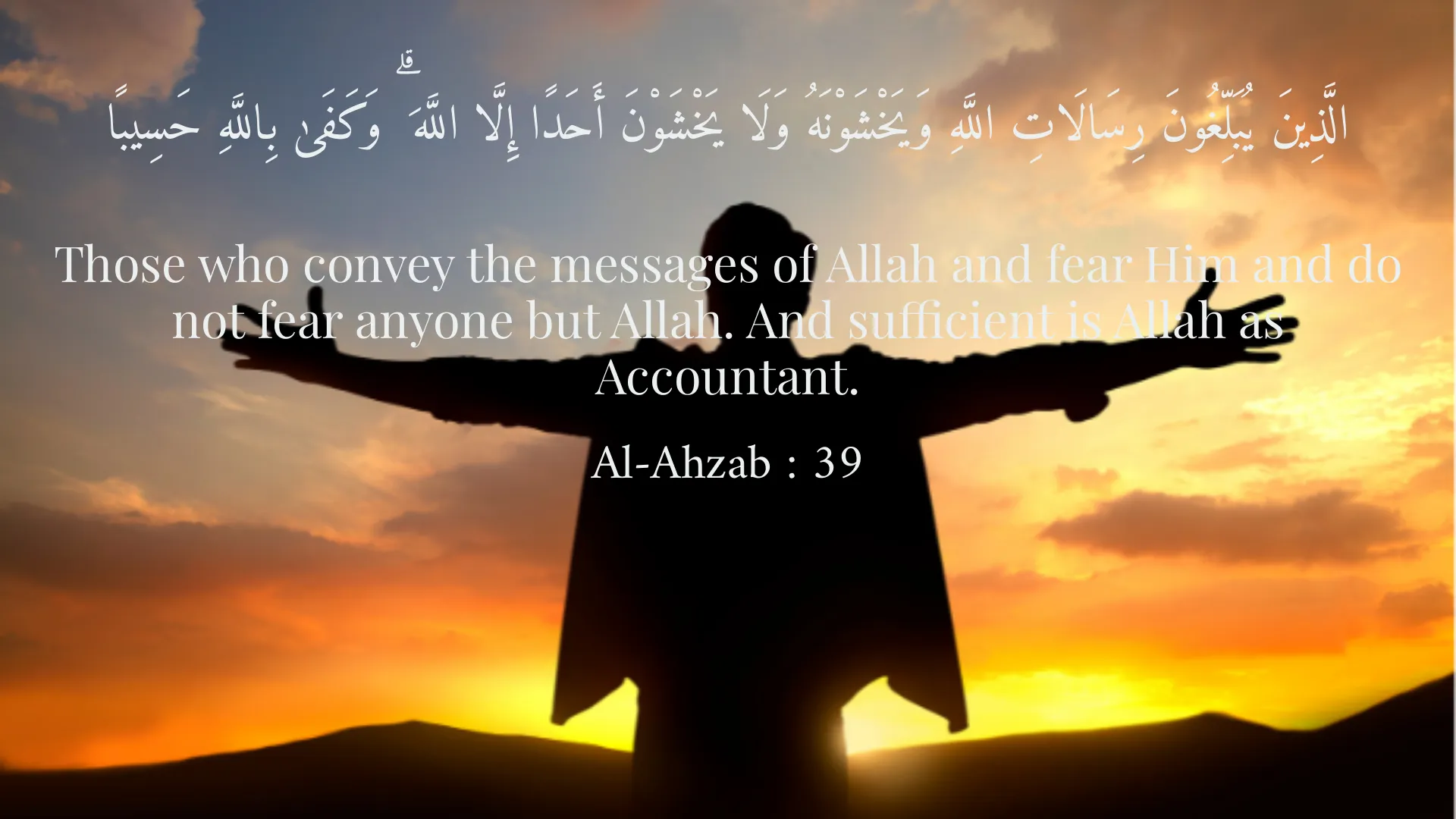
الَّذِينَ يُبَلِّغُونَ رِسَالَاتِ اللَّهِ وَيَخْشَوْنَهُ وَلَا يَخْشَوْنَ أَحَدًا إِلَّا اللَّهَ ۗ وَكَفَىٰ بِاللَّهِ حَسِيبًا
Those who convey the messages of Allah and fear Him and do not fear anyone but Allah. And sufficient is Allah as Accountant.
Al-Ahzab : 39
إِنَّمَا ذَٰلِكُمُ الشَّيْطَانُ يُخَوِّفُ أَوْلِيَاءَهُ فَلَا تَخَافُوهُمْ وَخَافُونِ إِن كُنتُم مُّؤْمِنِينَ
It is only Shaytan who instills fear in his allies, so do not fear them but fear Me, if you are [truly] believers.
Al-Imran : 175
يَا أَيُّهَا الَّذِينَ آمَنُوا مَن يَرْتَدَّ مِنكُمْ عَن دِينِهِ فَسَوْفَ يَأْتِي اللَّهُ بِقَوْمٍ يُحِبُّهُمْ وَيُحِبُّونَهُ أَذِلَّةٍ عَلَى الْمُؤْمِنِينَ أَعِزَّةٍ عَلَى الْكَافِرِينَ يُجَاهِدُونَ فِي سَبِيلِ اللَّهِ وَلَا يَخَافُونَ لَوْمَةَ لَائِمٍ ۚ ذَٰلِكَ فَضْلُ اللَّهِ يُؤْتِيهِ مَن يَشَاءُ ۚ وَاللَّهُ وَاسِعٌ عَلِيمٌ
O you who have believed, whoever of you reverts from his religion – Allah will bring forth [in place of them] a people He will love and who will love Him [who are] humble toward the believers, powerful against the disbelievers; they strive in the way of Allah and do not fear the blame of a blamer. That is the favor of Allah; He bestows it upon whom He wills. And Allah is all-Encompassing and Knowing.
Al-Ma'idah : 54
Short Story
It is narrated that in ancient times, a tyrannical ruler governed a city, and no one dared to speak the truth to him. One day, a wise and free-spirited dervish passed by the ruler's palace. Seeing the oppression and injustice inflicted upon the people, his heart ached. The ruler's close associates warned him, 'If you speak the truth, you will put your life in danger.' But the dervish smiled and said, 'Life is in the hands of God, not the ruler. Silence in the face of injustice is a greater injustice itself.' He bravely entered the palace and, without any fear or trembling, conveyed the truth to the ruler, warning him of the consequences of oppression. The ruler, astonished by the dervish's courage, could not harm him and even took heed of his words. This story teaches us that if your heart is filled with the light of truth and reliance on God, the fear of creation will depart from your heart, and the courage to speak truth will bring you wondrous rewards.