Quranic Answer
Feeling fear or hesitation towards repentance is a common human experience, and it can stem from various roots. Perhaps you believe your sins are too numerous or too grave to be forgiven, or you might be concerned about your ability to remain steadfast and avoid backsliding into old habits. It could also be the insidious whispers of Satan attempting to instill despair and hopelessness regarding God's boundless mercy. However, the Holy Quran and the Sunnah of Prophet Muhammad (peace be upon him) present an entirely different, hopeful picture of repentance (Tawbah). Repentance should not be a source of fear; rather, it is a gateway to tranquility, forgiveness, and a renewed connection with the Most Merciful Lord. One of the primary reasons individuals fear repentance is an insufficient understanding of Allah's infinite mercy. Many of us, perhaps unconsciously, harbor the notion that our sins are too enormous for divine forgiveness. Yet, Allah explicitly declares in the Quran: "Say, 'O My servants who have transgressed against themselves [by sinning], do not despair of the mercy of Allah. Indeed, Allah forgives all sins. Indeed, it is He who is the Forgiving, the Merciful.'" (Surah Az-Zumar, 39:53). This verse is a resounding call of hope, addressing those who have committed excesses against themselves and become immersed in sin, urging them: "Do not despair of the mercy of Allah!" Allah forgives all sins. He is indeed the Oft-Forgiving, the Most Merciful. This verse unequivocally demonstrates that no sin is so grand that Allah's mercy and forgiveness cannot encompass it. The fear of the magnitude of one's sins is a deceptive tactic employed by Satan to deter individuals from the path of return and purity. Allah is so merciful that He not only forgives sins but also loves those who repent and perform righteous deeds. Another reason for fear is the concern about inconsistency and the possibility of returning to sin. Humans are inherently weak and prone to error. You might think, "What if I repent and then sin again?" This, too, is a snare set by Satan. His objective is to keep you trapped in a cycle of despair and wrongdoing. However, the truth is that repentance is a continuous journey, not a one-time event. If someone repents and then slips again, the door of repentance remains open. The crucial aspect is that whenever we err, we should return to Allah with remorse and regret. Sincere repentance (Tawbah Nasuha) entails heartfelt regret for the past, abandoning the sin in the present, and making a firm resolve not to return to it in the future. Even if, after sincere repentance, one commits another sin, it does not nullify the previous repentance; rather, one must simply seek repentance again for the new transgression. Allah repeatedly emphasizes the necessity of sincere repentance in the Quran: "O you who have believed, repent to Allah with sincere repentance. It may be that your Lord will remove from you your misdeeds and admit you into gardens beneath which rivers flow..." (Surah At-Tahrim, 66:8). This verse illustrates that genuine repentance offers hope for the forgiveness of sins and entry into Paradise. Shame and guilt are also factors that can hinder repentance. Some individuals are so deeply ashamed of their past actions that they dare not even contemplate repentance. While this feeling of shame is natural, it should not become an impediment to returning to Allah. In fact, the very feeling of remorse and shame is the initial step towards repentance. When a servant realizes their wrongdoing and feels ashamed, it signifies an awakening of their innate nature and readiness for change. Allah is Al-Sattar (the Concealer of faults) and Al-Ghaffar (the Forgiver). Repenting is not about exposing one's sins before Allah but rather an acknowledgment of one's weakness and a plea for help from the Most Powerful and Most Merciful. Allah welcomes His servants who return to Him with humility and remorse. Satanic whispers play a crucial role in instilling fear of repentance. Satan does not want you to benefit from divine mercy. He employs various tactics, such as reminding you of the enormity of past sins, instilling despair and hopelessness, or implanting the thought that "you do not deserve forgiveness." He wishes to keep you submerged in the swamp of sin so that you may never attain salvation. Recognizing these whispers and counteracting them with reliance on Allah and recalling the verses of mercy is key to overcoming these fears. You must understand that Satan's promises are lies and deception, whereas Allah's promises are truth and reality. Repentance not only cleanses sins but also transforms evil deeds into good ones. Allah states in Surah Al-Furqan: "Except for those who repent, believe and do righteous work. For them Allah will replace their evil deeds with good. And ever is Allah Forgiving and Merciful." (Surah Al-Furqan, 25:70). This magnificent verse illustrates that sincere repentance, faith, and righteous deeds not only erase past sins but also convert them into good deeds. This is an unbelievable reward for those who genuinely turn back to Allah. This promise should dispel all fear and despair from one's heart and invite them towards repentance. So, why should we fear repentance when it is a new beginning? Repentance signifies a deeper bond with the Lord, a feeling of inner lightness and peace, and an opportunity to rectify the past and build a better future. Every moment of life is an opportunity for repentance, but it should not be delayed. "The acceptance of repentance by Allah is only for those who do evil in ignorance and then repent soon after. It is those to whom Allah will turn in forgiveness, and Allah is ever Knowing and Wise." (Surah An-Nisa, 4:17). This verse emphasizes the importance of timely repentance, before the opportunity is lost. Understanding that repentance is not a punishment but a divine gift can remove fear. Allah yearns for His servants to return, for He is their Creator and desires their welfare and good. Instead of fear, we should harbor eagerness for repentance. Eagerness towards a Lord whose doors of mercy are always open to His servants. Eagerness towards purity and goodness. Repentance is, in essence, a celebration for the soul, a celebration in which the soul is freed from the chains of sin and soars towards divine light. Instead of allowing baseless fears or satanic whispers to hinder you, take a step forward. Even a small step with sincere intention can be the beginning of a vast transformation in life. Allah, Al-Tawwab (the Acceptor of Repentance) and Al-Rahim (the Most Merciful), accepts repentance and wrongs no servant. Rely on Him with a heart full of hope, and return to Him. Be certain that He will receive you with open arms and transform all your fears into peace and assurance.
Related Verses
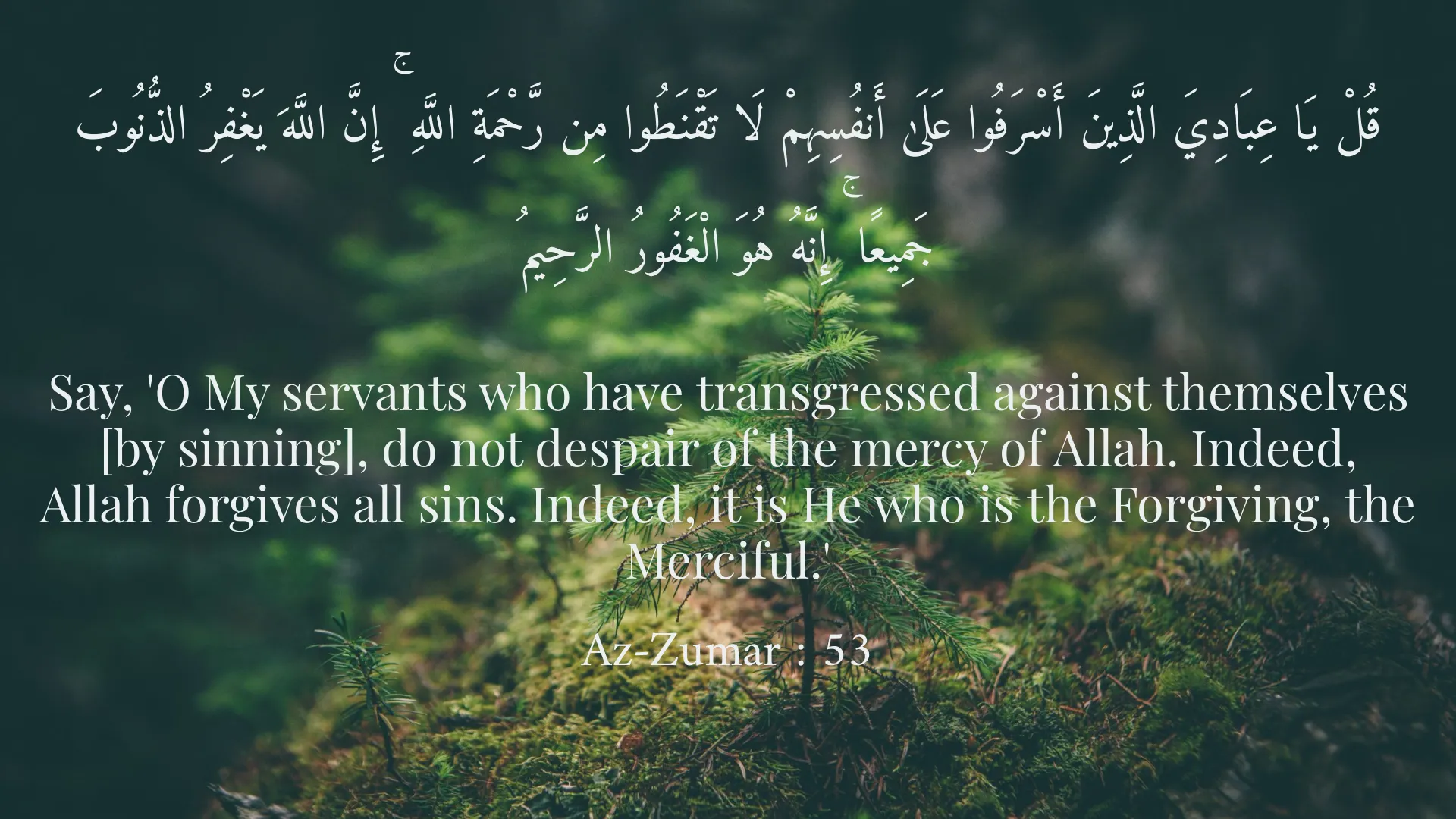
قُلْ يَا عِبَادِيَ الَّذِينَ أَسْرَفُوا عَلَىٰ أَنفُسِهِمْ لَا تَقْنَطُوا مِن رَّحْمَةِ اللَّهِ ۚ إِنَّ اللَّهَ يَغْفِرُ الذُّنُوبَ جَمِيعًا ۚ إِنَّهُ هُوَ الْغَفُورُ الرَّحِيمُ
Say, 'O My servants who have transgressed against themselves [by sinning], do not despair of the mercy of Allah. Indeed, Allah forgives all sins. Indeed, it is He who is the Forgiving, the Merciful.'
Az-Zumar : 53
يَا أَيُّهَا الَّذِينَ آمَنُوا تُوبُوا إِلَى اللَّهِ تَوْبَةً نَّصُوحًا عَسَىٰ رَبُّكُمْ أَن يُكَفِّرَ عَنكُمْ سَيِّئَاتِكُمْ وَيُدْخِلَكُمْ جَنَّاتٍ تَجْرِي مِن تَحْتِهَا الْأَنْهَارُ يَوْمَ لَا يُخْزِي اللَّهُ النَّبِيَّ وَالَّذِينَ آمَنُوا مَعَهُ ۖ نُورُهُمْ يَسْعَىٰ بَيْنَ أَيْدِيهِمْ وَبِأَيْمَانِهِمْ يَقُولُونَ رَبَّنَا أَتْمِمْ لَنَا نُورَنَا وَاغْفِرْ لَنَا ۖ إِنَّكَ عَلَىٰ كُلِّ شَيْءٍ قَدِيرٌ
O you who have believed, repent to Allah with sincere repentance. It may be that your Lord will remove from you your misdeeds and admit you into gardens beneath which rivers flow [on] the Day when Allah will not disgrace the Prophet and those who believed with him. Their light will proceed before them and on their right; they will say, 'Our Lord, perfect for us our light and forgive us. Indeed, You are over all things competent.'
At-Tahrim : 8
إِلَّا مَن تَابَ وَآمَنَ وَعَمِلَ عَمَلًا صَالِحًا فَأُولَٰئِكَ يُبَدِّلُ اللَّهُ سَيِّئَاتِهِمْ حَسَنَاتٍ ۗ وَكَانَ اللَّهُ غَفُورًا رَّحِيمًا
Except for those who repent, believe and do righteous work. For them Allah will replace their evil deeds with good. And ever is Allah Forgiving and Merciful.
Al-Furqan : 70
Short Story
It is narrated that in ancient times, there was a king whose justice and kindness were renowned far and wide. One day, he summoned an offender who had been imprisoned for years due to a grave sin, and who, overwhelmed by remorse and despair, thought he would never see freedom again. The king looked at him with eyes full of compassion and said, 'My servant, though your transgression was great, your remorse and repentance are clear to me. In return for this repentance, I forgive you and set you free from bondage.' The offender was so astonished by these words that he thought he was dreaming. With tearful, trembling eyes, he said, 'O King! For years, out of fear of punishment and the enormity of my sin, I was submerged in despair and did not allow myself even for a moment to think of forgiveness. Now that I witness this boundless grace from you, I realize that your kindness and generosity transcend all my imaginations.' This tale is a reminder of the story between servants and their Lord. Sometimes, out of fear of the magnitude of our sins, we dread repenting and imagine that Allah will not forgive us. But my friend! Let us not forget that Allah's mercy and forgiveness are boundless and endless. Just as a compassionate king forgives a remorseful sinner, the Lord of the worlds awaits the return of His penitent servants with open arms. So, never fear repentance, and return to Him with a hopeful heart, for He yearns for those who repent, and His promise of forgiveness is true.