Quranic Answer
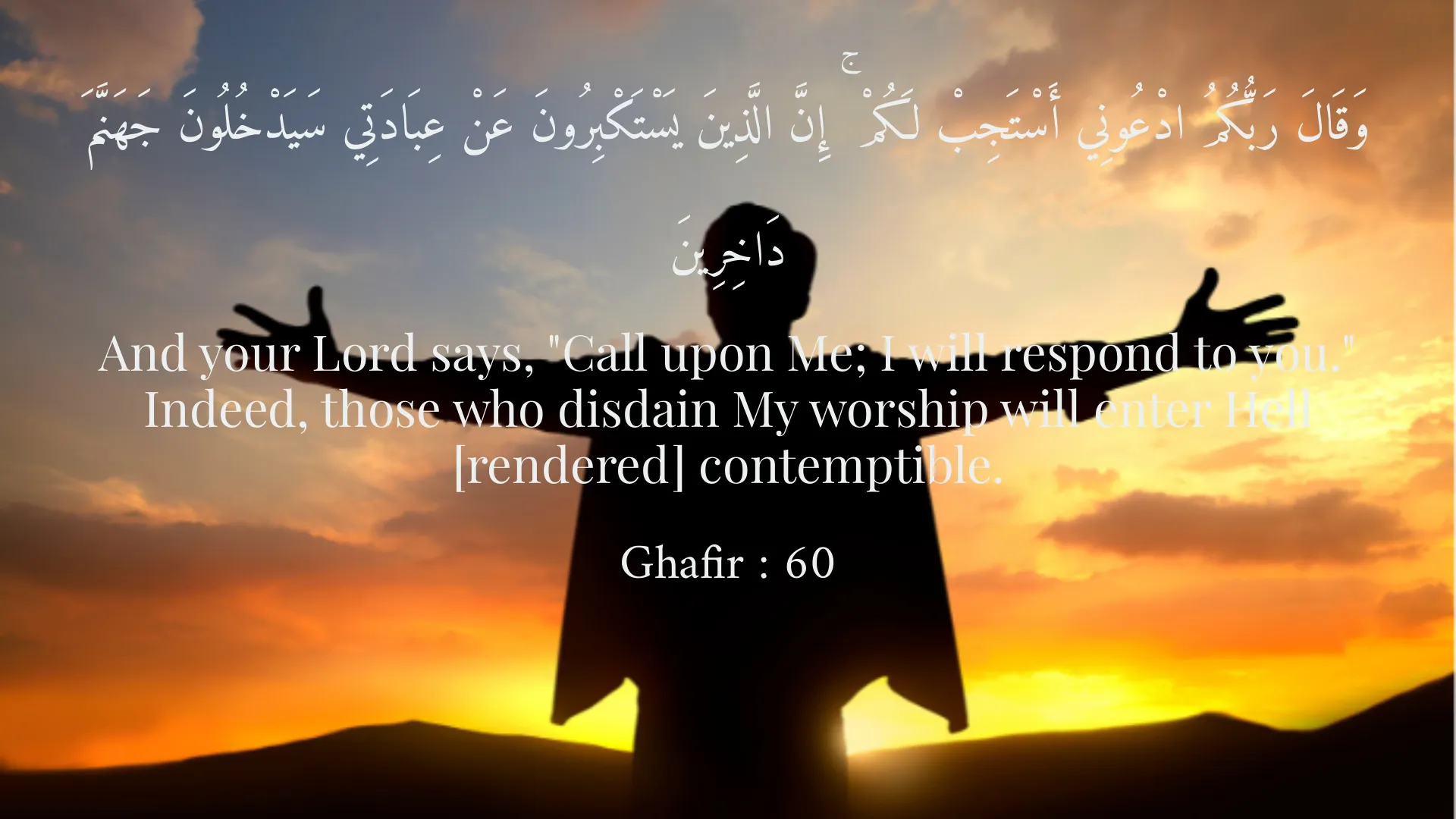
The experience of making a supplication (du'a) and it seemingly not being answered is a common one, and it can sometimes lead to discouragement, or even doubt, in the hearts of some. However, when we view this issue from a Quranic perspective, we come to understand the profound divine wisdom behind this apparent non-response. The Holy Quran explicitly promises that prayers will be answered. Allah Almighty states in Surah Ghafir (40:60): "And your Lord says, 'Call upon Me; I will respond to you.'" Furthermore, in Surah Al-Baqarah (2:186), we read: "And when My servants ask you, [O Muhammad], concerning Me - indeed I am near. I respond to the invocation of the supplicant when he calls upon Me. So let them respond to Me [by obedience] and believe in Me that they may be [rightly] guided." These verses clearly show that the acceptance of prayer is a divine principle and promise, but the key lies in understanding the meaning of 'response' and the wisdom behind it. Firstly and most importantly, the primary reason for the apparent non-acceptance of a prayer is "Divine Wisdom" (Hikmah). Allah Almighty is All-Knowing and is aware of what is truly good and beneficial for His servants. Sometimes, we ask for something that, from our limited perspective, seems good, but if we were to receive it, it might bring harm or detriment in the long run. In Surah Al-Baqarah (2:216), Allah says: "...But perhaps you hate a thing and it is good for you; and perhaps you love a thing and it is bad for you. And Allah Knows, while you know not." This verse provides us with the most fundamental understanding that our knowledge and awareness are minuscule compared to Allah's infinite knowledge. Therefore, when a prayer is not answered as we expected, it is in fact a divine response based on wisdom and benevolence. Either Allah wishes to give us something far better than what we can imagine, or He wishes to avert an evil or calamity from us of which we are unaware. This type of non-acceptance is, in essence, an acceptance, but veiled in a form of divine expediency that we are unable to comprehend. It is a testament to Allah's infinite care and concern for His creation, ensuring that what ultimately benefits us is what transpires, regardless of our immediate desires. Secondly, the concept of "Divine Test and Trial" (Ibtila') plays a significant role. This worldly life is a stage for human beings to be tested, to reveal their level of faith, patience, gratitude, and reliance on Allah. Sometimes, the immediate non-acceptance of a prayer is itself part of this test. Allah wants to gauge our patience, observe our persistence in supplication, and measure the depth of our reliance. This situation encourages individuals to turn to Allah more fervently, to increase their humility and earnest pleas, and to strengthen their connection with their Creator. In this process, a person grows spiritually and morally, attaining a higher level of understanding and closeness to Allah. This spiritual growth is often far more valuable than the fulfillment of a material need. These trials teach us to remember Allah not only in times of need but always, and to call upon Him not just for the fulfillment of our desires, but for His own sake and His Lordship. Thirdly, there might be "impediments to the acceptance of prayer" originating from the supplicant themselves. These obstacles are rooted in one's actions and internal state. Among these impediments are: * Sins and Unlawful Actions: Committing sins, especially major sins, and persisting in them without repentance can be a serious barrier to the acceptance of prayer. The Holy Quran strongly emphasizes refraining from sin and cultivating piety (taqwa). Living off unlawful earnings or oppressing others can render a person's prayers ineffective. Sincere repentance (tawbah) and turning back to Allah are crucial for overcoming many obstacles to prayer acceptance. It is through purification of one's actions and intentions that one can truly open the channels of divine response. * Lack of Sincerity and Certainty: Prayer must stem from genuine sincerity and conviction. If one prays with doubt or merely to test Allah, the prayer will not yield results. Certainty in Allah's power and will is an essential condition for prayer acceptance. Allah states: "I respond to the invocation of the supplicant when he calls upon Me." This calling must come from the depths of one's being, with complete faith and trust, knowing that Allah hears and has the power to fulfill all things. * Haste and Despair: Some individuals pray hastily, and when they don't see immediate results, they become despondent and stop supplicating. This haste and despair are major impediments. Allah desires His servants to call upon Him with persistence and steadfastness. Perseverance in prayer is a sign of deep faith and reliance, demonstrating true submission and trust in His timing. * Praying for Unlawful or Harmful Things: Allah does not answer prayers that involve injustice, sin, or anything that would be detrimental to the supplicant or others. Divine justice does not permit the acceptance of prayers that lead to corruption on Earth or oppression of anyone. Our requests must align with what is good, permissible, and ultimately beneficial. It is crucial to understand that the acceptance of prayer does not always mean the exact fulfillment of what we have asked for. Interpreters and scholars, based on divine wisdom, have outlined three types of "acceptance" for prayers, all of which are good and blessed: 1. Direct Fulfillment: This is what most people expect from an answered prayer, and sometimes, by His grace and mercy, Allah directly fulfills the exact request of His servant. 2. Averting Harm and Evil: Sometimes, a prayer is accepted, not by granting the specific request, but by Allah averting a greater calamity or evil that was destined to befall us. We remain unaware of this averted harm and might think our prayer was not answered, while in reality, the greatest good for us has been achieved. This is a subtle yet profound form of divine protection. 3. Reserved for the Hereafter: The third and perhaps most valuable type of acceptance is when Allah reserves the reward and blessing of the prayer for the Day of Judgment. On that Day, servants will wish that none of their prayers in this world had been directly answered, and all had been reserved for the Hereafter, because the reward there will be immensely greater and everlasting. This emphasizes the eternal perspective of Allah's plan. Ultimately, prayer is an act of worship in all circumstances. Even if it doesn't bring the immediate desired outcome, the act of prayer itself—connecting with the Creator, expressing servitude, and showing humility in the face of His immense richness—carries immense reward and draws one closer to Allah. Prayer leads to spiritual tranquility, strengthens faith, and increases reliance on Allah. Thus, no prayer is wasted, and no call to Allah goes unanswered; Allah's response is always the best and most benevolent, even if we do not initially comprehend it. The important thing is to persist in prayer with patience, certainty, sincerity, and repentance, placing complete trust in His infinite wisdom and boundless grace.
Related Verses
وَقَالَ رَبُّكُمُ ادْعُونِي أَسْتَجِبْ لَكُمْ ۚ إِنَّ الَّذِينَ يَسْتَكْبِرُونَ عَنْ عِبَادَتِي سَيَدْخُلُونَ جَهَنَّمَ دَاخِرِينَ
And your Lord says, "Call upon Me; I will respond to you." Indeed, those who disdain My worship will enter Hell [rendered] contemptible.
Ghafir : 60
وَإِذَا سَأَلَكَ عِبَادِي عَنِّي فَإِنِّي قَرِيبٌ ۖ أُجِيبُ دَعْوَةَ الدَّاعِ إِذَا دَعَانِ ۖ فَلْيَسْتَجِيبُوا لِي وَلْيُؤْمِنُوا بِي لَعَلَّهُمْ يَرْشُدُونَ
And when My servants ask you, [O Muhammad], concerning Me - indeed I am near. I respond to the invocation of the supplicant when he calls upon Me. So let them respond to Me [by obedience] and believe in Me that they may be [rightly] guided.
Al-Baqarah : 186
كُتِبَ عَلَيْكُمُ الْقِتَالُ وَهُوَ كُرْهٌ لَّكُمْ ۖ وَعَسَىٰ أَن تَكْرَهُوا شَيْئًا وَهُوَ خَيْرٌ لَّكُمْ ۖ وَعَسَىٰ أَن تُحِبُّوا شَيْئًا وَهُوَ شَرٌّ لَّكُمْ ۗ وَاللَّهُ يَعْلَمُ وَأَنتُمْ لَا تَعْلَمُونَ
Fighting has been enjoined upon you while it is hateful to you. But perhaps you hate a thing and it is good for you; and perhaps you love a thing and it is bad for you. And Allah Knows, while you know not.
Al-Baqarah : 216
Short Story
One of the wise men told Saadi: "One day in a barren desert, I saw a man, heartbroken, begging God for rain to save his crops. But the rain did not come, and he despaired of fate. After a while, I saw the same man giving thanks, saying: 'If it had rained that day, a great flood would have come and swept away not only my crops but also my home and livelihood. God answered my prayer in another way and averted a greater evil from me, of which I was unaware.'" This story teaches us that Divine Wisdom is beyond our comprehension, and whatever happens is ultimately for our good, even if it appears contrary to our desires.