Quranic Answer
The observation that others' prayers sometimes seem more effective for us is rooted in profound Quranic and Islamic insights. The Holy Quran teaches us that Allah Almighty is the Hearer and Responder of prayers, and no prayer goes unanswered, though the quality and timing of its acceptance depend on various factors. This experience, where someone else's prayer for us yields results more quickly, is a sign of Divine Wisdom and the dynamic nature of prayer acceptance in Islam. Let's explore this topic from several Quranic and principled perspectives to gain a deeper understanding. Firstly and most importantly, the principle of sincerity (Ikhlas) in prayer. The Quran repeatedly emphasizes the importance of sincerity in every act of worship and good deed. When an individual prays for another, their intention is often purer and free from personal self-interest that might be present in a person's prayer for themselves. A prayer offered out of compassion, love, and altruism holds greater weight with Allah. This type of prayer is a practical manifestation of verses that command cooperation in righteousness and piety; when someone prays for their brother or sister in faith, they are, in essence, aiding them on the path of goodness and piety. This purity of intention, devoid of any personal expectation, brings the prayer closer to the Divine Presence and increases the likelihood of its acceptance. Allah grants special attention to pure hearts and sincere intentions, and a prayer arising from such a heart is like a breeze of mercy that reaches its destination more swiftly. Secondly, the spiritual and moral state of the supplicant plays a significant role. The Holy Quran describes believers and righteous individuals with specific characteristics and promises them immense rewards. Individuals who are pious, faithful, righteous, and abstinent from sins are closer to Allah, and their prayers hold a special status with Him. Perhaps the person praying for you is in a higher spiritual state, has a purer heart, or has committed fewer sins. The prayer of such an individual, due to their closer proximity to the Divine, has a greater potential for acceptance. This does not mean that our own prayers are ineffective, but rather that obstacles such as sins, lack of sincerity, or weakness of faith might have diminished the power of our prayers, while the prayer of a pure-hearted believer operates with greater force. For example, the prayers of parents for their children, the prayer of the oppressed, or the prayer of a traveler are among those emphasized in Islamic narrations as being more readily accepted; these instances indicate specific conditions (such as the mercy of parents, the cry of injustice, or the vulnerability of a traveler) that accelerate acceptance. These principles are derived from the overall Quranic teachings regarding the status of the pious and the righteous. Thirdly, the etiquette of prayer and the conditions for its acceptance. In the Quran, we are commanded to call upon Allah with humility and in secret (Surah Al-A'raf, verse 55). Perhaps another person praying for us observes these etiquettes better; for instance, they might pray at specific times (like the pre-dawn hours or after obligatory prayers), or in sacred places, or with a broken heart full of hope. Furthermore, lawful sustenance and abstaining from prohibitions are also conditions for prayer acceptance. If the person praying for us is more careful in these regards, their prayer will be more effective. Additionally, sometimes we ask for things out of haste or incomplete knowledge of what is truly beneficial for us. However, another person, praying with a broader and more impartial view, might request something that precisely aligns with Divine Wisdom and expediency, which itself is a reason for the swift acceptance of their prayer. Fourthly, Divine Wisdom and the will of the Almighty. Allah is the Absolute Wise and orchestrates all affairs according to His best judgment and wisdom. He sometimes answers a person's prayer through an intermediary, another person's supplication, both to reward the supplicant (for their benevolent act) and to make the person being prayed for aware of His boundless mercy through others. This demonstrates the interconnectedness and importance of each individual's role in the Islamic community. Perhaps Allah intends to teach us that in times of hardship, we should extend our hands to our brothers and sisters in faith and benefit from their good prayers. This helps strengthen the sense of brotherhood, unity, and solidarity within the Islamic community, showing that no one is alone on this path and that one can always benefit from the spiritual support of others. The acceptance of others' prayers for us can be a lesson that we should always trust in Allah's wisdom and know that He ordains the best for His servants, even if it comes through means we did not expect. Finally, the feeling that others' prayers are sometimes more effective should not lead us to abandon our personal prayers. Instead, it should motivate us to increase our sincerity, strengthen our faith, purify our souls, and observe the etiquettes of prayer within ourselves. In reality, both types of prayers, whether our personal prayer or someone else's prayer for us, are manifestations of Divine Mercy and Power, and all ultimately return to Allah's Wisdom and Will. Allah responds to every prayer, sometimes by granting what we asked for, sometimes by averting a calamity, and sometimes by storing rewards for the Hereafter. Therefore, we should always raise our hands in prayer and ask Allah for our needs, whether for ourselves or for others, with the certainty that He is the Hearer and the Responder.
Related Verses
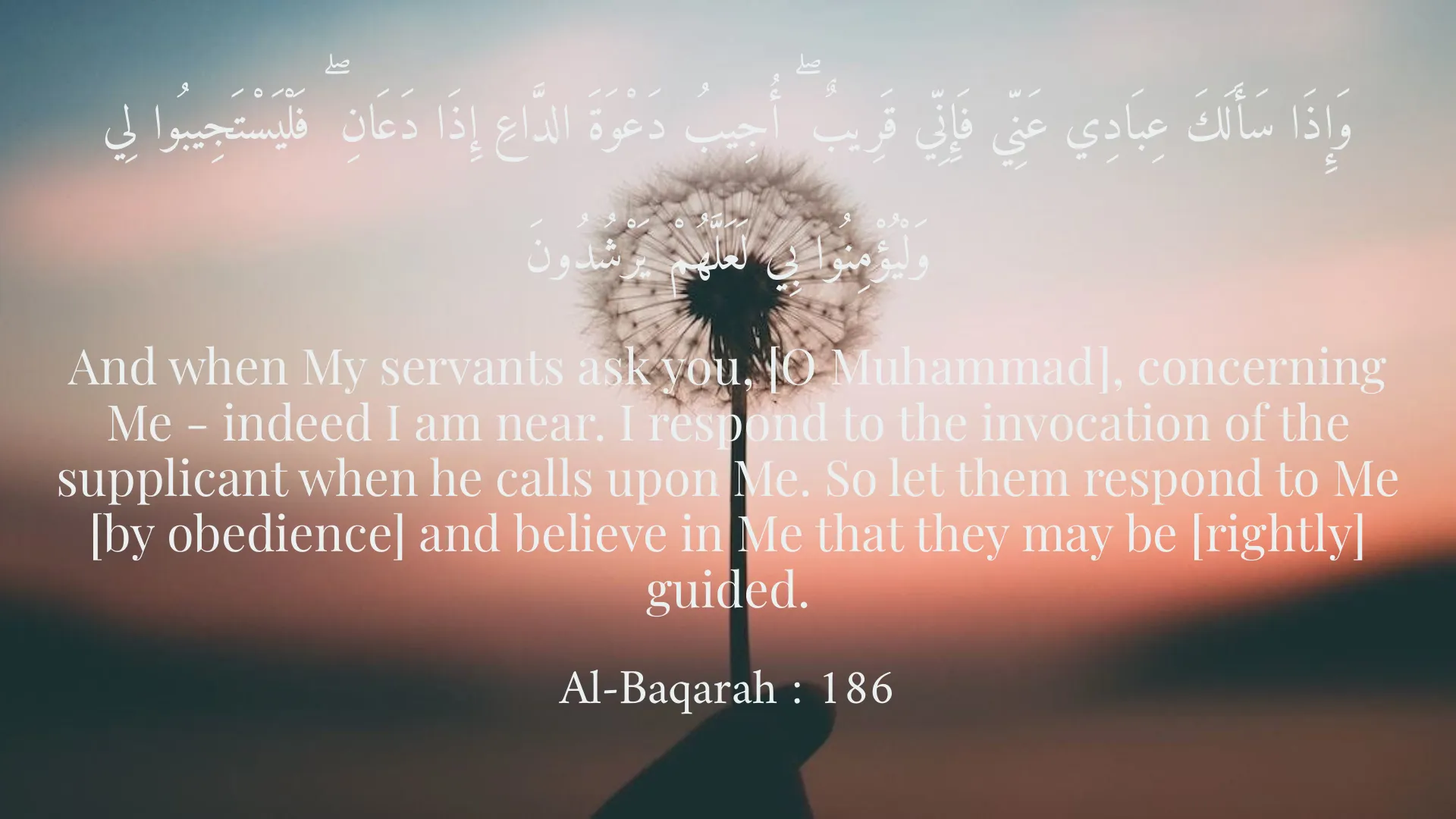
وَإِذَا سَأَلَكَ عِبَادِي عَنِّي فَإِنِّي قَرِيبٌ ۖ أُجِيبُ دَعْوَةَ الدَّاعِ إِذَا دَعَانِ ۖ فَلْيَسْتَجِيبُوا لِي وَلْيُؤْمِنُوا بِي لَعَلَّهُمْ يَرْشُدُونَ
And when My servants ask you, [O Muhammad], concerning Me - indeed I am near. I respond to the invocation of the supplicant when he calls upon Me. So let them respond to Me [by obedience] and believe in Me that they may be [rightly] guided.
Al-Baqarah : 186
وَقَالَ رَبُّكُمُ ادْعُونِي أَسْتَجِبْ لَكُمْ ۚ إِنَّ الَّذِينَ يَسْتَكْبِرُونَ عَنْ عِبَادَتِي سَيَدْخُلُونَ جَهَنَّمَ دَاخِرِينَ
And your Lord says, "Call upon Me; I will respond to you." Indeed, those who disdain My worship will enter Hell in humiliation.
Ghafir : 60
يَا أَيُّهَا الَّذِينَ آمَنُوا لَا تُحِلُّوا شَعَائِرَ اللَّهِ وَلَا الشَّهْرَ الْحَرَامَ وَلَا الْهَدْيَ وَلَا الْقَلَائِدَ وَلَا آمِّينَ الْبَيْتَ الْحَرَامَ يَبْتَغُونَ فَضْلًا مِّن رَّبِّهِمْ وَرِضْوَانًا ۚ وَإِذَا حَلَلْتُمْ فَاصْطَادُوا ۚ وَلَا يَجْرِمَنَّكُمْ شَنَآنُ قَوْمٍ أَن صَدُّوكُمْ عَنِ الْمَسْجِدِ الْحَرَامِ أَن تَعْتَدُوا ۘ وَتَعَاوَنُوا عَلَى الْبِرِّ وَالتَّقْوَىٰ ۖ وَلَا تَعَاوَنُوا عَلَى الْإِثْمِ وَالْعُدْوَانِ ۚ وَاتَّقُوا اللَّهَ ۖ إِنَّ اللَّهَ شَدِيدُ الْعِقَابِ
O you who have believed, do not violate the symbols of Allah or the sacred month or [eliminate from slaughter] the sacrificial animals [marked for sacrifice] or the garlands [marking them] or those intending [to visit] the Sacred House, seeking bounty from their Lord and [His] pleasure. But when you depart from ihram, then [you may] hunt. And do not let the hatred of a people for having obstructed you from the Sacred Mosque lead you to transgress. And cooperate in righteousness and piety, but do not cooperate in sin and aggression. And fear Allah; indeed, Allah is severe in penalty.
Al-Ma'idah : 2
Short Story
In ancient times, there lived a virtuous man named 'Hakim' in a city, known for his kindness and pure intentions. He always helped others, and whenever someone had a problem, they would first approach Hakim to pray for them. One day, a merchant who had lost his fortune came to Hakim and, with a broken heart, asked him to pray for the return of his wealth. The merchant himself had prayed many times, but it seemed his prayers had gone unanswered. Hakim kindly raised his hands and, with complete sincerity, asked Allah to restore the merchant's wealth. He sought no personal gain nor expected anything from the merchant; he prayed purely out of compassion and sympathy. It wasn't long before news arrived that the merchant's caravan, which was thought to be lost, had returned safe and sound, even bringing back more profit. The merchant was astonished and asked Hakim, 'I prayed many times myself, but why did your prayer yield results sooner?' Hakim smiled and said, 'Brother, perhaps a prayer offered with pure sincerity for another has fewer veils and reaches the Divine Presence directly. Allah loves kindness and helping one's fellow human beings, and He looks with special favor upon a heartfelt prayer that only seeks the good of another.' This simple story teaches us that a pure intention and compassion for others can be the key to the acceptance of prayers that we might not achieve on our own.