Quranic Answer
The question of why some individuals, particularly innocent children, are born into suffering from an early age is one of the most profound and challenging existential queries that humanity has pondered throughout history. This question holds significant importance not only from a philosophical standpoint but also from a religious one. The Holy Quran, as the divine word, does not directly address this specific query with a simplistic answer like "why was this child born into suffering?" Instead, it provides a comprehensive and overarching framework for understanding the phenomenon of suffering, trials, and tribulations in this worldly life. This framework is built upon fundamental principles such as divine wisdom, divine justice, the nature of this world as a realm of testing, the role of human actions, and the recompense in the hereafter. Understanding these principles can help individuals cope with this harsh reality and find meaning in it, rather than seeking a simple, one-dimensional answer for every specific case. One of the most crucial concepts the Quran presents for explaining suffering and hardships is "Ibtila'," or "trial/test." In the Quranic worldview, this worldly life (dunya) is inherently a realm of tests; it is a place for the manifestation of human essence, not a place of absolute comfort or perfect justice. Allah Almighty refers to this truth in numerous verses. For instance, in Surah Al-Baqarah, verse 155, we read: "And We will surely test you with something of fear and hunger and a loss of wealth and lives and fruits, but give good tidings to the patient." This verse clearly states that fear, hunger, poverty, illness, and the loss of loved ones (all of which can be reflected in childhood suffering) are unavoidable parts of divine trials. The purpose of these trials is to gauge human faith, patience, gratitude, and steadfastness in the face of adversity. These tests are not because Allah is unaware of our state, but rather for us and others to become aware of the truth of our faith and to provide an opportunity for spiritual growth and elevation of rank. Surah Al-Mulk, verse 2, reinforces this concept: "He who created death and life to test you which of you is best in deed - and He is the Exalted in Might, the Forgiving." From this perspective, even being born into difficult and painful circumstances can be part of this divine design for testing humanity; a test for the child (in a spiritual sense, even if not consciously experienced), for the parents, and for the society witnessing such suffering. Another key principle is Allah's absolute wisdom and infinite justice. Allah is All-Wise, and everything He does is based on profound wisdom and boundless knowledge that may not be comprehensible to limited human intellect. Sometimes, what appears to us as suffering and calamity secretly contains hidden goodness and blessings that only become apparent over time or in the Hereafter. The Quran strongly emphasizes divine justice; Allah never wrongs anyone and never burdens one soul with the burden of another (Surah Al-An'am, verse 164: "And no bearer of burdens will bear the burden of another"). Therefore, the suffering of an innocent child is never due to their own sins (as a child is innocent) or the sins of their parents (meaning that God punishes them for others' sins). Rather, this suffering, however difficult, is part of the broader system of Ibtila' and divine wisdom, in which opportunities for patience, steadfastness, and great reward are provided. This situation may serve as a test for parents and the surrounding community to demonstrate mercy, compassion, and empathy. Much of the suffering children face from birth, particularly in impoverished or war-torn regions, is a direct result of human actions and choices. Poverty, diseases caused by malnutrition, wars, discrimination, and social injustices are often the product of human decisions, mismanagement, greed, and disregard for the rights of others. In Surah Ar-Rum, verse 41, the Quran states: "Corruption has appeared on land and sea by [reason of] what the hands of people have earned so He may let them taste part of [the consequence of] what they have done that perhaps they will return [to righteousness]." This verse indicates that a significant portion of suffering and problems in the world is a direct consequence of human deeds, rather than merely an inescapable divine decree. Within this framework, the birth of a child into an environment plagued by poverty or war can be the result of a chain of misguided human choices at individual and collective levels, leading to humanitarian catastrophes. Thus, our responsibility as human beings to address these issues and establish justice is paramount. For those who live in suffering and endure these hardships with patience and faith, the Quran promises immeasurable rewards in the Hereafter. Surah Az-Zumar, verse 10, states: "Say, 'O My servants who have believed, fear your Lord. For those who do good in this world is good, and Allah's earth is spacious. Indeed, the patient will be given their reward without account.'" This reward extends to all who are patient, including innocent children who have suffered in life and who may not have had the capacity for conscious choice or resistance. In Islamic belief, children who pass away before reaching maturity enter Paradise and will intercede for their parents. Their suffering in this world can be seen as a purifier that elevates their status in the Hereafter. Furthermore, the suffering of children is a great test for other human beings and societies. Allah has entrusted us with the responsibility to be merciful to one another, to help those in need, and to strive to eliminate oppression and injustice. Witnessing the suffering of children is not meant to justify indifference, but rather to awaken feelings of compassion, social responsibility, and practical action. Islam strongly emphasizes charity (Zakat, Sadaqa), helping orphans, and supporting the poor, as these are means to alleviate suffering in society. Therefore, part of the answer to the question actually lies in our duty: what can we do for these children? Finally, it must be remembered that the Quranic perspective views this worldly life as temporary and transient, while the afterlife is eternal and the place of ultimate reward or punishment. The hardships and difficulties of this world are insignificant compared to the eternity of the Hereafter. In the Hereafter, Allah will act with perfect justice, and no one's suffering, however small, nor any good deed, will be overlooked. This perspective gives humanity hope that even if a complete and satisfying answer to the 'why' of suffering is not found in this world, divine justice will be realized in the Hereafter, and every hardship endured with patience will bring immense reward. In conclusion, the Holy Quran does not directly attribute the suffering of children to their personal sins or divine punishment, as they are innocent. Instead, it explains it within a broader framework of divine wisdom, the tests of worldly life, and the consequences of human actions. Their suffering can be a test for themselves (accompanied by great reward in the Hereafter), for their parents, and for society to demonstrate compassion and responsibility. Moreover, a significant portion of this suffering results from injustices and misguided human choices, which we are responsible for striving to rectify. This perspective does not merely justify suffering; rather, it is an invitation to patience, faith, practical action to alleviate pain and suffering in the world, and hope in Allah's absolute justice in the Hereafter.
Related Verses
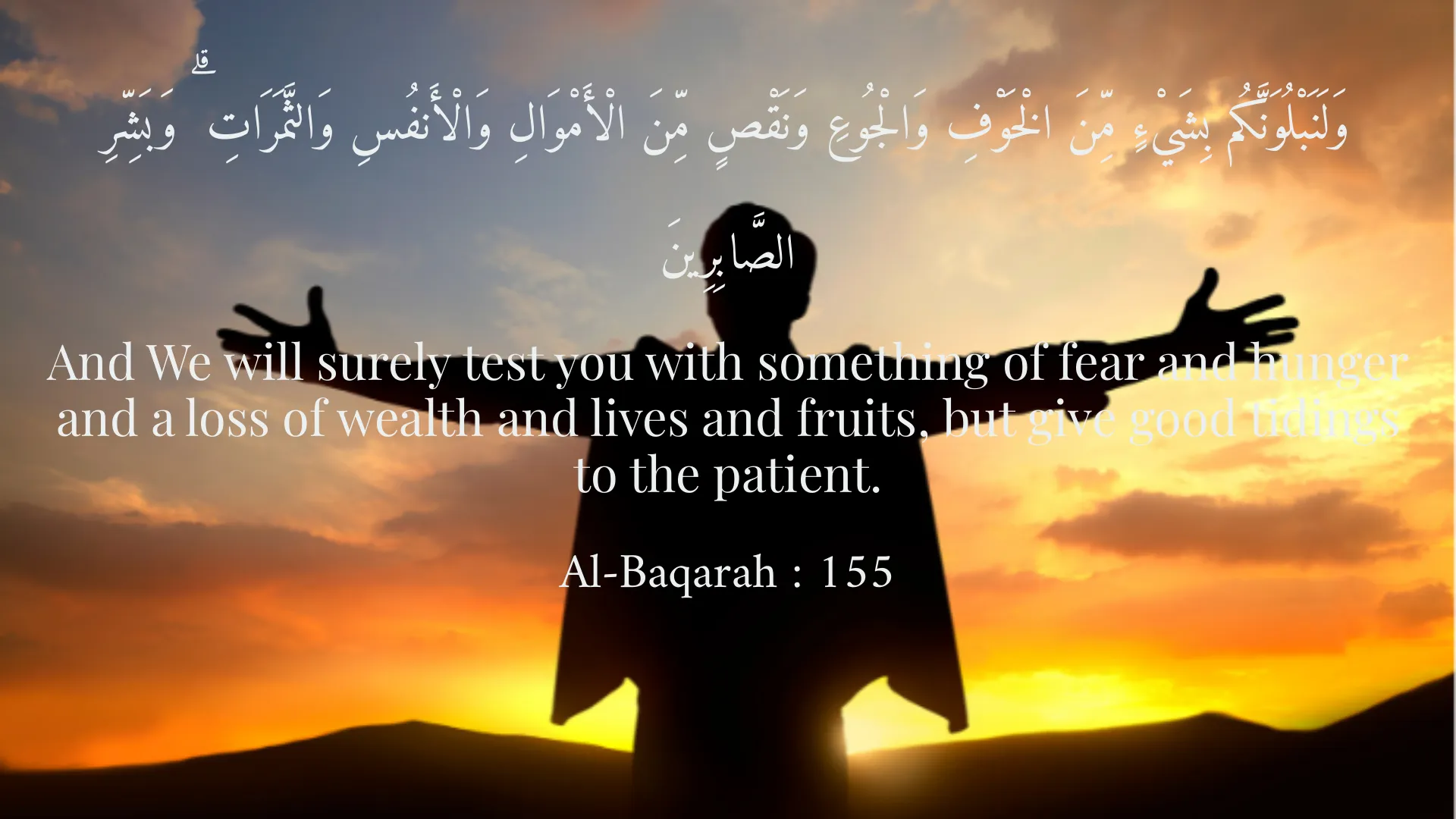
وَلَنَبْلُوَنَّكُم بِشَيْءٍ مِّنَ الْخَوْفِ وَالْجُوعِ وَنَقْصٍ مِّنَ الْأَمْوَالِ وَالْأَنفُسِ وَالثَّمَرَاتِ ۗ وَبَشِّرِ الصَّابِرِينَ
And We will surely test you with something of fear and hunger and a loss of wealth and lives and fruits, but give good tidings to the patient.
Al-Baqarah : 155
ظَهَرَ الْفَسَادُ فِي الْبَرِّ وَالْبَحْرِ بِمَا كَسَبَتْ أَيْدِي النَّاسِ لِيُذِيقَهُم بَعْضَ الَّذِي عَمِلُوا لَعَلَّهُمْ يَرْجِعُونَ
Corruption has appeared on land and sea by [reason of] what the hands of people have earned so He may let them taste part of [the consequence of] what they have done that perhaps they will return [to righteousness].
Ar-Rum : 41
قُلْ أَغَيْرَ اللَّهِ أَبْغِي رَبًّا وَهُوَ رَبُّ كُلِّ شَيْءٍ ۚ وَلَا تَكْسِبُ كُلُّ نَفْسٍ إِلَّا عَلَيْهَا ۚ وَلَا تَزِرُ وَازِرَةٌ وِزْرَ أُخْرَىٰ ۚ ثُمَّ إِلَىٰ رَبِّكُمْ مَّرْجِعُكُمْ فَيُنَبِّئُكُم بِمَا كُنتُمْ فِيهِ تَخْتَلِفُونَ
Say, 'Is it other than Allah I should seek as Lord while He is the Lord of all things? And every soul earns not [evil] except against itself, and no bearer of burdens will bear the burden of another. Then to your Lord is your return, and He will inform you about that over which you used to differ.'
Al-An'am : 164
قُلْ يَا عِبَادِ الَّذِينَ آمَنُوا اتَّقُوا رَبَّكُمْ ۚ لِلَّذِينَ أَحْسَنُوا فِي هَذِهِ الدُّنْيَا حَسَنَةٌ ۗ وَأَرْضُ اللَّهِ وَاسِعَةٌ ۗ إِنَّمَا يُوَفَّى الصَّابِرُونَ أَجْرَهُم بِغَيْرِ حِسَابٍ
Say, 'O My servants who have believed, fear your Lord. For those who do good in this world is good, and Allah's earth is spacious. Indeed, the patient will be given their reward without account.'
Az-Zumar : 10
Short Story
It is narrated that a man lost his way in the desert and was on the verge of perishing from thirst and hunger. In that desperate state, he prayed and asked God to save him. Suddenly, he saw a spring, drank from it, and regained his strength. Then, he noticed that next to the spring was a tree with sweet fruits, such as he had never seen before. The man thanked God and was astonished by this immense grace. He said to himself, "If I had not lost my way and endured all this suffering, I would never have reached this spring and these sweet fruits, nor would I have discovered this hidden wisdom." This story, though simple, illustrates that sometimes hardship and suffering are a gateway to blessings and treasures that we would never have attained in comfort, and that divine hidden wisdom is present in every occurrence.