Quranic Answer
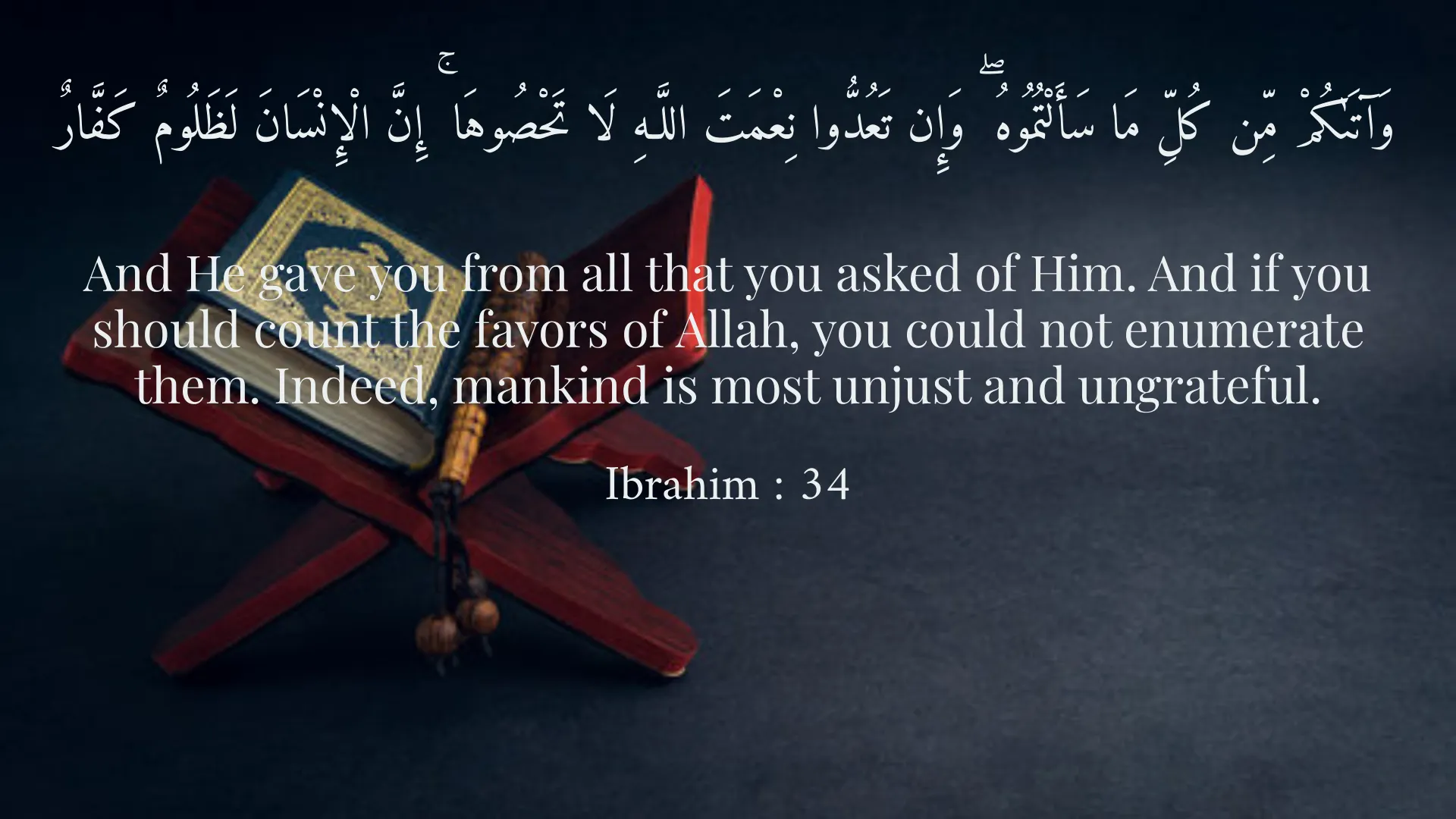
In the Holy Quran, the topic of ingratitude and certain human characteristics is addressed with profound clarity and depth. A striking illustration of this can be found in Surah Ibrahim, verse 34, where Allah states, 'And He gave you from all that you asked of Him. And if you should count the favors of Allah, you could not enumerate them. Indeed, mankind is most unjust and ungrateful.' This verse serves as a poignant reminder to humanity about the multitude of blessings bestowed upon them by the Creator. The enormity of these blessings is such that it exceeds the capability of humans to accurately account for them. Yet, astonishingly, many individuals, despite being enveloped in divine favors and provisions, find themselves engaging in acts of ingratitude, failing to acknowledge or express gratitude for these blessings. The concept of ingratitude is intricately woven into the fabric of human nature. It can be attributed to various psychological and social factors, including neglect, selfishness, and a profound lack of appreciation for what has been graciously provided by Allah. Individuals often fall into a trap of taking these blessings for granted, becoming indifferent to the warmth of God's mercy that surrounds them. The Islamic perspective emphasizes the importance of recognizing and valuing the divine gifts one receives in life. This acknowledgment is not merely a matter of commendation; it serves as an essential component of one's faith and spiritual well-being. To further understand the implications of ingratitude, we can turn to additional verses in the Quran. Surah Luqman, verse 34, proclaims, 'Indeed, Allah is All-Knowing of the unseen and what every soul earns.' This powerful statement reinforces the notion that Allah holds full awareness of human intentions, thoughts, and actions. It acts as a reminder that no matter how one chooses to behave outwardly, the inner workings of the heart are laid bare before the Almighty. This surveillance from Allah instills a deep sense of responsibility in individuals, urging them to reflect upon their actions, particularly their expressions of gratitude and the recognition of His favors. Ingrate behavior can be seen as a form of self-oppression. A person who negates or shows aloofness towards the bounties of God ultimately subjects themselves to a life void of appreciation and realization of joy. This state of ingratitude is often born out of a spiritual disconnect, a forgetfulness of God’s mercy, and an undervaluation of the blessings littering one’s path. One of the most straightforward yet profound observations one can make in understanding ingratitude is the idea of spiritual blindness. A heart that struggles to perceive and recognize Allah's favors may often be trapped in a cycle of discontent, constantly yearning for more without truly appreciating what has already been given. The Quran serves as a guide to encourage mankind to look beyond their immediate challenges and appreciate the countless blessings present in their lives. Moreover, ingratitude can diminish an individual's sense of happiness and fulfillment. In a fast-paced world where consumerism is rampant, many individuals equate happiness with material gain. This misalignment leads to an incessant chase for more possessions, promotions, or social validation while neglecting the simple yet profound blessings of good health, family, friendships, and the beauty of creation. Hence, gratitude involves a conscious recognition of what one has, framed by a perspective of appreciation and understanding. The impact of gratitude extends beyond the individual; it has the potential to induce a ripple effect on society at large. When individuals embrace and express gratitude, they contribute to a positive and nurturing environment. In communities where gratitude flourishes, relationships strengthen as bonds deepen, and social cohesion is fostered. People become more inclined to support one another, creating a culture rooted in compassion and mutual respect. Additionally, the practice of gratitude can have profound psychological and emotional benefits. Research has shown that individuals who regularly express gratitude experience lower levels of stress and depression, enhanced overall mental health, increased longevity, and deeper relationships. This observation aligns seamlessly with Islamic teachings that emphasize gratitude as a core element of faith and daily practice. Incorporating gratitude into one's daily routine serves as a powerful tool for personal transformation. Practical ways to embrace gratitude can include keeping a gratitude journal, where individuals can reflect on daily blessings, as well as engaging in acts of charity, reflecting on Allah's gifts, and verbally expressing appreciation towards others and towards Allah. These practices enhance mindfulness, foster positive emotions, and cultivate a profound sense of awareness of the divine. Ultimately, the act of gratitude is not merely about vocalizing thanks; it is about developing a heartfelt recognition of the beauty and abundance surrounding us. In conclusion, ingratitude is a complex characteristic of human behavior that stems from various factors including neglect, selfishness, and a lack of appreciation for divine blessings. A reminder from the Quran emphasizes the need for mindfulness and recognition of Allah's generosity. Both Surah Ibrahim and Surah Luqman serve as poignant reflections on the importance of gratitude in fostering not only spiritual growth but also personal fulfillment and societal well-being. Recognizing and valuing God's countless gifts enables individuals to break free from the chains of ingratitude, allowing them to live a more fulfilling and enriched life. Gratefulness is not merely an acknowledgment; it is a pathway to deeper connections with ourselves, our communities, and our Creator.
Related Verses
وَآتَىٰكُمْ مِّن كُلِّ مَا سَأَلْتُمُوهُ ۖ وَإِن تَعُدُّوا نِعْمَتَ اللَّـهِ لَا تَحْصُوهَا ۚ إِنَّ الْإِنْسَانَ لَظَلُومٌ كَفَّارٌ
And He gave you from all that you asked of Him. And if you should count the favors of Allah, you could not enumerate them. Indeed, mankind is most unjust and ungrateful.
Ibrahim : 34
إِنَّ اللَّـهَ عَالِمُ الْغَيْبِ وَمَا تُكْسِبُ كُلُّ نَفْسٍ
Indeed, Allah is All-Knowing of the unseen and what every soul earns.
Luqman : 34
Short Story
Once upon a time, a man named Ali was oblivious to Allah and never considered the blessings granted to him. Every day he complained about his life, not realizing that Allah had blessed him with many gifts. One day, he visited a friend and noticed that his friend lived in poverty and hardship. Ali suddenly awakened and realized how often he had been ungrateful in his life. He decided from that day on to be grateful to Allah and to acknowledge His blessings.