Quranic Answer
This is a profound and meaningful question that delves into the essence of human motivations and our relationship with our Creator. In the teachings of the Holy Quran, both the place of fear and the place of love are expounded upon as two fundamental wings for soaring towards perfection and closeness to God. Human beings are naturally driven by various motivations that shape their actions; some of these motivations stem from the fear of consequences and punishments, while others originate from a heartfelt affection and yearning for the Absolute Beloved, Almighty God. Fear in the Quran: A Constructive Awe The Quran refers to a type of fear that is not only commendable but also a catalyst for growth and guidance. This fear is termed 'Khawf' or 'Taqwa' (God-consciousness/piety). Taqwa means self-restraint and mindfulness, stemming from an understanding of God's infinite majesty and power, and an awareness of human responsibilities towards Him. This is not fear of God in the sense of fearing a tyrant, but rather a fear of neglecting divine rights, a fear of heedlessness and shortcomings in fulfilling duties, and a fear of the otherworldly consequences of sins. This is a constructive awe that leads a person to observe divine boundaries, avoid prohibitions, and perform obligations. Allah repeatedly emphasizes the importance of Taqwa in numerous verses. For example, in Surah Al-Imran, verse 102, He says: "O you who have believed, fear Allah as He should be feared and do not die except as Muslims." This verse indicates that Taqwa is not merely a recommendation but a necessity for preserving faith and achieving salvation. The fear of divine retribution and the torment of Hell is a powerful incentive to avoid sins and move towards righteous deeds. Many people, at the beginning of their faith journey, engage in worship and obedience under the influence of this fear and hope for reward, and this is a natural and necessary stage. Love in the Quran: The Pinnacle of Servitude and Knowledge However, the Quran also speaks of a higher level of motivation: 'love' or 'mahabbah' for Allah. This level is attained when a person achieves a deeper understanding of God, comprehends His beautiful names and attributes of beauty and perfection, and becomes immersed in His countless graces and blessings. In this state, actions are performed not out of fear of punishment, but out of love and yearning for union and satisfaction of the true Beloved. This is the station alluded to in Surah Al-Baqarah, verse 165: "But those who believe are stronger in love for Allah." This intense love causes a person to dedicate their entire being and existence to the satisfaction of their Lord. Actions performed out of love are accompanied by greater pleasure, passion, and sincerity, and in them, one seeks neither paradise nor fears hell, but solely the pleasure of the Beloved. The Quran, in Surah Al-Imran, verse 31, also outlines the path to divine love: "Say, 'If you should love Allah, then follow me, [so] Allah will love you and forgive you your sins. And Allah is Forgiving and Merciful.'" This verse indicates that love for Allah requires following His messenger, Prophet Muhammad (PBUH), and by acting upon divine commands, this love becomes reciprocal, and Allah will also love His servant. This level of love is 'Ihsan,' which is defined in the Hadith of Gabriel as the highest degree of faith: "To worship Allah as if you see Him, for if you do not see Him, He surely sees you." Actions performed out of love and Ihsan possess greater purity and permanence, and they are signs of the depth of one's faith and knowledge. The Balance Between Fear and Love The Quran teaches us that the ideal state is to strike a balance between these two motivations: fear of punishment and hope for mercy. These two are like two wings that enable the bird of faith to soar in the path of servitude. Fear prevents rebellion and sin, while hope encourages good deeds and prevents despair. Ultimately, love makes this path meaningful, sweet, and enduring. Those who worship solely out of fear may cease their worship when fear diminishes or disappears. And those who rely only on hope for mercy may fall into heedlessness and false assurance. But when love and affection become the central axis, fear and hope serve it, and servitude reaches its peak. This means reaching a point where performing good deeds is not merely a duty but an inner pleasure and need. How to Transform Actions from Fear to Love? Transforming actions from fear-driven to love-driven is a gradual process requiring knowledge and self-purification. The Quran offers several strategies for this purpose: 1. Increase Knowledge: By studying and reflecting upon the verses of the Quran and the divine names and attributes, we better understand the majesty, beauty, perfection, mercy, and power of Allah. The more our knowledge of God increases, the deeper our love will become. 2. Gratitude: Constantly reflect on Allah's countless blessings and be grateful. Gratitude opens the doors of love to the heart. 3. Constant Remembrance (Dhikr): Through Dhikr and remembrance of Allah in all states, we make His presence prominent in our lives. Dhikr enlivens the heart and ignites love. 4. Worship with Presence of Heart: Strive to perform prayers, supplications, and other acts of worship with full presence of heart and concentration on their meanings, not just as mechanical habits. This presence increases the sense of connection and closeness to the Beloved. 5. Service to Creation: By being good and serving others, we seek divine pleasure. These good deeds manifest love for Allah and cause Allah to love us in return. 6. Contemplation of Creation: Reflect on Allah's signs in the horizons and within ourselves (nature, our own bodies, the universe) to understand the power, wisdom, and beauty of creation, and thereby realize the greatness of the Creator. Ultimately, the Quran aims to nurture human beings who worship their Lord not only out of fear and greed, but out of deep love and knowledge, dedicating their entire lives to His satisfaction. This transformation is a path to true tranquility and eternal bliss.
Related Verses
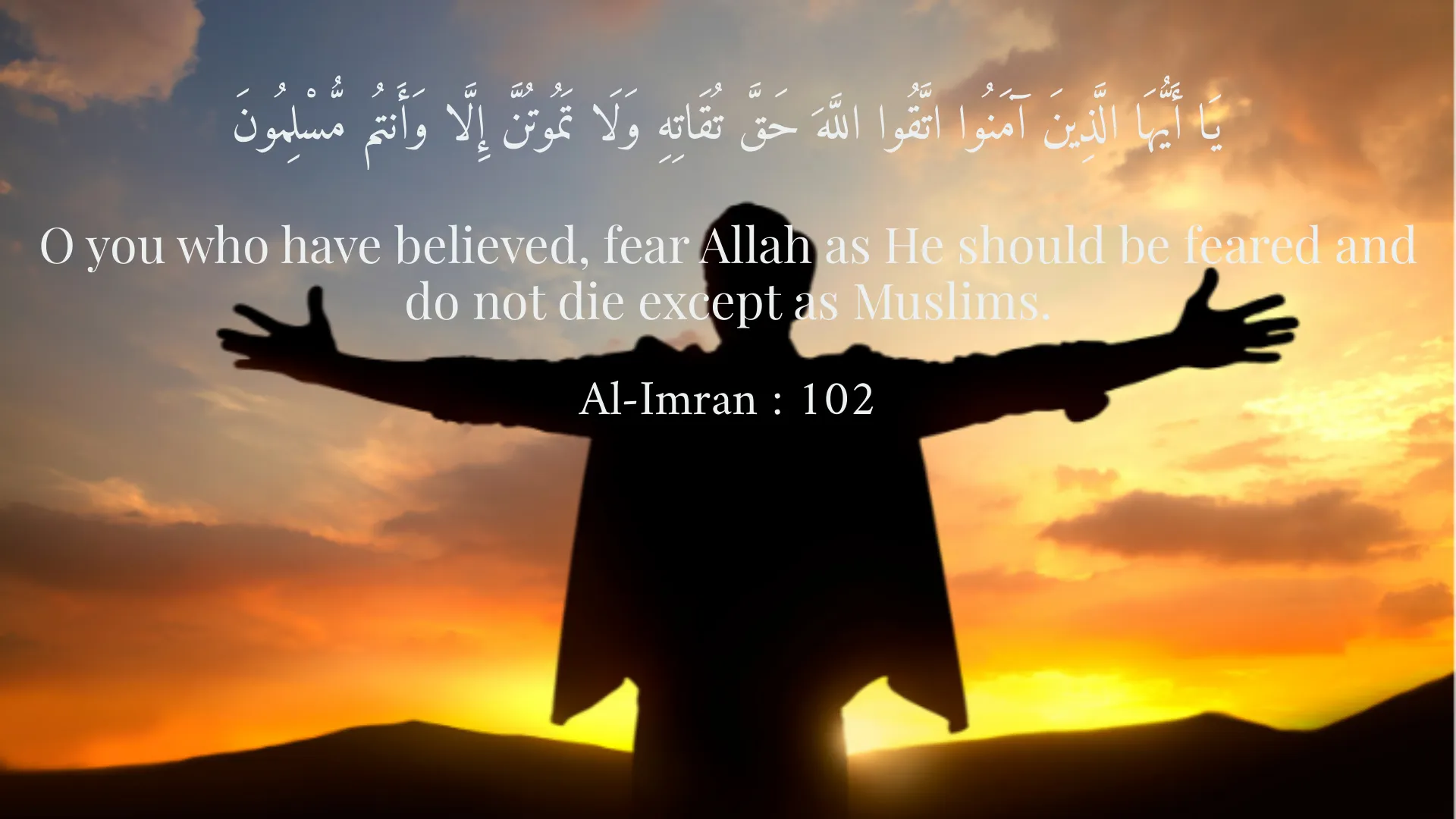
يَا أَيُّهَا الَّذِينَ آمَنُوا اتَّقُوا اللَّهَ حَقَّ تُقَاتِهِ وَلَا تَمُوتُنَّ إِلَّا وَأَنتُم مُّسْلِمُونَ
O you who have believed, fear Allah as He should be feared and do not die except as Muslims.
Al-Imran : 102
وَمِنَ النَّاسِ مَن يَتَّخِذُ مِن دُونِ اللَّهِ أَندَادًا يُحِبُّونَهُمْ كَحُبِّ اللَّهِ ۖ وَالَّذِينَ آمَنُوا أَشَدُّ حُبًّا لِّلَّهِ ۗ وَلَوْ يَرَى الَّذِينَ ظَلَمُوا إِذْ يَرَوْنَ الْعَذَابَ أَنَّ الْقُوَّةَ لِلَّهِ جَمِيعًا وَأَنَّ اللَّهَ شَدِيدُ الْعَذَابِ
And [yet], among the people are those who take other than Allah as equals [to Him]. They love them as they should love Allah. But those who believe are stronger in love for Allah. And if only those who have wronged would consider when they see the punishment that all power belongs to Allah and that Allah is severe in punishment.
Al-Baqarah : 165
قُلْ إِن كُنتُمْ تُحِبُّونَ اللَّهَ فَاتَّبِعُونِي يُحْبِبْكُمُ اللَّهُ وَيَغْفِرْ لَكُمْ ذُنُوبَكُمْ ۗ وَاللَّهُ غَفُورٌ رَّحِيمٌ
Say, [O Muhammad], 'If you should love Allah, then follow me, [so] Allah will love you and forgive you your sins. And Allah is Forgiving and Merciful.'
Al-Imran : 31
Short Story
It is narrated that in ancient times, there was a devout worshipper who spent his days and nights in devotion. Whenever he was asked, "Why do you undertake such hardship?", he would reply, "Out of fear of Hell and yearning for Paradise." One day, a wise old man passed by him and said, "Young man, your worship is good, but have you ever considered that there is a motive even nobler than fear and hope?" The youth asked in astonishment, "What motive?" The elder replied, "Love! Love for the Lord Himself. If you love Him so much that neither Hell nor Paradise can deter you from Him, then your worship will take on a different color and transform from fear-driven servitude to eager union. This is when the servant prostrates, not out of fear of punishment or greed for reward, but solely for the pleasure of their Beloved." The youth pondered this, and from that day forward, in every prayer, he contemplated the greatness and mercy of God until His love took root in his heart. His actions transformed from fear to love, and he tasted the sweetness of true servitude.