Quranic Answer
In the Holy Quran, several core concepts such as conscience, piety, and responsibility towards others are recurrently highlighted, forming the foundation of Islamic ethical teachings. These concepts are not only pivotal for personal morality but also essential for communal harmony. People who appear heartless often signify a profound detachment from God and Islamic precepts, suggesting a significant moral decline. The Quran extensively discusses the importance of maintaining a heartfelt connection to faith and the resulting behaviors that stem from this connection. In Surah Al-Baqarah, verse 143, Allah commands believers to remain steadfast in their faith while cultivating a heart filled with piety and mercy. This scriptural injunction indicates that when individuals disengage from their pious duties and the essence of their faith, they may exhibit behaviors that are, at best, indifferent to the suffering of others. The phrase 'heartlessness' can thus be interpreted as a manifestation of weakened faith, illustrating a departure from essential moral and ethical tenets. The heart, symbolizing the seat of emotions and beliefs, must remain engaged with the divine and the moral teachings of Islam. Furthermore, Surah At-Tawbah, verse 67, recounts that 'The hypocrites are not good,' thereby emphasizing that those who perform actions devoid of sincerity eventually lose touch with their humanity and conscience. This verse sheds light on a critical aspect of hypocrisy—insincerity—which leads to the deterioration of empathy and compassion towards others. Such individuals often prioritize their self-interests over the welfare of the community, fostering an environment where heartlessness thrives. The Quran portrays a direct correlation between spiritual neglect and moral decay. When people withdraw from their sacred obligations to God, they risk becoming immunized to the needs of others. Consequently, their actions reflect a jarring disconnection from compassion and empathy, guiding them towards inhumane behaviors. The degradation of conscience and a sense of responsibility towards fellow beings can easily be traced back to this spiritual estrangement. Conversely, the Quran reassures believers that by drawing closer to God and prioritizing piety as a life principle, one enhances their capacity to embody humanity and conscience. Genuine piety is transformative; it inspires individuals to act selflessly, cultivating not just personal virtues but also establishing a culture of empathy within society. The encircled space of faith that promotes responsibility ensures that the hearts of believers remain soft and responsive to the plight of others, nurtured by regular acts of kindness, charity, and a deep-seated commitment to justice. This examination of heartlessness can be approached from two fundamental dimensions: the distance from God and religious teachings, and the lack of responsibility towards others. First, the spiritual disconnection often translates into a tangible indifference towards societal issues. This disconnect can result from various factors, including personal grievances, societal pressures, or disillusionment with faith due to real or perceived injustices. Each of these factors can lead to a gradual erosion of empathy and a corresponding increase in self-centered behavior. Second, the obligation towards others is palpable in Islamic teachings. The Quran emphasizes that believers hold a responsibility not only towards their families and communities but also towards humanity at large. Acts of charity, known as Zakat, and the practice of compassion towards the less fortunate are recurrent themes in Islamic doctrine. Heartlessness often implies a failure to fulfill these essential responsibilities, leading to societal discord and the fragmentation of communal ties. Muslims are called to live lives reflective of the teachings in the Quran, where empathy, kindness, and understanding sit at the forefront. Moreover, fostering a conscious commitment to develop one’s inner moral compass is vital. In the societal sphere, this can manifest as participation in community service, advocacy for justice, and creating safe spaces for dialogue and understanding across diverse groups. Enabling empathy as paramount encourages individuals to recognize their shared humanity, pushing them towards amicable resolutions and understanding. As we navigate through life, the teachings of the Quran serve as a powerful reminder of the inherent duty each individual has to cultivate their conscience and prioritize human feelings. It is through this conscious effort—rooted in the ascription to divine guidance and others' welfare—that we can combat the heartlessness that plagues our society. By striving to learn from within and adhering to the teachings of Islam, believers can create a world where compassion takes precedence over indifference, unity triumphs over division, and humanity shines brightly amidst adversity. In conclusion, the heartlessness exhibited by some individuals is a reflection of their distancing from God and sacred principles. In contrast, returning to the core tenets of faith, including mercy and compassion, can renew both individual and collective humanity. The conscious choice to maintain one's relationship with the divine enhances our moral faculties, ensuring we embody the virtues dictated by our faith. Thus, learning from the Quranic teachings, we can prioritize our conscience and human feelings, forging paths of greater empathy in our interactions with one another.
Related Verses
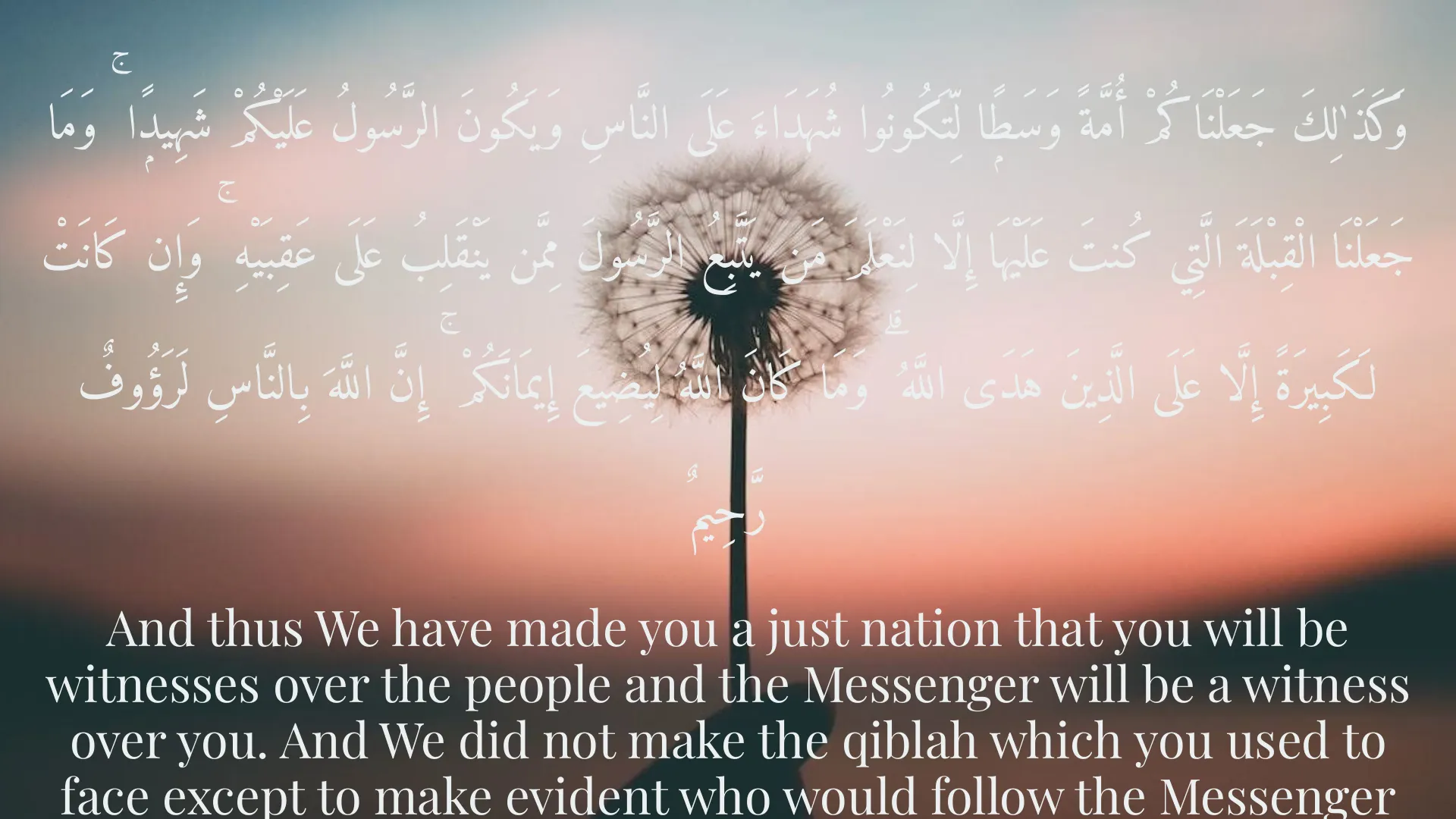
وَكَذَٰلِكَ جَعَلْنَاكُمْ أُمَّةً وَسَطًۭا لِّتَكُونُوا شُهَدَاءَ عَلَى النَّاسِ وَيَكُونَ الرَّسُولُ عَلَيْكُمْ شَهِيدًۭا ۚ وَمَا جَعَلْنَا الْقِبْلَةَ الَّتِي كُنتَ عَلَيْهَا إِلَّا لِنَعْلَمَ مَن يَتَّبِعُ الرَّسُولَ مِمَّن يَنْقَلِبُ عَلَى عَقِبَيْهِ ۚ وَإِن كَانَتْ لَكَبِيرَةً إِلَّا عَلَى الَّذِينَ هَدَى اللَّهُ ۗ وَمَا كَانَ اللَّهُ لِيُضِيعَ إِيمَانَكُمْ ۚ إِنَّ اللَّهَ بِالنَّاسِ لَرَؤُوفٌ رَّحِيمٌ
And thus We have made you a just nation that you will be witnesses over the people and the Messenger will be a witness over you. And We did not make the qiblah which you used to face except to make evident who would follow the Messenger and who would turn back on his heels. And indeed, it was great except for those whom Allah guided. And Allah would not make your faith lose; indeed Allah is Subtle and Merciful to the people.
Al-Baqarah : 143
وَٱلْمُرَآءُونَ غَيْرُ حَسَنِينَ
And the hypocrites are not good.
At-Tawbah : 67
Short Story
One day, a man sat by the river, looking at the water. He thought about how successful his life had been but how heartless and unfeeling he felt inside. He decided to pray and ask God to grant him a sense of humanity and love for others. Hours later, he saw a child fall into the water and rushed to save him. That day, he learned that humanity and conscience make life more beautiful.