Quranic Answer
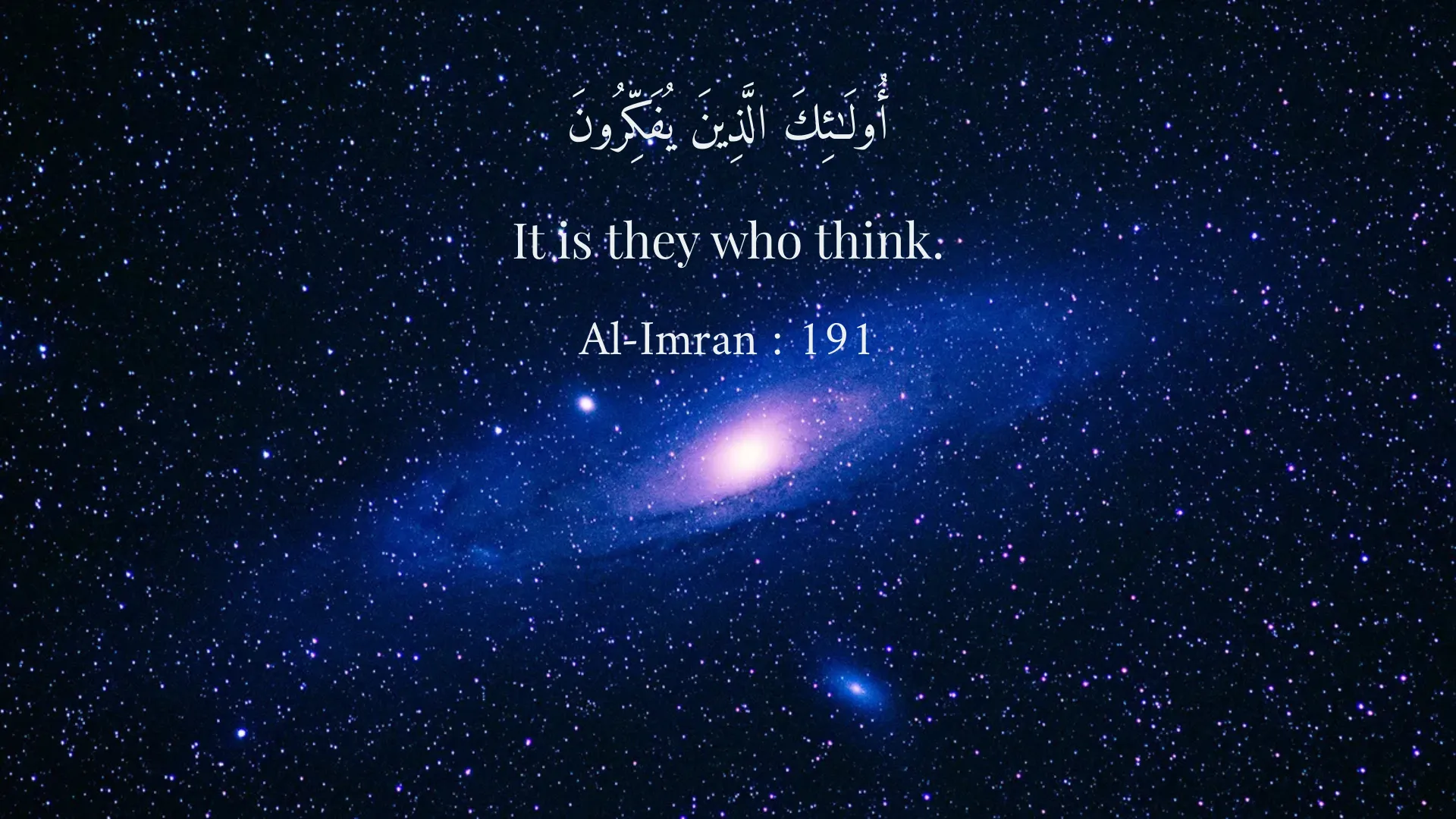
In the Holy Quran, thinking and reasoning are presented as vital characteristics of the believers. This emphasis on intellectual engagement offers profound insights into the nature of faith and spirituality within Islamic teachings. The Quran is not merely a religious text but an invitation to cultivate a reflective mindset and to seek wisdom and understanding through contemplation and reasoning. In this article, we will delve deeply into these concepts, highlighting various Quranic verses, and exploring the implications of thought and reasoning in the life of a believer. One of the central verses that underscores the importance of reflection is found in Surah Al-Imran, verse 191. Here, God invites believers to ponder over the cosmos and the signs of creation: "And in the creation of the heavens and the earth, and the alternation of the night and the day, there are signs for those of understanding." This verse serves as a call to contemplate the wonders of the universe, urging individuals to recognize the intricacies and majesty of creation. The phrase "those of understanding" denotes not just intellectual capability but also an active engagement with these signs. It is an encouragement to delve deep into the meanings behind what is perceived, allowing for personal growth and a stronger connection with the divine. Conversely, the Quran highlights the lack of thought as a trait of ignorant and negligent individuals. In Surah Al-Jathiya, verse 23, it reads: "Have you seen he who has taken as his god his own desire, and Allah has left him astray due to knowledge and sealed his hearing and his heart and put over his vision a veil?" This verse poignantly illustrates how succumbing to personal desires can lead an individual away from true understanding and wisdom. Ignoring the signs of God results in a state of spiritual blindness and deafness, indicating that the failure to reflect and reason leads not only to ignorance but also to an estrangement from the divine truth. It is essential to consider that one of the significant roots of a lack of thought can emerge from ignorance and a deficit of knowledge. In Surah Al-Baqarah, verse 269, God elucidates this point by stating: "He grants wisdom to whom He wills, and whoever has been given wisdom has certainly been given much good." Here, wisdom is portrayed as a divine gift, one that enriches the life of the recipient considerably. This suggests that acquiring knowledge and wisdom is not merely the results of human endeavor but rather a blessing from God. Thus, those who find themselves steeped in ignorance are often distanced from the truths of existence, rendering them incapable of meaningful contemplation. The Quran consistently underscores the necessity of thought and reasoning as cornerstones of a believer's journey. Engaging with these concepts opens a pathway to a deeper understanding of life’s truths and the broader universe. Believers are encouraged not only to seek knowledge but to borderlessly reflect upon it—transforming mere information into wisdom through contemplation. This dual approach—acquisition of knowledge through study and reflection—becomes a comprehensive methodology for navigating the complexities of life. Moreover, the Quran emphasizes that neglecting thought is not merely a personal loss but impacts one's relationship with God and the broader community. When individuals abandon the practice of reflection, they risk perpetuating cycles of ignorance, which can lead to societal discord and misunderstanding. As the Quran advocates for sound reasoning and interpretation, believers are called to foster an environment where questioning and reflection are not only welcomed but encouraged. This process is crucial in addressing misconceptions and forging a deeper, authentic relationship with the divine. The significance of thought and reasoning extends beyond personal spirituality; it influences moral and ethical decision-making. In Islam, the capacity to think critically and reflectively is indispensable for establishing justice, compassion, and empathy in interpersonal relations. When believers engage thoughtfully with the world, they become active participants in fostering a just society aligned with Islamic principles. Reflection leads to understanding, which in turn cultivates a sense of responsibility towards oneself and others. Additionally, the Quran’s call to intellectual engagement remains relevant in contemporary times. As society becomes increasingly complex, with rapid advancements in technology and science, the need for thoughtful engagement grows ever more imperative. The teachings of the Quran encourage believers to utilize their intellect to navigate these changes, ensuring that faith and rationality coexist harmoniously. By integrating the values of reflection and reasoning into everyday life, believers can contribute positively to the world around them. Furthermore, the barrier to thoughtful engagement often stems from societal pressures and cultural conditioning. In many instances, people might find themselves sidelined by prevalent ideologies that discourage questioning or critical analysis. However, the Quran provides a counter-narrative, advocating for inquisitiveness and the pursuit of knowledge as a sacred pursuit. Thus, believers must strive to cultivate an environment that celebrates inquiry, encouraging themselves and others to ask difficult questions and seek out answers without fear of ridicule or condemnation. Ultimately, the Quran presents a compelling case for thought and reasoning as vital components of faith. It challenges believers to move beyond superficial assumptions and engage with the essence of their beliefs. The call for contemplation is not confined to the natural world but extends to the inner landscape of the individual as well, urging self-examination and ethical reflection. As Muslims navigate their journeys of faith, embracing the principles of thought and reasoning serves as a guiding beacon, illuminating the path towards a deeper understanding of their beliefs and the world. In conclusion, the Holy Quran's rich tapestry of verses emphasizes that thinking and reasoning are indispensable for believers. Reflecting upon the signs of creation, shedding light on ignorance, and actively seeking wisdom are integral steps towards spiritual growth. The teachings encourage Muslims to engage with life dynamically, forging a deeper relationship with the divine while contributing positively to their communities. By valuing thought and reflection, believers are empowered to transform their understanding of existence, finding depth, and meaning in their journey of faith.
Related Verses
أُولَـٰئِكَ الَّذِينَ يُفَكِّرُونَ
It is they who think.
Al-Imran : 191
أَفَرَأَيْتَ مَنِ اتَّخَذَ إِلَٰهَهُ هَوَاهُ وَأَضَلَّهُ اللَّهُ عَلَىٰ عِلْمٍ
Have you seen he who has taken as his god his own desire, and Allah has left him astray due to knowledge?
Al-Jathiya : 23
يُؤتي الحكمةَ مَن يَشاءُ
Allah gives wisdom to whom He wills.
Al-Baqarah : 269
Short Story
One day a man was lost and exhausted in the heart of the forest. He was confused and disheartened, wondering why everything seemed out of place. Suddenly, he remembered God and began to think about his life and his behavior. He realized why he had been indifferent and careless in some matters of life. He decided from then on to pay more attention to the Quran and its verses, and to contemplate his life more.