Quranic Answer
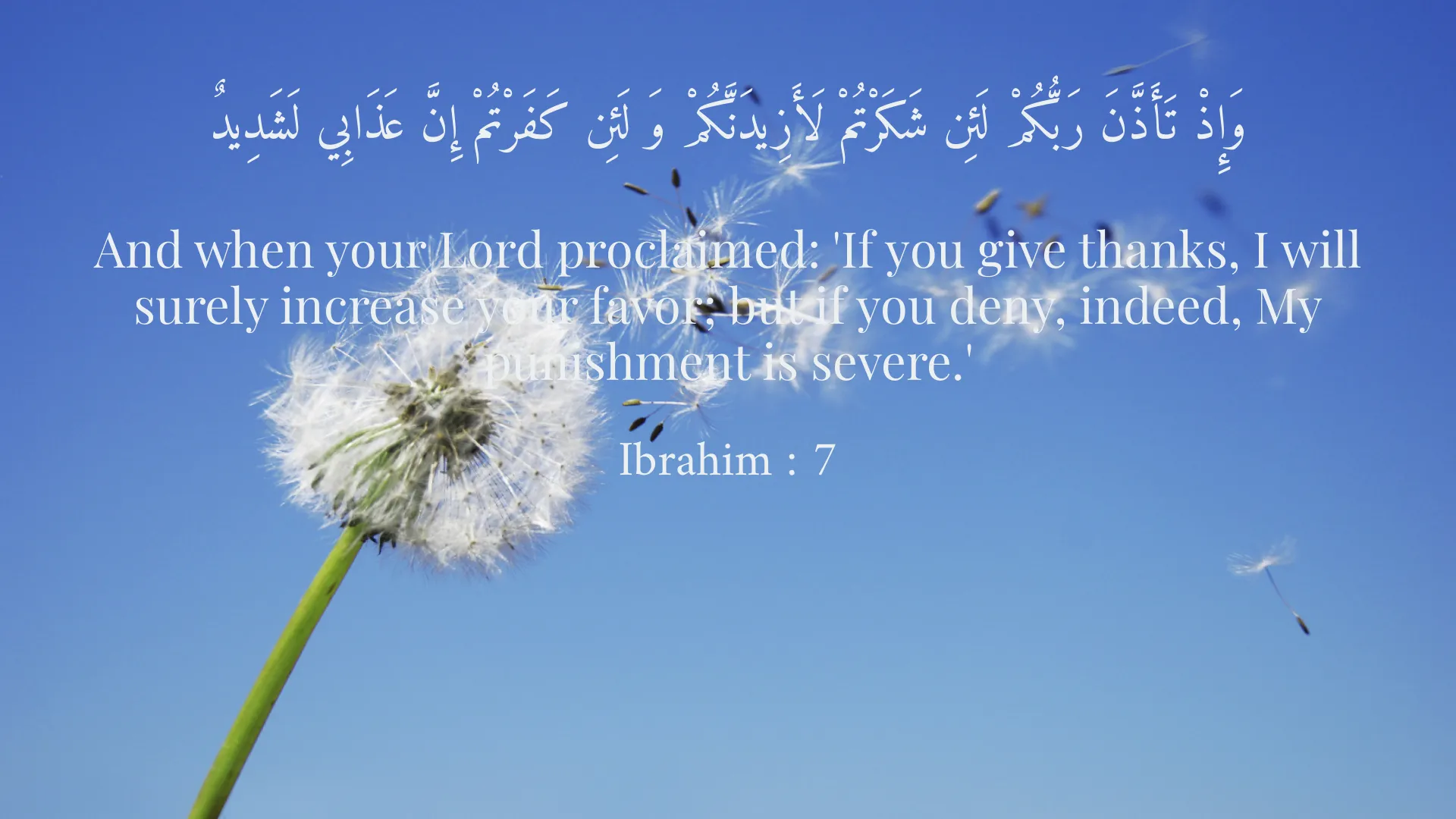
Gratitude is a concept deep-rooted in various cultures and religions, yet it holds a particularly significant position in Islam. The Holy Quran, the holy book of Muslims, repeatedly emphasizes the importance of gratitude, illustrating how essential it is for a fulfilling and spiritually enriched life. Allah invites humans to recognize His blessings and express their gratitude consistently. As we delve into the teachings of the Quran, especially in Surah Ibrahim, it becomes clear that gratitude is not merely a polite expression but a vital aspect of faith. In verse 7 of this Surah, it states: 'And when your Lord proclaimed: 'If you give thanks, I will surely increase your favor; but if you deny, indeed, My punishment is severe.' This profound verse underlines two crucial points: first, that gratitude can lead to an increased bounty from Allah, and second, that ingratitude can result in the abandonment of divine mercy and the advent of punishment. Understanding the implications of this verse is essential. Gratitude, it suggests, is a catalyst that transforms our relationship with the Divine and enhances our lives. It fosters a cycle of positive reinforcement, where recognizing and appreciating the gifts we have can lead to receiving even more blessings. On the other hand, the danger of ingratitude looms large. It can create a disconnect between oneself and the spiritual abundance available. In ingratitude, one might find themselves estranged from the innate joys and pleasures of life, leading possibly to spiritual and emotional turmoil. People may fall into ingratitude for various reasons, the first of which is the common oversight of the blessings they already possess. In the fast-paced world that many of us inhabit, it is easy to become enmeshed in our daily routines and the constant cycle of worries and responsibilities. Work, relationships, and societal pressures can dominate our minds, overshadowing the myriad blessings that surround us. Individuals may forget the warmth of familial bonds or the beauty of health and well-being amid the hustle and bustle of life. This neglect of recognizing what they have often leads to a lack of appreciation. Additionally, comparison is another significant contributor to ingratitude. Social media, advertising, and societal standards frequently bombard us with images and narratives that portray an idealized lifestyle, leading many to engage in unhealthy comparisons with others. When individuals focus on what their neighbors, friends, or public figures possess, they may begin to overlook the abundant gifts present in their lives. This constant comparison can foster feelings of inadequacy and discontent, leading to a barren acknowledgment of one’s possessions and capabilities. Moreover, human nature tends to forget the depth and breadth of the blessings afforded to them. People are often unaware or fail to acknowledge the complexities of the gifts in their lives – such as a supportive family, access to education, robust health, and the freedom to practice their faith without fear – which can easily devolve into feelings of ungratefulness. These fundamental aspects are paramount to our well-being but tend to become background noise against the chaos of worldly commitments. The Quran strongly emphasizes the negative consequences of ingratitude. Numerous verses serve as reminders that ungrateful behavior distances individuals from the mercy and favors of Allah, leading to deprivation of provisions, peace, and even spiritual tranquility. The Quran, therefore, serves as a moral compass guiding humans to consistently count their blessings, fostering an environment conducive to spiritual growth and life improvement. One effective means to cultivate gratitude is through the practice of mindful awareness. By taking the time to reflect on our blessings, we can develop a profound appreciation for all that Allah has granted us. Simple practices such as journaling about what we are thankful for daily or performing specific prayers of thanks can help individuals shift focus from what they lack to what they have. Moreover, Muslims are encouraged not only to feel gratitude internally but also to express it outwardly. Giving thanks can take various forms, from verbalizing appreciation to Allah through prayers to performing acts of kindness that reflect gratitude in action. These expressions not only enrich the individual's spiritual journey but also serve as a beacon of goodness in the community, inspiring others to recognize and appreciate their blessings. Furthermore, it is crucial for individuals to practice patience and contentment. Understanding that life is a journey filled with ups and downs is essential. Rather than allowing temporary setbacks to overshadow the multitude of blessings one possesses, embracing a mindset of resilience can foster a deeper sense of gratitude. Being content amid life’s hardships encourages individuals to look beyond their immediate circumstances and see the bigger picture – a life filled with opportunities for growth, learning, and connection. In conclusion, the consistent emphasis on gratitude in the Holy Quran reveals its significance in leading a spiritually fulfilling life. Recognizing our blessings not only enhances our relationship with Allah but also improves our emotional and mental states. The Quran’s teachings invite all believers to nurture an attitude of gratitude through awareness, mindfulness, and expression. By steering clear of harmful comparisons and acknowledging the abundance that permeates our lives, we position ourselves to truly embrace the divine bounty bestowed upon us. Consequently, gratitude becomes not just a value but a transformative power, reshaping lives and inviting fruitful rewards. Therefore, let us all heed the Divine call to give thanks, for indeed, as affirmed in the Quran, gratitude leads to the increase of favor from our Lord.
Related Verses
وَإِذْ تَأَذَّنَ رَبُّكُمْ لَئِن شَكَرْتُمْ لَأَزِيدَنَّكُمْ وَ لَئِن كَفَرْتُمْ إِنَّ عَذَابِي لَشَدِيدٌ
And when your Lord proclaimed: 'If you give thanks, I will surely increase your favor; but if you deny, indeed, My punishment is severe.'
Ibrahim : 7
فَاذْكُرُونِي أَذْكُرْكُمْ وَاشْكُرُوا لِي وَلَا تَكْفُرُونِ
So remember Me; I will remember you. And be grateful to Me and do not deny Me.
Al-Baqarah : 152
وَإِن تَعُدُّوا نِعْمَةَ اللَّهِ لَا تُحْصُوهَا
And if you should count the favors of Allah, you could not enumerate them.
Al-Nahl : 18
Short Story
One day, a man was overwhelmed by the facts of his life and had distanced everything from himself. Because of daily problems and concerns, he had forgotten how much Allah had blessed him. One day while sitting in his garden, he noticed the blossoms on the trees and remembered the verses of the Quran. He realized that expressing gratitude to Allah could fill his life with peace. He decided to dedicate a minute each day to gratitude and recalling his blessings, and very soon he felt a greater sense of happiness and contentment.