Quranic Answer
In the Holy Quran, the significance of small deeds is a powerful reminder of the importance of intention and sincerity in our actions. In the fast-paced world we live in, it's easy to overlook the impact of small gestures, yet Allah emphasizes their profound value throughout the Quran. One enlightening verse is found in Surah Az-Zukhruf, Verse 32, where Allah states, 'And indeed, We do not ask for anything in return from them except gratitude.' This simple yet powerful statement underlines that even the smallest expression of thankfulness can carry immense virtue in the eyes of the Creator. It reminds believers that gratitude is not just a polite response but a deeply valued trait in their relationship with Allah. Moreover, the Quran provides numerous illustrations about the consequences of small actions. In Surah Al-Baqarah, Verse 261, Allah states, 'The example of those who spend their wealth in the way of Allah is like a seed of corn that sprouts seven ears, and in every ear there are a hundred grains.' This metaphorical representation highlights the exponential return that even a small deed can yield when performed with the right intention. It essentially conveys the message that acts of charity and kindness, no matter how small, can transform into something exceedingly great. These verses collectively convey a profound message: the essence of small deeds lies in the intention behind them. Engaging in small acts of goodness, whether it be a sincere thank you, a kind word, or an act of charity, reflects a believer's commitment to their faith. Additionally, these small acts are crucial in establishing a sincere connection with God. When individuals perform small actions out of genuine love and desire to please Allah, these deeds take on a life of their own, growing in value and reward. Furthermore, during the course of history, we have witnessed the extraordinary impact of seemingly insignificant actions. A smile shared with a stranger, a helping hand offered to someone in need, or even holding the door open for another person can ignite positive change in someone's day or life. These actions seem minor on an individual level, but they contribute significantly to a culture of kindness and compassion in society. The Quran’s exhortation to undertake such small deeds serves as a reminder that they can lead to a cumulative effect of goodness, ultimately enhancing individual lives and the community as a whole. In the Islamic tradition, small acts of kindness are not only emphasized for their immediate benefits but also for their long-lasting impact. A study by social psychologists highlights that when people engage in small, kind actions, they report increased feelings of happiness and satisfaction. This aligns with the Quranic message; when we perform good deeds, however small, we create ripples of positivity in the world that can lead to an overall improvement of our surroundings and interpersonal relationships. Additionally, when Muslims incorporate small acts of goodness into their daily routines, they foster a lifestyle rich in spirituality and connection to their faith. Even simple acts, like offering a friendly greeting or expressing appreciation, can enhance an individual's spiritual journey. Engaging daily in such actions reflects the values of empathy and service to others—core principles in Islam that help believers embody the teachings of the Quran. The habitual practice of these small deeds can assist Muslims in developing a consistent mindset of gratitude and humility. By periodically reflecting on their intentions and actions, believers create an opportunity for spiritual growth. The consciousness of consistently performing small deeds transforms mundane moments into opportunities for connection with God. When each action becomes a means to express gratitude or devotion, a deeper relationship with Allah ensues, resulting in immense rewards both in this life and the hereafter. As with any discipline, practicing small acts regularly can help individuals cultivate a habit of kindness and strengthen their faith. A simple yet powerful way to begin is by setting intentions each morning to perform at least one small, significant act throughout the day. This could take many forms, be it helping a colleague, showing compassion towards a friend, or donating to a charitable cause—even in minor amounts. By doing this, believers not only enrich their spirituality but also contribute positively to the fabric of society. Furthermore, communities can benefit immensely from encouraging small acts of kindness among members. Muslim leaders and teachers should advocate for a culture that celebrates and recognizes such deeds. Recognition can come through informal praise among peers, sharing stories of kindness in community gatherings, or arranging events that challenge members to perform small acts of goodness. Such initiatives can lead to increased engagement, loyalty, and a stronger sense of community. In conclusion, the essence of small deeds in Islam cannot be overstated. The Quran teaches that even the simplest actions, when done with good intention and sincere faith, can lead to profound outcomes. In a world that often emphasizes grand gestures, it is essential for every Muslim to pay attention to these minor actions, incorporating them into their daily lives. By doing so, they honor their faith, foster deeper connections with Allah, and contribute positively to the world around them. The Islamic tradition encourages believers to recognize the immense value of small deeds, affirming that they play a crucial role in shaping both the individual's spiritual journey and the collective moral framework of society.
Related Verses
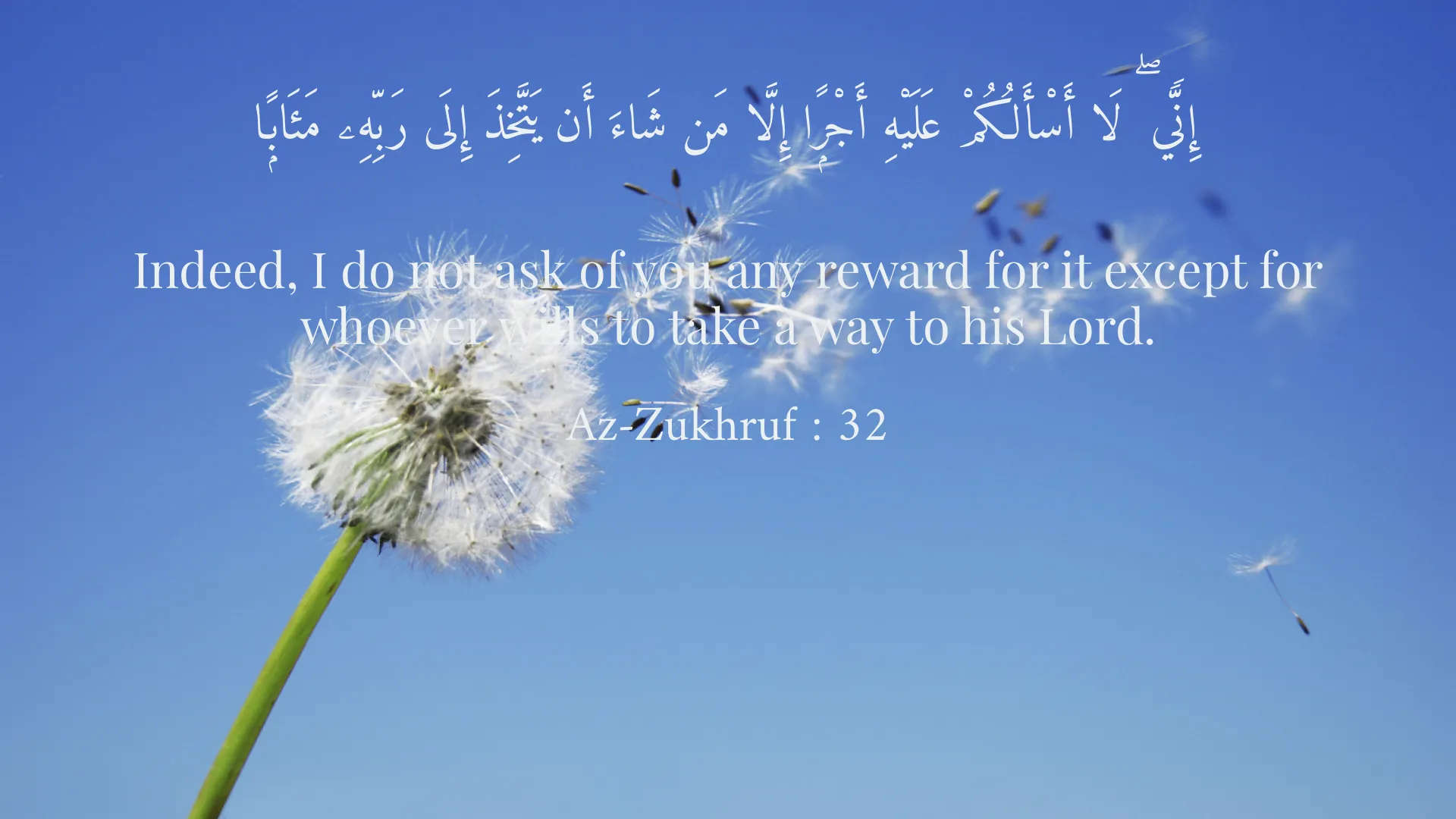
إِنََّّي ۖ لَا أَسْأَلُكُمْ عَلَيْهِ أَجْرًۭا إِلَّا مَن شَاءَ أَن يَتَّخِذَ إِلَى رَبِّهِۦ مَئَابًۭا
Indeed, I do not ask of you any reward for it except for whoever wills to take a way to his Lord.
Az-Zukhruf : 32
مَثَلُ الَّذِينَ يُنفِقُونَ أَمْوَالَهُمْ فِي سَبِيلِ اللَّهِ كَمَثَلِ حَبَّةٍ أَنبَتَتْ سَبْعَ سُنبُلَاتٍ فِي كُلِّ سُنبُلَةٍ مِّئَةُ حَبَّةٍ ۗ وَاللَّهُ يُضَاعِفُ لِمَن يَشَاءُ ۗ وَاللَّهُ سَمِيعٌ عَلِيمٌ
The example of those who spend their wealth in the way of Allah is like a seed of corn that sprouts seven ears, and in every ear there are a hundred grains. Allah multiplies His reward for whom He wills. And Allah is Hearing and Knowing.
Al-Baqarah : 261
Short Story
One day, Adel lived in a small village and was busy with his simple daily tasks. He always tried to help others. One day, a woman approached Adel and asked for help. He immediately rushed to assist her and with his small but valuable act, brought joy to her. This small deed reminded him of the Imam and made Adel recall the Quranic verses that emphasize how God values even the smallest good deeds.