Quranic Answer
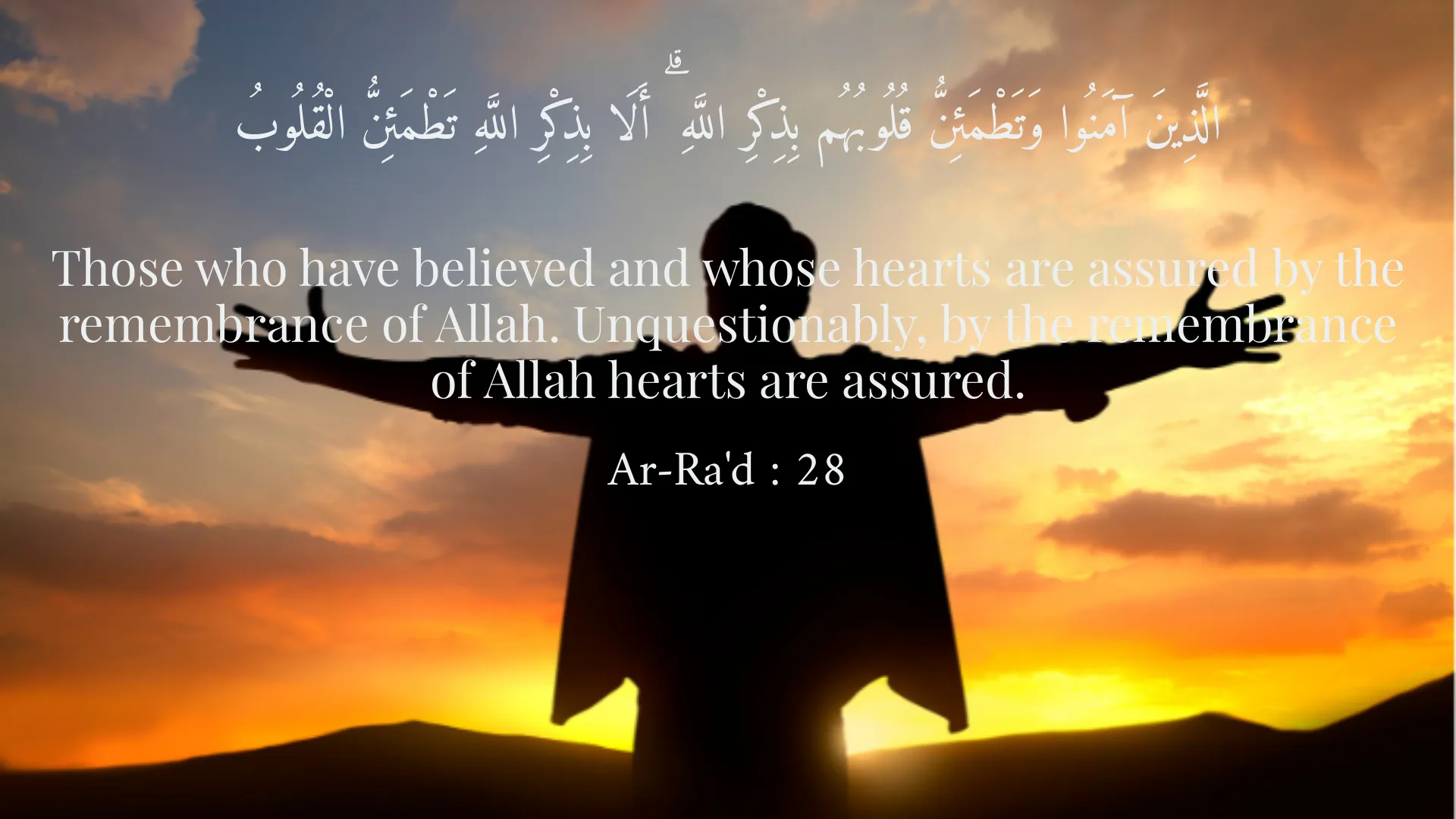
The inability to pray with a happy heart is an experience many believers encounter on their spiritual journey. This feeling can stem from various factors deeply rooted in one's spiritual and emotional state. The Holy Quran, as a complete guide to life, directly addresses this condition and offers solutions for achieving inner peace and sincerity in worship. When we speak of a 'happy heart' in prayer (dua), we refer to a state of tranquility, presence of mind, sincerity, hope, and certainty in Allah’s response. It is a state where an individual turns wholeheartedly towards Allah, free from doubt, hesitation, worldly distractions, and attachment. The Quran explicitly states that true peace can only be found in the remembrance of Allah, as mentioned in Surah Ar-Ra'd, verse 28: “Those who have believed and whose hearts are assured by the remembrance of Allah. Unquestionably, by the remembrance of Allah hearts are assured.” This pivotal verse indicates that a lack of inner peace, and consequently, the inability to pray with a joyful heart, often arises from heedlessness of Allah's remembrance and a lack of presence with Him. One of the most significant impediments to achieving a 'happy heart' in prayer is excessive attachment to worldly life and heedlessness of the Hereafter. The Quran repeatedly emphasizes that worldly life is fleeting and should not be one's ultimate goal. When a person's heart becomes overly engrossed in material possessions and worldly attachments, there is little room left for complete devotion and attention to Allah. This attachment can lead to anxiety, worry, and despair, all of which are contrary to the tranquility and joy of prayer. Surah At-Tawbah, verse 24, clearly states that if one’s fathers, sons, brothers, wives, relatives, acquired wealth, feared commerce, and beloved dwellings are dearer to them than Allah, His Messenger, and striving in His cause, then they should await Allah’s command. This verse illustrates that prioritizing worldly matters over spiritual ones can create a barrier between a person and Allah, diminishing the sweetness and delight of prayer. Another crucial factor is sins and disobedience. Sins settle upon the heart like rust, darkening and obscuring it. The more sins committed, the thicker the veil between the servant and the Lord, making heartfelt connection more difficult. The Quran places great emphasis on repentance (Tawbah) and seeking forgiveness (Istighfar). Repentance means turning back from sin to Allah, and Istighfar means seeking His pardon. These acts purify the heart, making it receptive to divine light. In Surah An-Nisa, verse 110, it is stated: “And whoever does evil or wrongs himself then seeks forgiveness of Allah will find Allah Forgiving and Merciful.” Therefore, the first step towards a happy heart in prayer is to cleanse it from the impurities of sin through sincere repentance. Riya (showing off) and a lack of sincerity (Ikhlas) are also major obstacles to praying with a happy heart. If the purpose of prayer or any other act of worship is to gain people's attention or praise rather than seeking Allah's pleasure, the heart will never experience true peace and joy. The Quran considers sincerity to be a fundamental condition for the acceptance of deeds. In Surah Az-Zumar, verse 2, Allah says: “So worship Allah, [being] sincere to Him in religion.” Prayer offered with pure intentions, solely for the sake of Allah, brings tranquility to the soul and invigorates it. Conversely, those who show off in their prayers are admonished in Surah Al-Ma'un, verses 4 to 6: “So woe to those who pray (4) [but] who are heedless of their prayer (5) – those who make show [of their deeds] (6).” Heedlessness and showing off distance the heart from humility and presence, preventing the feeling of joy in worship. Insufficient knowledge of Allah and a lack of true reliance (Tawakkul) can also lead to a coldness in the heart during prayer. If a servant does not have complete faith in Allah’s absolute power, boundless mercy, and infinite knowledge, and does not truly believe that He is the Hearer and Answerer of prayers, how can they pray with certainty and joy? Reliance on Allah means surrendering affairs to Him and having complete trust in His wisdom and decree. The greater the reliance, the less anxiety and worry, allowing the heart to pray with greater peace. The Quran repeatedly calls on humanity to rely on Allah, stating that its results are peace and guidance. To achieve a 'happy heart' in prayer, the Quran offers several remedies: constant remembrance of Allah (Dhikr), which assures hearts; sincerity in intention to perform all deeds solely for Allah's pleasure; continuous repentance and seeking forgiveness to purify the soul and heart; patience and perseverance in facing difficulties and awaiting the answer to prayers, as stated in Surah Al-Baqarah, verse 153: “O you who have believed, seek help through patience and prayer. Indeed, Allah is with the patient.” This verse demonstrates that prayer, coupled with patience, is a powerful tool for overcoming challenges and attaining inner peace. Furthermore, contemplating Allah's signs and manifestations of His power and mercy in creation can ignite love and awe for Allah in the heart, motivating one to pray with greater zeal and devotion. Ultimately, this is a spiritual journey requiring persistence, self-improvement, and continuous effort to raise hands in supplication to Allah with a tranquil and joyful heart.
Related Verses
الَّذِينَ آمَنُوا وَتَطْمَئِنُّ قُلُوبُهُم بِذِكْرِ اللَّهِ ۗ أَلَا بِذِكْرِ اللَّهِ تَطْمَئِنُّ الْقُلُوبُ
Those who have believed and whose hearts are assured by the remembrance of Allah. Unquestionably, by the remembrance of Allah hearts are assured.
Ar-Ra'd : 28
إِنَّا أَنزَلْنَا إِلَيْكَ الْكِتَابَ بِالْحَقِّ فَاعْبُدِ اللَّهَ مُخْلِصًا لَّهُ الدِّينَ
Indeed, We have sent down to you the Book in truth, so worship Allah, [being] sincere to Him in religion.
Az-Zumar : 2
فَوَيْلٌ لِّلْمُصَلِّينَ
So woe to those who pray,
Al-Ma'un : 4
الَّذِينَ هُمْ عَن صَلَاتِهِمْ سَاهُونَ
[but] who are heedless of their prayer -
Al-Ma'un : 5
الَّذِينَ هُمْ يُرَاءُونَ
those who make show [of their deeds]
Al-Ma'un : 6
Short Story
It is narrated that a wealthy merchant, despite his abundant riches, was perpetually sorrowful and anxious. Whenever he stood for prayer or raised his hands in supplication, his heart found no peace, his thoughts constantly consumed by the profits and losses of his trade. One day, in the marketplace, he saw a poor dervish sitting peacefully under a tree, reciting the remembrance of God with a radiant smile and a tranquil heart. The merchant approached him and asked with astonishment, "O man of God, how is it that despite your poverty, your heart is so joyful and at ease, while I, with all my possessions, am always in distress and anxiety, finding no peace even in my prayers?" The dervish replied with a smile, "My friend, you carry the burden of the world on your shoulders, and your heart is tied to it. But I have entrusted my heart to the Almighty Creator, who is the Sustainer of all. Therefore, my heart is light, and when I pray, I have no concern in my heart but Him." The merchant was deeply moved by the dervish's words and fell into contemplation, gradually finding a way to free his heart from the shackles of the world and taste the sweet joy of praying with a happy heart.