Quranic Answer
In the Holy Quran, the intricate relationship between human life and the experiences of hardship and trials is a focal point that resonates through multiple verses. It is clearly stated that hardships and trials are not anomalies but rather an intrinsic part of human existence. The Quran offers a profound perspective on these challenges, presenting them as elements of divine wisdom with the potential to foster growth and resilience. This exploration of hardship, struggle, and eventual spiritual enlightenment is explored extensively throughout the text. One of the most significant verses regarding trials and tribulations can be found in Surah Al-Baqarah, verse 155, which states: "And We will surely test you with something of fear and hunger and loss of wealth and lives and fruits." This verse serves as a poignant reminder that life is often fraught with challenges, be it fear of the unknown, hunger, financial losses, or personal setbacks. These experiences are universal; they transcend eras, cultures, and societies, binding humanity in a shared struggle. Yet, the Quran does not merely divulge the existence of these hardships; it emphasizes the purpose behind them. Each trial is presented as a test of faith and an opportunity for individuals to reflect on their resilience. Moreover, the Quran reiterates this theme in Surah Al-Anfal, verse 28: "And know that your properties and your children are but a trial." This verses encapsulates the essence of loyalty and attachment, prompting believers to recognize that while material wealth and familial bonds are essential, they should not anchor one's devotion away from God. The trials associated with these elements of life serve as moments for pondering and self-assessment, allowing people to understand their true priorities. The notion of property and children being a trial underscores that the very things that can bring joy and fulfillment may also lead to challenges that test one’s patience and loyalty to their faith. These struggles and challenges can evoke various responses from believers. Interestingly, the Quran suggests that hardships are not simply hurdles to be overcome; they are opportunities for spiritual and personal growth. Every difficulty presents a moment for individuals to look within themselves, fostering self-improvement and drawing them closer to their Creator. Adversity often forces introspection, leading to a heightened awareness of one’s faith and the world surrounding them. In this way, struggles become a divine educational tool for enhancing one's understanding of patience, resilience, and faith. The concept of enduring hardship to cultivate a deeper sense of faith is further elaborated in various passages throughout the Quran. When individuals confront adversity, they experience a unique chance to strengthen their resolve and trust in God's plan. For many, these moments of difficulty become a catalyst for their spiritual awakening—a period of reflection where the true significance of their faith is illuminated. It is during the most challenging circumstances that a believer's values, purpose, and the impact of their devotion come to light. A noticeable theme throughout the Quran is the juxtaposition of hardship and the promise of relief. This cyclic relationship between trials and relief underlines the importance of patience and endurance. In Surah Al-Inshirah (Chapter 94), Allah reassures believers that after hardship, there is indeed ease: "For indeed, with hardship [will be] ease." This recurring message promotes hope and reassures us that no trial is permanent, and every challenge carries the seed of a better tomorrow. Such verses instill a sense of hope within individuals, encouraging them to persevere and maintain their faith, even when the weight of the world seems to rest upon their shoulders. Additionally, the Quran incorporates historical narratives that exemplify various figures who faced immense trials, such as Prophet Job (Ayub) and Prophet Moses (Musa), illustrating that even the most righteous individuals encountered significant hardships. Their stories serve as powerful testimonies that trials are a common thread in the journey of faith. Prophet Job, known for his unyielding patience in the face of extreme suffering, embodies the spiritual strength that one can acquire through tribulation. His unwavering faith amidst calamity exemplifies the potential for personal growth that can emerge from even the darkest of situations. One learns from the Quran that such hardships are not representative of divine abandonment; rather, they are pathways to spiritual enlightenment. Modern interpretations of the Quran further contextualize these messages for contemporary audiences, allowing individuals to draw upon ancient wisdom while navigating the complexities of modern life. The presence of societal pressures, financial instability, and existential fears may lead many to feel disheartened. Yet, when viewed through the lens of Quranic teachings, these challenges become enriching experiences that foster growth, resilience, and a deeper understanding of faith. Individuals can harness their experiences of hardship as transformative moments that shape their spiritual journeys, reinforcing the belief that nothing is in vain. In conclusion, the Holy Quran eloquently and powerfully captures the essence of hardship as both a trial and a tool for growth. By embracing these teachings, believers can transform their understanding of life's challenges. Hardships, as articulated in the Quran, are not merely obstacles; they are profound opportunities to deepen one’s faith, develop earnest patience, and cultivate spiritual resilience. Ultimately, these trials serve to unify humanity in its shared struggles while enlightening each individual through the divine wisdom embedded in life’s challenges.
Related Verses
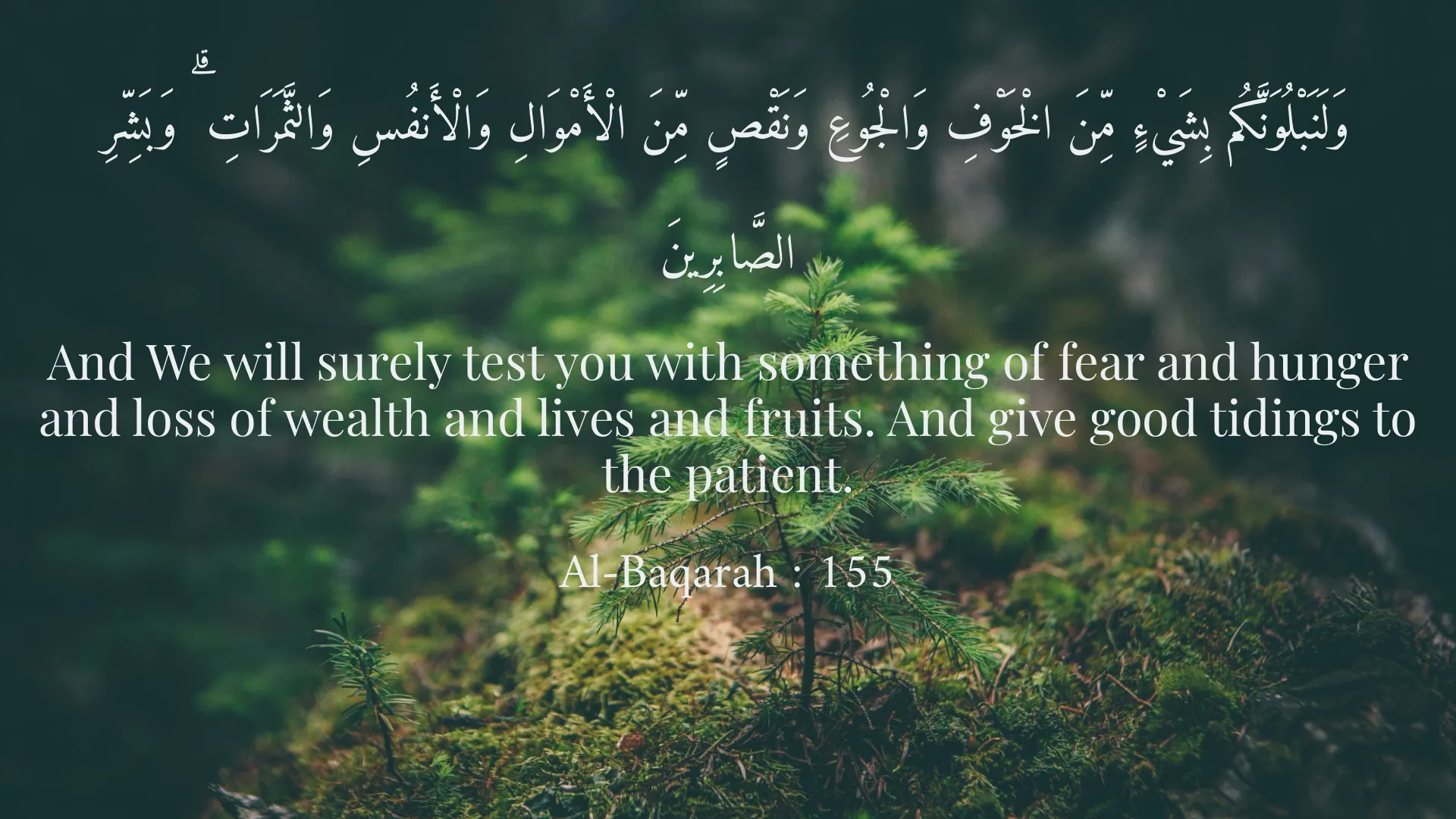
وَلَنَبْلُوَنَّكُم بِشَيْءٍ مِّنَ الْخَوْفِ وَالْجُوعِ وَنَقْصٍ مِّنَ الْأَمْوَالِ وَالْأَنفُسِ وَالثَّمَرَاتِ ۗ وَبَشِّرِ الصَّابِرِينَ
And We will surely test you with something of fear and hunger and loss of wealth and lives and fruits. And give good tidings to the patient.
Al-Baqarah : 155
وَاعْلَمُوا أَنَّمَا أَمْوَالُكُمْ وَأَوْلَادُكُمْ فِتْنَةٌ ۖ وَأَنَّ اللَّهَ عِندَهُ أَجْرٌ عَظِيمٌ
And know that your properties and your children are but a trial. And Allah has with Him a great reward.
Al-Anfal : 28
Short Story
One day, a man faced many financial difficulties. He felt hopeless and did not know what to do. However, in his heart, he always remembered the Quranic verses that said, 'Before hardships come to you, be patient and draw closer to God.' He decided to respond to his problems with patience and resilience and to use these trials as opportunities for learning and personal growth. After a while, he reaped the fruits of his patience and learned new things from life.