Quranic Answer
Dear sister or brother, this is a question many people grapple with throughout their lives. Feeling constant defeat against a specific sin can be incredibly disheartening, but it's important to know you are not alone in this feeling, and the Holy Quran offers profound and hopeful guidance for facing these challenges. Allah Almighty has repeatedly emphasized in the Quran the weakness of human beings and their need for divine mercy and guidance. At the same time, He has also provided practical and spiritual solutions for overcoming temptations and strengthening one's will. This inner struggle is an inseparable part of every believer's spiritual growth journey, and Allah accepts and rewards this effort from you. One of the primary reasons a person repeatedly fails against a specific sin relates to the nature of the 'nafs al-ammarah' (the soul that incites to evil) and the whispers of Shaytan (Satan). The Quran clearly states that the human soul is inherently inclined towards evil, unless it is covered by divine mercy and guidance. In Surah Yusuf, verse 53, Allah says: "And I do not absolve myself. Indeed, the soul is a persistent enforcer of evil, except for what my Lord has mercy upon. Indeed, my Lord is Forgiving and Merciful." This verse illustrates that the root of this struggle lies within us; the soul's inclination towards immediate pleasures and worldly desires. Shaytan exploits this weakness, continuously tempting humans towards sin. His goal is to mislead and deviate people from the straight path, as mentioned in numerous Quranic verses. However, the Quran also shows the way out of this situation. The first and most crucial step is to turn sincerely and purely to Allah. Allah is Oft-Forgiving and Most Merciful, and the doors of repentance are never closed. Even if you commit the same sin repeatedly, sincere repentance and a firm resolve to abandon it are always accepted by Allah. In Surah Ali 'Imran, verse 135, Allah states: "And those who, when they commit an immorality or wrong themselves, remember Allah and seek forgiveness for their sins – and who can forgive sins except Allah? – and do not persist in what they have done while they know." This verse gives us hope that even after committing a sin, there is an opportunity for return and forgiveness, provided we do not persist in the sin and truly regret it, resolving to abandon it. Repentance is more than uttering words; it involves heartfelt regret, verbal seeking of forgiveness (Istighfar), abandoning the sin in practice, and a firm resolve not to return to it. Each time you repeat this cycle of repentance, you are effectively training your soul that the path to return and rectification is always open, which prevents despair from overwhelming you. In addition to repentance and seeking forgiveness, the Quran strongly emphasizes the importance of patience (Sabr) and steadfastness on the path of truth. The struggle against the self and the whispers of Shaytan is a long-term battle that requires persistence and resilience. In Surah Al-Baqarah, verse 153, we read: "O you who have believed, seek help through patience and prayer. Indeed, Allah is with the patient." Patience means enduring difficulties, resisting temptations, and being steadfast in serving Allah. Prayer, as the pillar of faith and a means of connecting with the Creator, provides immense spiritual strength and protects a person from sin. Performing prayer with presence of heart and attention to its meanings restrains one from indecency and evil. Whenever you feel weak, take refuge in prayer and connect with Allah through it. This spiritual connection is a safe haven against the onslaught of temptations and strengthens your will to overcome that specific sin. Furthermore, changing one's environment and avoiding triggers that lead to sin is extremely vital. The Holy Quran invites believers to avoid vain talk and actions that lead to corruption. If the sin you are struggling with is linked to specific individuals, places, or activities, try to distance yourself from them. This is an important principle in battling the self: to avoid any context or environment that pushes you towards sin. Additionally, engaging in good deeds and acts of worship, studying the Quran, reflecting on divine verses, attending religious gatherings, and associating with righteous people all help strengthen your faith and resolve, providing positive alternatives for times when you might otherwise fall into sin. In Surah Al-Ankabut, verse 69, it is stated: "And those who strive for Us – We will surely guide them to Our ways. And indeed, Allah is with the doers of good." This verse shows that any effort you make to avoid sin and draw closer to Allah, even if it seems unsuccessful at first, is not hidden from Allah, and will ultimately lead to guidance and victory. Despair of Allah's mercy is itself a great sin. Even if you have failed a thousand times, know that the door of divine mercy is open, and He welcomes those who repent. The important thing is not to give up and to continue this struggle. Each time you succeed in resisting the sin, even for a short while, it is a victory in itself. Gradually, with increasing faith, strengthened will, and unseen divine help, you can overcome that sin. Remember that Allah does not burden a soul beyond its capacity (Surah Al-Baqarah, verse 286). So, you have the ability to overcome this sin; you just need to employ the right tools and rely on Allah. This path is a process that requires patience, continuous effort, and absolute reliance on Allah. Be assured that Allah will not leave you alone on this path, and each time you return to Him with sincerity, He will assist you.
Related Verses
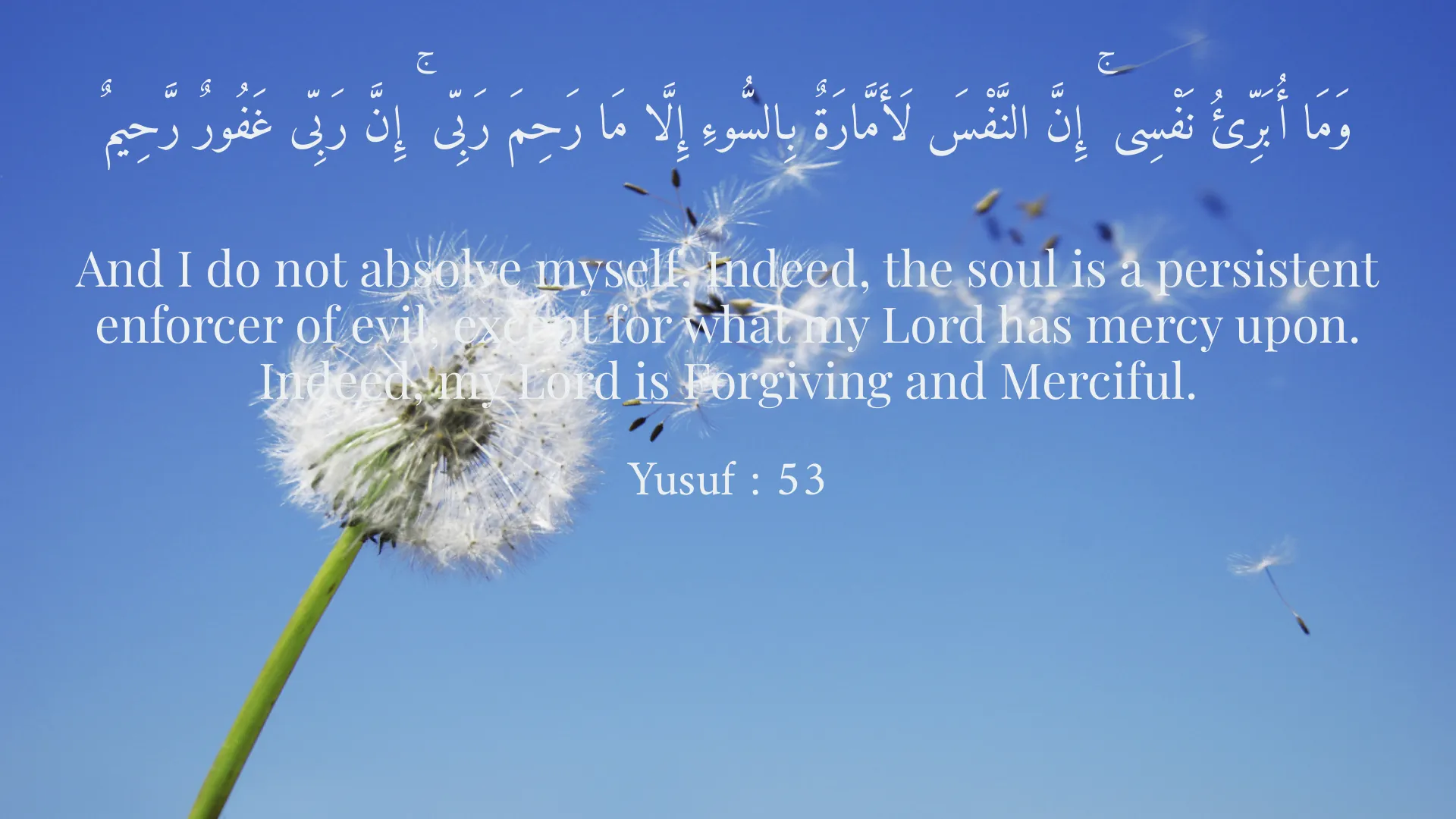
وَمَا أُبَرِّئُ نَفْسِی ۚ إِنَّ النَّفْسَ لَأَمَّارَةٌ بِالسُّوءِ إِلَّا مَا رَحِمَ رَبِّی ۚ إِنَّ رَبِّی غَفُورٌ رَّحِیمٌ
And I do not absolve myself. Indeed, the soul is a persistent enforcer of evil, except for what my Lord has mercy upon. Indeed, my Lord is Forgiving and Merciful.
Yusuf : 53
وَالَّذِينَ إِذَا فَعَلُوا فَاحِشَةً أَوْ ظَلَمُوا أَنفُسَهُمْ ذَكَرُوا اللَّهَ فَاسْتَغْفَرُوا لِذُنُوبِهِمْ وَمَن يَغْفِرُ الذُّنُوبَ إِلَّا اللَّهُ وَلَمْ يُصِرُّوا عَلَى مَا فَعَلُوا وَهُمْ يَعْلَمُونَ
And those who, when they commit an immorality or wrong themselves, remember Allah and seek forgiveness for their sins – and who can forgive sins except Allah? – and do not persist in what they have done while they know.
Ali 'Imran : 135
یَا أَیُّهَا الَّذِینَ آمَنُوا اسْتَعِینُوا بِالصَّبْرِ وَالصَّلَاةِ ۚ إِنَّ اللَّهَ مَعَ الصَّابِرِینَ
O you who have believed, seek help through patience and prayer. Indeed, Allah is with the patient.
Al-Baqarah : 153
وَالَّذِینَ جَاهَدُوا فِینَا لَنَهْدِیَنَّهُمْ سُبُلَنَا ۚ وَإِنَّ اللَّهَ لَمَعَ الْمُحْسِنِینَ
And those who strive for Us – We will surely guide them to Our ways. And indeed, Allah is with the doers of good.
Al-Ankabut : 69
Short Story
It is narrated in Saadi's Gulistan that there was a just king who had a swift and intelligent servant. Every morning, before sunrise, the servant would wake the king. However, this servant had an undesirable habit: whenever the king woke him, out of fear of the king's wrath, he would immediately get out of bed, but after a few moments, the temptation of sleep would overcome him again, and he would fall back asleep. This cycle repeated several times until the king had to wake him with greater reprimand. One day, the king said to the servant, "What is wrong with you that you wake up each time and then fall back asleep? Do you not fear my wrath?" The servant, with shame, replied, "O King! I do fear, but my rebellious soul pulls me towards comfort and sleep, weakening my will." The king smiled and said, "O servant! This struggle of yours with your soul is the battle of every human being. Each time you rise from sleep, even if you fall back asleep, you have taken a step in the path of resistance. The true battle is not surrendering to the soul. Each time you repent and resolve to stay awake, you have indeed gained a small victory. In this path, perseverance, even with falling and getting up, is a victory in itself, for despair is the ultimate defeat." The servant took these words to heart, and with each awakening, he strengthened his resolve, eventually overcoming the temptation of sleep, becoming an example of steadfastness.