Quranic Answer
Your question about feeling compelled or forced in worship is a profound and relatable one that many individuals encounter on their spiritual journey. A correct understanding of the nature of worship in Islam can transform this feeling, making worship a joyous and serene experience rather than a burden. The Holy Quran consistently emphasizes free will, awareness, and voluntary choice in accepting faith and performing acts of worship, never advocating for compulsion in religion or devotion. Fundamentally, worship in Islam is not an external obligation that oppresses the soul; rather, it is a voluntary and loving connection with the Creator of the universe. Allah Almighty explicitly states in the Quran: "There shall be no compulsion in [acceptance of] the religion. The right course has become clear from the wrong." (Al-Baqarah: 2:256). This verse lays down the foundational principle of human free will and choice in embracing faith and performing acts of worship. If religion were to be accepted through coercion, it would not only lose its spiritual value but also fail to have any elevating effect on the soul. True faith and worship emanate from a heart that, with awareness, desire, and love, turns towards its Cherisher. So, why does this feeling of compulsion sometimes arise? This sensation can stem from various roots: 1. Lack of Understanding the Philosophy of Worship: Some individuals perceive worship merely as a set of dry rituals and actions that must be performed to escape divine punishment or gain rewards. This perspective distances worship from its true essence, which is connection with God, spiritual growth, and inner peace. The Holy Quran repeatedly emphasizes the deep purposes and profound effects of worship. For instance, regarding prayer, it states: "Recite what has been revealed to you of the Book and establish prayer. Indeed, prayer prohibits immorality and wrongdoing, and the remembrance of Allah is greater. And Allah knows that which you do." (Al-Ankabut: 29:45). This verse clearly shows that prayer is not merely a duty but a means of purifying the self, preventing evil, and attaining a greater remembrance of Allah. When one comprehends this philosophy, worship ceases to be a compulsion; instead, it becomes an inner need and a path to perfection. 2. Environmental and Social Influences: Sometimes, the feeling of compulsion arises from external pressures, such as family expectations, societal norms, or peer influence. An individual might engage in worship to please others or to avoid criticism. In such cases, the pure intention (niyyah), which is the cornerstone of every act of worship, becomes diluted. Islam places great emphasis on sincere intention and performing acts solely for the pleasure of Allah. The Prophet Muhammad (peace be upon him) said, "Indeed, actions are by intentions." When worship is performed for show or out of fear of people's judgment, it naturally brings with it a sense of heaviness and compulsion. It transforms a potentially fulfilling spiritual act into a mere performance, devoid of genuine connection and inner peace. The true beauty of worship lies in its privacy and sincerity between the worshiper and the Creator, free from the need for external validation. 3. Failure to Experience the Sweetness of Worship: Authentic worship is inherently soothing and comforting for the heart. The Quran affirms: "Those who have believed and whose hearts are assured by the remembrance of Allah. Unquestionably, by the remembrance of Allah hearts are assured." (Ar-Ra'd: 13:28). If worship merely becomes a routine habit, devoid of the soul's presence, this sweetness and tranquility will not be felt, giving way to a sense of lethargy or compulsion. To experience this sweetness, one must strive to engage in worship with presence of heart, contemplating divine verses, and focusing on the meaning and purpose of each act. Mindless repetition of movements and invocations, without attention to their concepts or without a heartfelt connection, will naturally lack appeal. It is through mindful engagement that the worshiper unlocks the profound spiritual benefits and finds solace in divine remembrance. 4. Incorrect Perception of God: Sometimes, misconceptions about God can form in our minds, for instance, imagining an angry, vengeful God who only seeks to punish. This perception can lead to worship driven by fear and compulsion. However, the Quran introduces Allah with boundless attributes of mercy and compassion: "In the name of Allah, the Most Gracious, the Most Merciful" (Al-Fatihah: 1). He is loving towards His servants, and our worship is not to add to His greatness but for our own growth and perfection. Every action an individual performs, its benefit or harm returns to them: "Whoever does righteousness, it is for his [own] soul; and whoever does evil, it is against it." (Fussilat: 41:46). Understanding God's infinite mercy and His desire for our well-being fundamentally shifts the paradigm of worship from a fearful obligation to a loving response. How to Transform Compulsion into Love and Eagerness? * Deepen Knowledge (Ma'rifah): Strive for a deeper understanding of Allah and His attributes, study the Quran, ponder its verses, and grasp the philosophy behind acts of worship. When one truly comes to know the majesty and kindness of their Lord, worship ceases to be a mere duty; instead, it becomes an opportunity to express love and gratitude. This intellectual and spiritual engagement fuels genuine devotion. * Rectify Intention (Niyyah): Consciously intend to perform acts of worship solely for Allah's pleasure, out of love and gratitude, rather than out of fear or to gain approval from others. This internal shift is paramount and empowers the individual to find profound meaning in their acts. * Presence of Heart (Hudhur al-Qalb): During worship, endeavor to focus all your attention and senses. Imagine that you are in direct conversation with the Creator of the universe. Practicing mindfulness and avoiding distractions can help increase presence of heart. This transforms routine actions into intimate spiritual dialogues. * Contemplate Blessings: Reflecting on the countless divine blessings, from health and life to family and sustenance, cultivates a profound sense of gratitude. Gratitude is a powerful motivator for loving worship. When one recognizes the boundless generosity of Allah, worship naturally flows as an expression of thanks. * Small, Consistent Steps: If worship feels overwhelming, start with small, consistent steps. For example, initially focus on one prayer or a specific remembrance (dhikr) and gradually expand. Consistency in small acts is superior to abandoning large ones. This gradual approach builds spiritual stamina and makes the journey sustainable. * Seek Divine Help: Ask Allah Himself to let you taste the sweetness of worship and remove this feeling of compulsion. Supplicating for increased sincerity and love for worship is highly effective. Allah is the ultimate source of guidance and strength, and turning to Him sincerely can alleviate inner struggles. * Understand the Purpose of Creation: The Quran states: "And I did not create the jinn and mankind except to worship Me." (Adh-Dhariyat: 51:56). This verse indicates that worship is not merely an obligation but the primary purpose of human creation and the path to human perfection. Understanding this ultimate goal transforms our perspective on worship from a perceived burden into a profound and meaningful pursuit. Ultimately, feeling compelled in worship is a sign that we have not yet reached the depth and truth of our connection with Allah. By changing our perspective, increasing our awareness, and striving to establish a heartfelt connection, this compulsion will transform into eagerness, love, and peace. Worship is not for God's benefit, but for our own well-being and perfection; it is a bridge between us and the infinite source of tranquility and power. This journey is an inner one that, with conscious and heartfelt steps, leads to the destination of divine pleasure and true inner peace. Remember, Allah is too merciful to compel His servants to something they do not enjoy. He has shown the way and given us the choice to tread the path of salvation with conscious and heartfelt decision.
Related Verses
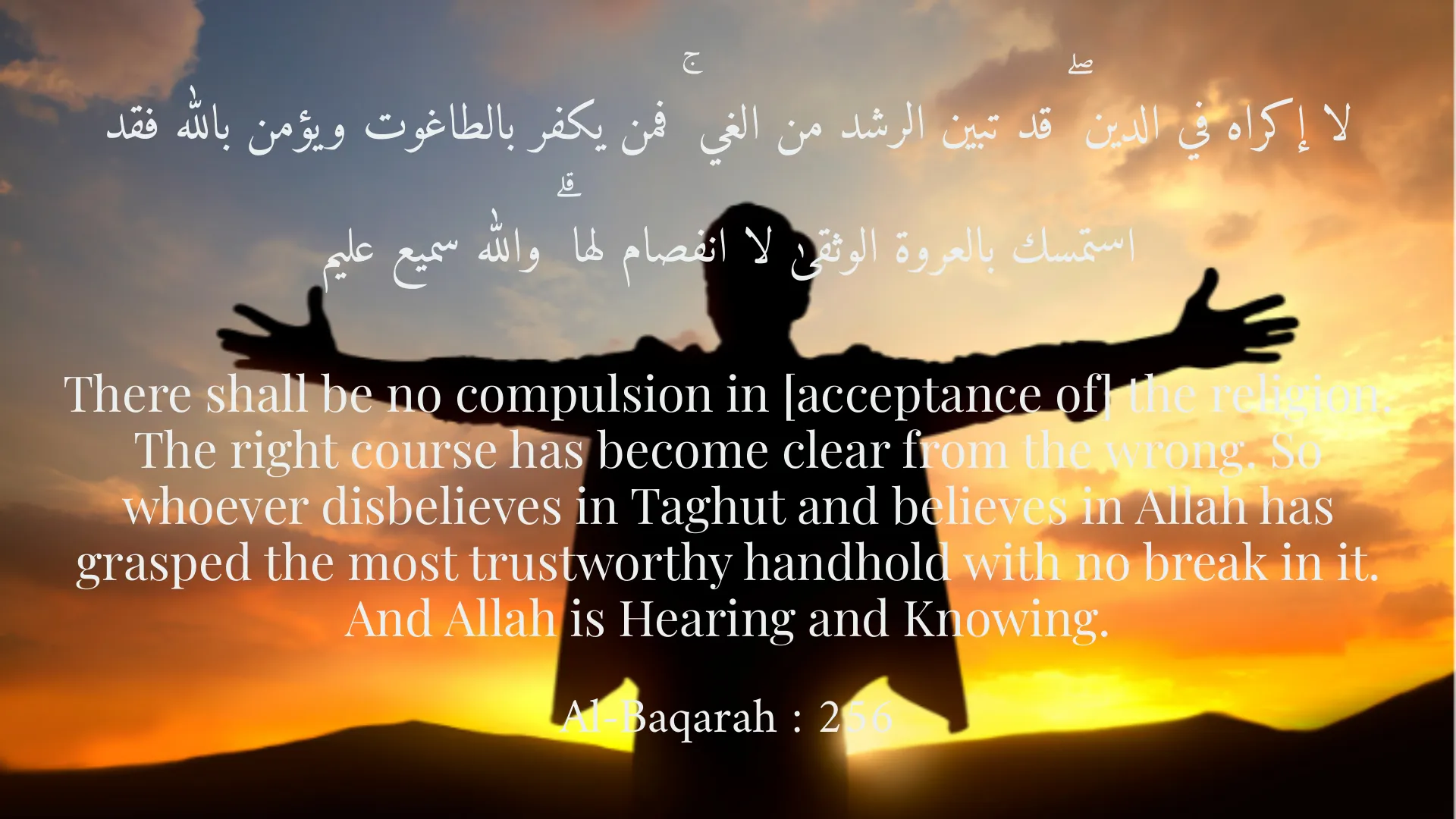
لا إكراه في الدين ۖ قد تبين الرشد من الغي ۚ فمن يكفر بالطاغوت ويؤمن بالله فقد استمسك بالعروة الوثقىٰ لا انفصام لها ۗ والله سميع عليم
There shall be no compulsion in [acceptance of] the religion. The right course has become clear from the wrong. So whoever disbelieves in Taghut and believes in Allah has grasped the most trustworthy handhold with no break in it. And Allah is Hearing and Knowing.
Al-Baqarah : 256
اتل ما أوحي إليك من الكتاب وأقم الصلاة ۖ إن الصلاة تنهىٰ عن الفحشاء والمنكر ۗ ولذكر الله أكبر ۗ والله يعلم ما تصنعون
Recite what has been revealed to you of the Book and establish prayer. Indeed, prayer prohibits immorality and wrongdoing, and the remembrance of Allah is greater. And Allah knows that which you do.
Al-Ankabut : 45
الذين آمنوا وتطمئن قلوبهم بذكر الله ۗ ألا بذكر الله تطمئن القلوب
Those who have believed and whose hearts are assured by the remembrance of Allah. Unquestionably, by the remembrance of Allah hearts are assured.
Ar-Ra'd : 28
Short Story
There was once a wise dervish who lived humbly. A wealthy merchant, known for his grand acts of charity and public prayers, once approached him. The merchant boasted, "O revered one, I donate great sums to the poor and pray long hours in the mosque. Yet, I feel no joy, only a burden in these deeds. What is my fault?" The dervish smiled gently and replied, "My dear friend, a man once planted a tree. One day, he saw a beautiful fruit hanging from its branch. He plucked it, but his heart felt no delight, for he had planted the tree hoping only to avoid the gardener's whip, not out of love for cultivation. Another man, however, tended a small garden, watering his plants with joy, conversing with them as if they were his children. When a single blossom appeared, his heart swelled with boundless happiness. The first man performed a duty; the second lived a passion. When your acts of worship are born from the fear of a whip or the desire for applause, they will feel like chains. But when they spring from a heart yearning for connection, they become wings that carry you to the heavens." The merchant pondered these words and began to seek sincerity in his heart, and slowly, the burden transformed into bliss.