Quranic Answer
Feeling tired or spiritually fatigued in one's religious devotion is a common experience encountered by many on the path to truth. This state is not necessarily a sign of weak faith; rather, it can act as an alarm bell, prompting us to re-evaluate the quality of our relationship with God, our acts of worship, and how we confront life's challenges. The Holy Quran, this guiding scripture, offers direct and indirect insights into the roots of this feeling and the ways to overcome it, which we will explore in detail. One of the primary reasons for feeling tired in religious observance is the absence or weakness of "sincerity of intention" (Ikhlas). When our acts of worship and deeds are performed not for the pure pleasure of God, but for social standing, habit, or merely to fulfill a duty, the soul and heart do not derive nourishment from them. Consequently, they quickly succumb to boredom and fatigue. The Quran states in Surah Al-Bayyinah, verse 5: "And they were not commanded except to worship Allah, [being] sincerely obedient to Him, inclining to truth, and to establish prayer and to give zakah. And that is the correct religion." This verse clearly emphasizes the crucial importance of sincerity. If our worship lacks this vital element, it becomes like stagnant water that not only fails to give life but also develops an unpleasant odor, discouraging us from continuing our journey. This feeling of fatigue is essentially born from the disconnect between the outward action and the inner state; when the body is engaged but the heart is heedless. Another contributing factor is "immersion in materialism and worldly attachments." Modern life, with its dizzying speed and emphasis on consumerism and competition, can so preoccupy the human mind and heart with worldly affairs that little room remains for spiritual concerns and connection with God. The Quran repeatedly warns that wealth and children are adornments of worldly life and should not divert us from the remembrance of God. In Surah Al-Kahf, verse 46, we read: "Wealth and children are [but] adornment of the worldly life. But the enduring good deeds are better to your Lord for reward and better for [one's] hope." When our minds are entirely engrossed in acquiring wealth, status, or fleeting worldly pleasures, acts of worship and religious duties can appear as heavy burdens that hinder our worldly goals. This internal conflict inevitably leads to spiritual exhaustion and discouragement from religious devotion. "Lack of reflection on Quranic verses and the meanings of worship" is also a significant cause of fatigue. If prayer becomes merely a series of repetitive movements and Quranic recitation occurs without understanding its meanings, the soul gains no benefit from these acts, and the heart remains lifeless. The Quran is a book of guidance, a book through which every verse can open a new door to knowledge. When an individual fails to connect with the profoundness of divine words, it is akin to performing physical exercises without a clear purpose; over time, monotony and weariness set in. Reflection on the Quran and understanding the meanings of prayer, supplication, and other acts of worship ensures that each religious act becomes a fresh and inspiring experience, not merely a chore. "Divine trials and tests" can also lead to feelings of fatigue. Life is replete with challenges and calamities. At times, one may feel weak and hopeless on this path. The Quran states: "Do the people think that they will be left to say, 'We believe' and they will not be tried? * But We have certainly tried those before them, and Allah will surely make evident those who are truthful, and He will surely make evident the liars." (Al-Ankabut: 2-3). Although these trials are difficult, their purpose is to purify faith and strengthen the soul. If one lacks the mental preparedness to face these trials and perceives them as injustice or punishment, they might become disheartened from religious devotion. Quranic Solutions for Overcoming Fatigue and Renewing Spiritual Vitality: 1. Returning to the Remembrance of Allah (Dhikr): The Quran identifies the healing of hearts in the remembrance of God. "Unquestionably, by the remembrance of Allah hearts are assured." (Ar-Ra'd: 28). Dhikr is not merely the repetition of words but includes pondering Allah's greatness, reciting the Quran with contemplation, and heartfelt attention during prayer. Whenever fatigue sets in, turn wholeheartedly to the remembrance of Allah. This remembrance is like water that quenches the soul's thirst and bestows fresh energy. 2. Seeking Help Through Patience and Prayer (Sabr wa Salah): In difficult times, the Quran proposes two primary solutions: patience and prayer. "O you who have believed, seek help through patience and prayer. Indeed, Allah is with the patient." (Al-Baqarah: 153). Patience means steadfastness and resilience in the face of difficulties and temptations, while prayer is the pinnacle of the servant's connection with the Creator and a source of peace and strength. When you feel weak and tired, seek refuge in prayer. Perform it with khushu (humility and devotion) and full attention, sharing your troubles with Allah. This intimate connection will be energizing and revitalizing. 3. Renewing Intention and Repentance (Tawbah): Whenever you feel that you have deviated from the main path or that your intentions have become impure, the opportunity for repentance and return is always available. The Quran, in numerous verses, emphasizes the importance of repentance and turning back to God. Renewing intention in every act of worship revitalizes it and brings fresh enthusiasm. Each day, one can intend that all actions, even daily chores, are performed for the pleasure of Allah. 4. Reflection on the Quran (Tadabbur al-Quran): As mentioned, recitation without reflection eventually becomes tiresome. By studying commentaries, attending Quranic tafsir sessions, and contemplating divine messages, one can bring life to the heart and soul through the word of God. Understanding what message Allah has for our lives gives meaning and depth to our acts of worship. 5. Moderation and Avoiding Extremism: Islam is a religion of moderation and forbids extremism and negligence. Sometimes, individuals at the beginning of their religious path become overly zealous and undertake practices that are unsustainable for them. This extremism quickly leads to fatigue and abandonment of religious observance. The Prophet Muhammad (PBUH) said: "The best deeds are those which are done consistently, even if they are few." One should set a realistic and sustainable plan for their acts of worship. 6. Associating with the Righteous and People of Dhikr: Keeping company with those whose hearts are alive with the remembrance of God, and witnessing their zeal and enthusiasm in religious devotion, can transmit significant positive energy. In Surah Al-Kahf, verse 28, the Quran states: "And keep yourself patient with those who call upon their Lord by night and day, seeking His countenance. And let not your eyes pass beyond them, desiring adornments of the worldly life..." This verse emphasizes the importance of a spiritual environment and companionship with the righteous. 7. Gratitude (Shukr): Focusing on Allah's countless blessings and expressing gratitude for them not only strengthens one's sense of contentment and peace but also solidifies their bond with the Creator. A person who is constantly grateful rarely experiences despair or fatigue. The Quran states: "And if you are grateful, I will surely increase you [in favor]." (Ibrahim: 7). Gratitude opens the heart to divine favors and the feeling of continuous connection with God eliminates fatigue. In conclusion, feeling tired in religious devotion is a natural stage in the spiritual journey. It is crucial not to view it as a sign of failure but rather as an opportunity to rebuild and deepen one's relationship with the Lord. By adhering to the Quranic principles of sincerity, remembrance, patience, prayer, reflection on the Quran, and moderation, we can successfully navigate this stage and continue on the path of servitude with a heart full of peace and vitality. Allah is the Most Merciful; He does not burden anyone beyond their capacity and is always awaiting the return of His servants. This path is full of light and blessings, provided we tread it with an awakened heart and a sincere intention.
Related Verses
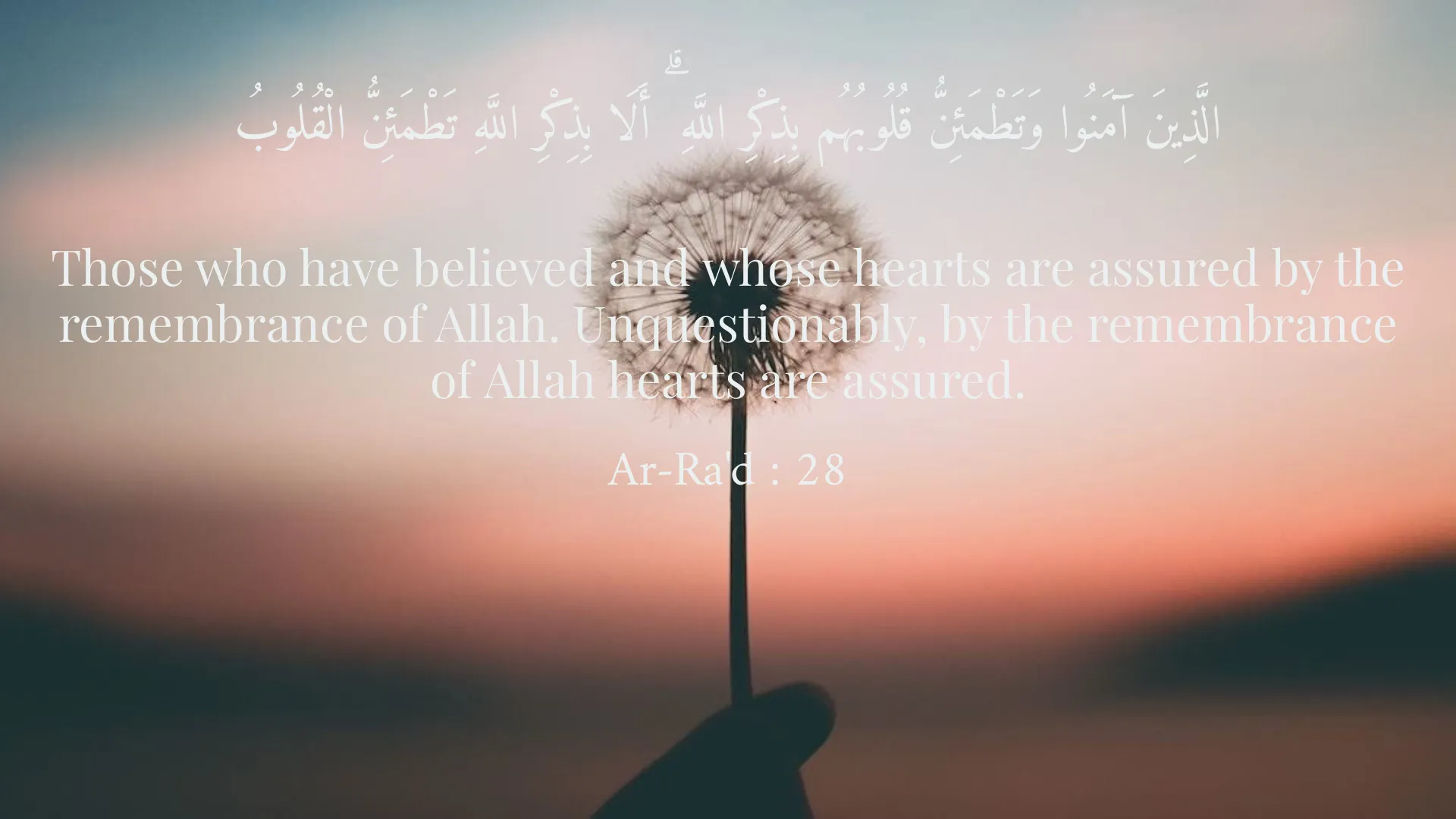
الَّذِينَ آمَنُوا وَتَطْمَئِنُّ قُلُوبُهُم بِذِكْرِ اللَّهِ ۗ أَلَا بِذِكْرِ اللَّهِ تَطْمَئِنُّ الْقُلُوبُ
Those who have believed and whose hearts are assured by the remembrance of Allah. Unquestionably, by the remembrance of Allah hearts are assured.
Ar-Ra'd : 28
يَا أَيُّهَا الَّذِينَ آمَنُوا اسْتَعِينُوا بِالصَّبْرِ وَالصَّلَاةِ ۚ إِنَّ اللَّهَ مَعَ الصَّابِرِينَ
O you who have believed, seek help through patience and prayer. Indeed, Allah is with the patient.
Al-Baqarah : 153
وَمَا أُمِرُوا إِلَّا لِيَعْبُدُوا اللَّهَ مُخْلِصِينَ لَهُ الدِّينَ حُنَفَاءَ وَيُقِيمُوا الصَّلَاةَ وَيُؤْتُوا الزَّكَاةَ ۚ وَذَلِكَ دِينُ الْقَيِّمَةِ
And they were not commanded except to worship Allah, [being] sincerely obedient to Him, inclining to truth, and to establish prayer and to give zakah. And that is the correct religion.
Al-Bayyinah : 5
Short Story
It is recounted in the Bustan that a devout dervish, after years of intense worship and asceticism, began to feel his heart heavy and his spirit weary. His initial fervor had waned. He approached a wise elder and confided in him. The venerable elder listened kindly and then said, "My son, perhaps you have forgotten that God does not look upon the multitude of your devotions, but upon the purity of your intention and the presence of your heart. A single sincere sigh from the depths of your soul is worth more than a thousand lifeless prostrations." The dervish pondered these words and decided to simplify his practices, focusing instead on cultivating heartfelt presence and sincerity. Soon, the weariness departed, and his devotion blossomed anew, sweeter and more profound than before, for he had rediscovered the taste of true sincerity.