Quranic Answer
Feeling weary or fatigued by repeated acts of worship is an experience many believers might encounter. From the perspective of the Holy Quran, this feeling often serves as an invitation to reassess the depth and quality of one's connection with God, rather than being an indication of a flaw in faith. The Quran guides us towards a form of worship that originates from the heart and soul, transcending mere outward movements. If worship becomes solely a repetition of actions performed without presence of heart or reflection on their meanings, it is natural for the human spirit to gradually feel alienated and tired. This feeling can be an opportunity for deeper contemplation into the wisdom and purpose behind acts of worship. 1. The Comprehensive Purpose of Worship: The Quran explicitly states that the purpose of creating jinn and mankind is to worship Allah. In Surah Adh-Dhariyat, verse 56, Allah says: "And I did not create the jinn and mankind except to worship Me." This verse indicates that worship is not limited to a few specific, repetitive actions, but encompasses the entire spectrum of human life—from thoughts and intentions to speech and deeds. When a person understands this broad concept of worship, they realize that every moment of life is an opportunity to draw closer to Allah. This perspective transforms the repetition of specific acts of worship, removing monotony and imbuing them with profound depth. 2. The Importance of Khushu' (Humility and Presence): One of the most crucial factors in overcoming weariness in worship is khushu', which means humility, concentration, and presence of heart before Allah. In Surah Al-Mu'minun, verses 1 and 2, Allah states: "Successful indeed are the believers Who are humble in their prayers." Khushu' transforms prayer from a mere physical exercise into a loving dialogue with the Creator. To achieve khushu', it is necessary to free the mind from worldly attachments before beginning worship, to pay attention to the meanings of the words and recitations, and to believe that one is conversing with the Lord of the worlds. Continuous practice of this presence of heart brings the sweetness and pleasure of worship, thus eliminating weariness. 3. The Power of Dhikr (Remembrance of Allah): The remembrance of Allah plays a pivotal role in maintaining the freshness of the soul and warding off weariness. In Surah Ar-Ra'd, verse 28, the Quran says: "Those who have believed and whose hearts are assured by the remembrance of Allah. Unquestionably, by the remembrance of Allah hearts are assured." Remembering Allah is not limited to specific invocations; it includes contemplating divine verses, reflecting on creation, and recalling Allah's countless blessings. The more the remembrance of Allah is present in our daily lives, the stronger our spiritual connection with Him becomes, and acts of worship cease to be repetitive and soulless. Dhikr polishes the heart and gives it renewed life. 4. Understanding the Wisdom Behind Commandments: Another aspect that can help reduce weariness is understanding and contemplating the meanings of acts of worship. When a person knows what they are reciting and saying in prayer, or the philosophy behind fasting and Hajj, worship is no longer just an obligation but a path to growth and perfection. Studying Quranic exegesis, Hadith, and explanations of worship can help achieve this deep understanding. For instance, realizing that each unit (rak'ah) of prayer is a renewal of one's covenant with Allah, and each prostration (sujud) is the ultimate humility before His greatness, can be a strong motivation to continue worship with zeal and enthusiasm. 5. Sincerity (Ikhlas) and Intention (Niyyah): The Quran greatly emphasizes sincerity in worship. Surah Al-Bayyinah, verse 5, states: "And they were not commanded except to worship Allah, [being] sincerely obedient to Him, inclining to truth, and to establish prayer and to give zakah. And that is the correct religion." When worship is purely for the sake of Allah and free from any hypocrisy or display, its true pleasure settles in the human heart. Pure intention is the essence of every act of worship, transforming it from an outward action into a spiritual connection. This purity of intention eliminates fatigue and boredom. 6. Variety in Connecting with Allah: Finally, varying forms of connecting with Allah can also be beneficial. Worship is not only formal prayers and fasting. Reciting the Quran with contemplation, supplication and intimate prayer (dua and munajat), reflecting on divine creation, serving God's creation (e.g., caring for parents, helping the needy), seeking knowledge, and maintaining kinship ties can all be forms of worship that refresh the soul. Sometimes, changing the type of worship or performing other good deeds can provide the necessary energy to return to routine acts of worship with renewed spirit. Let us remember that Allah is Merciful and values the sincere efforts of His servants, even if they sometimes feel weak or tired. This feeling of weariness is not a sign of weak faith; rather, it can be an invitation to deepen one's relationship with Allah and find new meaning in every act of worship.
Related Verses
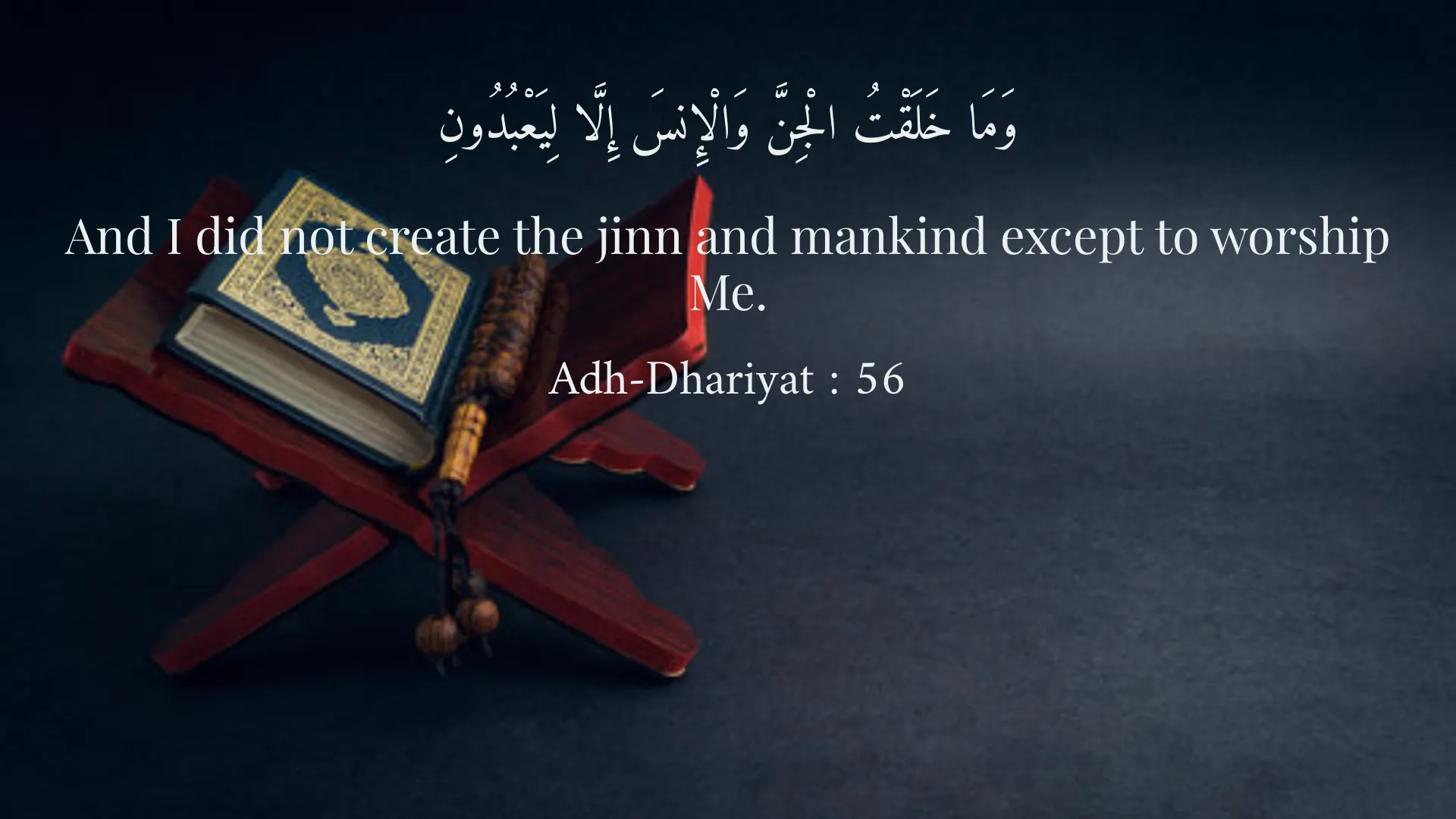
وَمَا خَلَقْتُ الْجِنَّ وَالْإِنسَ إِلَّا لِيَعْبُدُونِ
And I did not create the jinn and mankind except to worship Me.
Adh-Dhariyat : 56
قَدْ أَفْلَحَ الْمُؤْمِنُونَ
Successful indeed are the believers,
Al-Mu'minun : 1
الَّذِينَ هُمْ فِي صَلَاتِهِمْ خَاشِعُونَ
Those who are humble in their prayers.
Al-Mu'minun : 2
الَّذِينَ آمَنُوا وَتَطْمَئِنُّ قُلُوبُهُم بِذِكْرِ اللَّهِ ۗ أَلَا بِذِكْرِ اللَّهِ تَطْمَئِنُّ الْقُلُوبُ
Those who have believed and whose hearts are assured by the remembrance of Allah. Unquestionably, by the remembrance of Allah hearts are assured.
Ar-Ra'd : 28
Short Story
It is narrated that in a certain town, there lived a devout worshipper who had spent many years diligently engaged in prayer and remembrance. However, one day, a feeling of weariness and spiritual dryness came over him. His prayers no longer held their former fervor, and his invocations seemed repetitive. Distressed, he sought out a wise old man, a man of profound spiritual insight, and shared his plight. The wise elder smiled and said, "My son, your situation is like that of a garden which you water every day, but you never look at its fruits nor become intoxicated by the beauty of its flowers. Worship is not merely pouring water onto the roots; it is also about tasting the fruit and smelling the flower." Then the elder continued: "Every day you stand for prayer, imagine it is your last prayer, and you will never again have the opportunity. With your entire being, with your heart and tongue, connect with God. When you recite remembrance, taste its meaning in your soul, and in every small blessing, see His powerful hand." The worshipper pondered these words deeply. He realized that for years he had only performed the outward form of worship, neglecting its inner essence and depth. From then on, in every prayer and remembrance, he imbued it with meaning through presence of heart and contemplation. It wasn't long before the weariness departed from him, and his acts of worship became a gushing spring of joy and tranquility for him, and each day, he felt himself closer to the Divine.