Quranic Answer
The feeling that worship is burdensome or difficult is a common human experience that many believers encounter at various points in their spiritual journey. It's a profound question that touches upon the very core of our relationship with the Divine. The Holy Quran, with its infinite wisdom, does not ignore this real feeling; rather, it provides profound insights into its causes and offers practical remedies to overcome it, guiding us towards a more fulfilling and joyful spiritual life. Firstly, one of the primary reasons worship might feel heavy stems from a misunderstanding of its true nature and purpose. Often, we perceive worship merely as a set of rituals or obligations rather than a profound connection, a source of peace, and a means of spiritual growth. The Quran consistently emphasizes that Allah does not burden a soul beyond its capacity (Al-Baqarah 2:286) and that He intends ease for us, not hardship (Al-Baqarah 2:185). When worship is viewed as a heavy duty imposed from outside, devoid of its inner spiritual essence, it naturally feels weighty. However, when understood as a dialogue with the Creator, a refuge from worldly anxieties, and a pathway to inner tranquility, its perceived weight diminishes, transforming into a source of solace and strength. The Quran invites us to reflect on our creation, stating in Surah Adh-Dhariyat (51:56): "And I did not create the jinn and mankind except to worship Me." This verse highlights that worship is not an arbitrary command but the very purpose of our existence, designed for our ultimate good and spiritual fulfillment. Secondly, a significant factor contributing to this sense of burden is a weakening of faith or a state of spiritual heedlessness (ghafala). When our hearts are disconnected from the remembrance of Allah, and our minds are preoccupied with worldly affairs, acts of worship can indeed feel like a chore. The Quran warns against such heedlessness, emphasizing the importance of constant remembrance (Dhikr). In Surah Ar-Ra'd (13:28), Allah states: "Those who have believed and whose hearts are assured by the remembrance of Allah. Unquestionably, by the remembrance of Allah hearts are assured." This verse offers a direct antidote to the heaviness: a heart filled with God's remembrance finds peace, making worship feel natural and light. Conversely, a heart devoid of this remembrance becomes hard and resistant to spiritual acts. The hypocrites, for instance, are described in Surah An-Nisa (4:142) as standing for prayer "lazily, showing [themselves to] the people and not remembering Allah except a little." This powerful description directly links the feeling of lethargy in worship to a lack of sincere remembrance and intention. Thirdly, the insidious whispers and machinations of Shaytan (Satan) play a crucial role in making worship seem daunting. Shaytan's primary objective is to divert humanity from the path of Allah, and he employs various tactics, including instilling laziness, procrastination, and a sense of futility regarding acts of devotion. He exaggerates the perceived difficulty and minimizes the immense rewards. The Quran repeatedly warns us about Shaytan as a clear enemy and enjoins us to seek refuge from him. Recognizing his whispers as external interference rather than an inherent dislike for worship can empower us to resist them. Furthermore, excessive attachment to worldly life (dunya) and its fleeting pleasures can eclipse the light of faith and make spiritual pursuits seem less appealing. When material possessions, social status, or worldly ambitions become our ultimate goal, the spiritual dimension of life takes a backseat, and worship, which calls for detachment from these transient things, can feel like an imposition. The Quran reminds us that this worldly life is but a fleeting enjoyment, and the hereafter is far better and more enduring (Al-A'la 87:16-17). Shifting our perspective to prioritize the eternal over the temporary can dramatically alter our perception of worship, transforming it from a burdensome task into a cherished investment in our everlasting future. Lastly, the feeling of heaviness can also arise from a lack of genuine love for Allah and His commands. When love is present, obedience becomes joyful and spontaneous, not burdensome. The Quran encourages us to reflect on Allah's countless blessings and His boundless mercy, fostering a deep sense of gratitude and love. When we truly appreciate that worship is a means to express our gratitude, seek His pleasure, and draw closer to Him, it ceases to be a heavy obligation and becomes a beloved act of devotion. Surah Al-Baqarah (2:45) states: "And seek help through patience and prayer. And indeed, it is difficult except for the humbly submissive [to Allah]." This verse implicitly suggests that for those with true humility and submission (khushu'), worship is not difficult, indicating that a deeper spiritual state alleviates the burden. To overcome this feeling of heaviness, the Quran offers clear guidance: 1. Deepen your understanding: Reflect on the purpose of creation and the true essence of worship. Understand that Allah needs nothing from us, but we desperately need Him and His guidance. 2. Increase Dhikr (remembrance of Allah): Engage in constant remembrance through prayer, supplication, recitation of the Quran, and pondering His signs. This nurtures the heart and brings tranquility. 3. Seek Allah's help: Turn to Allah sincerely, asking for ease and strength. As 2:45 suggests, prayer itself is a means of seeking help for other prayers. 4. Reflect on the rewards: Meditate on the immense spiritual and worldly benefits of worship, including inner peace, strength, forgiveness, and the promise of Paradise. 5. Combat Shaytan's whispers: Seek refuge in Allah from Satan, recognize his deceptive tactics, and persist in your good deeds. 6. Prioritize the Hereafter: Re-evaluate your priorities, recognizing the ephemeral nature of this world and the everlasting importance of the spiritual journey. 7. Cultivate love for Allah: Reflect on His attributes, His blessings, and His boundless mercy, allowing gratitude and love to fill your heart. In essence, while the feeling of worship being heavy is real, it is often a symptom of an underlying spiritual condition. By addressing these root causes through a deeper understanding, sincere remembrance, unwavering faith, and a heart filled with love and gratitude for Allah, the perceived burden transforms into a source of profound joy, peace, and spiritual upliftment. Worship becomes not an obligation to endure, but a cherished communion with the Divine, an integral part of a blessed and meaningful life.
Related Verses
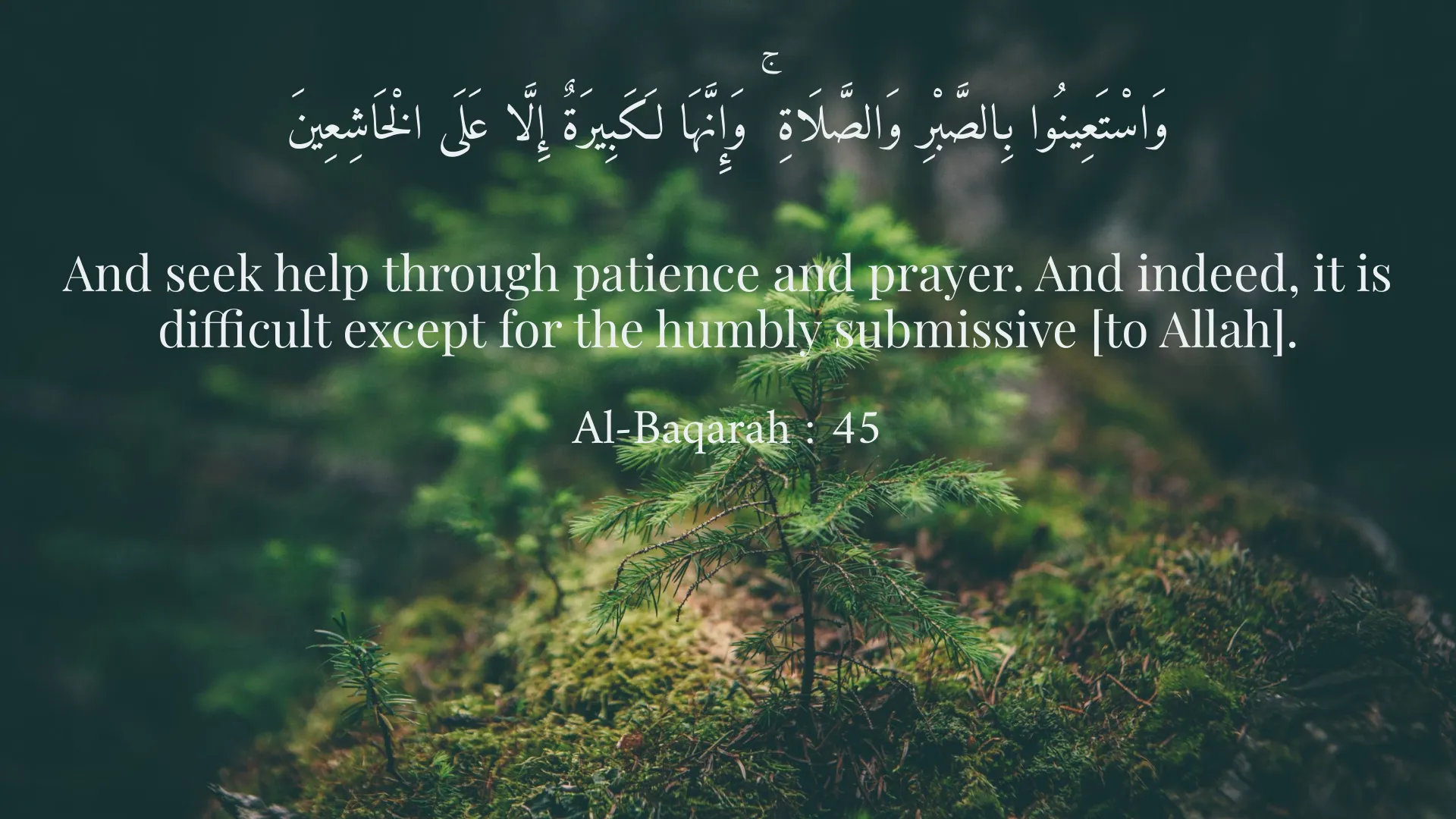
وَاسْتَعِينُوا بِالصَّبْرِ وَالصَّلَاةِ ۚ وَإِنَّهَا لَكَبِيرَةٌ إِلَّا عَلَى الْخَاشِعِينَ
And seek help through patience and prayer. And indeed, it is difficult except for the humbly submissive [to Allah].
Al-Baqarah : 45
إِنَّ الْمُنَافِقِينَ يُخَادِعُونَ اللَّهَ وَهُوَ خَادِعُهُمْ وَإِذَا قَامُوا إِلَى الصَّلَاةِ قَامُوا كُسَالَىٰ يُرَاءُونَ النَّاسَ وَلَا يَذْكُرُونَ اللَّهَ إِلَّا قَلِيلًا
Indeed, the hypocrites [think to] deceive Allah, but He is deceiving them. And when they stand for prayer, they stand lazily, showing [themselves to] the people and not remembering Allah except a little.
An-Nisa : 142
الَّذِينَ آمَنُوا وَتَطْمَئِنُّ قُلُوبُهُم بِذِكْرِ اللَّهِ ۗ أَلَا بِذِْرِ اللَّهِ تَطْمَئِنُّ الْقُلُوبُ
Those who have believed and whose hearts are assured by the remembrance of Allah. Unquestionably, by the remembrance of Allah hearts are assured.
Ar-Ra'd : 28
Short Story
Once, a dervish was seen sighing heavily after a night of long prayers. His disciple, observing his weariness, asked, 'Master, why does devotion seem so arduous for you?' The dervish smiled gently and replied, 'My dear, it is not the length of the prostrations that weighs down the heart, but the chains of worldly desires. When the heart is truly free and filled with the love of the Divine, even the longest night of vigil feels lighter than a feather, for joy transforms all toil into delight.'