Quranic Answer
Why do humans repeatedly make mistakes? This is a profound and common question that many of us face throughout life. Sometimes, despite being fully aware of the wrongness of an action, we find ourselves falling into the same trap again and again. From the perspective of the Holy Quran, the repetition of mistakes stems from several factors, all of which are intricately linked to the complex nature of human beings, external satanic influences, and the quality of our relationship with Allah. A deep understanding of these factors not only helps us to comprehend the underlying reasons for this phenomenon but also provides practical, Quranic solutions to overcome this cycle of repetition, enabling us to move towards growth and perfection. 1. The Nature of the Nafs al-Ammarah (The Soul that Incites to Evil): The first and perhaps most significant factor is the inherent nature of the human soul, which the Quran refers to as "Nafs al-Ammarah bis-Su'" (the soul that incites to evil). In Surah Yusuf, verse 53, Prophet Yusuf (AS) with divine insight states: "And I do not acquit myself. Indeed, the soul is a persistent enjoiner of evil, except for what my Lord has mercy upon. Indeed, my Lord is Forgiving and Merciful." This verse explicitly reveals that within every human being exists a powerful inclination towards error, sin, selfishness, and following personal desires. This inherent tendency, if not controlled and guided by divine teachings and self-purification, can easily lead to the repetition of mistakes. This control requires "Jihad al-Akbar" or the greater struggle (struggle against one's self); a continuous battle against unlawful desires, harmful inclinations, and bad habits. A person who is aware of this characteristic of their soul, and knows that their nafs is always lurking to lead them astray, can prevent repeatedly falling into the pit of mistakes through constant self-monitoring (muraqabah) and self-accountability (muhasabah). By acknowledging their internal weaknesses, they can strive to strengthen their spiritual and moral virtues. 2. Satanic Whispers (Waswasah): The second factor is the influence and whispers of Satan, whom the Quran identifies as an "Aduwwun Mubeen" (clear enemy) of humanity. Satan is constantly lying in wait to mislead people and pull them towards error, diverting them from the straight path. The Holy Quran refers to this enmity and Satan's deceptive methods in numerous verses. For instance, in Surah Al-Baqarah, verse 168, we read: "O mankind, eat from whatever is on earth [that is] lawful and good, and do not follow the footsteps of Satan. Indeed, he is to you a clear enemy." Satan, through his whispers and deceptions, beautifies mistakes in the human eye, trivializes their consequences, and encourages procrastination in repentance and reform. Repeating a mistake can be the result of repeatedly and unknowingly succumbing to these temptations; temptations that are sometimes very subtle and hidden, gradually dragging a person into the abyss of sin. To counter this factor, the Quran emphasizes constant remembrance of Allah (Dhikr), which strengthens the heart against temptations, seeking refuge in Allah from Satan's evil (Istia'dhah), and not following his "footsteps" which progressively lead one astray. 3. Lack of Sincere Repentance (Tawbah Nasuh): A third significant factor is the absence of "Tawbah Nasuh," or sincere and heartfelt return to Allah. Sometimes, after committing an error, a person repents, but this repentance is not from the depths of the heart; it is merely a momentary regret without a firm resolve to abandon that sin. True repentance, or "Tawbah Nasuh," has specific characteristics: it not only includes heartfelt remorse for the past but also a serious and unwavering determination not to return to that error in the future, and an effort to make amends if possible. In Surah An-Nisa, verse 17, Allah states: "But repentance is for those who do evil in ignorance and then repent soon after. It is to them that Allah turns in forgiveness. And Allah is ever Knowing and Wise." The phrase "soon after" (min qareeb) indicates that a person should quickly and without delay return to Allah, and this repentance must be accompanied by a firm and practical decision to change behavior. If repentance is superficial and does not address the root causes of the error, the same incorrect behavioral patterns will remain within the individual, leading to repeated mistakes. 4. Heedlessness (Ghaflah) and Lack of Reflection on Consequences: The fourth factor is heedlessness and insufficient reflection on the consequences of actions and learning from past experiences. The Holy Quran repeatedly invites humanity to reflect (tafakkur), ponder (tadabbur) upon its verses and signs, and take lessons from the fate of past nations, as well as from the outcomes of one's own actions. Those who continue their lives without reflecting on the results of their deeds, and without learning from past experiences (whether personal or others'), are prone to repeating mistakes. In Surah Al-Hashr, verse 18, Allah says: "O you who have believed, fear Allah. And let every soul look to what it has put forth for tomorrow - and fear Allah. Indeed, Allah is Acquainted with what you do." This verse emphasizes the importance of "Muhasabah al-Nafs" (self-accountability) and looking towards the future, which is a prerequisite for not repeating errors. If a person does not consider the consequences of their actions, does not learn from bitter past experiences, and remains indifferent to the negative repercussions of their behavior, it is natural for them to continue down the same wrong paths repeatedly. 5. Lack of Patience (Sabr) and Steadfastness (Istiqamah): Another factor that plays a significant role in repeating mistakes is the lack of patience and steadfastness in the path of self-improvement and abandoning sins. Changing deeply ingrained habits and giving up sins requires strong will, perseverance, and immense steadfastness. Many individuals desire to change quickly, and when they face the first obstacle or temptation, they become discouraged and revert to past mistakes. The Quran offers the solution to this problem through patience and prayer. In Surah Al-Baqarah, verse 153, Allah says: "O you who have believed, seek help through patience and prayer. Indeed, Allah is with the patient." Anyone who is impatient in their path of self-correction, and reverts to past errors as soon as they encounter difficulty or temptation, will never break free from the cycle of repetition. Prayer and patience are two powerful tools for strengthening one's will, persevering on the path of truth, and drawing spiritual energy from Allah. Patience in the face of temptations, patience in performing acts of obedience, and patience in refraining from prohibitions are all essential pillars for escaping the repetition of mistakes. Quranic Solutions to Overcome Repeating Mistakes: To overcome this cycle, the Holy Quran provides practical and comprehensive solutions: * Constant Self-Accountability (Muhasabah) and Self-Monitoring (Muraqabah): As mentioned, every night before sleeping or at the end of each day, review your actions and identify strengths, weaknesses, and errors committed. * Sincere and Practical Repentance (Tawbah Nasuh): Heartfelt remorse, a strong determination to abandon the sin, and efforts to make amends for past wrongs (e.g., seeking forgiveness or making restitution). * Constant Remembrance of Allah (Dhikr): The remembrance of Allah, both verbally and by heart, calms the soul, wards off satanic whispers, and keeps a person on the right path. * Seeking Help and Reliance on Allah (Tawakkul): Through prayer (Salat), supplication (Du'a), reliance on Allah, and a deep connection with the Almighty, ask Allah to assist you against the inciting soul (Nafs al-Ammarah) and Satan's temptations, and to keep your steps firm. * Associating with the Righteous and Avoiding Sinful Environments: One's surroundings and companions greatly influence behavior. Associating with good people encourages goodness and avoidance of error. * Strengthening Religious Knowledge and Insight (Basirah): A deeper understanding of divine commandments, their wisdom, and awareness of the consequences of sins helps a person avoid errors due to ignorance and increases their ability to discern right from wrong. In conclusion, although repeating mistakes is distressing, it can be a sign of a need for a deep reassessment of our relationship with Allah and ourselves. Allah is the Most Merciful and Forgiving, and the doors of repentance and return are never closed. What is important is genuine remorse, a firm resolve to abandon errors, and continuous effort for correction. By following the guidance of the Quran, we can break this cycle of repetition and strive towards perfection, inner peace, and divine pleasure, experiencing a more meaningful and purposeful life. This path may be challenging, but its reward is salvation and success in this world and the Hereafter.
Related Verses
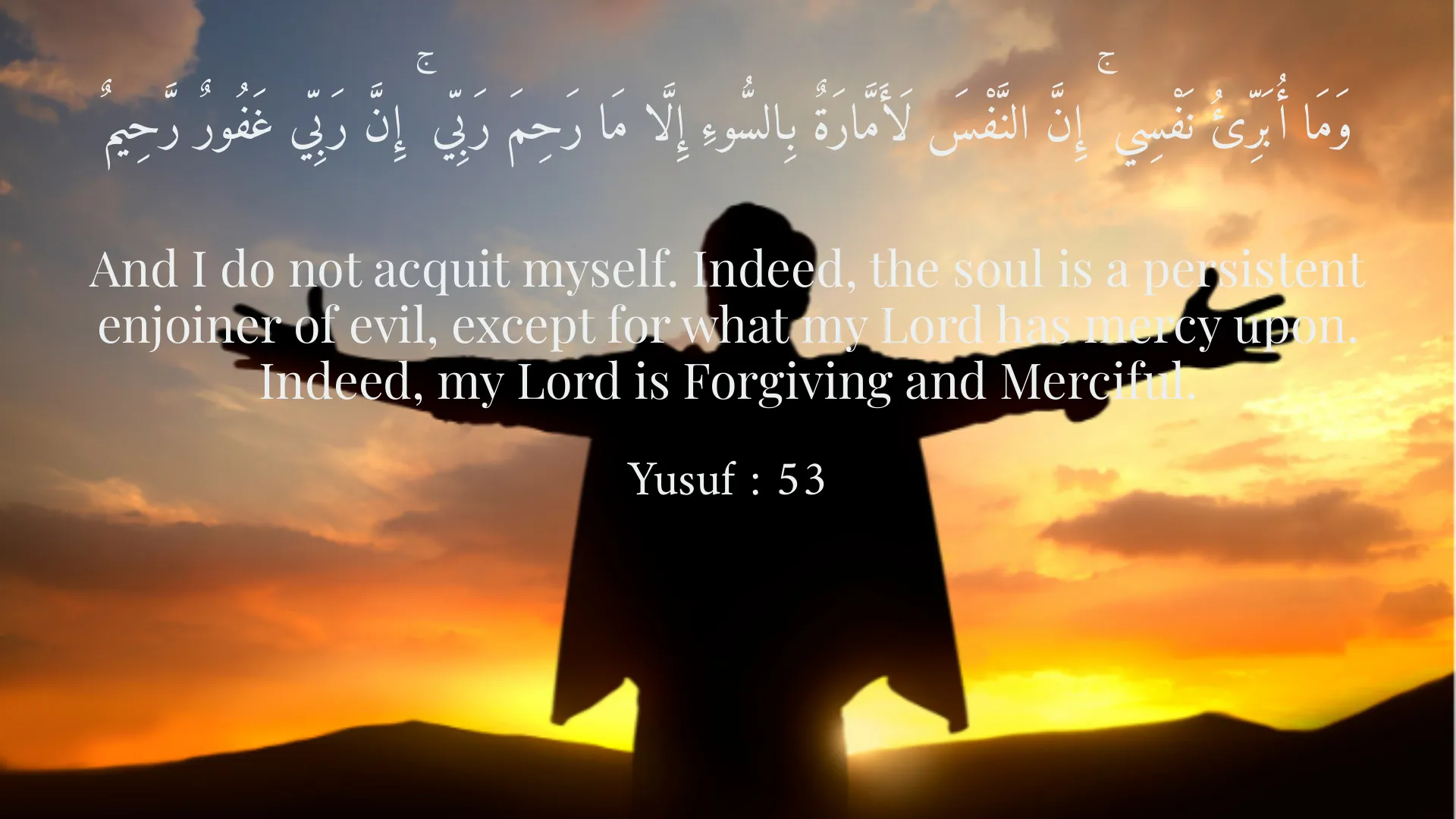
وَمَا أُبَرِّئُ نَفْسِي ۚ إِنَّ النَّفْسَ لَأَمَّارَةٌ بِالسُّوءِ إِلَّا مَا رَحِمَ رَبِّي ۚ إِنَّ رَبِّي غَفُورٌ رَّحِيمٌ
And I do not acquit myself. Indeed, the soul is a persistent enjoiner of evil, except for what my Lord has mercy upon. Indeed, my Lord is Forgiving and Merciful.
Yusuf : 53
يَا أَيُّهَا النَّاسُ كُلُوا مِمَّا فِي الْأَرْضِ حَلَالًا طَيِّبًا وَلَا تَتَّبِعُوا خُطُوَاتِ الشَّيْطَانِ ۚ إِنَّهُ لَكُمْ عَدُوٌّ مُّبِينٌ
O mankind, eat from whatever is on earth [that is] lawful and good, and do not follow the footsteps of Satan. Indeed, he is to you a clear enemy.
Al-Baqarah : 168
إِنَّمَا التَّوْبَةُ عَلَى اللَّهِ لِلَّذِينَ يَعْمَلُونَ السُّوءَ بِجَهَالَةٍ ثُمَّ يَتُوبُونَ مِن قَرِيبٍ فَأُولَٰئِكَ يَتُوبُ اللَّهُ عَلَيْهِمْ ۗ وَكَانَ اللَّهُ عَلِيمًا حَكِيمًا
But repentance is for those who do evil in ignorance and then repent soon after. It is to them that Allah turns in forgiveness. And Allah is ever Knowing and Wise.
An-Nisa : 17
Short Story
It is narrated that an imprudent man repeatedly fell into a well, and each time, with great difficulty and by seeking help, he was rescued. His friends advised him, 'Beware of this path and pay attention to the signs, for this well is deep and dangerous.' But each time, he took their words as a jest, saying, 'I am wise enough and know my own way.' Not long after, he fell into the same well again, and this time his cries reached no one. Finally, with great effort and many injuries, he pulled himself out. Then he vowed to himself never again to stray from the known and safe path and to listen to his friends' advice. Saadi says: 'When a wise man sees himself in a well / He resolves to find another way.' This tale illustrates that until a person learns from their mistakes and makes a serious determination to change, they will inevitably repeat them, and sometimes advice only becomes effective after a bitter experience.