Quranic Answer
The question, "Why do I not get tired of repeating my mistakes?" delves into a profound aspect of human psychology and spiritual struggle, touching upon themes of self-awareness, willpower, and the subtle influences that shape our choices. While the Holy Quran does not use modern psychological terminology to diagnose this state, it offers deep, insightful explanations rooted in spiritual and moral principles. It illuminates the internal conflicts and external temptations that can lead an individual to fall repeatedly into the same errors, seemingly without exhaustion, and, more importantly, provides the divine remedies for breaking free from such detrimental cycles. One of the primary reasons highlighted in the Quran, which can be considered the root of many repeated mistakes, is the influence of the "Nafs al-Ammara bis-Su'" – the commanding self that inclines one to evil. This is the ego or soul that persistently incites a person towards desires and limitless wants, even if these desires contradict reason and pure human nature (fitra). In Surah Yusuf, verse 53, Allah states: "And I do not acquit myself. Indeed, the soul is a persistent enforcer of evil, except for what my Lord has mercy upon. Indeed, my Lord is Forgiving and Merciful." This verse explicitly reveals the inner human inclination towards error and sin, unless it is accompanied by divine mercy and a conscious struggle against this self. The repetition of mistakes often stems from succumbing to this "Nafs al-Ammara" which, due to the false allure and transient pleasures of this world, draws a person towards itself and prevents them from feeling tired or disgusted by this repetition. This ego operates with such subtlety and complexity that sometimes a person doesn't even realize they are repeating destructive patterns under its influence. This is where the profound need for spiritual awakening and awareness of the traps laid by the commanding self becomes acutely apparent, and understanding this intrinsic pull is the first step toward overcoming it. Another significant factor is the whispers and temptations of Satan. Satan is the clear enemy of humanity, constantly striving to divert individuals from the path of truth and lead them towards sin and error. He not only invites people to sin but beautifies sin in their eyes and makes them oblivious to its dire consequences. In Surah An-Nisa, verse 120, Allah says: "He [Satan] promises them and arouses desire in them. But Satan does not promise them except delusion." These deceptions and false promises from Satan cause individuals, even after committing mistakes and experiencing their bitter consequences, to fall into his subsequent traps. This is because Satan constantly gives them false hope and trivializes the ramifications of sin. These temptations can be very persistent and cunning, to the extent that they lead a person to believe that repeating a mistake is acceptable or that they will compensate for it in the near future. This psychological mechanism that Satan instills in humans is a key factor in the lack of feeling exhaustion from repeating errors; he influences one's ability to distinguish right from wrong, and benefit from harm, thus plunging them into a cycle of repetition. "Ghaflah" or heedlessness is also a crucial factor in the repetition of mistakes. Ghaflah means forgetting the primary purpose of creation, forgetting God, the Day of Judgment, and the consequences of one's actions. When a person becomes heedless of these realities, they ponder less on the repercussions of their mistakes and, consequently, find no motivation to abandon them or rectify their behavior. The Holy Quran repeatedly warns humanity against heedlessness and advises them to always remember God and the Day of Judgment. This heedlessness can be due to excessive worldly preoccupations, pursuit of pleasure, or even habitual sin, which, over time, causes the human heart to harden and no longer be affected by remorse or regret. "Qaswat al-Qalb" or the hardening of the heart is a result of repeated sin and heedlessness. When a person's heart hardens, the light of divine guidance and the reminders from the Quran and reason can no longer penetrate it, and this lack of sensitivity causes the individual not to even feel the pain and suffering caused by sin. This state prevents the feeling of pain and suffering caused by sin, and as a result, the cycle of repeating mistakes continues because there is no longer an internal deterrent to stop it. The absence of "Tawbah Nasuh" or sincere repentance can also be a reason for this repetition. Repentance is not merely uttering "Astaghfirullah" (I seek forgiveness from Allah); rather, it is a profound change of heart and a strong resolve to abandon sin and return to God. True repentance encompasses regretting the past, making a serious decision to abandon the sin in the present, and making amends for what has been lost or wronged in the future. If repentance is not deep and genuine, and merely lip service, the individual will likely revert to the same mistakes. In Surah Az-Zumar, verse 53, Allah, with utmost mercy and forgiveness, states: "Say, 'O My servants who have transgressed against themselves [by sinning], do not despair of the mercy of Allah. Indeed, Allah forgives all sins. Indeed, it is He who is the Forgiving, the Merciful.'" This verse keeps the hope of divine forgiveness alive, even for those who have committed many sins. To truly get tired of repeating mistakes and ultimately break free, one must disrupt this cycle with genuine repentance and a firm resolve for change. Without this unwavering resolve and willpower, the cycle will persist, and the individual will remain trapped in sin. To exit this state, the Quran provides practical and comprehensive solutions through which this destructive cycle can be broken, and one can move towards growth and perfection: 1. Returning to God (Tawbah and Istighfar): The most crucial step is sincere repentance. This includes honestly acknowledging the mistake, feeling genuine remorse for it, and making a firm and decisive resolve to abandon it in the future. This repentance must be accompanied by Istighfar (seeking forgiveness) and be continuous. Divine mercy is vast, and one should never despair of it, even if lapses occur repeatedly and one falls back into error. Allah always keeps the door of repentance open. 2. Constant remembrance of God (Dhikr): The remembrance of God, including prayer, recitation of the Quran, supplication, and glorification, keeps the heart awake and pulls a person out of heedlessness. The Quran states: "Unquestionably, by the remembrance of Allah hearts are assured" (Surah Ar-Ra'd, verse 28). Tranquility and attentiveness to God act as a strong barrier against temptations and carnal desires, empowering the individual to resist. 3. Self-accounting (Muhasabah): One of the strong recommendations in Islam is self-accounting and self-observation (muraqabah). This means that every night before sleeping, we should reflect on our daily actions. What mistakes were made? Why? What factors led us to them? And how can we prevent their recurrence in the future? This regular self-review helps increase self-awareness, accountability, and a deeper understanding of oneself. 4. Strengthening Faith and Knowledge: A deeper understanding of God, the true purpose of life, the philosophy of creation, and the consequences of sins in this world and the hereafter, strengthens faith. The stronger the faith, the easier it becomes to struggle against the commanding self and Satan's whispers, and the firmer one's resolve to abandon errors becomes. Acquiring religious knowledge is a key to solving many ethical and behavioral problems. 5. Perseverance and Steadfastness (Istiqamah): Changing habits and abandoning repeated mistakes requires patience and steadfastness. This is not an overnight process, and lapses may occur repeatedly, but it is crucial not to despair. Every time we fall, we must rise again and return to the path with firm resolve. Steadfastness on the path of truth is the key to success in this internal struggle. Ultimately, not feeling tired of repeating mistakes is a sign of a deep need for spiritual awakening and a re-evaluation of one's relationship with oneself, God, and the world. The Holy Quran clearly shows this path and, with the promise of divine mercy and forgiveness, invites humanity towards liberation from this cycle. By acknowledging weaknesses, turning to the divine threshold, and continuously striving for self-purification, these chains can be broken, leading to true tranquility and genuine growth. This path is continuous and requires persistent effort, but its outcome is freedom from the bondage of errors and the attainment of eternal felicity and inner peace, which nothing else can replace.
Related Verses
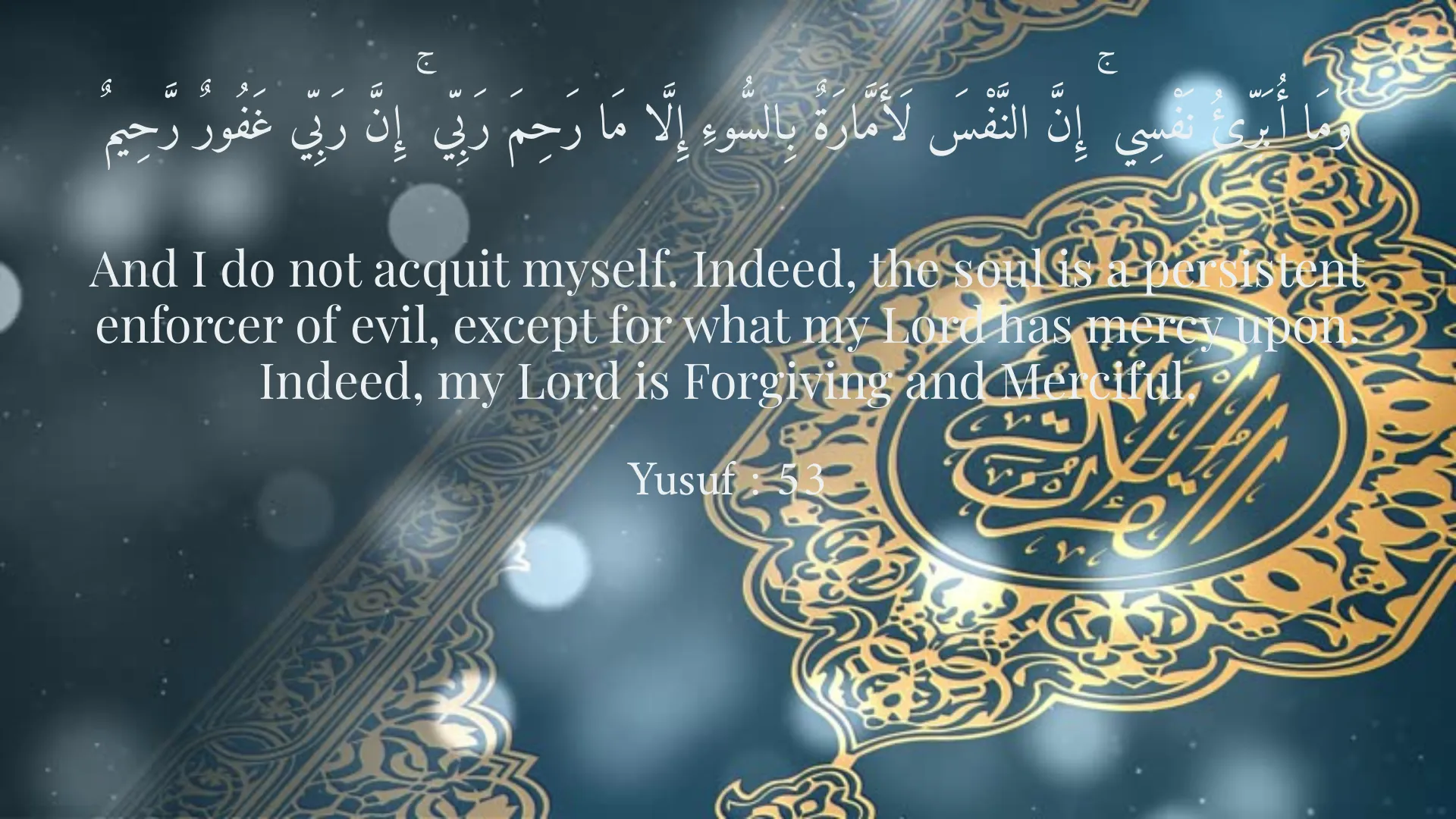
وَمَا أُبَرِّئُ نَفْسِي ۚ إِنَّ النَّفْسَ لَأَمَّارَةٌ بِالسُّوءِ إِلَّا مَا رَحِمَ رَبِّي ۚ إِنَّ رَبِّي غَفُورٌ رَّحِيمٌ
And I do not acquit myself. Indeed, the soul is a persistent enforcer of evil, except for what my Lord has mercy upon. Indeed, my Lord is Forgiving and Merciful.
Yusuf : 53
قُلْ يَا عِبَادِيَ الَّذِينَ أَسْرَفُوا عَلَىٰ أَنفُسِهِمْ لَا تَقْنَطُوا مِن رَّحْمَةِ اللَّهِ ۚ إِنَّ اللَّهَ يَغْفِرُ الذُّنُوبَ جَمِيعًا ۚ إِنَّهُ هُوَ الْغَفُورُ الرَّحِيمُ
Say, 'O My servants who have transgressed against themselves [by sinning], do not despair of the mercy of Allah. Indeed, Allah forgives all sins. Indeed, it is He who is the Forgiving, the Merciful.'
Az-Zumar : 53
يَعِدُهُمْ وَيُمَنِّيهِمْ ۖ وَمَا يَعِدُهُمُ الشَّيْطَانُ إِلَّا غُرُورًا
He [Satan] promises them and arouses desire in them. But Satan does not promise them except delusion.
An-Nisa : 120
Short Story
In ancient times, in a city full of wisdom and knowledge, there lived a man named Aref. Aref was a righteous and well-respected man, yet he occasionally slipped into unpleasant habits and minor mistakes that he himself was displeased with. He would often resolve to abandon them, but it wasn't long before he returned to the same path. One day, he went to a wise Sheikh, a man of profound spiritual insight, and with a deep sigh, said, "O Sheikh, I am astonished by myself! Every time I make a mistake, I regret it and decide to quit it, but then I relapse. It's as if I never get tired of repeating these errors. Guide me, what should I do?" The wise Sheikh smiled and said, "My son, your story is like that of a villager who, every time he passed through a muddy road, his clothes would get stained with mud. Each time he would complain and say he would never pass that way again, but the very next day, he would take the same road. Until one day, he went to a sage and complained about his condition. The sage said, 'O man, you get tired of the mud on your clothes, but you don't get tired of your mistaken path! Your exhaustion is from the outward appearance, not from the inner reality.'" The Sheikh continued, "You too get tired of the <i>results</i> of your mistakes, but you haven't accepted their root within yourself. Until you recognize your 'Nafs al-Ammara' (commanding self), earnestly fight against Satan's whispers, and awaken your heart with the remembrance of God, this cycle will continue. True exhaustion from repeating mistakes begins when the pain caused by them penetrates the depths of your being and propels you towards real change. Then you will see how the path of truth and righteousness will be sweeter and more serene than any other path." Aref took heed of the Sheikh's words. From then on, instead of fleeting regrets, he dedicated himself to self-purification and constant remembrance of God, stepping firmly onto the path of repentance and steadfastness. He gradually realized that only through deep awareness and continuous struggle could one break free from the bondage of repeating errors and attain true peace.