Quranic Answer
The question of why one might fall back into sin after engaging in acts of worship is a deeply reflective one, touching upon the very essence of human nature, the purpose of devotion, and the constant spiritual struggle. The Holy Quran, as our ultimate guide, provides profound insights into this common experience, offering both explanations and pathways to overcome this challenge. One of the most pivotal verses that directly addresses the preventative power of worship, particularly prayer (Salat), is found in Surah Al-Ankabut (The Spider), verse 45: "Recite, [O Muhammad], what has been revealed to you of the Book and establish prayer. Indeed, prayer prohibits immorality and wrongdoing, and the remembrance of Allah is greater. And Allah knows that which you do." This verse clearly states that prayer, when established properly, should deter a person from engaging in indecency and evil. If an individual finds themselves sinning shortly after prayer or other acts of worship, it prompts a sincere introspection into the quality and depth of their devotion. Is the worship merely a set of physical movements and recited words, or does it genuinely engage the heart and soul? Is there sufficient khushu' (humility and attentiveness) and sincerity in our prayers? When a person truly submits to Allah with their entire being, their spirit is purified, and their resolve to avoid sin is strengthened. If this deterrent effect is not fully realized, it might be due to a failure in fully "establishing" the prayer, meaning it is performed but not truly integrated into the individual's inner being and daily life. It is not just about performing the ritual, but letting its essence permeate one's character and actions. The "remembrance of Allah is greater" part further emphasizes that the continuous state of being mindful of God, beyond the formal prayer, is paramount. Another significant factor, as illuminated by the Quran, is the persistent whispers and schemes of Satan (Shaytan). Satan is an avowed enemy of humanity, and he never ceases in his attempts to lead people astray. Allah states in Surah Fatir (The Originator), verse 6: "Indeed, Satan is an enemy to you; so take him as an enemy. He only invites his party to be among the companions of the Blaze." Acts of worship create a spiritual shield, distancing a person from Satan's influence. However, as soon as the act of worship concludes, Satan renews his efforts to tempt and mislead. He is acutely aware of human weaknesses and exploits desires, anger, greed, and forgetfulness of God to draw individuals back into sin. Therefore, the struggle against Satan is an ongoing battle that requires constant vigilance. Even after a profound spiritual experience, if one becomes heedless and immediately succumbs to carnal or satanic temptations, they may fall into sin again. This highlights the importance of consistent remembrance of Allah and maintaining a state of piety in all moments of life, not just during specific times of worship. Furthermore, the inherent nature of the human self, often referred to as the nafs al-ammarah bis-su' (the commanding self that incites evil), also plays a role in leading one towards sin. The Quran explicitly states this human inclination: "And I do not acquit myself. Indeed, the soul is a persistent enjoiner of evil, except for what my Lord has mercy upon. Indeed, my Lord is Forgiving and Merciful." (Surah Yusuf, verse 53). This inner struggle between divine inclinations and worldly desires is constant. While worship helps strengthen the divine inclinations, it does not mean the 'commanding self' is permanently subdued. Humans must always be in a state of self-awareness and strive against their lower desires. This internal struggle is often termed the 'greater jihad' (jihad al-akbar) and demands perseverance and steadfastness. A crucially important point emphasized by the Quran is the concept of Tawbah (repentance) and returning to God. If one sins after worship, they must not despair. Despair of Allah's mercy is, in itself, a grave sin. Allah, the Most Merciful, declares in Surah Az-Zumar (The Troops), verse 53: "Say, 'O My servants who have transgressed against themselves [by sinning], do not despair of the mercy of Allah. Indeed, Allah forgives all sins. Indeed, it is He who is the Forgiving, the Merciful.'" This verse opens wide the door of hope for sinners, demonstrating that Allah is always ready to accept the repentance of His servants. This cyclical nature of "worship-sin-repentance" illustrates human weakness in the face of temptation, alongside the boundless vastness of Divine Mercy. The key is to return to Allah immediately after a stumble, sincerely repent, and resolve not to repeat the sin. To effectively address this challenge, the Quran implicitly offers several practical approaches: 1. Continuous Remembrance of Allah (Dhikr): Not just during formal prayers, but throughout the day. The phrase "and the remembrance of Allah is greater" in Al-Ankabut 29:45 points to this. Constant remembrance in one's heart, mind, and tongue creates a strong barrier against temptations. 2. Adherence to Taqwa (God-consciousness): The Quran repeatedly enjoins believers to cultivate Taqwa, which is self-restraint and mindfulness of Allah's commands and prohibitions. Taqwa grants spiritual insight, helping individuals discern right from wrong. 3. Choosing Righteous Company: The Quran emphasizes the importance of associating with pious individuals, as one's environment and companions have a direct impact on behavior. 4. Commitment to Self-Correction: Each time a sin occurs, one should immediately repent without despair, strive to make amends, and firmly resolve not to repeat it in the future. This continuous process of self-refinement and return signifies perseverance on the path of servitude to Allah. Ultimately, falling back into sin after worship should not lead to discouragement or abandonment of devotion. Instead, it should serve as a powerful impetus to deepen one's connection with Allah, better understand inner and outer adversaries, and strengthen one's resolve. This spiritual journey is a continuous one, and with every step taken towards Allah, even after a stumble, His mercy and forgiveness embrace the individual more fully.
Related Verses
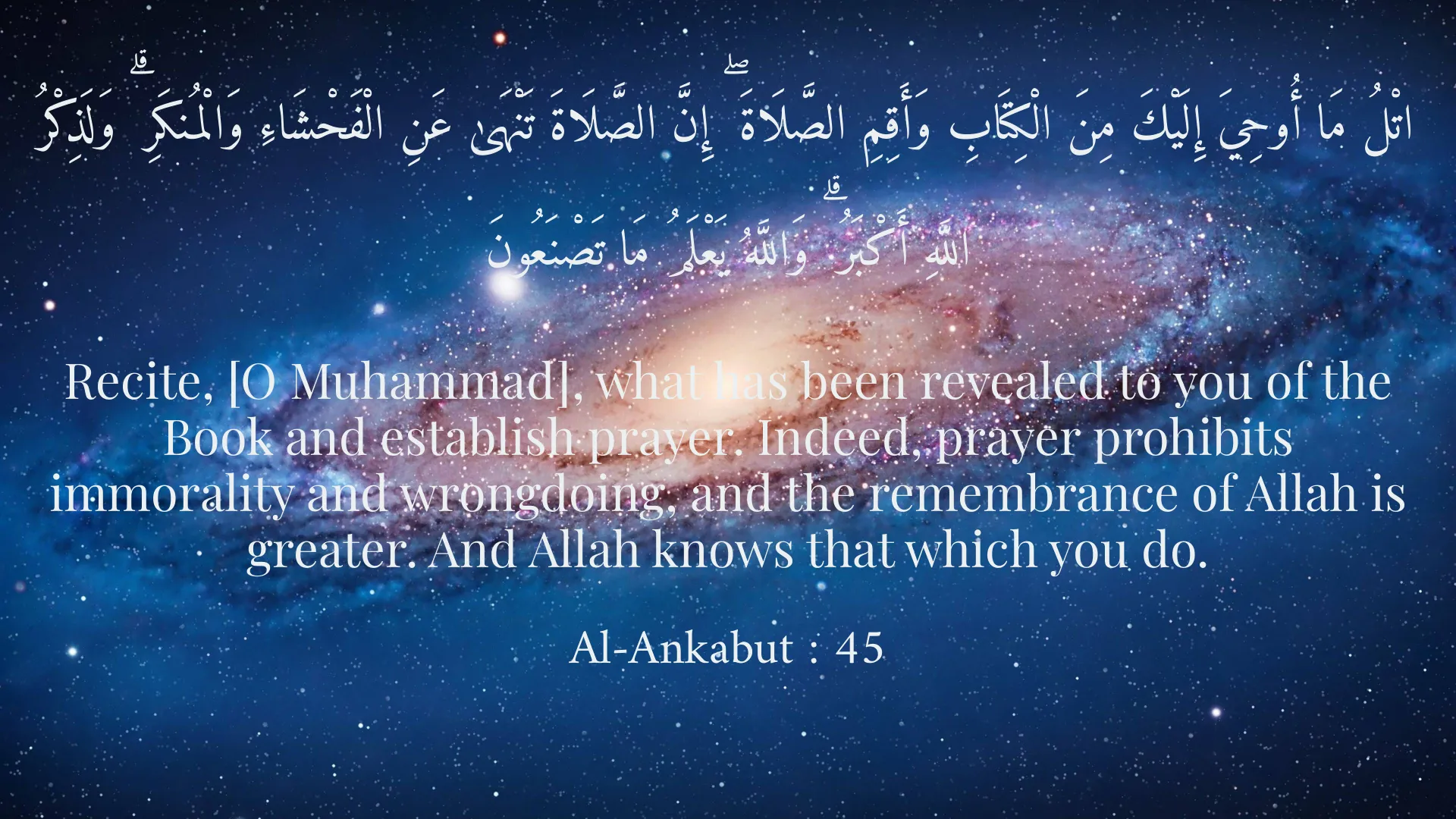
اتْلُ مَا أُوحِيَ إِلَيْكَ مِنَ الْكِتَابِ وَأَقِمِ الصَّلَاةَ ۖ إِنَّ الصَّلَاةَ تَنْهَىٰ عَنِ الْفَحْشَاءِ وَالْمُنكَرِ ۗ وَلَذِكْرُ اللَّهِ أَكْبَرُ ۗ وَاللَّهُ يَعْلَمُ مَا تَصْنَعُونَ
Recite, [O Muhammad], what has been revealed to you of the Book and establish prayer. Indeed, prayer prohibits immorality and wrongdoing, and the remembrance of Allah is greater. And Allah knows that which you do.
Al-Ankabut : 45
إِنَّ الشَّيْطَانَ لَكُمْ عَدُوٌّ فَاتَّخِذُوهُ عَدُوًّا ۚ إِنَّمَا يَدْعُو حِزْبَهُ لِيَكُونُوا مِنْ أَصْحَابِ السَّعِيرِ
Indeed, Satan is an enemy to you; so take him as an enemy. He only invites his party to be among the companions of the Blaze.
Fatir : 6
قُلْ يَا عِبَادِيَ الَّذِينَ أَسْرَفُوا عَلَىٰ أَنفُسِهِمْ لَا تَقْنَطُوا مِن رَّحْمَةِ اللَّهِ ۚ إِنَّ اللَّهَ يَغْفِرُ الذُّنُوبَ جَمِيعًا ۚ إِنَّهُ هُوَ الْغَفُورُ الرَّحِيمُ
Say, 'O My servants who have transgressed against themselves [by sinning], do not despair of the mercy of Allah. Indeed, Allah forgives all sins. Indeed, it is He who is the Forgiving, the Merciful.'
Az-Zumar : 53
Short Story
It is narrated that a mystic, after years of worship and vigils, still suffered from the temptations of his lower self and worldly desires. Whenever he finished his night prayers, it was as if a light illuminated his heart, and his resolve to abandon sin became firm. Yet, it wasn't long before, amidst the complexities of the worldly market or the allure of food and sleep, his resolve would weaken, and he would fall into a minor or major sin. With a broken heart, he approached a spiritual master and said, "O wise elder, what should I do? Despite all this worship, I am still a slave to my own self, and each time after finding purity in devotion, I fall back into error." The master, with a benevolent smile, replied: "My son, does a gardener abandon his garden after watering it? Or does he become disheartened when a weed sprouts? No! The gardener visits his garden daily, waters it, plucks the weeds, and nurtures the trees. Your soul is like a garden; acts of worship are its life-giving water, and sins are its weeds. Each time a sin emerges, uproot it with repentance and seeking forgiveness, and continuously water your soul with worship and remembrance. Do not despair of God's mercy, for He is the true Gardener of hearts, and each time you turn towards Him, He accepts you and aids you. Steadfastness on this path is worship itself, and eventually, this garden of the heart will become a paradise." The mystic was heartened by the elder's words and understood that the path to salvation lay in continuous effort and never despairing of Divine grace.