Quranic Answer
The feeling of negativity, or even self-dislike, is a common human experience that many of us encounter throughout our lives. This feeling can stem from various factors, including past mistakes, unmet expectations, comparing oneself to others, or even negative environmental influences and internal whispers. While the Holy Quran does not directly use the term 'self-dislike,' it presents concepts that profoundly help in understanding and treating this spiritual state. From a Quranic perspective, this feeling can have roots in the self-reproaching soul, negligence of God's remembrance, the influence of Satan, and worldliness. One of the most significant concepts in the Quran that addresses this condition is the concept of 'Nafs al-Lawwamah,' or the self-reproaching soul. In Surah Al-Qiyamah, verse 2, Allah swears by it: 'And I swear by the self-reproaching soul.' The Nafs al-Lawwamah is the awakened conscience of a human being that reproaches and blames one after committing a sin or a mistake. This self-reproach is essentially a divine blessing, as it indicates the vitality of conscience and the awakening of the heart. If this feeling of self-reproach did not exist, a person might continue down a path of error without any deterrent. Therefore, the primary root of discomfort with oneself is often the awakening of this conscience and the innate human tendency towards purity and perfection. If managed correctly, this feeling can lead to repentance, rectification, and moving towards betterment. However, if this self-reproach becomes excessive and turns into despair and feelings of worthlessness, it can be destructive. Another Quranic reason that might lead to self-dislike is the commission of sins and shortcomings in fulfilling divine duties. When a person deviates from the path of servitude and obedience to Allah, feelings of guilt and shame might overwhelm them. The Holy Quran repeatedly emphasizes the importance of repentance (Tawbah) and returning to Allah. In Surah Az-Zumar, verse 53, Allah says: 'Say, 'O My servants who have transgressed against themselves [by sinning], do not despair of the mercy of Allah. Indeed, Allah forgives all sins. Indeed, it is He who is the Forgiving, the Merciful.'' This verse is a beacon of hope for anyone dissatisfied with themselves due to their sins. The crucial point is that instead of drowning in despair, one should return to Allah's mercy and compensate for the past with sincere repentance. Allah is the Acceptor of repentance and the Forgiver, and this is the greatest source of peace and liberation from the bondage of guilt and self-dislike. Another factor mentioned in the Quran that can fuel negative self-feelings is satanic whispers. Satan constantly tries to divert humans from the path of truth and sow despair, hopelessness, and negative thoughts in their hearts. In Surah An-Nas, verses 4 and 5, Allah teaches us to seek refuge from the evil of 'the retreating whisperer – Who whispers into the breasts of mankind.' Sometimes, self-dislike arises not from an actual fault but as a result of satanic whispers that compel a person to focus on weaknesses and disregard strengths, thus hindering positive activities and forward movement. Recognizing these whispers and seeking refuge in Allah is a crucial step in overcoming these negative emotions. Furthermore, excessive worldliness and attachment to material possessions, along with comparing oneself to others, can also lead to feelings of inadequacy and self-dislike. The Quran warns humanity that the life of this world is merely a fleeting enjoyment and should not distract one from the ultimate purpose of creation and the Hereafter. Focusing on what others possess or what one has not achieved in this world can lead to regret and frustration. In contrast, the Quran emphasizes contentment, acceptance of divine decree, and striving for Allah's pleasure. When a person perceives their true worth in closeness to Allah, rather than in material possessions or social status, many reasons leading to self-dislike dissipate. The Quranic solution to overcome these feelings is to return to the remembrance of Allah (Dhikr). In Surah Ar-Ra'd, verse 28, Allah says: 'Those who have believed and whose hearts are assured by the remembrance of Allah. Unquestionably, by the remembrance of Allah hearts are assured.' The remembrance of Allah, prayer (Salat), recitation of the Quran, supplication (Du'a), and seeking forgiveness (Istighfar) are all tools that purify the heart, nourish the soul, and grant deep tranquility that eradicates any negative feelings towards oneself. By connecting with the endless source of divine mercy and power, one sees their true value and position reflected in the mirror of the Lord's grace and understands that no matter how many mistakes they have made, upon returning and striving for rectification, they can receive divine forgiveness and love. This awareness paves the way for self-acceptance and movement towards deeper and more sustainable growth. Ultimately, true self-knowledge in Islam means understanding that humanity is Allah's vicegerent on Earth, a status that makes them worthy of love and honor, not self-dislike and despair.
Related Verses
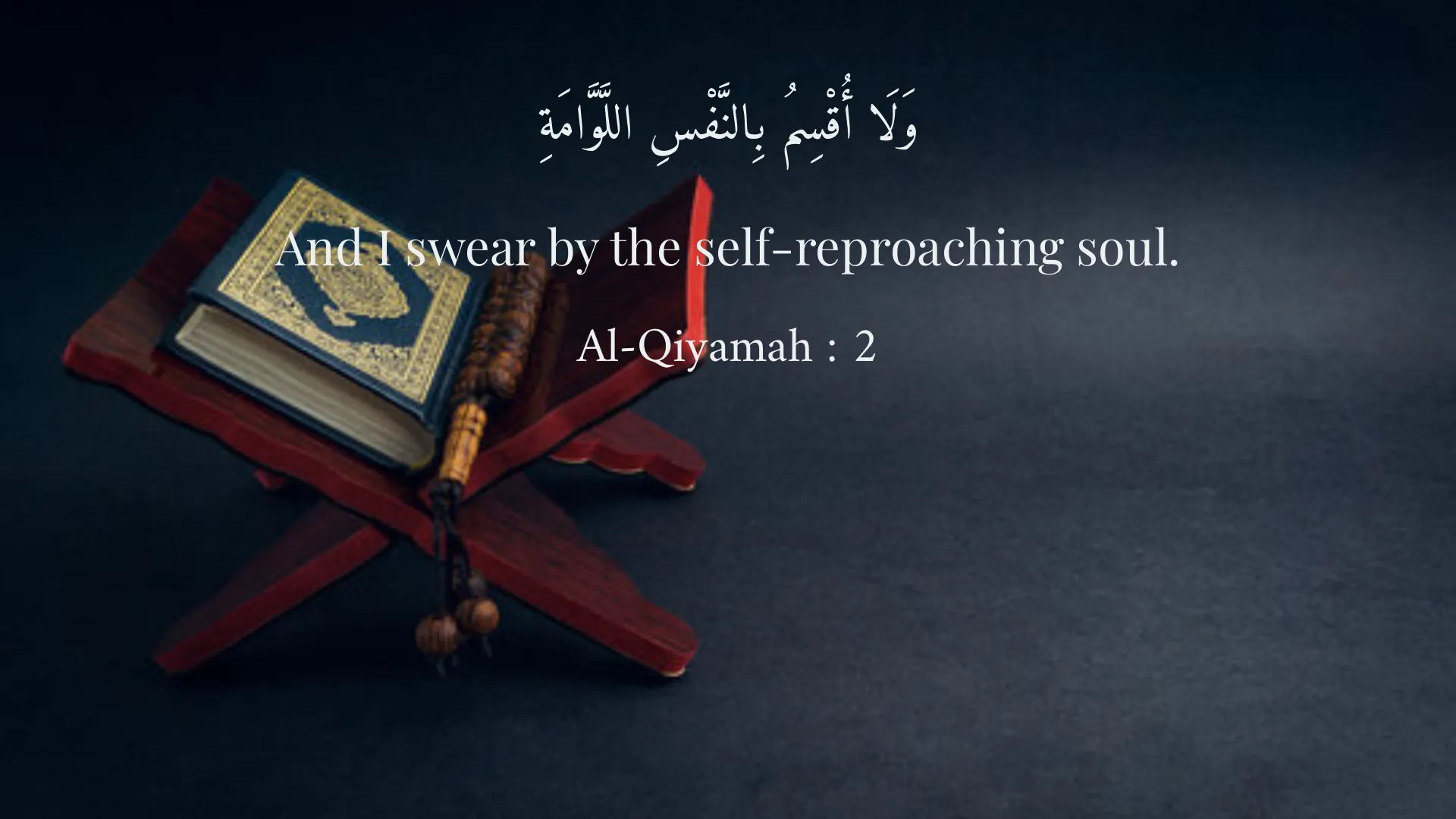
وَلَا أُقْسِمُ بِالنَّفْسِ اللَّوَّامَةِ
And I swear by the self-reproaching soul.
Al-Qiyamah : 2
قُلْ يَا عِبَادِيَ الَّذِينَ أَسْرَفُوا عَلَىٰ أَنفُسِهِمْ لَا تَقْنَطُوا مِن رَّحْمَةِ اللَّهِ ۚ إِنَّ اللَّهَ يَغْفِرُ الذُّنُوبَ جَمِيعًا ۚ إِنَّهُ هُوَ الْغَفُورُ الرَّحِيمُ
Say, 'O My servants who have transgressed against themselves [by sinning], do not despair of the mercy of Allah. Indeed, Allah forgives all sins. Indeed, it is He who is the Forgiving, the Merciful.'
Az-Zumar : 53
الَّذِينَ آمَنُوا وَتَطْمَئِنُّ قُلُوبُهُم بِذِكْرِ اللَّهِ ۗ أَلَا بِذِكْرِ اللَّهِ تَطْمَئِنُّ الْقُلُوبُ
Those who have believed and whose hearts are assured by the remembrance of Allah. Unquestionably, by the remembrance of Allah hearts are assured.
Ar-Ra'd : 28
Short Story
In Saadi's Gulistan, it is related that there was a wealthy king who was always lamenting and sorrowful. In the same city, a tattered dervish lived with a joyful heart and a light spirit. The king asked the dervish, "How is it that I, with all these blessings, have no peace, and you, with all this poverty, are so happy and content?" The dervish smiled and said, "O King! I am content with what I have, and my heart finds peace in the remembrance of my Lord. But you ponder what you do not possess, and your heart wanders after worldly things. As long as the heart is bound by worldly desires and oblivious to its Creator, one will be dissatisfied with oneself and suffer, for the true treasure of inner peace and divine contentment lies not in an abundance of gold and silver." The king pondered these words and realized that the root of his dissatisfaction with himself lay not in external deficiencies but in his inner state and the direction of his heart. He decided to change his path and seek peace through the remembrance of God and contentment.