Quranic Answer
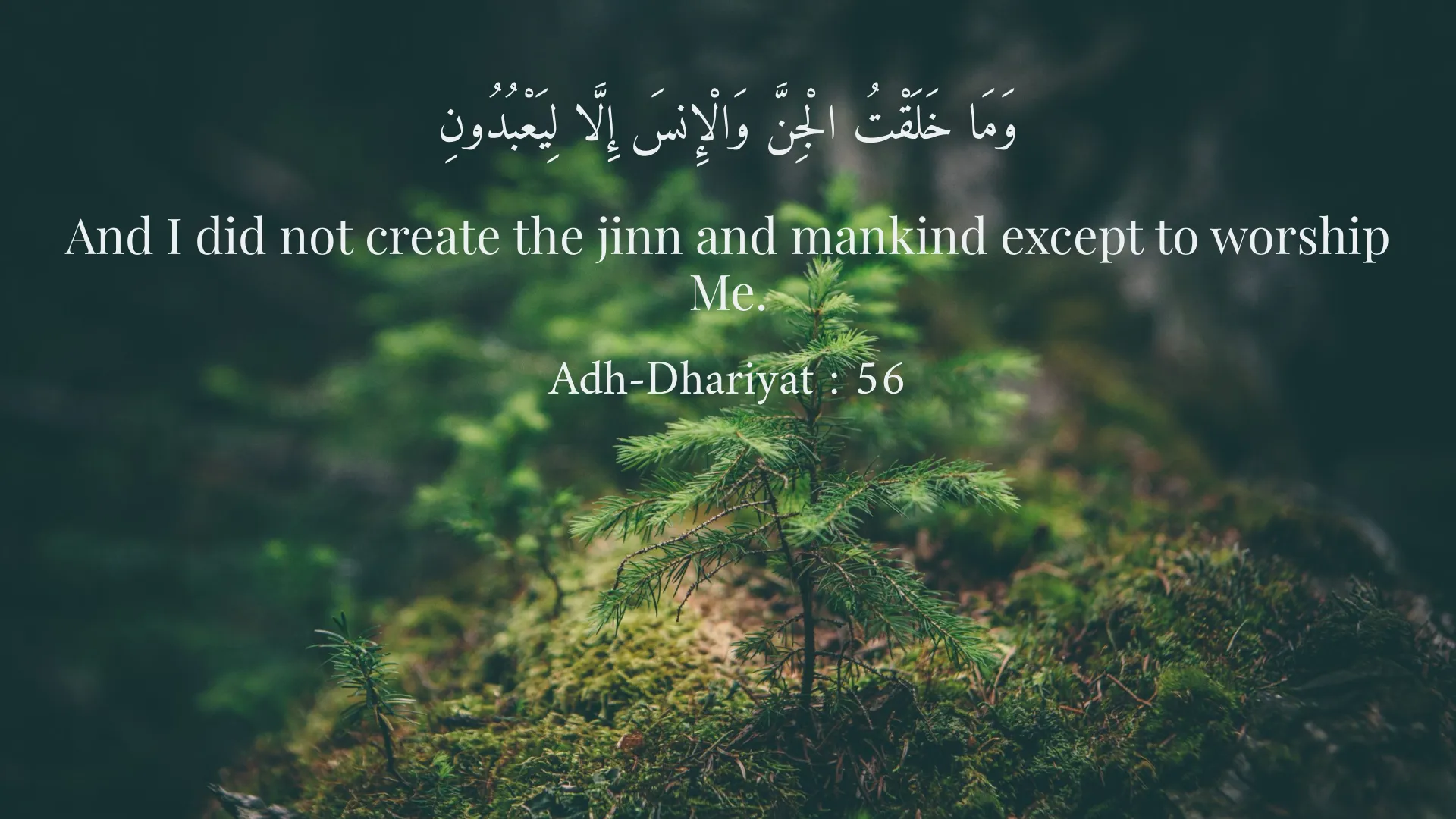
Feeling that one's life is fruitless or without purpose is a profound human experience that many encounter at different stages. This sense of emptiness or futility, though often painful, is not, from the Quranic perspective, an endpoint. Rather, it can be an invitation for deep reflection and a re-evaluation of life's true meaning and objective. The Holy Quran, as the divine word of Allah, offers us a clear and purposeful vision for our existence, directly addressing this question with unwavering principles. First and foremost, the Quran emphasizes that the creation of humanity and the entire universe is not in vain or without a grand purpose. Allah Almighty states in Surah Adh-Dhariyat, verse 56: "And I did not create the jinn and mankind except to worship Me." This noble verse defines the fundamental objective of our existence: worship. However, worship in Islam is not confined merely to ritual acts like prayer, fasting, charity, and pilgrimage. It is a comprehensive concept encompassing all aspects of life. Every good deed, every kind word, every act of assistance to others, every sincere effort expended in seeking beneficial knowledge, every act of excellence in one's work, and every instance of patience during adversity – all of these can be considered acts of worship if performed with sincerity and devotion to Allah. When an individual realizes that their life, with all its intricate details, is an ongoing opportunity for worship and drawing closer to Allah, the feeling of "fruitlessness" begins to dissipate. This is because they understand that every step they take and every breath they draw can carry immense reward with Allah. Secondly, the Quran strongly highlights the immense value of righteous deeds and assures us that no effort expended in His path goes to waste. Surah Al-Asr, though remarkably concise, brilliantly summarizes the human condition: "By time, Indeed, mankind is in loss, Except for those who have believed and done righteous deeds and advised each other to truth and advised each other to patience." This powerful Surah outlines the path to salvation from loss, emptiness, or futility. It mandates belief in Allah, performing good deeds that benefit the individual and society, enjoining truth (calling people to goodness and justice), and enjoining patience in the face of life's hardships, obedience to Allah, and abstaining from His prohibitions. When a person adheres to these principles, they fill their life with goodness and contribution, thereby witnessing the fruits of their actions, even if these fruits are not material or immediately apparent in this world. The Quran teaches us that the true value of an action lies not always in its visible outcomes, but in its sincerity and righteous intention. How many actions may seem small in the eyes of people, yet are mighty in the scales of Allah? Thirdly, the Quran reassures us that Allah never wastes the reward of those who do good, and that every righteous deed holds a magnificent recompense. In Surah An-Nahl, verse 97, Allah says: "Whoever does righteousness, whether male or female, while a believer - We will surely cause him to live a good life, and We will surely give them their reward [in the Hereafter] according to the best of what they used to do." This divine promise of a good life in this world and a grand reward in the Hereafter serves as a potent motivator to overcome feelings of emptiness. "A good life" here does not necessarily imply only wealth or material success; rather, it refers to a life filled with contentment, tranquility, serenity, and blessings, even amidst challenging circumstances. This inner peace and satisfaction are the true fruits stemming from faith and righteous deeds, and they are sufficient to dispel any sense of futility. Fourthly, the Quran reminds us that this worldly life is a temporary abode of test, not a permanent dwelling. This perspective helps in understanding life's fluctuations and various conditions, including periods of feeling "fruitless." Allah Almighty says in Surah Al-Mulk, verse 2: "He who created death and life to test you [as to] which of you is best in deed—and He is the Exalted in Might, the Forgiving." When we view life as a test, we understand that the goal is not always to achieve grand, visible accomplishments, but rather to strive with sincerity and devotion in everything we do. Even periods when we feel weak or incapable can be part of this test, serving as opportunities for patience, supplication, and repentance—all actions of immense value in the sight of Allah. Fifthly, the Quran calls for optimism and warns against despairing of Allah's mercy. Feelings of despair and emptiness can be an entry point for Shaytan (Satan), and the Quran cautions us against falling into this trap. "And do not despair of the relief of Allah. Indeed, no one despairs of the relief of Allah except the disbelieving people" (Yusuf: 87). The belief that Allah is with the patient, with those who do good, and that He never abandons His servant, brings immense comfort and strengthens one's resolve to continue striving and giving. To overcome this feeling, the Quran advises the following: 1. Deepen your knowledge of Allah and contemplate His signs: The more one's faith and knowledge of Allah grow, the greater their understanding of divine wisdom in all things, diminishing feelings of aimlessness. 2. Increase in the remembrance of Allah (Dhikr): "Unquestionably, by the remembrance of Allah hearts are assured" (Ar-Ra'd: 28). Remembrance, prayer, and recitation fill the heart with tranquility and relieve worries. 3. Initiate good deeds, even if seemingly small: Do not underestimate any good action. A smile, a kind word, helping someone in need—all hold weight with Allah. 4. Connect with others and engage in community service: Isolation can exacerbate feelings of loneliness and futility. Helping others and feeling a sense of belonging gives life meaning. 5. Patience and Supplication: Seek help from Allah through patience and prayer. "O you who have believed, seek help through patience and prayer. Indeed, Allah is with the patient" (Al-Baqarah: 153). In conclusion, the feeling of "fruitlessness" is a temporary state that can be remedied by returning to the essence of our noble faith. Islam imbues life with profound meaning, making every moment an opportunity to draw closer to Allah, and guaranteeing the fruits of one's efforts in both this world and the Hereafter. Always remember that your existence is not a coincidence, and every sincere effort you make is recorded by Allah, never to be lost.
Related Verses
وَمَا خَلَقْتُ الْجِنَّ وَالْإِنسَ إِلَّا لِيَعْبُدُونِ
And I did not create the jinn and mankind except to worship Me.
Adh-Dhariyat : 56
وَالْعَصْرِ
By time,
Al-Asr : 1
إِنَّ الْإِنسَانَ لَفِي خُسْرٍ
Indeed, mankind is in loss,
Al-Asr : 2
إِلَّا الَّذِينَ آمَنُوا وَعَمِلُوا الصَّالِحَاتِ وَتَوَاصَوْا بِالْحَقِّ وَتَوَاصَوْا بِالصَّبْرِ
Except for those who have believed and done righteous deeds and advised each other to truth and advised each other to patience.
Al-Asr : 3
مَنْ عَمِلَ صَالِحًا مِّن ذَكَرٍ أَوْ أُنثَى وَهُوَ مُؤْمِنٌ فَلَنُحْيِيَنَّهُ حَيَاةً طَيِّبَةً ۖ وَلَنَجْزِيَنَّهُمْ أَجْرَهُم بِأَحْسَنِ مَا كَانُوا يَعْمَلُونَ
Whoever does righteousness, whether male or female, while a believer - We will surely cause him to live a good life, and We will surely give them their reward [in the Hereafter] according to the best of what they used to do.
An-Nahl : 97
Short Story
In times long past, a spirited young man named Bahram, who had been tending a small garden for years, one day approached a wise elder with a heavy heart and weary eyes. He lamented, "O sage, for years I have sown seeds, planted greens, and watered this garden, yet I feel my life is fruitless. Whatever I do, it's as if it makes no difference! I am not tall like a cypress, nor beautiful like a rose, nor fruitful like a laden tree." The wise elder smiled gently and said, "My young friend, do you only look at the fruits that ripen immediately?" Then he continued, "I recall, many years ago, there was a farmer in a desolate desert plain who, every day, would remove a small stone from the path of travelers and set it aside. People would laugh at him, saying, 'What a futile effort! You dig no well, nor cultivate any land!' The farmer would smile patiently and continue his work. Years passed, and the farmer grew old. One day, a large caravan got lost in that desert and was on the verge of perishing from thirst and heat. Suddenly, they saw that a path had been cleared, the stones moved aside, and a small tree had grown in the shade along that path. By following the stone-free path, they reached a spring that the farmer, years ago, had cleared not for that very day, but for the sake of God. The people then understood that his work was not fruitless; rather, its fruit appeared later and for others." The elder looked at Bahram and added, "O Bahram! Sometimes the fruit of our labor is not for ourselves, nor for this very moment, but for others and in a distant future. You sow seeds of hope, and though you may not see its fruit, the shade of that tree will bring comfort to passersby. What truly matters is the intention and perseverance in the right path." Upon hearing these words, Bahram's heart found peace, and he returned to his garden with a newfound insight, certain that no effort expended in the path of truth would ever be fruitless.