Quranic Answer
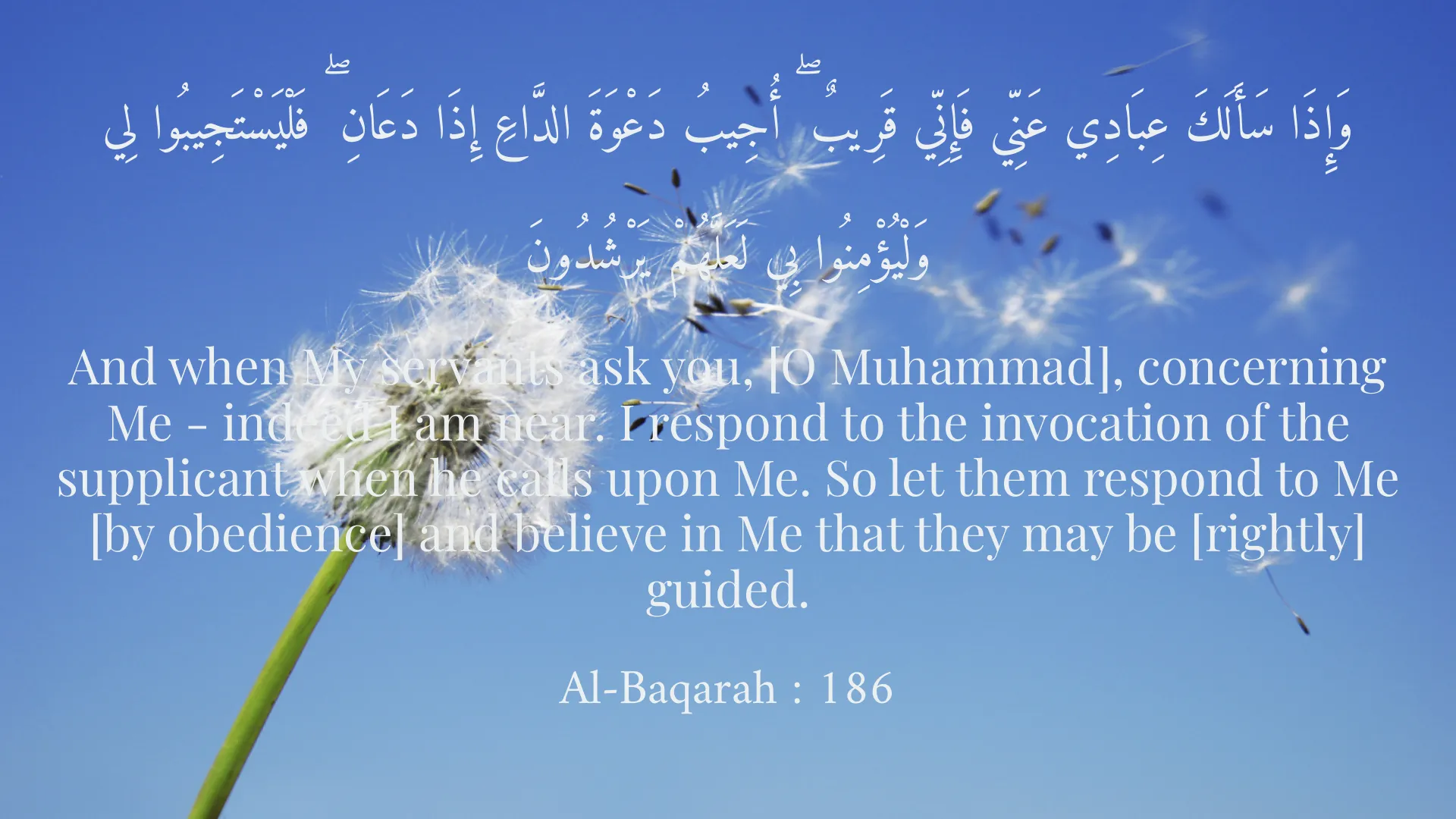
The feeling that prayers are sometimes rejected is a common human experience, one that many believers encounter throughout their lives. However, from the perspective of the Holy Quran, the notion that a prayer is truly 'rejected' by Allah Almighty contradicts the fundamental teachings of divine revelation. Allah explicitly promises in the Quran to respond to the supplications of His servants. The essential truth is that Allah always hears and responds to His servants' prayers, but the manner and timing of this response may differ from what we envision. This difference signifies His infinite wisdom and absolute knowledge, rather than a rejection of the prayer. One of the most significant verses in this regard is Surah Al-Baqarah, verse 186, which states: "And when My servants ask you, [O Muhammad], concerning Me - indeed I am near. I respond to the invocation of the supplicant when he calls upon Me. So let them respond to Me [by obedience] and believe in Me that they may be [rightly] guided." This verse clearly indicates that Allah Almighty is always near to His servants and answers their prayers. Furthermore, in Surah Ghafir, verse 60, it says: "And your Lord says, 'Call upon Me; I will respond to you.' Indeed, those who disdain My worship will enter Hell in humiliation." These verses provide a divine guarantee of answered prayers for believers. So, why does this uncomfortable feeling of 'rejected prayer' sometimes arise? There are several reasons for this perception, all stemming from our misunderstanding of the concept of 'response' (ijabah): 1. Divine Wisdom and the Best Response: Allah Almighty possesses absolute knowledge of what is good and what is evil, of the present and the future. He knows what is truly beneficial for us, even if we do not comprehend it at that moment. Sometimes, we ask for something that, if granted, would be detrimental to us or would block a greater good. In such cases, Allah answers our prayer, but not in the exact form we desire. Instead, He responds in a way that is ultimately better and more beneficial for us. This could manifest as warding off harm, saving its reward for the Hereafter, or granting something superior at an appropriate time. 2. Different Forms of Divine Response: The acceptance of a prayer does not solely mean a 'yes' to our specific request. Allah's response can manifest in several forms: * Direct Granting of the Request: Allah grants us precisely what we asked for. * Delay in Granting: Sometimes, it is in our best interest for our request to be fulfilled at a later time. This delay might be for us to cultivate patience, increase perseverance, or for better conditions to materialize. * Substitution with Something Better: Instead of our specific request, Allah bestows upon us something better and more beneficial, whose wisdom we might not realize at that moment. * Averting Harm: At times, our prayer leads to the warding off of a calamity that was destined to befall us, of which we are unaware. In this scenario, our prayer has indeed been answered, not by fulfilling a specific desire, but by preventing a potential harm. * Storage for the Hereafter: If none of the above occurs, the reward and merit of our prayer are preserved with Allah and will be returned to us in the best possible way on the Day of Judgment. This is considered one of the finest forms of acceptance, as eternal reward is more enduring and valuable than any worldly request. 3. Conditions and Etiquette of Supplication: Although Allah has promised to answer, observing certain conditions and etiquettes can influence the quality and promptness of the response. Sincerity in supplication, certainty in Allah's response, repentance and abstaining from sins, earning lawful provision, persistence in prayer, and praying for others are among these etiquettes. Sometimes, the feeling of rejection arises from not adhering to these etiquettes or from the presence of impediments like sins and lack of repentance. This doesn't mean the prayer isn't heard, but rather that there are obstacles we need to address. 4. Impatience and Haste: Humans are inherently hasty and desire immediate fulfillment of their wishes. The Holy Quran also alludes to this human trait. Despair from divine mercy and eagerness for immediate answers can lead individuals to assume their prayers have been rejected, while Allah is orchestrating their affairs in the best possible manner. Patience and reliance on Allah are of paramount importance in this journey, as stated in Surah Al-Baqarah, verse 153: "O you who have believed, seek help through patience and prayer. Indeed, Allah is with the patient." 5. Our Limited Understanding of Time and Space: We live within the confines of limited time and space, whereas Allah is the Creator of time and space. His planning transcends our finite comprehension. The opportune moment for a request to be fulfilled may not have arrived yet, and this could be to our benefit. Ultimately, the feeling of a prayer being rejected should not lead to discouragement or despair. Instead, it should be an opportunity for self-reflection on one's relationship with Allah, a review of the etiquette of prayer, and a strengthening of patience and reliance. Every sincere prayer, offered with mindfulness of Allah, will yield fruit, whether in this world or the Hereafter. It is our duty to pray and await the response with certainty, trusting in Allah's wisdom regarding the manner and timing of His answer. Prayer itself is a great act of worship and a bridge connecting us to the Creator, even if the apparent outcome does not match our specific request. This connection and sense of presence are the most comforting aspects of prayer, which should not be overlooked. So, never cease to supplicate, for Allah has promised to hear the prayers of His servants and respond in the best way, and He never breaks His promise. Understanding this Quranic truth instills peace and assurance in the hearts of believers and strengthens their resolve on the path of servitude. Therefore, when we feel our prayer has been rejected, we should, in fact, re-evaluate our understanding of the concept of 'acceptance.' Allah never rejects a prayer; rather, He responds to every prayer with a response that always contains absolute and complete good for us. It is His divine wisdom that determines which request is beneficial for us, and how and when it should be fulfilled. Sometimes, the non-fulfillment of a wish in this world leads to a greater good in the Hereafter or prevents an evil of which we are unaware. Thus, instead of despair, we must continue with certainty and hope in Allah's boundless grace, knowing that everything we ask of Him is preserved with Him and will be returned to us in the best possible way.
Related Verses
وَإِذَا سَأَلَكَ عِبَادِي عَنِّي فَإِنِّي قَرِيبٌ ۖ أُجِيبُ دَعْوَةَ الدَّاعِ إِذَا دَعَانِ ۖ فَلْيَسْتَجِيبُوا لِي وَلْيُؤْمِنُوا بِي لَعَلَّهُمْ يَرْشُدُونَ
And when My servants ask you, [O Muhammad], concerning Me - indeed I am near. I respond to the invocation of the supplicant when he calls upon Me. So let them respond to Me [by obedience] and believe in Me that they may be [rightly] guided.
Al-Baqarah : 186
وَقَالَ رَبُّكُمُ ادْعُونِي أَسْتَجِبْ لَكُمْ ۚ إِنَّ الَّذِينَ يَسْتَكْبِرُونَ عَنْ عِبَادَتِي سَيَدْخُلُونَ جَهَنَّمَ دَاخِرِينَ
And your Lord says, 'Call upon Me; I will respond to you.' Indeed, those who disdain My worship will enter Hell in humiliation.
Ghafir : 60
يَا أَيُّهَا الَّذِينَ آمَنُوا اسْتَعِينُوا بِالصَّبْرِ وَالصَّلَاةِ ۚ إِنَّ اللَّهَ مَعَ الصَّابِرِينَ
O you who have believed, seek help through patience and prayer. Indeed, Allah is with the patient.
Al-Baqarah : 153
Short Story
It is said that a dervish prayed for many years to the Almighty, saying, "O Lord, I wish You would grant me a spacious home and a secluded place so I can worship in peace." Days turned into years, and the dervish continued to live in his small hut, his prayer seemingly unanswered. One day, the city where they lived was struck by a natural disaster, and many grand and magnificent houses were destroyed. However, the dervish's small hut, due to its simplicity and location, remained safe from this calamity. Witnessing the devastation, the dervish understood the divine wisdom. He realized that if he had a larger home, he too might have suffered like others. He then raised his hands in prayer and said, "O Lord, I thank You for answering my prayer in a way I did not anticipate, but which was best for me. You know best what is good for Your servant, even if our eyes and minds fail to grasp it." And with a heart full of tranquility, he continued his worship, for he understood that every response from the Beloved is pure grace.