Quranic Answer
Spiritual fatigue, though not a term explicitly found in the Quran, is a profound human experience that the Quran comprehensively addresses through its teachings on the state of the heart, faith, distress, peace, remembrance of God, and the effects of worldly attachments. It can be understood as a weariness of the soul, manifesting as a lack of motivation, disconnection, emotional burden, or a diminished zeal for spiritual practices and even daily life. The Holy Quran provides deep insights into the underlying causes of such a state and, crucially, offers timeless remedies that lead to spiritual rejuvenation and lasting tranquility. One of the primary causes of spiritual fatigue, as illuminated by Quranic principles, is Ghaflah (Heedlessness or Forgetfulness of Allah). When individuals become excessively absorbed in the transient affairs of this world, pursuing fleeting pleasures, and neglecting their spiritual duties and the constant remembrance of their Creator, their hearts can become hardened and distant. This relentless chase after material gains, societal validation, and worldly achievements can paradoxically drain the soul, leaving it feeling empty and unfulfilled despite outward successes. The heart, which is the very core of faith and connection, loses its vitality when it forgets its primary source of nourishment and purpose. The Quran repeatedly warns against falling into this state of heedlessness, highlighting its detrimental effects on the soul's well-being. Another significant contributor to spiritual weariness is Sins and Disobedience (Al-Dhunoob wal Ma'asi). Just as physical impurities can lead to bodily illness, spiritual impurities accumulated through sins can weigh down the soul, darken the heart, and create a veil between the individual and divine light. Every transgression, whether seemingly minor or major, leaves a spiritual imprint. An accumulation of these imprints can lead to profound feelings of guilt, anxiety, and a pervasive spiritual heaviness that manifests as fatigue. The Quran, with its boundless wisdom, repeatedly calls for sincere repentance (Tawbah) and seeking forgiveness (Istighfar) as essential means of purifying the soul and lightening its burdens. This process of returning to Allah, acknowledging one's faults, and seeking His pardon is pivotal for spiritual renewal. Excessive Love of this World (Hubb ad-Dunya) stands as a major cause of spiritual exhaustion. When worldly life becomes the ultimate goal, and attachment to its impermanent aspects overshadows the pursuit of the eternal Hereafter, the soul is destined to experience disappointment and weariness. The nature of this world is inherently transient, filled with trials, losses, and imperfections. Basing one's entire sense of well-being and happiness on its unstable foundations leads to continuous anxiety, regret over what is lost, and an insatiable desire for what is not yet attained. This endless, unfulfilling chase is inherently draining and leads to profound spiritual fatigue. The Quran reminds us repeatedly that this life is but a fleeting enjoyment, and the true, everlasting abode is the Hereafter, encouraging us to seek what is eternal. Furthermore, a Deficiency in Remembrance and Worship (Nuqsan adh-Dhikr wal Ibadah) is directly correlated with spiritual vitality. The Quran profoundly emphasizes the importance of Dhikr (remembrance of Allah) as the ultimate source of peace and tranquility for the heart. When one neglects the regular practice of prayer (Salah), Quranic recitation, sincere supplication (Du'a), glorification (Tasbih), and contemplation of Allah's magnificent creation, the spiritual connection weakens, and the soul feels deprived of its essential nourishment. These acts are far more than mere rituals; they are the very lifeline that connects the human spirit to its Creator, providing strength, guidance, and solace. Without this consistent spiritual recharge, a deep sense of fatigue is inevitable. The Remedies offered by the Quran are holistic and powerful: The most fundamental and potent remedy is Dhikr Allah (Remembrance of Allah). The Quran unequivocally states in Surah Ar-Ra'd (13:28): "Unquestionably, by the remembrance of Allah hearts are assured." This verse serves as a cornerstone for spiritual well-being. Consistent remembrance of Allah, through sincere prayer, heartfelt recitation of the Quran, fervent supplication, uttering words of glorification (like Subhanallah, Alhamdulillah, Allahu Akbar), and deep contemplation of Allah's countless signs in creation, acts as a profound spiritual recharge. It skillfully shifts one's focus from overwhelming worldly anxieties to the infinite power, mercy, and wisdom of God, instilling an unparalleled sense of peace, security, and spiritual lightness. This constant conscious connection reminds the soul of its ultimate purpose and belonging, dissipating feelings of weariness. Patience (Sabr) and Prayer (Salah) are divinely prescribed tools for overcoming distress and nurturing resilience. Surah Al-Baqarah (2:153) advises: "O you who have believed, seek help through patience and prayer. Indeed, Allah is with the patient." Prayer is a direct, intimate communion with God, a sacred moment to unburden oneself, seek divine guidance, and feel the profound presence of the Almighty. It is a spiritual anchor in the storms of life. Patience, on the other hand, empowers an individual to endure hardships, trials, and adversities without spiritual collapse, fostering an unwavering trust in God's divine plan and perfect timing. Together, these two pillars form an unbreakable shield against spiritual depletion and foster inner fortitude. Repentance (Tawbah) and Seeking Forgiveness (Istighfar) are crucial for the ongoing cleansing and purification of the heart. When sins accumulate, they act like rust on the heart's surface, gradually dimming its inherent light and vitality. The act of constantly turning back to Allah in sincere repentance, acknowledging one's shortcomings, expressing remorse, and earnestly seeking His boundless forgiveness, effectively washes away these spiritual impurities. The Quran fervently encourages believers to hasten to repentance, repeatedly emphasizing that Allah is Oft-Forgiving, Most Merciful. This profound spiritual cleansing brings an unparalleled lightness, renewal, and vitality to the soul, lifting the heavy veil of guilt and regret. Reliance on Allah (Tawakkul 'ala Allah) is another powerful antidote to the anxieties and spiritual fatigue brought on by the uncertainties of life. When one places their trust entirely and unequivocally in God, understanding that all power, dominion, and control belong solely to Him, the immense burden of worldly outcomes is gracefully lifted from their shoulders. As stated in Surah At-Talaq (65:3): "And whoever relies upon Allah – then He is sufficient for him." This profound reliance instills a deep inner calm and peace, as the believer knows with certainty that whatever transpires is by His divine will and for a wisdom that may not be immediately apparent to human comprehension. This allows the heart to rest from worry and striving for what is beyond its control. Finally, Contemplation of God's Signs and the Hereafter (Tafakkur fi Ayati Allah wal Akhirah) helps in profoundly realigning one's priorities and significantly reducing undue attachment to the fleeting world. By reflecting deeply on the vastness, intricate design, and absolute precision of God's creation—from the smallest atom to the grandest galaxies—one's awe, reverence, and profound love for the Creator naturally increase. Similarly, remembering the ultimate destination—the eternal Hereafter—helps to put all worldly problems and stresses into their true perspective, making them appear less daunting and significantly reducing their spiritual toll. This crucial mindset shift directs focus from ephemeral, transient gains to enduring, eternal rewards, providing a wellspring of sustained motivation and spiritual energy. In essence, while the term "spiritual fatigue" may be contemporary, the Holy Quran provides a timeless, comprehensive framework for understanding and addressing the deep-seated causes of spiritual weariness, and for cultivating a healthy, balanced, and profoundly connected relationship with the Divine. It is a powerful call to consistently re-evaluate one's life, recalibrate priorities, and relentlessly nourish the soul with what truly sustains it: the remembrance of Allah, sincere and consistent worship, unwavering patience, earnest repentance, and absolute trust in His divine plan. By embracing and diligently applying these profound Quranic guidelines, individuals can not only effectively overcome spiritual fatigue but also cultivate a vibrant, resilient, and tranquil spiritual life, abundantly filled with inner peace, profound purpose, and unwavering resolve. The Quran teaches us that true rest and ultimate solace are not found in escaping life's inevitable challenges, but rather in facing them with a heart firmly anchored in the constant remembrance of God. This profound, unbreakable connection acts as an inexhaustible wellspring of spiritual strength, enabling the believer to navigate the myriad ups and downs of life with grace, unparalleled resilience, and an unwavering, purposeful spirit. It is a continuous, beautiful journey of self-purification and drawing ever closer to the Divine, where every act of devotion, every precious moment of remembrance, and every contemplative reflection on Allah's magnificent signs contributes directly and significantly to the soul's vigor, clarity, and overall well-being. Ultimately, the Quran presents a complete and holistic spiritual hygiene system, designed to prevent and effectively cure spiritual ailments, thereby fostering a vibrant, meaningful, and deeply purposeful existence for humanity.
Related Verses
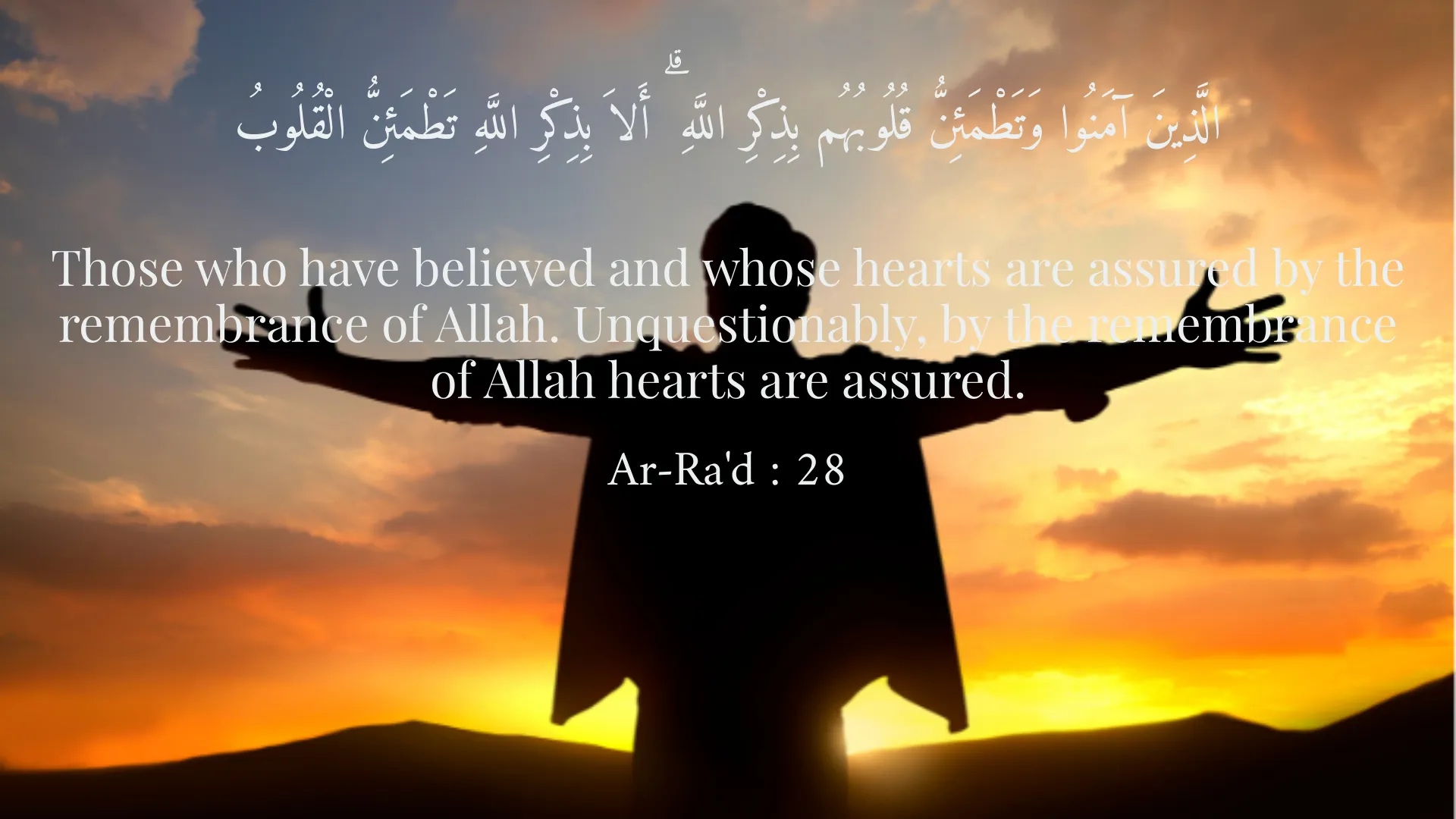
الَّذِينَ آمَنُوا وَتَطْمَئِنُّ قُلُوبُهُم بِذِكْرِ اللَّهِ ۗ أَلاَ بِذِكْرِ اللَّهِ تَطْمَئِنُّ الْقُلُوبُ
Those who have believed and whose hearts are assured by the remembrance of Allah. Unquestionably, by the remembrance of Allah hearts are assured.
Ar-Ra'd : 28
يَاأَيُّهَا الَّذِينَ آمَنُوا اسْتَعِينُوا بِالصَّبْرِ وَالصَّلَاةِ ۚ إِنَّ اللَّهَ مَعَ الصَّابِرِينَ
O you who have believed, seek help through patience and prayer. Indeed, Allah is with the patient.
Al-Baqarah : 153
قُلْ يَا عِبَادِيَ الَّذِينَ أَسْرَفُوا عَلَىٰ أَنفُسِهِمْ لَا تَقْنَطُوا مِن رَّحْمَةِ اللَّهِ ۚ إِنَّ اللَّهَ يَغْفِرُ الذُّنُوبَ جَمِيعًا ۚ إِنَّهُ هُوَ الْغَفُورُ الرَّحِيمُ
Say, 'O My servants who have transgressed against themselves [by sinning], do not despair of the mercy of Allah. Indeed, Allah forgives all sins. Indeed, it is He who is the Forgiving, the Merciful.'
Az-Zumar : 53
Short Story
The King and the Dervish: A powerful king, despite his vast kingdom and immense wealth, often found himself restless and burdened by an inexplicable weariness. He had everything a man could desire – palaces, treasures, armies – yet his heart felt heavy. One day, he saw a dervish sitting peacefully under a tree, seemingly without any worldly possessions, yet radiating an inner calm. The king approached him and asked, "O wise man, I am a king with unlimited resources, yet my heart is often troubled and weary. You, with nothing, seem to possess boundless peace. What is your secret?" The dervish smiled gently and replied, "O King, your heart is burdened because you seek contentment in fleeting possessions. Your soul yearns for its Creator, but you feed it with the dust of this world. My peace comes from detaching my heart from the transient and connecting it to the Eternal. When the heart remembers its true home and its true Beloved, it finds rest, for it is then nourished by divine light, not by worldly shadows." The king pondered these words, realizing that true spiritual vigor comes not from accumulating the world, but from cultivating the heart's connection to Allah and finding contentment in His remembrance. He began to dedicate more time to reflection and sincere devotion, and slowly, the spiritual fatigue lifted from his heart, replaced by a serenity he had never known.