Quranic Answer
The feeling that prayer (Dua) sometimes seems useless is a common human experience that many believers encounter on their spiritual journey. This sense of futility or ineffectiveness in prayer often stems from a misunderstanding of the nature and philosophy of Dua in Islam and how divine responses unfold. The Holy Quran clearly emphasizes the importance and power of Dua, considering it not merely a means of requesting needs, but a deep and vital connection between the servant and their Lord. Let us explore this topic from a Quranic perspective to achieve peace of mind and gain a proper understanding of this great act of worship. The Quran considers Dua as the essence and core of worship. In numerous verses, Allah Almighty calls His servants to pray and promises to respond. For instance, in Surah Ghafir, verse 60, He states: “And your Lord says: ‘Call upon Me; I will respond to you.’ Indeed, those who disdain My worship will enter Hell in humiliation.” This verse explicitly shows that Dua is itself a form of worship, and abandoning it signifies arrogance towards the Creator. Thus, even if our request does not appear to be immediately granted, the act of supplicating itself is a great act of worship for which abundant reward exists, elevating the servant to a state of closeness to Allah. This is the most crucial point not to forget: Dua is inherently valuable, regardless of its apparent outcome. Sometimes we assume that the answer to Dua only means the immediate and exact fulfillment of what we have asked from God. However, divine wisdom far surpasses our limited comprehension. Allah Almighty answers prayers in various ways that may not be immediately understandable to us. These methods include: 1. Immediate and Direct Response: Sometimes, through His grace and mercy, Allah grants us exactly what we have asked for, either immediately or in the near future. This type of response is the most tangible and helps strengthen faith. 2. Delay in Response and Divine Wisdom: Often, our request is answered, but not at the time or place we expect. This delay might be due to a divine wisdom that only Allah knows; perhaps we are not yet ready to receive that blessing, or perhaps fulfilling that request at the current time would be detrimental to us. Divine wisdom dictates that the best time and best condition for answering a prayer are considered. This delay can be a test of the servant's patience and certainty. 3. Granting Something Better Than the Initial Request: It is entirely possible that we ask God for something that appears good, but Allah, due to His infinite knowledge of the future and our true welfare, grants us something superior and more beneficial instead, which we might not realize at that moment. This is akin to a parent whose child wants candy, but the parent gives fruit for the child's health. We are confined by our limited perceptions, but Allah sees and is aware of all aspects. 4. Averting Harm and Evils: One of the greatest blessings of Dua is that, through it, Allah averts calamities and misfortunes that might have befallen us or reduces their severity. We may never become aware of these averted harms, but this itself is one of the best forms of response. Our Dua becomes a protective shield against adverse events. 5. Stored for the Hereafter: Sometimes, a servant's prayer is not answered in this world, but Allah stores it for the Day of Judgment and returns it in the form of good deeds and high ranks. On that Day, people will wish that none of their prayers had been answered in this world, so that all those prayers would be returned to them as reward in the Hereafter. This is the greatest type of response, as the blessings of the Hereafter are eternal and immeasurable. Furthermore, attention must be paid to the conditions and etiquette of Dua. Dua is not just a verbal request; it must emanate from a pure heart with certainty in Allah's power and mercy. Presence of mind, humility, repentance from sins, striving in line with the request (meaning Dua without action is meaningless), and abstaining from unlawful earnings are among the factors that influence the acceptance of Dua. Also, it is during times of hardship and difficulty that one remembers Allah more and supplicates, and this itself is an opportunity for spiritual growth and maturity. Therefore, when you feel that Dua is useless, instead of despairing, consider its deeper nature. Dua is a loving conversation with the Creator, an act of worship that carries immense reward, a shield against calamities, and an investment for the Hereafter. Allah is wiser and more merciful than to leave His servant's prayer unanswered. He never wastes a prayer. It might simply be that His answer differs from our expectation, or comes at a better time. So, with a heart full of hope and certainty, continue to supplicate, and be confident that every Dua is a seed planted in the soil of servitude, and its fruits will bear at the best time and in the best way, whether in this world or in the Hereafter. Every time you raise your hands in Dua, know that you are strengthening your connection with the eternal divine power, and this itself is the greatest benefit and the most comforting outcome. This permanent bond with the Creator, even when your desired answer is not apparent, gives you resilience, patience, and insight to see the hidden wisdom beyond events. Dua is the practice of reliance on God, the practice of accepting divine will, and the practice of gratitude in all circumstances. The feeling that Dua is useless arises more from an incomplete understanding of these broad and meaningful dimensions of Dua than from its actual reality. Allah Almighty is always close to His servants and hears their prayers, and gives the best response at the best possible time. This certainty frees the human heart from any despair and hopelessness. So, whenever such a temptation comes to you, immediately seek refuge in Allah's greatness and wisdom and the promises of the Holy Quran, and raise your hands in need to Him with a heart more confident than before.
Related Verses
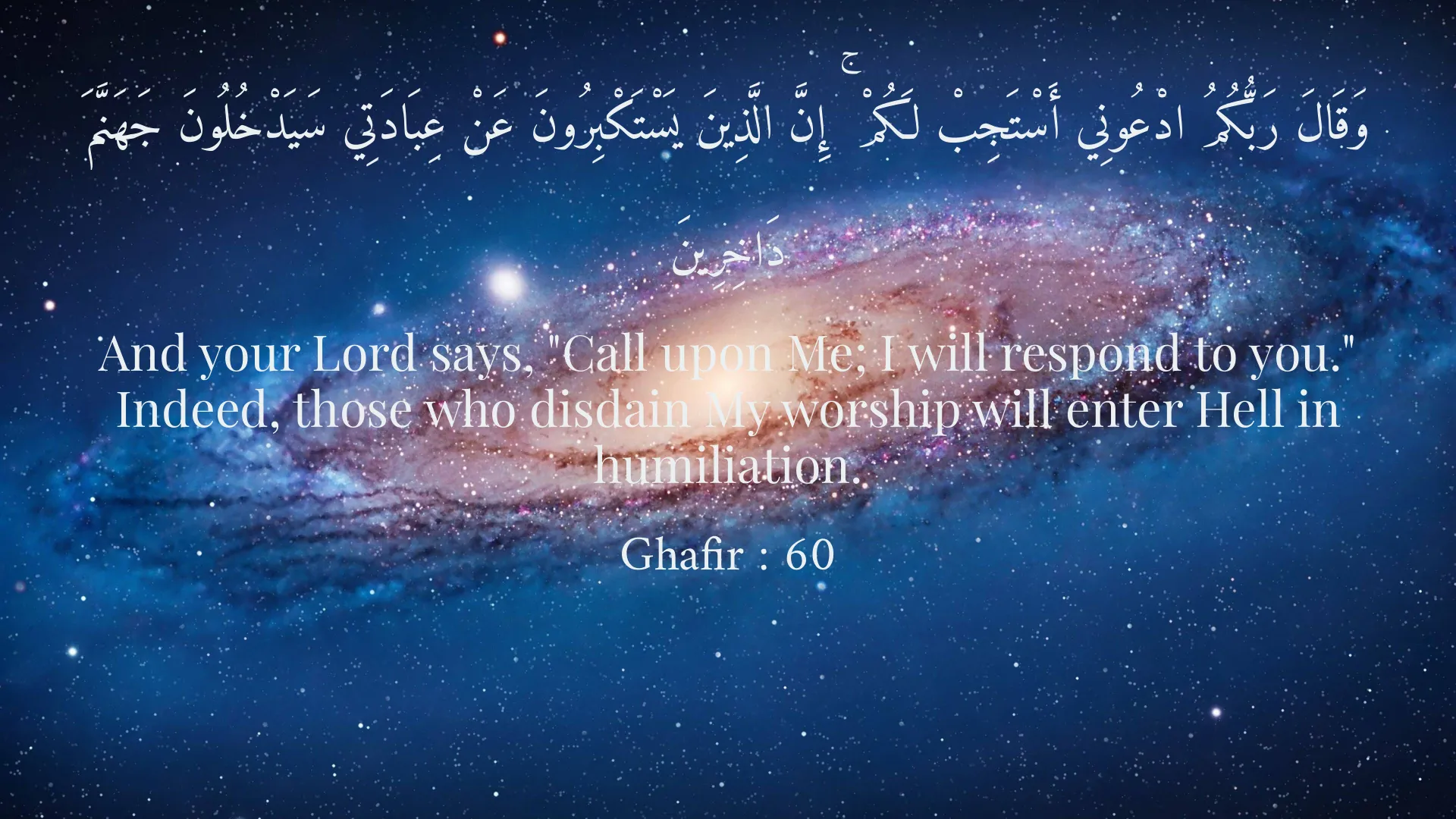
وَقَالَ رَبُّكُمُ ادْعُونِي أَسْتَجِبْ لَكُمْ ۚ إِنَّ الَّذِينَ يَسْتَكْبِرُونَ عَنْ عِبَادَتِي سَيَدْخُلُونَ جَهَنَّمَ دَاخِرِينَ
And your Lord says, "Call upon Me; I will respond to you." Indeed, those who disdain My worship will enter Hell in humiliation.
Ghafir : 60
وَإِذَا سَأَلَكَ عِبَادِي عَنِّي فَإِنِّي قَرِيبٌ ۖ أُجِيبُ دَعْوَةَ الدَّاعِ إِذَا دَعَانِ ۖ فَلْيَسْتَجِيبُوا لِي وَلْيُؤْمِنُوا بِي لَعَلَّهُمْ يَرْشُدُونَ
And when My servants ask you, [O Muhammad], concerning Me - indeed I am near. I respond to the invocation of the supplicant when he calls upon Me. So let them respond to Me [by obedience] and believe in Me that they may be [rightly] guided.
Al-Baqarah : 186
يَا بَنِيَّ اذْهَبُوا فَتَحَسَّسُوا مِن يُوسُفَ وَأَخِيهِ وَلَا تَيْأَسُوا مِن رَّوْحِ اللَّهِ ۖ إِنَّهُ لَا يَيْأَسُ مِن رَّوْحِ اللَّهِ إِلَّا الْقَوْمُ الْكَافِرُونَ
O my sons, go and find out about Joseph and his brother and do not despair of the relief from Allah. Indeed, no one despairs of relief from Allah except the disbelieving people.
Yusuf : 87
Short Story
It is narrated that a faithful man prayed for years for Allah to grant him a righteous child. Each time he raised his hands in supplication, he saw no answer, and sometimes he was tempted to think his prayers were futile. But he, believing in divine wisdom, never despaired of God's grace and continued his efforts on the path of purity and good deeds. One day, he was sitting in a garden, pondering to himself, "Patience and reliance on God are the keys to breakthroughs, even if our eyes see nothing outwardly." Suddenly, he saw a lost and helpless child by the roadside crying. His heart ached for the child, so he brought him to his home and raised him as his own. Years passed, and that child grew into a righteous and benevolent man, becoming a pride of his time. The old man, witnessing the young man's virtues, only then realized that his prayer had been answered, but not in the way he had expected. Allah had granted him a child who was not from his loins, but who was nourished by his spirit and faith, bringing abundant goodness and blessings to him and to society. Thus, the man understood that sometimes the answer to prayer comes in a form we never imagine, but its goodness is far greater than our initial desires, signifying boundless divine grace and wisdom.