Quranic Answer
The feeling that prayer can sometimes be useless is a common human experience, especially when immediate or desired results are not observed. This feeling might stem from our expectations about how prayers should be answered, which sometimes differ from divine wisdom and the actual manner of divine response. However, from the perspective of the Holy Quran and Islamic teachings, this perception arises from an incomplete understanding of the true nature, purpose, and mechanism of prayer (dua) and the infinite wisdom of Allah (God). The Quran unequivocally asserts that Allah is All-Hearing and All-Responsive, but not always in the way we might imagine or expect. 1. Misunderstanding the Nature of Response and Divine Wisdom: One primary reason for feeling that prayer is useless is the expectation of an immediate, tangible, and specific outcome that aligns perfectly with our initial request and within our desired timeframe. We pray for a specific job, a cure for an illness, or a resolution to a problem, and when it doesn't materialize in the exact way or moment we anticipate, doubt and disappointment creep in. The Quran, however, teaches us that Allah’s response is not always a direct “yes” to our exact wording, but rather a response rooted in His boundless knowledge and absolute wisdom; a wisdom that transcends our limited perception. * Divine Wisdom (Hikmah): Allah knows what is truly best for us, even if we, with our limited understanding, cannot comprehend it. Sometimes, what we ask for might, in the long run, be detrimental to us. Allah might withhold something to protect us from a greater harm, or to grant us something far superior later. This concept is crucial: it means Allah’s response is always for our ultimate good, whether it manifests as a direct acceptance, a delay, or an alternative, better outcome that is hidden from us. This is highlighted in Surah Al-Baqarah, verse 216: "…But perhaps you hate a thing and it is good for you; and perhaps you love a thing and it is bad for you. And Allah Knows, while you know not." This verse clearly illustrates the limitations of human knowledge and the vastness of divine omniscience. * Delayed Response as a Test or Training: Sometimes, Allah delays the answer to a prayer as a test of our patience, perseverance, and sincerity. This delay can strengthen our faith, teach us resilience, and deepen our reliance on Him. It allows us to grow, mature, and perhaps even to exert the necessary effort that should accompany our supplications. Patience (sabr) is a highly lauded virtue in Islam, and the process of waiting for an answer can cultivate this quality within us. Prayer, when accompanied by patience, gains greater value. 2. The Multifaceted Nature of Allah's Response: Divine response to prayer is not monolithic; it takes various forms, many of which are not immediately obvious to us: * Direct Acceptance: This is what we usually expect. Our prayer is answered exactly as we asked, in the timeframe we hoped for. This certainly happens and strengthens our faith. * Substitution with Something Better: Allah might replace what we asked for with something far better, something we hadn't even conceived of. For example, we might pray for wealth, but Allah might grant us inner peace, contentment, or health, which are often more valuable than material riches. This type of response is the deepest, bringing true and lasting benefit to us. * Averting Calamity: Sometimes, the answer to our prayer is the prevention of an unseen calamity or misfortune that was destined to befall us. We might never know about this averted evil, and thus might mistakenly think our prayer went unanswered. This is a profound benefit of prayer – it acts as a shield and wards off many adversities. Indeed, many comforts and much peace in our lives are the result of answered prayers whose form of acceptance remains unknown to us. * Reward in the Hereafter: If a prayer is not answered in this worldly life, Allah might reserve its full reward for the Hereafter. This is a tremendous form of divine response, as the eternal rewards are infinitely more significant than temporary worldly gains. According to narrations, on the Day of Judgment, people will wish none of their prayers had been answered in this world, so they could receive the full reward in the Hereafter. This indicates that even prayers seemingly without effect in this world are, in reality, a huge treasure for us in eternal life. 3. Prayer as an Act of Worship (Ibadah) and Connection: Beyond specific requests, prayer itself is a profound act of worship and submission to Allah. It acknowledges His sovereignty, power, and mercy, and our utter dependence on Him. When we raise our hands in supplication, we are admitting our humility and His greatness. This act of connection, communication, and remembrance (dhikr) brings immense spiritual benefits, regardless of the immediate outcome of the specific request. * Inner Peace and Tranquility: The very act of turning to Allah in prayer brings a deep sense of peace and comfort. It allows us to offload our burdens, worries, and fears onto the One who controls all things. This psychological and spiritual solace is an immediate and tangible benefit of prayer, often overlooked when we focus solely on material outcomes. * Strengthening Faith: Consistent prayer, even when results are not apparent, strengthens our reliance on Allah and deepens our faith. It builds trust in His plan and His wisdom. This unwavering trust is a cornerstone of true belief. * Self-Reflection and Growth: The process of formulating our prayers often leads to self-reflection, helping us identify our true needs, desires, and even our shortcomings. It can be a catalyst for personal growth and positive change, as we seek Allah's guidance to improve ourselves. 4. Conditions for Prayer and Our Own Role: While Allah is All-Responsive, certain conditions, often related to our own state and actions, can influence the perceived effectiveness of prayer. These are not hindrances to Allah's power, but rather aspects of our interaction with the divine: * Sincerity (Ikhlas): Prayer must be offered with sincerity, a pure heart, and genuine belief in Allah's ability to respond. * Lawful Sustenance (Halal Rizq): Islam emphasizes that consuming unlawful (haram) sustenance can be a barrier to the acceptance of prayers. * Avoidance of Sin: While not an absolute barrier, persistent engagement in major sins without repentance can diminish the spiritual state conducive to prayer. * Effort (Sa'y) & Reliance (Tawakkul): Prayer is not a substitute for effort. We are encouraged to strive in our affairs while simultaneously relying on Allah. Prayer complements effort; it doesn't replace it. This is akin to the well-known saying, "Tie your camel and then trust in Allah." * Avoiding Despair: Never give up praying, no matter how long it takes. Despair from Allah's mercy is itself a major sin and weakens the spirit of prayer. The Prophet Muhammad (PBUH) said, "The supplication of any one of you is granted as long as he does not show impatience by saying, 'I supplicated but I was not granted my supplication.'" (Sahih Muslim, No. 2735). Conclusion: The feeling that prayer is useless is a human fallacy born from impatience and a limited perspective. The Quran assures us that Allah is indeed near and responds to every sincere call. His answer may not always be what we expect or when we expect it, but it is always what is best for us, imbued with divine wisdom. Prayer is a powerful tool for connection, a source of peace, a means of seeking guidance, and an act of worship that yields immense benefits in this life and the next, regardless of the immediate material outcome. We must cultivate patience, trust in Allah's infinite wisdom, and persist in our supplications, knowing that not a single sincere prayer goes unheard or unrewarded by the Most Merciful.
Related Verses
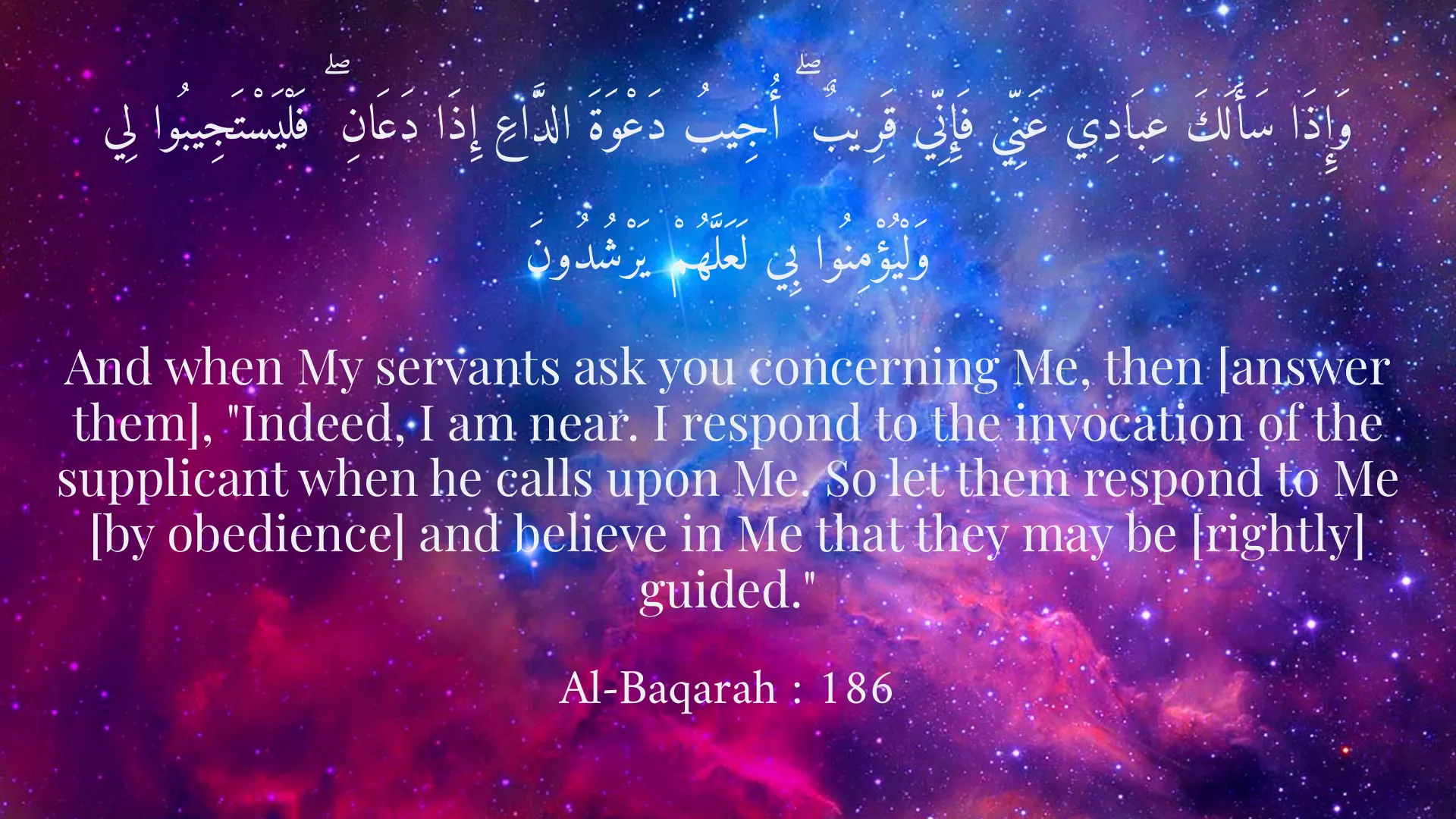
وَإِذَا سَأَلَكَ عِبَادِي عَنِّي فَإِنِّي قَرِيبٌ ۖ أُجِيبُ دَعْوَةَ الدَّاعِ إِذَا دَعَانِ ۖ فَلْيَسْتَجِيبُوا لِي وَلْيُؤْمِنُوا بِي لَعَلَّهُمْ يَرْشُدُونَ
And when My servants ask you concerning Me, then [answer them], "Indeed, I am near. I respond to the invocation of the supplicant when he calls upon Me. So let them respond to Me [by obedience] and believe in Me that they may be [rightly] guided."
Al-Baqarah : 186
وَقَالَ رَبُّكُمُ ادْعُونِي أَسْتَجِبْ لَكُمْ ۚ إِنَّ الَّذِينَ يَسْتَكْبِرُونَ عَنْ عِبَادَتِي سَيَدْخُلُونَ جَهَنَّمَ دَاخِرِينَ
And your Lord says, "Call upon Me; I will respond to you." Indeed, those who disdain My worship will enter Hell [rendered] contemptible.
Ghafir : 60
كُتِبَ عَلَيْكُمُ الْقِتَالُ وَهُوَ كُرْهٌ لَّكُمْ ۖ وَعَسَىٰ أَن تَكْرَهُوا شَيْئًا وَهُوَ خَيْرٌ لَّكُمْ ۖ وَعَسَىٰ أَن تُحِبُّوا شَيْئًا وَهُوَ شَرٌّ لَّكُمْ ۗ وَاللَّهُ يَعْلَمُ وَأَنتُمْ لَا تَعْلَمُونَ
Fighting has been enjoined upon you while it is hateful to you. But perhaps you hate a thing and it is good for you; and perhaps you love a thing and it is bad for you. And Allah Knows, while you know not.
Al-Baqarah : 216
Short Story
Once upon a time, a villager spent years supplicating to God for wealth and prosperity. With all his heart, he asked Allah to fill his life with riches so he could be free from the torment of poverty. Days and months passed, but he saw no sign of an opening in his affairs. Despair settled upon his heart like dust, and he told himself, "What good is all this prayer? It seems my voice does not reach the heavens." One day, an old dervish, passing by his hut, heard the man's lamentations. The dervish, with a kind smile, asked, "My friend, what sorrow has made you weep so?" The villager spoke of his seemingly unanswered prayers, how he had prayed for wealth for years with no response. The wise dervish replied, "My dear friend, you only look at the outward form of your request. How do you know that perhaps Allah has answered your prayer in a different way? Perhaps if wealth had come exactly as you wished, it would have brought a greater trouble, or taken away your current peace and comfort. Perhaps instead of worldly riches, Allah has granted you contentment and health, which are treasures far greater! Many wealthy people envy your moment of peace." The man paused and reflected on his life; he saw that despite his poverty, he was free from illness, his heart was full of purity, and among his family, love and peace reigned. He then understood that Allah had answered his prayer, but not in the way he expected, rather in the best possible way for his ultimate good. From that day, his heart found peace, and with every prayer, he found more contentment and gratitude within himself.