Quranic Answer
"Why do I sometimes get negative results with good intentions?" This question reflects a deep and common concern for many people. It often happens that we embark on a path, make a decision, or perform an action with a heart full of goodwill, yet the outcome is not only not positive, but may even appear negative or harmful. This experience can lead to disappointment, despair, and sometimes even a weakening of faith. However, from the perspective of the Holy Quran, these phenomena are part of the wise divine order of creation and God's meticulous planning, and there are profound reasons and wisdom behind each of them. Understanding these can bring peace and guidance. 1. Divine Wisdom and Limited Human Knowledge (Qadar): The most crucial point emphasized by the Quran is the limitation of human knowledge and understanding when compared to God's boundless knowledge. We only perceive a small fraction of reality and are unaware of the long-term and hidden consequences of matters. Allah Almighty explicitly states this truth in the Holy Quran: "And perhaps you hate a thing and it is good for you; and perhaps you love a thing and it is bad for you. And Allah Knows, while you know not." (Surah Al-Baqarah, Verse 216). This verse presents a key principle: what you dislike may contain good for you, and what you like may contain evil for you. And Allah knows, while you do not know. This verse teaches us that outcomes that appear negative might, in their essence and within the broader context of our destiny, contain a greater good that is hidden from our view at that moment. Perhaps this "negative result" prevents us from falling into a greater evil, or it opens a path for us that we never imagined. This perspective shifts our view from a short-sighted and superficial one to a deeper, more trust-oriented one. With His infinite knowledge, Allah knows the best path for His servants, even if this path initially seems arduous. This acceptance is the first step in dealing with such experiences. 2. Divine Tests and Trials (Ibtila'): Another wisdom behind "negative results" from "good intentions" is the concept of divine tests and trials. The Holy Quran repeatedly emphasizes that worldly life is a testing ground for human beings to gauge their patience, gratitude, faith, and reliance on God. Allah says: "And We will surely test you with something of fear and hunger and a loss of wealth and lives and fruits, but give good tidings to the patient." (Surah Al-Baqarah, Verse 155). These trials are not for Allah to gain knowledge, but for the truth within us to manifest and for human perfections to be nurtured. When we do something with good intentions and receive an undesirable outcome, it is a test: Do we despair and give up on doing good? Or do we practice patience, trust in God, learn from the experience, and continue with stronger faith? These "negative results" can be tools for purifying the soul, strengthening willpower, and deepening our insight. They lead us to humility before divine decree and the understanding that everything is in His hands. 3. The Importance of Correct Method and Righteous Deeds (Amal Saleh): Although good intention is the foundation of every righteous deed, in Islam, intention alone is not sufficient. The action must be righteous; meaning, in addition to a pure intention, it must also be carried out using the correct method and in accordance with divine teachings. Sometimes, despite pure intentions, we may not achieve the desired outcome due to lack of sufficient information, not consulting experts, or choosing an incorrect method. The Holy Quran places great emphasis on righteous deeds and the necessity of following the true path. Even if our intention is pure, but we make a mistake in choosing the means or method of action, the result may not be desirable. This teaches us that alongside pure intention, we must always seek knowledge, consultation, and diligence in performing tasks to achieve the best possible outcome. In Surah Al-Kahf, verses 103 and 104, it speaks of those "whose effort is lost in worldly life, while they think that they are doing good work." This indicates that even the belief in the goodness of an action does not guarantee its righteousness, and it must be weighed against divine criteria. 4. Hidden Outcomes and Hereafter Rewards: Sometimes the results of our good deeds do not immediately manifest in this world, or they do not appear in the way we expect. This might be because the true and complete reward for that action is reserved for us in the Hereafter. This world is not the place for receiving the full reward of deeds, but rather a passage for earning its worthiness. Even if we see no tangible worldly results from our good work, we should not despair; for Allah does not waste even an atom's weight of our good deeds, and He will grant us their reward on the day we need it most, namely, the Day of Judgment. This perspective gives us patience and hope and ensures that our motivation for doing good is not limited to worldly results but also extends to seeking God's pleasure and the reward in the Hereafter. 5. A Reminder of Humility and Reliance (Tawakkul): The experience of receiving "negative results" from "good intentions" can serve as a reminder for us to be humble before God's absolute power and knowledge. This experience teaches us that although we make our efforts, ultimately, control of affairs rests with Allah. This is where the concept of "Tawakkul" (reliance) gains meaning: entrusting the outcome to God after fulfilling our duty and making sincere efforts. Allah says in the Quran: "And whoever fears Allah – He will make for him a way out And will provide for him from where he does not expect. And whoever relies upon Allah – then He is sufficient for him. Indeed, Allah will accomplish His purpose. Allah has already set for everything a [decreed] extent." (Surah At-Talaq, Verses 2-3). This verse emphasizes that reliance on God does not mean inaction, but rather peace of mind that the ultimate outcome is in His hands. Ultimately, encountering such experiences should not deter us from continuing to do good, but rather should deepen our faith and insight. These are opportunities to understand divine wisdom more profoundly, strengthen patience and reliance, and remember that the best outcome is what Allah has decreed for us, even if it seems undesirable to us at the moment. The purpose of good deeds extends beyond tangible worldly results, aiming for divine pleasure and human perfection.
Related Verses
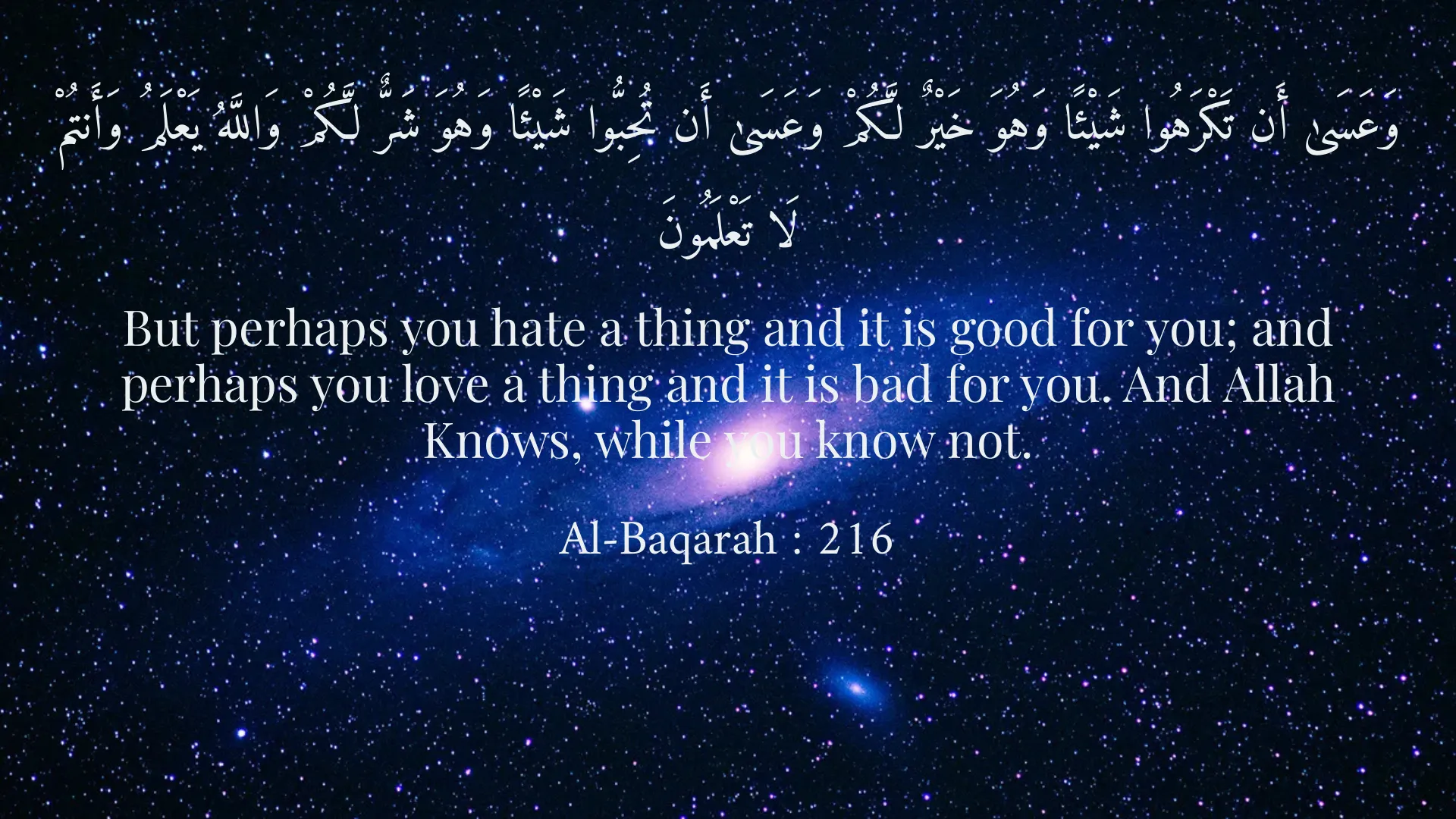
وَعَسَىٰ أَن تَكْرَهُوا شَيْئًا وَهُوَ خَيْرٌ لَّكُمْ وَعَسَىٰ أَن تُحِبُّوا شَيْئًا وَهُوَ شَرٌّ لَّكُمْ وَاللَّهُ يَعْلَمُ وَأَنتُمْ لَا تَعْلَمُونَ
But perhaps you hate a thing and it is good for you; and perhaps you love a thing and it is bad for you. And Allah Knows, while you know not.
Al-Baqarah : 216
وَلَنَبْلُوَنَّكُم بِشَيْءٍ مِّنَ الْخَوْفِ وَالْجُوعِ وَنَقْصٍ مِّنَ الْأَمْوَالِ وَالْأَنفُسِ وَالثَّمَرَاتِ وَبَشِّرِ الصَّابِرِينَ
And We will surely test you with something of fear and hunger and a loss of wealth and lives and fruits, but give good tidings to the patient.
Al-Baqarah : 155
وَمَن يَتَوَكَّلْ عَلَى اللَّهِ فَهُوَ حَسْبُهُ ۚ إِنَّ اللَّهَ بَالِغُ أَمْرِهِ ۚ قَدْ جَعَلَ اللَّهُ لِكُلِّ شَيْءٍ قَدْرًا
And whoever relies upon Allah – then He is sufficient for him. Indeed, Allah will accomplish His purpose. Allah has already set for everything a [decreed] extent.
At-Talaq : 3
Short Story
It is narrated that a kind-hearted man, with the intention of revitalizing a ruined house and seeking God's pleasure, set about renovating it. People reproached him, saying, 'Why do you care for such a ruin?' He paid no heed to their censure and continued his diligent work. One day, a mighty flood swept through, engulfing homes and destroying many structures. But the house that the benevolent man had renovated with good intentions and great foresight, due to its strong foundation and adherence to sound principles, remained safe from the flood and became a refuge for many displaced people. The people were astonished and praised the man, realizing that his insight went beyond appearances, and his good intention, coupled with wisdom and foresight, had become a source of salvation. So, know that sometimes the outward appearance of matters is contrary to their inner reality, and God's wisdom is far greater than our conjectures; good intentions must be coupled with sound planning and righteous action to bear good fruit.