Quranic Answer
The feeling of emptiness despite engaging in acts of worship is a profound human experience that many spiritual seekers encounter on their journey. This question itself is a testament to a deeper yearning for truth and a more meaningful connection with the Creator. The Holy Quran, with its profound insights, addresses this aspect of human existence beautifully, offering clear guidance on how to overcome such feelings. The answer to this question does not merely lie in increasing the quantity of worship, but fundamentally in transforming its quality and depth. Emptiness often arises from an incomplete or superficial understanding of the concept of "worship" (Ibadah) in Islam. In the Quran, worship extends far beyond mere rituals and prescribed acts; it is a comprehensive way of life, a continuous relationship with God, and a path towards the spiritual and moral perfection of the human being. To overcome this sense of emptiness, the first crucial step is to understand that the human heart is inherently drawn towards its Lord. The Quran beautifully states in Surah Ar-Ra'd, verse 28: "Those who have believed and whose hearts are assured by the remembrance of Allah. Unquestionably, by the remembrance of Allah hearts are assured." This verse reveals a fundamental truth: true tranquility and the alleviation of inner emptiness can only be achieved through a deep and continuous connection with Allah. If, despite our acts of worship, we still feel a void, it might indicate that "Dhikr Allah" (remembrance of Allah) has not been truly realized in our worship. Prayer (Salat), fasting (Sawm), charity (Zakat), and pilgrimage (Hajj) are all means to achieve "Dhikr Allah" and cultivate presence of heart, not ends in themselves. If these rituals are performed without presence of mind, without reflection on their meanings, and without attention to the profound messages they convey, it is natural for the soul to remain unfulfilled, and for that emptiness to persist. Many of us perform acts of worship out of habit, as a daily chore, or even for outward show, while our hearts and minds are preoccupied with other concerns. In such cases, worship, instead of being a bridge to God, becomes a barrier. The second step involves examining our intention and sincerity (Ikhlas) in worship. The Quran, in Surah Al-Bayyinah, verse 5, states: "And they were not commanded except to worship Allah, [being] sincere to Him in religion, inclining to truth, and to establish prayer and to give zakat. And that is the correct religion." Sincerity means performing every act, including worship, solely for the pleasure of Allah, without associating any partners with Him, whether in the form of hypocrisy (riya') or seeking worldly gains. If our worship, instead of being an earnest endeavor to please Allah, unconsciously becomes a tool to gain social standing, escape punishment, or merely fulfill a soulless obligation, it cannot provide true inner satisfaction and peace. Inner emptiness might stem from the fact that we are trying to fill it with things other than Allah Himself, even within the framework of worship. Furthermore, the concept of worship in Islam is much broader than mere rituals. The Holy Quran declares the purpose of creating jinn and humankind to be worship: "And I did not create the jinn and mankind except to worship Me" (Surah Adh-Dhariyat, verse 56). This verse indicates that the entirety of human life, with all its dimensions, can be a field of worship. If we limit worship only to a few minutes of prayer or a few days of fasting, and neglect the rest of our lives, it is natural to feel a void. True worship encompasses good conduct towards people, honesty, trustworthiness, justice, kindness, helping the needy, contemplating creation, seeking beneficial knowledge, and every righteous deed performed with a divine intention. When an individual focuses solely on the ritualistic aspect of worship and neglects its ethical and social dimensions, they are effectively ignoring a significant part of their connection with God. For instance, someone who prays but engages in backbiting, or who fasts but disregards the rights of others, may appear to be worshipping, but the spirit of worship, which is piety (taqwa) and avoidance of sin, is weak within them. The Quran in Surah Al-Ankabut, verse 45, states: "Recite, [O Muhammad], what has been revealed to you of the Book and establish prayer. Indeed, prayer prohibits immorality and wrongdoing, and the remembrance of Allah is greater. And Allah knows that which you do." This verse clearly states that the purpose of prayer is to restrain from evil, and if this effect is not evident in the worshipper, it is an indication of a lack of depth and quality in their worship. The feeling of emptiness might thus arise if our worship is merely a form, and its content—its impact on our behavior and morals—is weak. Sometimes, the cause of emptiness is excessive attachment to the worldly life and material possessions. The human heart has a limited capacity, and if it is filled with the love of this world and its transient allurements, there will be no room for the love of Allah and true tranquility. The Quran repeatedly warns that worldly life is but a fleeting enjoyment, and true eternal peace lies in the Hereafter. When individuals base their values and goals solely on worldly achievements, they will invariably feel a sense of inadequacy and deficiency, regardless of age, wealth, or circumstances, because the world is inherently limited and perishable and cannot truly satisfy the boundless human soul. The solution is to view this world as a means to attain divine pleasure, not as an ultimate goal. To fill this emptiness, it is recommended that we perform our acts of worship with greater presence of heart. In prayer, try to focus on the meanings of the words, understand whom we are standing before, and what we are saying. Dedicate moments to contemplation of Allah's grandeur and His blessings. Recite Dhikr and Du'a not only with the tongue but also with the heart and soul. Furthermore, build relationships with others based on Quranic principles of love, justice, and benevolence. Serving creation, especially those in need, is one of the most effective ways to fill inner emptiness and find divine satisfaction. Forgiving, showing compassion, and abstaining from sins also help purify the heart and open the way for divine light. Finally, it is crucial to be patient on the spiritual path and avoid despair. Spiritual growth is a gradual process. We might feel empty today, but through continuous effort, sincerity, and reliance on Allah, we can gradually fill this void with the light of faith and divine tranquility. Allah has promised to guide those who strive in His way: "And those who strive for Us – We will surely guide them to Our ways. And indeed, Allah is with the doers of good." (Surah Al-Ankabut, verse 69). This striving includes striving against the self (jihad an-nafs) and working to improve the quality of one's worship and life. With every sincere step, more light will illuminate our hearts, and that emptiness will transform into lasting peace.
Related Verses
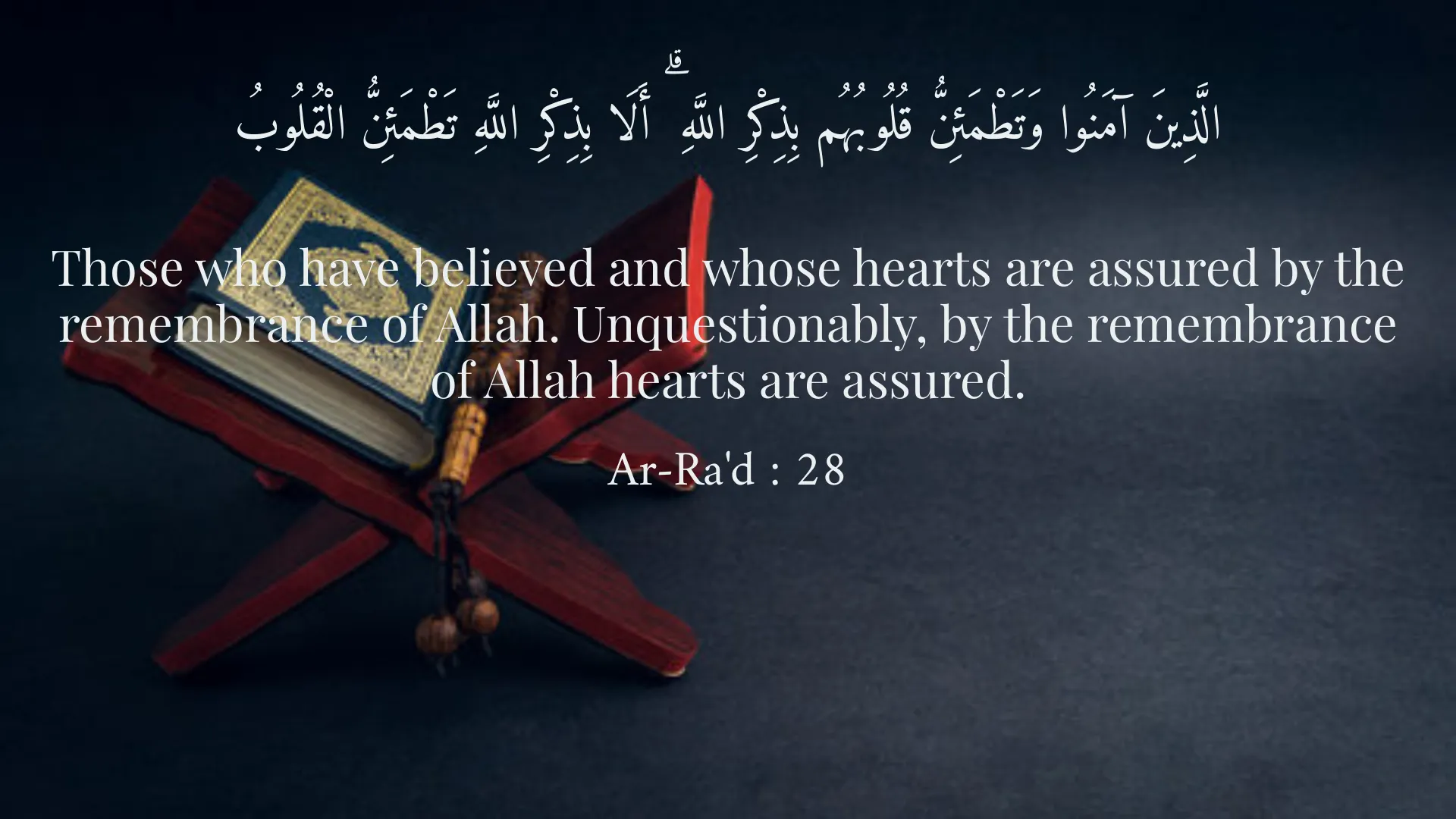
الَّذِينَ آمَنُوا وَتَطْمَئِنُّ قُلُوبُهُم بِذِكْرِ اللَّهِ ۗ أَلَا بِذِكْرِ اللَّهِ تَطْمَئِنُّ الْقُلُوبُ
Those who have believed and whose hearts are assured by the remembrance of Allah. Unquestionably, by the remembrance of Allah hearts are assured.
Ar-Ra'd : 28
وَمَا خَلَقْتُ الْجِنَّ وَالْإِنسَ إِلَّا لِيَعْبُدُونِ
And I did not create the jinn and mankind except to worship Me.
Adh-Dhariyat : 56
وَمَا أُمِرُوا إِلَّا لِيَعْبُدُوا اللَّهَ مُخْلِصِينَ لَهُ الدِّينَ حُنَفَاءَ وَيُقِيمُوا الصَّلَاةَ وَيُؤْتُوا الزَّكَاةَ ۚ وَذَٰلِكَ دِينُ الْقَيِّمَةِ
And they were not commanded except to worship Allah, [being] sincere to Him in religion, inclining to truth, and to establish prayer and to give zakat. And that is the correct religion.
Al-Bayyinah : 5
اتْلُ مَا أُوحِيَ إِلَيْكَ مِنَ الْكِتَابِ وَأَقِمِ الصَّلَاةَ ۖ إِنَّ الصَّلَاةَ تَنْهَىٰ عَنِ الْفَحْشَاءِ وَالْمُنكَرِ ۗ وَلَذِكْرُ اللَّهِ أَكْبَرُ ۗ وَاللَّهُ يَعْلَمُ مَا تَصْنَعُونَ
Recite, [O Muhammad], what has been revealed to you of the Book and establish prayer. Indeed, prayer prohibits immorality and wrongdoing, and the remembrance of Allah is greater. And Allah knows that which you do.
Al-Ankabut : 45
Short Story
A dervish, poor in worldly possessions but rich in spirit, was once approached by a king. The king, observing the dervish's serenity, asked, "O dervish, do you not feel the emptiness of poverty, the lack of worldly comforts?" The dervish smiled warmly and replied, "O King, it is not poverty that brings emptiness, but rather the heart's attachment to fleeting things. My heart is filled with remembrance of God, and in His presence, there is no room for want or void. The true void is in a heart that seeks contentment in transient treasures, for they vanish, leaving behind only longing. But a heart connected to the Eternal finds eternal peace." The king, though surrounded by immense wealth, felt a sudden pang of truth in his own heart, realizing that his grand palaces and countless treasures had never quite filled the subtle yearning he often felt. He understood then that true richness lay not in what one possessed, but in the peace that came from connection to the Divine.