Quranic Answer
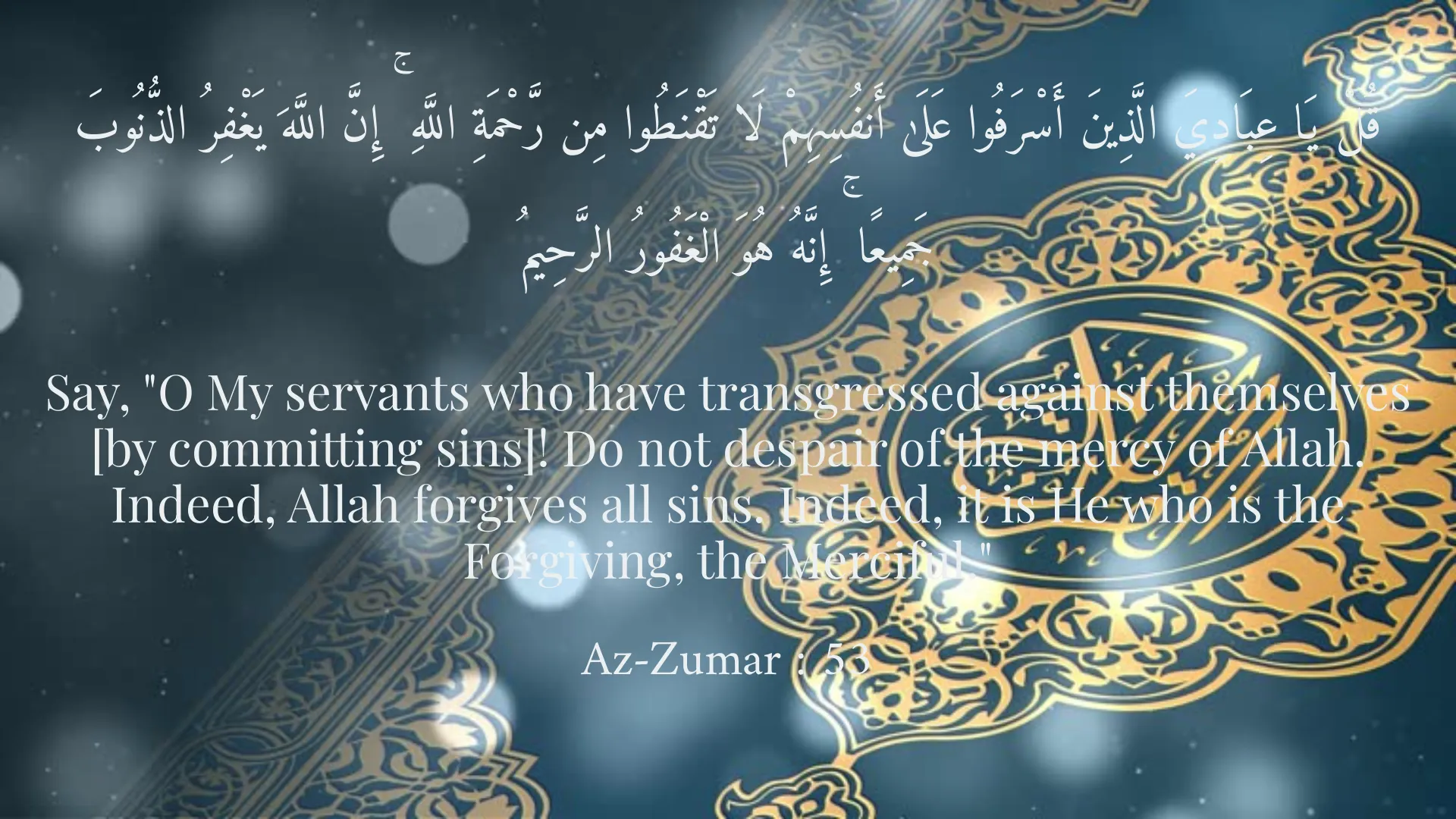
The feeling of guilt after repentance is an experience many believers face, and it can be quite distressing. While this feeling can be a sign of a living conscience and genuine remorse, if it lingers and becomes excessive, it can lead to despair and hopelessness in divine mercy, which is a significant sin in itself. The Holy Quran conveys a clear and decisive message about the vastness of Allah's mercy and the acceptance of sincere repentance. In numerous verses, Allah emphasizes that every sin, no matter how great, is forgivable if accompanied by Tawbah Nasuh (sincere and pure repentance). This encompasses all types of sins, from minor to major, demonstrating the boundless expanse of divine forgiveness. Therefore, the first step to liberation from this feeling is a deep understanding of this Quranic truth: that Allah is infinitely merciful and forgiving, and He has promised His forgiveness to sincere repenters. One of the most beautiful and hopeful verses in this regard is Surah Az-Zumar, verse 53: “Say, 'O My servants who have transgressed against themselves [by committing sins]! Do not despair of the mercy of Allah. Indeed, Allah forgives all sins. Indeed, it is He who is the Forgiving, the Merciful.'” This verse clearly states that Allah forgives all sins and no one should despair of His mercy. This verse serves as a beacon of guidance for anyone who still carries the heavy burden of sin even after repenting. This persistent feeling of guilt contradicts Allah's explicit promise and should be overcome with trust and certainty in His assurances. If Allah Himself has guaranteed that He forgives all sins, then there is no longer room for excessive worry and regret; rather, the focus should be on building a better, purer future. The feeling of guilt after repentance sometimes stems from various roots. One of the most important reasons is the whispers (waswas) of Satan. Satan constantly strives to divert humans from the path of truth and lead them to despair. When a person repents and returns to Allah, Satan tries to keep alive feelings of shame and worthlessness by reminding them of their past, aiming to deter them from continuing on the path of servitude and drawing closer to God. He wants humans to believe that their sins were so great they are unforgivable, while Allah Himself has introduced Himself as “At-Tawwab” (The Ever-Returning, Acceptor of Repentance) and “Al-Ghafur” (The All-Forgiving). The Quran warns us that Satan is our clear enemy, and we should not listen to his whispers, but rather seek refuge in Allah and ask Him to protect us from the evil of his whispers. Another reason might be a misunderstanding of the concept of repentance and divine mercy. Repentance in Islam is not merely a verbal expression of regret; it is a deep inner transformation, a firm resolve to abandon sin, and a sincere return to Allah. If repentance is accompanied by these conditions, Allah accepts it. Surah An-Nisa, verse 17, states: “But repentance is only for those who do evil in ignorance or unawareness and then repent soon after. It is to these that Allah will turn in forgiveness, and Allah is ever Knowing and Wise.” This verse indicates that promptness in repentance and not persisting in sin are characteristics of accepted repentance. If these conditions are met, a person should be confident that their repentance has been accepted. Sometimes, guilt may arise from Huquq al-Ibad, the rights of other people. If the sin committed involved infringing upon the rights of others (such as backbiting, slander, financial injustice, or physical harm), mere repentance to Allah is not sufficient. Instead, one must compensate for the violated rights, seek forgiveness from the wronged individuals, or, if they are unreachable, perform good deeds on their behalf. Until these rights are fulfilled, the psychological burden of the sin might not be lifted. Although, even in these cases, Allah looks at the repentance and the person's effort to make amends, and ultimately His mercy takes precedence over everything, and we hope that with utmost effort to compensate, Allah will grant ultimate forgiveness. To overcome this feeling of guilt after repentance, there are several remedies derived from Quranic teachings and the Sunnah of the Prophet (PBUH): Firstly, Certainty in Divine Mercy; the most crucial step is to strengthen faith and certainty that Allah is the Acceptor of repentance and is Merciful, and that He forgives sins. Reciting verses of mercy, engaging in Istighfar (seeking forgiveness), and seeking refuge in Allah from despair brings tranquility to the heart. Secondly, Focus on Good Deeds; after repentance, performing good deeds and righteous acts can gradually replace the memories of sin and generate positive feelings. The Quran states: “And establish prayer at the two ends of the day and at the approaches of the night. Indeed, good deeds do away with ill deeds. That is a reminder for those who remember.” (Surah Hud, 11:114). This verse clearly shows that good deeds have a cleansing power. Thirdly, Supplication and Prayer (Dua); continuous communication with Allah through prayer and supplication brings tranquility and helps one alleviate the psychological burden of sin, strengthening the feeling of closeness to the Almighty. Dua is a gateway to connect with the infinite power and mercy of Allah. Fourthly, Reflection on Quranic Verses; pondering over verses that speak of forgiveness, mercy, and repentance can change one's perspective on the grandeur of the Lord and the vastness of His forgiveness, kindling the light of hope in one's heart. Fifthly, Avoiding Sinful Environments; staying away from factors that remind one of sins or facilitate a return to them is effective in strengthening the resolve to abandon sin and reducing feelings of guilt. This includes avoiding people or places that trigger negative memories. Sixthly, Self-Acceptance; it's important to accept that all humans are fallible, and Allah is far too merciful to abandon you after sincere repentance. This feeling of guilt should not turn into excessive self-blame that hinders your spiritual growth and progress; rather, it should be an incentive to move forward. Ultimately, guilt is an internal mechanism that guides a person toward repentance and rectification. However, after genuine repentance, this feeling should give way to peace, hope, and a resolve to continue on the path of servitude. The aim of Islam is not to create despair, but to open the gates of mercy and hope for a return to Allah. Let us remember that every moment our heart regrets a sin and returns to the Lord, it is a new opportunity for purification. We must not allow external whispers or internal weaknesses to deprive us of this precious opportunity. Faith in divine promises is the key to liberation from this heavy burden. Allah's mercy is boundless, and sincere repentance is a strong and steadfast bridge that carries a person from the abyss of sin to the shore of tranquility and forgiveness. This path requires patience, steadfastness, and complete trust in the Almighty, for He always accepts His repenting servants.
Related Verses
قُلْ يَا عِبَادِيَ الَّذِينَ أَسْرَفُوا عَلَىٰ أَنفُسِهِمْ لَا تَقْنَطُوا مِن رَّحْمَةِ اللَّهِ ۚ إِنَّ اللَّهَ يَغْفِرُ الذُّنُوبَ جَمِيعًا ۚ إِنَّهُ هُوَ الْغَفُورُ الرَّحِيمُ
Say, "O My servants who have transgressed against themselves [by committing sins]! Do not despair of the mercy of Allah. Indeed, Allah forgives all sins. Indeed, it is He who is the Forgiving, the Merciful."
Az-Zumar : 53
إِنَّمَا التَّوْبَةُ عَلَى اللَّهِ لِلَّذِينَ يَعْمَلُونَ السُّوءَ بِجَهَالَةٍ ثُمَّ يَتُوبُونَ مِن قَرِيبٍ فَأُولَئِكَ يَتُوبُ اللَّهُ عَلَيْهِمْ ۗ وَكَانَ اللَّهُ عَلِيمًا حَكِيمًا
But repentance is only for those who do evil in ignorance or unawareness and then repent soon after. It is to these that Allah will turn in forgiveness, and Allah is ever Knowing and Wise.
An-Nisa : 17
وَأَقِمِ الصَّلَاةَ طَرَفَيِ النَّهَارِ وَزُلَفًا مِّنَ اللَّيْلِ ۚ إِنَّ الْحَسَنَاتِ يُذْهِبْنَ السَّيِّئَاتِ ۚ ذَٰلِكَ ذِكْرَىٰ لِلذَّاكِرِينَ
And establish prayer at the two ends of the day and at the approaches of the night. Indeed, good deeds do away with ill deeds. That is a reminder for those who remember.
Hud : 114
Short Story
It is narrated that in ancient times, there was a young man named Bahram who, in his heedless youth, had committed many wrongdoings and caused much distress to others. One day, he deeply regretted his actions and decided to repent and set his life straight. He went to the House of God and, with tears and supplication, repented of his sins, vowing never to return to those evil deeds. Bahram spent years in worship, doing good to people, and helping the needy. However, sometimes, a shadow of sorrow and guilt would weigh heavily on his heart, troubling him. He would say to himself, "Has Allah truly forgiven me? Will these sins ever be forgotten?" One day, he approached a wise master and related his condition. The master kindly told him, "O Bahram, your repentance has been sincere, and Allah is Most Merciful, accepting the repentance of His servants. These whispers are from Satan, who wishes to make you despair of divine mercy. You are now like a tree that bears fruit. Your past are like fallen leaves, carried away by the wind of divine mercy. Look at how you now cast shade and bear fruit. Be certain that Allah erases past sins with your good deeds of today." Upon hearing these words, Bahram's heart found peace, and he understood that peace with the past lay in faith in divine forgiveness and the continuation of good deeds. From that day forward, he continued his life with a tranquil heart and joyful spirit, never allowing the temptation of past sins to hinder his peace and closeness to God.