Quranic Answer
“Why do I still sin despite worshipping?” This is a profound and honest question that many sincere believers encounter on their spiritual journey. It not only reflects self-awareness and a desire for purity but also indicates a correct understanding of the nature of servitude (to God) and its challenges. Understanding this phenomenon requires a comprehensive reflection on Quranic teachings about human nature, the role of Satan, the function of worship, and the importance of repentance. The Holy Quran, this book of guidance, beautifully answers these ambiguities and provides a clear path for believers on this arduous journey. This question is not a sign of weak faith; rather, it often indicates a vibrant heart and a awakened conscience that is troubled by every slip and yearns for perfection. The Quran, with kindness and clarity, addresses the roots of this condition and shows the paths to overcome it. The first point to consider is the inherent nature of human beings. The Quran explicitly states that humans are created weak. In Surah An-Nisa, verse 28, Allah says: “Allah intends to lighten your burden; and mankind was created weak.” This weakness is not a defect but a part of divine wisdom in the creation of humanity and their test in this world. Humans are forgetful; they are sometimes influenced by desires and passions, and may, despite pure intentions for worship, fall into error. These slips are the result of the temporary dominance of material and carnal aspects over their spiritual dimension. Acts of worship grant humans strength and insight to manage these weaknesses and remain steadfast on the path of servitude, but they do not eliminate them completely. Instead, it is a continuous process of purification and elevation. Every human, even prophets and saints, are vulnerable to temptations and slips, and the difference lies in how they confront them and return to the straight path. The second crucial factor is the role of Shaytan (Satan). The Quran clearly identifies Satan as an open enemy to humanity and warns that he is always lying in wait to deceive people. In Surah Fatir, verse 6, it states: “Indeed, Satan is an enemy to you; so take him as an enemy. He only invites his party to be among the companions of the Blaze.” Satan does not sit idly by; he is constantly striving to lead humans astray, even those who are engaged in worship. He whispers, beautifies sins, and weakens the hope in God's mercy in the heart of the sinner to deter them from repentance. Worship acts as a barrier against satanic whispers, but this barrier requires constant vigilance and reinforcement. Satan enters through human weaknesses, negligence, and even the pride resulting from worship to lead one astray. This is an ongoing struggle that requires continuous awareness and seeking assistance from Allah. His temptations do not cease even after years of worship; rather, they take on different forms, from overt sins to more subtle temptations like pride and hypocrisy. The third factor is the 'Nafs al-Ammara' (the commanding soul that inclines to evil). The human soul has various dimensions, and one of them is the 'Nafs al-Ammara bis-Su'' which inclines humans towards undesirable desires and urges. In Surah Yusuf, verse 53, it states: “And I do not acquit myself. Indeed, the soul is a persistent enjoiner of evil, except those upon whom my Lord has mercy. Indeed, my Lord is Forgiving and Merciful.” Worship is a powerful tool for controlling and purifying the self. Prayer, fasting, charity, and other acts of worship help individuals overcome their carnal desires and guide their soul towards the 'Nafs al-Lawwamah' (the self-reproaching soul) which feels remorse after sin, and then to the 'Nafs al-Mutmainnah' (the tranquil soul) which achieves divine contentment. This path is a gradual and continuous journey that requires persistence and conscious effort. Although worship refines the soul, the roots of some carnal desires can be deep and require constant greater jihad (struggle against oneself). Now, let's consider the function of worship. Why do we worship? The purpose of worship is not to build an impenetrable shield that no sin can breach. Rather, the goal is to establish a strong connection with the Creator, a constant remembrance of Him, and to strengthen 'Taqwa' (God-consciousness and piety). In Surah Al-Ankabut, verse 45, Allah says: “Recite, [O Muhammad], what has been revealed to you of the Book and establish prayer. Indeed, prayer prohibits immorality and wrongdoing, and the remembrance of Allah is greater. And Allah knows that which you do.” This verse clearly states that prayer (a part of worship) deters humans from evil. The word 'tanha' (prohibits/deters) signifies a continuous and active deterrence, not an immediate and complete eradication. Prayer grants insight, awakens one's conscience, and reminds one of God and their responsibilities every time a mistake is made. This process is gradual, and with each act of worship, the human's bond with the Creator deepens, and their strength in resisting sins increases. If an individual continues to sin despite worship, it might indicate that their worship has not yet reached the necessary depth and has not transformed into 'dhikr kathir' (abundant remembrance) and continuous presence of heart, or that their struggle against the self and Satan requires more effort and vigilance. This does not imply a flaw in the worship itself, but rather a need to enhance its quality and the presence of heart within it. The final and very hopeful point is the importance of repentance (Tawbah) and seeking forgiveness. The Holy Quran places great emphasis on Allah's boundless mercy and His acceptance of repentance. Allah knows that humans are fallible and, despite striving for purity, may err. Therefore, He has always kept the door of repentance open to His servants. In Surah Az-Zumar, verse 53, Allah Almighty says: “Say, 'O My servants who have transgressed against themselves [by sinning], do not despair of the mercy of Allah. Indeed, Allah forgives all sins. Indeed, it is He who is the Forgiving, the Merciful.'” This verse indicates that even after committing a sin, there is a path back to purity. The feeling of remorse after a sin is itself a sign of faith and a fruit of the very acts of worship that have sown the seeds of piety in the heart. The true sinner is one who neither worships nor feels remorse for their sin. But a believer who worships and yet makes a mistake quickly returns to Allah and seeks forgiveness, and this return and repentance is itself the pinnacle of servitude and closeness to God. This opportunity for repentance is itself a sign of Allah's boundless grace and mercy, and a path for continuous purification. In conclusion, sinning despite worship is not a sign of complete failure; rather, it is a part of the human spiritual growth and elevation. This phenomenon invites us to humility, self-awareness, and continuous effort. Worship is a powerful tool for fighting against the self and Satan, but this struggle is ongoing, and one should never despair of Allah's mercy and forgiveness. Every time we fall, it is an opportunity for sincere repentance and a stronger rise. By persisting in worship, increasing mindfulness in it, consciously striving to overcome temptations, and constantly seeking forgiveness, we can gradually overcome sins and attain proximity to Allah. This path is an endless journey towards perfection that culminates with patience, gratitude, and seeking assistance from the Lord, and each stage of it offers valuable lessons for our spiritual life.
Related Verses
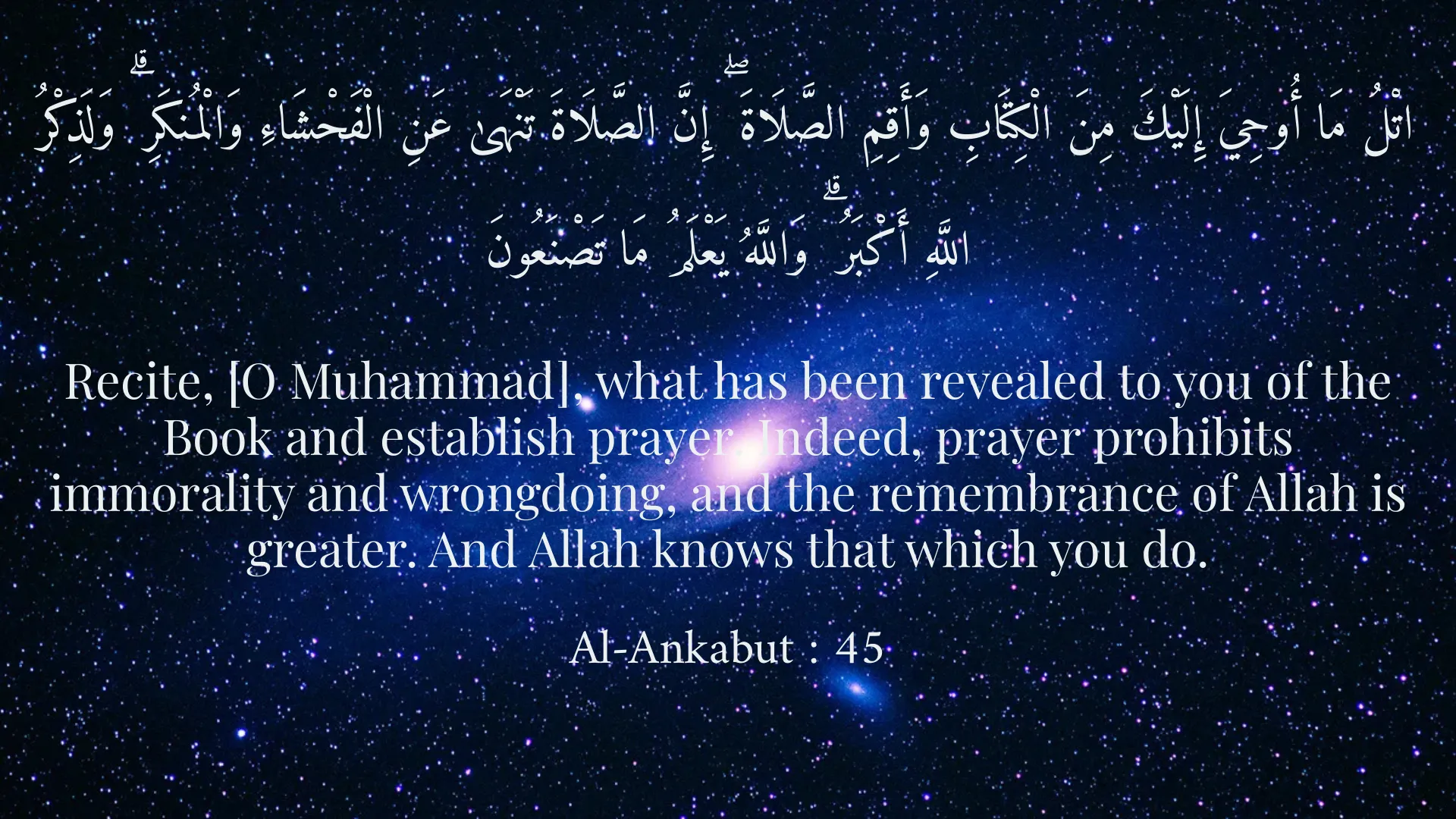
اتْلُ مَا أُوحِيَ إِلَيْكَ مِنَ الْكِتَابِ وَأَقِمِ الصَّلَاةَ ۖ إِنَّ الصَّلَاةَ تَنْهَىٰ عَنِ الْفَحْشَاءِ وَالْمُنكَرِ ۗ وَلَذِكْرُ اللَّهِ أَكْبَرُ ۗ وَاللَّهُ يَعْلَمُ مَا تَصْنَعُونَ
Recite, [O Muhammad], what has been revealed to you of the Book and establish prayer. Indeed, prayer prohibits immorality and wrongdoing, and the remembrance of Allah is greater. And Allah knows that which you do.
Al-Ankabut : 45
قُلْ يَا عِبَادِيَ الَّذِينَ أَسْرَفُوا عَلَىٰ أَنفُسِهِمْ لَا تَقْنَطُوا مِن رَّحْمَةِ اللَّهِ ۚ إِنَّ اللَّهَ يَغْفِرُ الذُّنُوبَ جَمِيعًا ۚ إِنَّهُ هُوَ الْغَفُورُ الرَّحِيمُ
Say, 'O My servants who have transgressed against themselves [by sinning], do not despair of the mercy of Allah. Indeed, Allah forgives all sins. Indeed, it is He who is the Forgiving, the Merciful.'
Az-Zumar : 53
وَمَا أُبَرِّئُ نَفْسِي ۚ إِنَّ النَّفْسَ لَأَمَّارَةٌ بِالسُّوءِ إِلَّا مَا رَحِمَ رَبِّي ۚ إِنَّ رَبِّي غَفُورٌ رَّحِيمٌ
And I do not acquit myself. Indeed, the soul is a persistent enjoiner of evil, except those upon whom my Lord has mercy. Indeed, my Lord is Forgiving and Merciful.
Yusuf : 53
Short Story
Once, a devout man complained to himself, lamenting that despite his many prayers and night vigils, he still occasionally slipped into sin, and his heart was deeply troubled by this. He sought out a wise sage and recounted his plight. The sage replied with a warm smile: "My dear friend, devotion and the path of truth are like a garden where both flowers and thorns grow. What is important is that whenever a thorn pricks your foot, you pull it out and continue on your way. Your worship is the gardener who waters the garden of your heart. And if sometimes a weed sprouts, your task is to pluck it out, not to despair of gardening. The sign of true devotion is not that you never sin, for that is the characteristic of angels; rather, it is that whenever you do sin, you regret your action, return to the threshold of truth, and resolve to repent and reform. This return and repentance itself is a bridge that brings you closer to Him. So, neither despair of your own sins nor of the Lord's mercy." The devout man found peace and understood that the path to perfection is one of continuous return.