Quranic Answer
Arrogance, in its essence, is a multifaceted psychological construct that permeates human interactions and perspectives. Within the broader scope of human behavior, arrogance is often seen as an inflated sense of self-importance that leads individuals to view themselves as superior to others. This belief, however, is often rooted in deep-seated insecurities, giving rise to a paradoxical nature of arrogance where those who may appear most confident are often battling significant internal conflicts. The Quran, which serves as a guide for moral and ethical conduct for millions of Muslims around the globe, provides profound insights into the nature of arrogance and its consequences in both this life and the hereafter. The Quran addresses arrogance in various contexts, helping its readers to understand the dangers of excessive pride and the essential humility required in life. Arrogance can stem from various factors, including personal achievements, wealth, physical beauty, or even intellectual knowledge. Individuals may perceive themselves as elevated above their peers based solely on their accomplishments or attributes. In Surah Az-Zumar, verse 60, Allah states: 'And [mention] the Day the Horn will be blown; and whoever is in the heavens and whoever is on the earth will fall dead, except for whom Allah wills. And all will come to Him humbled.' This profound reminder underscores the ultimate reality that no one can be considered superior to Allah. On the Day of Judgment, the rich, the powerful, the beautiful, and the learned will find themselves equal before their Creator, stripped of their earthly distinctions and forced to confront the truth of their existence. The message is clear: feelings of arrogance directed at both ourselves and others are not only meaningless but also perilous, as they divert us from the awareness of our mortal condition and our accountability before God. Arrogance often manifests in daily behavior as contempt or disdain towards others. This is highlighted in Surah Luqman, verse 18, where God warns, 'And do not turn your cheek [in contempt] toward people and do not walk through the earth exultantly.' Here, the Quran explicitly cautions against exhibiting prideful behavior and emphasizes the importance of treating others with respect. When we adopt an attitude of arrogance, we not only alienate ourselves from our genuine connections with others but also risk alienating ourselves from God's mercy and forgiveness. The psychological roots of arrogance are complex and often tied to a person’s inability to appreciate the blessings they possess. Gratitude plays a significant role in combating arrogance, as it encourages individuals to recognize and acknowledge the kindness and grace bestowed upon them by God. Failure to practice gratitude can lead to a distorted self-image where one’s achievements become a source of inflated self-worth rather than a reminder of God's generosity. Moreover, the transient nature of life emphasizes how arrogance is built on shaky ground. The Quran frequently reminds us that everything we possess – be it wealth, status, or intellect – is a test from Allah to evaluate our gratitude and humility. In Surah Al-Anfal, verse 28, it is stated: 'And know that your possessions and your children are but a trial and that Allah has with Him a great reward.' This verse calls attention to the ultimate futility of placing our self-worth in external factors, reinforcing the idea that true success lies in our relationship with God and our demeanor towards our fellow human beings. It is essential to consider the societal impact of arrogance as well. In communities where arrogance prevails, social bonds are often weakened, leading to discord and division. When individuals believe themselves to be superior, they are less likely to empathize with others, fostering an environment where compassion and understanding are scarce. This lack of connection can result in a breakdown of essential social structures, as communication and collaboration diminish in the face of pride and contempt. On a personal level, overcoming arrogance requires a conscious effort to cultivate humility and self-awareness. One must regularly engage in self-reflection to recognize one's limitations and strengths while acknowledging the contributions of others. Seeking knowledge, practicing humility in speech and action, and cultivating a habit of gratitude can significantly transform how individuals perceive themselves and act towards others. Developing an awareness of the equalizing force of death, as emphasized in Surah Az-Zumar, can also be instrumental in eliminating arrogance. By recognizing that life is fleeting and that ultimately, we will all stand humbled before our Creator, we can cultivate a mentality rooted in humility rather than pride. This awareness reminds us to cherish our relationships, offer kindness to others, and embrace the shared human experience. In conclusion, arrogance is a complex psychological phenomenon that can be detrimental to personal and societal well-being. The Quran sheds light on the perils of pride, encouraging readers to embrace humility and gratitude. By recognizing the transient nature of wealth, beauty, and status, individuals can cultivate a profound understanding of the value of humility. As we strive to avoid the snares of arrogance, we open ourselves up to a deeper connection with God, our fellow beings, and ultimately, a life imbued with compassion, respect, and gratitude. Thus, the path towards overcoming arrogance is not merely an individual endeavor but a collective journey towards creating a harmonious society founded on mutual respect and understanding.
Related Verses
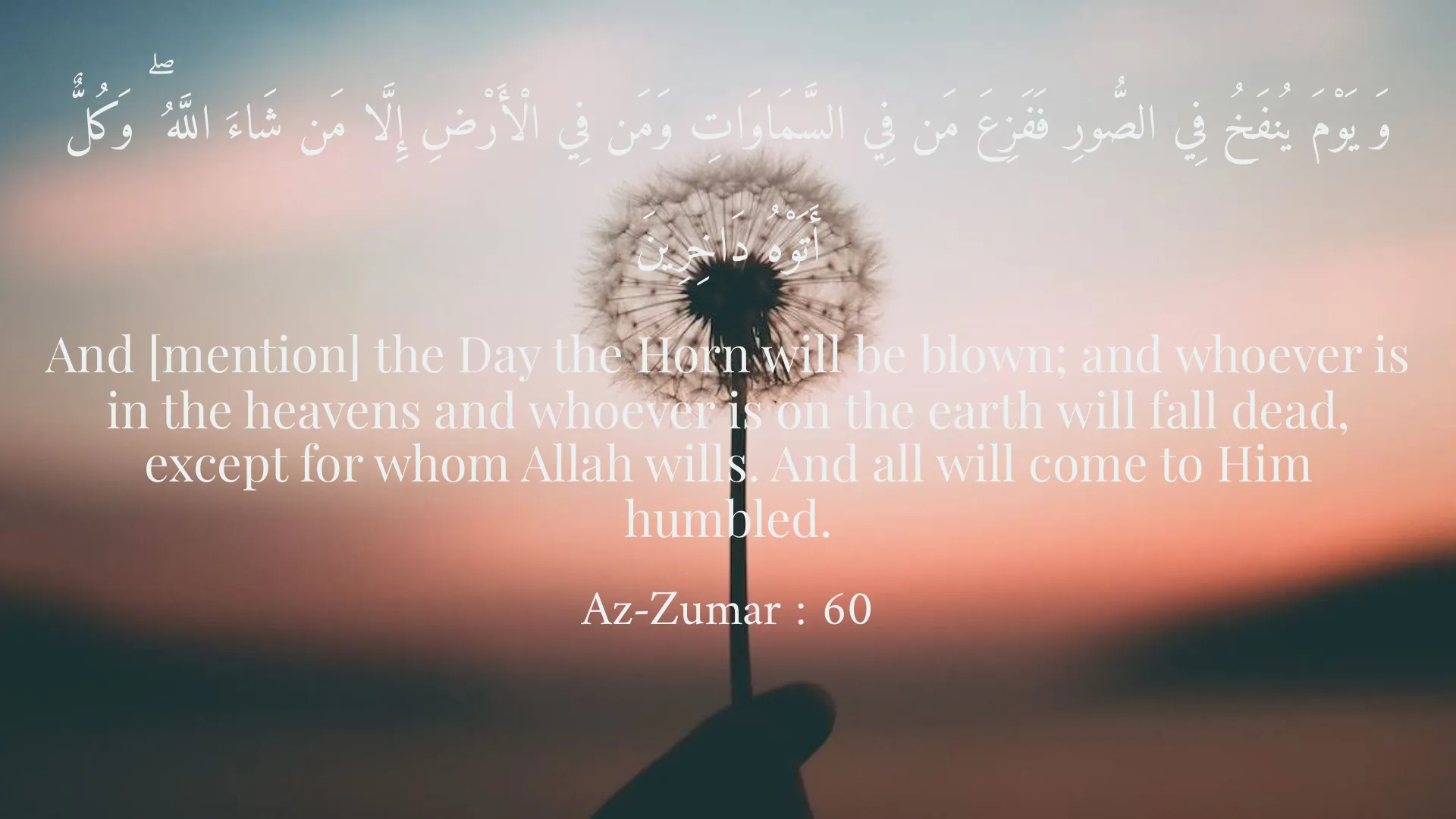
وَ يَوْمَ يُنفَخُ فِي الصُّورِ فَفَزِعَ مَن فِي السَّمَاوَاتِ وَمَن فِي الْأَرْضِ إِلَّا مَن شَاءَ اللَّهُ ۖ وَكُلٌّ أَتَوْهُ دَاخِرِينَ
And [mention] the Day the Horn will be blown; and whoever is in the heavens and whoever is on the earth will fall dead, except for whom Allah wills. And all will come to Him humbled.
Az-Zumar : 60
وَلَا تَصْعَرْ خَدَّكَ لِلنَّاسِ وَلَا تَمْشِ فِي الْأَرْضِ مَرَحًا
And do not turn your cheek [in contempt] toward people and do not walk through the earth exultantly.
Luqman : 18
Short Story
One day, in the shadow of a tree, a mystic sat pondering while looking at the tree. The simplicity and grace of the tree reminded him that no matter how superior one feels, in the face of God's spirit and the Creator's nature, it holds no significance. The mystic thought to himself, 'I must add to my humility each day and remember that none of us can perceive ourselves as great in the grandeur of God.' This reflection helped him stay away from arrogance and treat others with respect and love.