Quranic Answer
Hypocrisy, in its essence, is a phenomenon that permeates various aspects of social behavior, yet it takes on a particularly grave dimension when it infiltrates the realms of spirituality and worship. In the Holy Quran, hypocrisy is explicitly condemned, particularly as it pertains to acts of worship and charity. The dangers of insincerity in devotion to God are pronounced and serve as a sobering reminder to believers about the purity of intention required in their spiritual undertakings. Understanding Hypocrisy in Worship To understand hypocrisy in worship, we must first define it. Hypocrisy can be explained as the act of performing religious deeds not for the sake of divine approval or spiritual growth but rather to garner approval, admiration, or recognition from others. It is a deceitful behavior that undermines the very essence of worship, transforming what should be a sincere connection between the worshiper and the Creator into a display meant for human observance. In Surah Al-Baqarah, verse 264, Allah warns believers: "O you who have believed, do not invalidate your charities with reminders or hurt, as one who spends his wealth merely to be seen by the people, and does not believe in Allah and the Last Day." This verse articulates a fundamental tenet of Islamic belief: the sincere intention behind every act of worship or charity is paramount. The Consequences of Insincerity Engaging in acts of worship for the sake of show or social recognition not only voids the merit of those acts but also distances the believer from the divine rewards they seek to attain. The Quran informs us that hypocrisy negates the spiritual rewards that individuals seek and can lead to dire consequences in the afterlife. It serves as a reminder that only those acts that are rooted in sincerity and undertaken with the purpose of pleasing God will result in true spiritual upliftment. Acts devoid of sincerity are seen not only as wasted efforts but as a source of potential divine retribution. The Corruption of Good Deeds Further elaborating on the dynamics of hypocrisy in worship, we can draw attention to the notion that good deeds performed with the wrong intentions can be more dangerous than an outright absence of piety. For instance, when a person donates to charity not out of compassion but rather to elevate their social standing, they not only miss an opportunity for genuine goodness but also contribute to a culture of superficiality. In Surah Al-Mu’minun, verse 19, it is emphasized: "And those who believe in their Lord and do not associate partners with Him, they are the true believers." This verse delineates a clear line between true faith, which is manifested through sincerity, and the hollow practices of hypocrites. The Temptation of Popularity In the modern context, many find themselves grappling with this concept of hypocrisy due to the overwhelming influence of social media and public perception. The desire for popularity can lead individuals to engage in religious practices or charitable actions for the acclaim of others rather than from a heart centered on faith. The significance of this contemporary reality cannot be understated; as believers share their acts of worship in public spheres, the balance between sharing one's faith and displaying hypocrisy often becomes precarious. It is essential to cultivate an awareness of intentions and a mindfulness toward why we engage in certain religious activities. Fostering Sincerity Among Believers The teachings of the Quran encourage believers to perform their acts of worship and charity with a sincere heart focused on God. This can be achieved through several practices. First, regular self-reflection is crucial. By engaging in introspection, believers can assess their motivations and align their actions with their faith. Asking oneself questions like: "Am I doing this for God or for the approval of others?" can lead to greater sincerity and authenticity in religious practices. Additionally, fostering a mindset of humility is also imperative. Recognizing that all actions should stem from a desire to serve God removes the desire for social recognition. When humility becomes a central aspect of one's character, the inclination towards hypocrisy naturally diminishes. Moreover, the community plays a vital role in reinforcing sincere behaviors. Encouraging an environment where individuals are rewarded for genuine acts of kindness and spirituality rather than for their visibility or acclaim can foster a culture that eschews hypocrisy. Daily Remembrance of Divine Realities Incorporating the remembrance of divine realities in daily life can also aid in combating hypocrisy. Regular reminders of the temporality of life and the significance of the hereafter can sharpen one’s focus on sincerity in worship. Believers are encouraged to frequently reflect upon the greatness of God, the transitory nature of worldly accolades, and the eternal consequences of their deeds. This remembrance acts as a powerful antidote to the allure of hypocrisy, invigorating the spirit and re-establishing one’s true purpose. Conclusion In summary, the Holy Quran lays a clear and unambiguous stance against hypocrisy in worship, warning believers of the spiritual peril that comes with insincerity. The necessity of ensuring that acts of worship and charity are performed with the right intentions is emphasized time and again within its verses. By engaging in self-reflection, nurturing humility, and rooting oneself in the remembrance of God, believers can guard against falling into the abyss of hypocrisy. Ultimately, genuine devotion, rooted in sincerity, forms the bedrock of spiritual life and allows for a profound connection with the Divine. It is crucial for the faithful to embrace this reality, ensuring that their worship transcends mere social compliance and be firmly anchored in the quest for God’s pleasure.
Related Verses
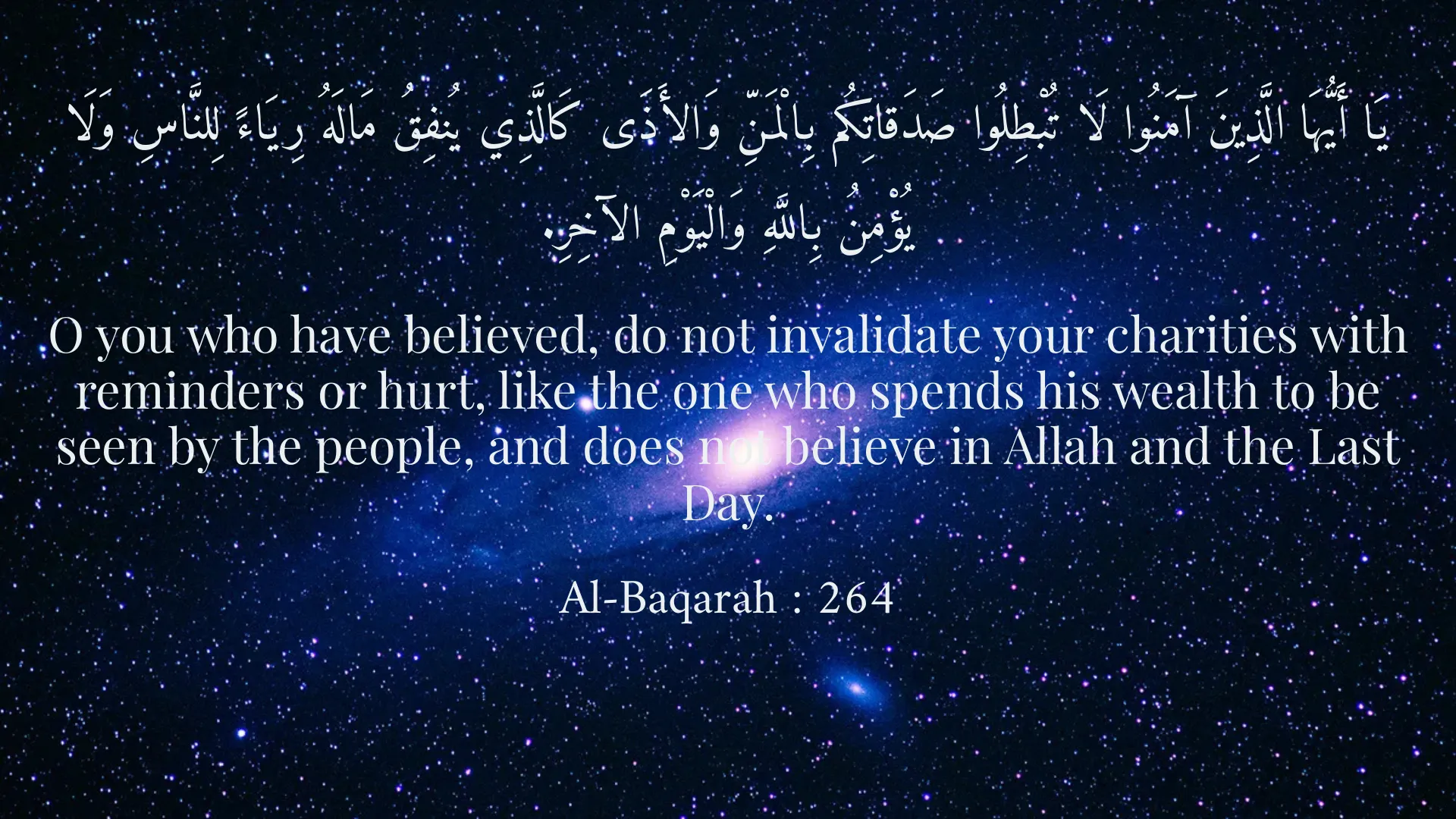
يَا أَيُّهَا الَّذِينَ آمَنُوا لَا تُبْطِلُوا صَدَقاتِكُم بِالْمَنِّ وَالأَذَى كَالَّذِي يُنفِقُ مَالَهُ رِيَاءً لِلنَّاسِ وَلَا يُؤْمِنُ بِاللَّهِ وَالْيَوْمِ الآخِرِ.
O you who have believed, do not invalidate your charities with reminders or hurt, like the one who spends his wealth to be seen by the people, and does not believe in Allah and the Last Day.
Al-Baqarah : 264
وَالَّذِينَ يُؤْمِنُونَ بِرَبِّهِمْ وَلَا يُشْرِكُونَ بِرَبِّهِمْ شَيْئًا.
And those who believe in their Lord and do not associate partners with Him.
Al-Mu'minun : 19
Short Story
One day, a man was engaged in worship and wondered why he sometimes felt that his acts of worship were insincere. He remembered that God sees the nature of acts of worship and is aware of people's intentions. Thus, he decided to worship solely for the sake of God's satisfaction and to avoid any attempts to attract the attention of others. Over time, he felt more peace and sincerity in his worship, and he was very happy about this.