Quranic Answer
The question, "Why do some acts of worship seem ineffective?" is a profound and challenging one that many believers encounter on their journey of devotion. The Holy Quran, as the divine word, not only guides our actions but also provides deep insights into the essence and spirit of these actions. Answering this question requires contemplation on the objectives of worship, the conditions for their acceptance, and divine wisdom in how their effects manifest. The first and most crucial point emphasized by the Quran is "sincerity" (Ikhlas). Worship, when performed without sincere intention and solely for the pleasure of Allah, might appear outwardly beautiful, but internally, it may lack the necessary depth and impact. In Surah Al-Bayyinah, verse 5, Allah says: "And they were not commanded except to worship Allah, [being] sincere to Him in religion, inclining to truth, and to establish prayer and to give zakat. And that is the correct religion." This verse explicitly states that the core of religion and worship is sincerity. When worship is performed out of habit, for show (riya), or to gain worldly benefits, it loses its essential essence, and its spiritual and moral effects fade. Sincerity means that the human heart and soul, during worship, are entirely directed towards God, with no partner or ulterior motive interfering with the intention. If the intention is tainted by non-divine motives, even the greatest acts of worship might remain fruitless. The second point is "presence of heart" (Hudur al-Qalb) and "humility" (Khushu'). The Quran describes the successful believers, stating: "Certainly will the believers have succeeded: They who are during their prayer humbly submissive." (Surah Al-Mu'minun, 23:1-2). Prayer, which is the pillar of religion, exerts its true effect when performed with presence of heart and humility. Prayer is not merely physical movements and repetition of words; rather, it is a profound conversation with the Lord. If the heart wanders elsewhere and the mind is preoccupied with worldly thoughts, this act of worship cannot establish a deep connection, and consequently, its educational and preventive effects against indecency and evil, as mentioned in Surah Al-Ankabut, verse 45 ("Indeed, prayer prohibits immorality and wrongdoing"), will be less observed. Thus, lack of concentration and heedlessness during worship are primary factors contributing to its apparent ineffectiveness. The third factor is "acting upon the requirements of worship." Worship is not just a series of rituals; it is an invitation to change one's lifestyle and behavior. For instance, fasting is introduced in Surah Al-Baqarah, verse 183, with the purpose of attaining "piety" (Taqwa): "O you who have believed, decreed upon you is fasting as it was decreed upon those before you that you may become righteous." If an individual fasts but then engages in backbiting, lying, slander, and other major sins, can it be expected that their fasting will achieve the goal of piety? No. Worship must lead to improved behavior and closer adherence to divine values. If someone prays but does not cease corruption and oppression, or gives zakat but disregards the rights of others, they will not see the true impact of their worship in their lives. The Quran repeatedly emphasizes the link between faith and righteous deeds. Righteous deeds are the fruit and sign of true faith and effective worship. The fourth point is "perseverance and patience" in the path of worship and awaiting the manifestation of its effects. Sometimes, the effects of worship do not appear quickly, and one might become despairing due to the lack of immediate results. The Quran invites us to patience and steadfastness. In Surah Al-Baqarah, verse 153, it states: "O you who have believed, seek help through patience and prayer. Indeed, Allah is with the patient." In this verse, Allah introduces patience and prayer as two means of seeking help. This indicates that the path of servitude requires steadfastness, and one should not be discouraged by the delay in observing results. Many effects of worship are internal, spiritual, and long-term, manifesting in inner peace, insight, success in endeavors, and protection from calamities, which may not be immediately apparent. The fifth factor is "internal and external obstacles" that can diminish the effectiveness of worship. Sins, especially major sins, can create veils between the servant and the Lord, preventing the light of worship from reaching the heart. The Holy Quran repeatedly forbids people from committing sins and introduces repentance as a way to remove these obstacles. Furthermore, unlawful earnings (haram livelihood), neglecting the rights of others, and disregard for lawful and unlawful matters can nullify or at least weaken the effect of acts of worship. The Quran explicitly emphasizes the purity of wealth and lawful earnings, as lawful sustenance directly impacts the spiritual enlightenment of the heart and the acceptance of worship. Finally, one must refer to "divine wisdom" in how the effects of worship manifest. Sometimes, Allah's wisdom dictates that the results of actions appear in a specific way or at a certain time of which we are unaware. What we perceive as ineffective might, in its essence, bring us immense good that we are not yet aware of. Allah is All-Knowing and All-Wise, and whatever He decrees is best, even if it does not outwardly align with our desires. Trust in divine decree and the belief that every righteous deed is preserved with Allah and will never be lost can bring solace. "So whoever does an atom's weight of good will see it" (Surah Az-Zalzalah, 99:7). This verse assures us that no good deed, no matter how small, goes unrewarded. In summary, the perceived ineffectiveness of worship usually stems from internal factors such as lack of sincerity, absence of presence of heart, or inconsistency between actions and the spirit of worship. Furthermore, sins and disregard for piety can diminish the effects of worship. Patience and perseverance, along with a deep understanding of divine wisdom in the manifestation of effects, are also key points. True worship is not merely a set of rituals but a lifestyle based on piety, sincerity, and complete servitude that is reflected in all aspects of one's life. This comprehensive perspective reveals the true impact of worship and transforms an individual's life in this world and the hereafter.
Related Verses
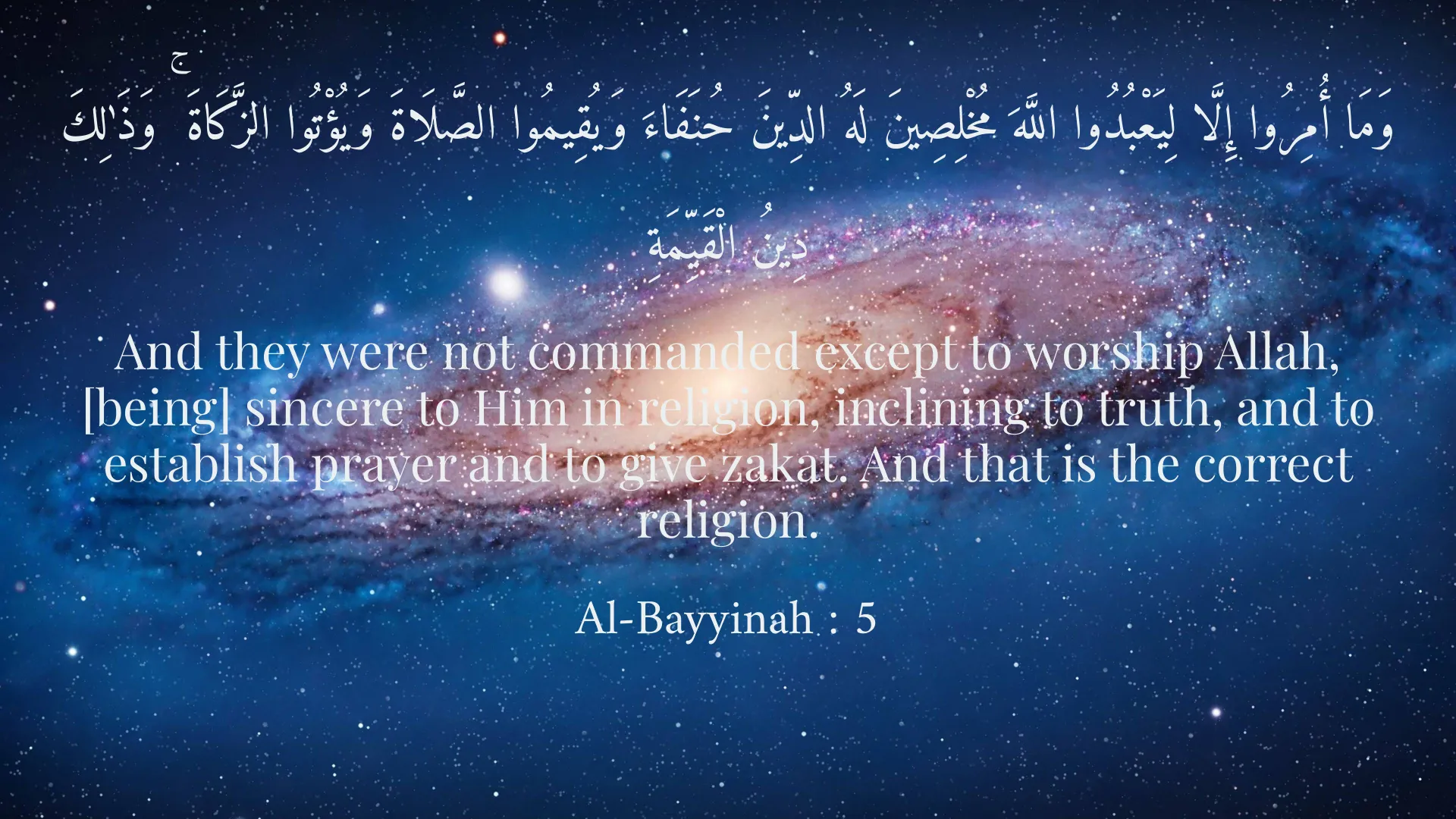
وَمَا أُمِرُوا إِلَّا لِيَعْبُدُوا اللَّهَ مُخْلِصِينَ لَهُ الدِّينَ حُنَفَاءَ وَيُقِيمُوا الصَّلَاةَ وَيُؤْتُوا الزَّكَاةَ ۚ وَذَٰلِكَ دِينُ الْقَيِّمَةِ
And they were not commanded except to worship Allah, [being] sincere to Him in religion, inclining to truth, and to establish prayer and to give zakat. And that is the correct religion.
Al-Bayyinah : 5
اتْلُ مَا أُوحِيَ إِلَيْكَ مِنَ الْكِتَابِ وَأَقِمِ الصَّلَاةَ ۖ إِنَّ الصَّلَاةَ تَنْهَىٰ عَنِ الْفَحْشَاءِ وَالْمُنكَرِ ۗ وَلَذِكْرُ اللَّهِ أَكْبَرُ ۗ وَاللَّهُ يَعْلَمُ مَا تَصْنَعُونَ
Recite, [O Muhammad], what has been revealed to you of the Book and establish prayer. Indeed, prayer prohibits immorality and wrongdoing, and the remembrance of Allah is greater. And Allah knows that which you do.
Al-Ankabut : 45
يَا أَيُّهَا الَّذِينَ آمَنُوا كُتِبَ عَلَيْكُمُ الصِّيَامُ كَمَا كُتِبَ عَلَى الَّذِينَ مِن قَبْلِكُمْ لَعَلَّكُمْ تَتَّقُونَ
O you who have believed, decreed upon you is fasting as it was decreed upon those before you that you may become righteous.
Al-Baqarah : 183
يَا أَيُّهَا الَّذِينَ آمَنُوا اسْتَعِينُوا بِالصَّبْرِ وَالصَّلَاةِ ۚ إِنَّ اللَّهَ مَعَ الصَّابِرِينَ
O you who have believed, seek help through patience and prayer. Indeed, Allah is with the patient.
Al-Baqarah : 153
فَمَن يَعْمَلْ مِثْقَالَ ذَرَّةٍ خَيْرًا يَرَهُ
So whoever does an atom's weight of good will see it,
Az-Zalzalah : 7
Short Story
It is narrated that in ancient times, a wealthy man performed his daily prayers with great pomp in the grand mosque, constantly asking God to increase his wealth, yet his life was full of worries, and he wondered why his worship had no effect. In the same city, a poor dervish prayed simply and sincerely in his humble abode, seeking only peace of heart and insight, and was always at ease. The wealthy man asked him, "What is the secret to your tranquility?" The dervish replied, "Worship is neither in outward multitude nor in expecting worldly rewards. Every act of worship is like a tree whose fruit grows in the garden of the heart, if watered with sincerity and nurtured by presence of heart. I reap the fruit of patience and contentment from servitude, not worldly fruit. Worship that does not lead to peace may be attached to the body, not the soul; but what is linked to the soul will reveal its effect sooner or later, even if unseen.". The wealthy man pondered these words, realizing that the effect of worship might be found elsewhere than he had imagined.