Quranic Answer
The Phenomenon of Sin and Deviation: Insights from the Holy Quran In the realm of religious studies and theological exploration, the Holy Quran serves as an invaluable source of guidance for millions of believers worldwide. Among its myriad teachings, the Quran addresses the profound issue of sin and the psychological and social mechanisms that lead individuals astray. One of the most compelling points raised in these scriptures pertains to the role of Satan and his deceptive temptations, as well as the impact of environmental influences on human behavior. This article delves into these themes, drawing from specific verses in the Quran, particularly focusing on Surah Al-Baqarah, Surah Ar-Ra'd, and Surah Al-Imran. ### The Deception of Satan In Surah Al-Baqarah, verse 208, the Quran explicitly urges believers: "O you who have believed, enter into Islam completely and do not follow the footsteps of Satan. Indeed, he is to you a manifest enemy." This verse highlights the notion that Satan is not merely a metaphorical representation of evil but a genuine adversary who seeks to divert believers from their faith. The reference to the 'footsteps of Satan' is particularly significant; it suggests that there are subtle and gradual ways through which individuals may be led away from righteousness. Satan employs a range of deceptive practices, including seductive temptations and false promises, to ensnare unsuspecting believers. The Quran's plea for believers to enter into Islam completely underscores the importance of sincerity and commitment in faith. It implies that wavering beliefs can render individuals more vulnerable to Satan’s influence. To fortify oneself against these external temptations, believers are encouraged to foster a holistic Islamic lifestyle characterized by unwavering faith, disciplined prayer, and continuous quest for spiritual growth. ### The Importance of Remembrance of God Another essential aspect discussed in the Quran is the act of remembering God, or dhikr, as a means of finding peace and resisting sin. Surah Ar-Ra'd, verse 28 states: "Indeed, in the remembrance of Allah do hearts find rest." This verse elucidates the spiritual significance of keeping God at the forefront of one’s mind. When individuals engage in regular remembrance of God—whether through prayer, reading the Quran, or meditation—they cultivate a sense of inner peace and clarity that serves as a buffer against the temptations of the material world and the whisperings of Satan. Conversely, neglecting the remembrance of God can lead to spiritual desolation. An individual who becomes ensnared in the hustle of daily life often finds it challenging to maintain a connection with their faith. Such disconnection may breed anxiety, confusion, and ultimately, moral compromise. Hence, the Quran articulates a clear warning: when one neglects the practice of dhikr, they surrender a crucial defense mechanism against moral decay and sin. ### The Influence of Social Environment Furthermore, the Quran acknowledges the role of social circumstances in the propensity to sin. Surah Al-Imran, verse 14 articulates: "Beautified for people is the love of that which they desire - of women and children, heaped-up sums of gold and silver..." This verse poignantly encapsulates human nature's susceptibility to temptation. The allure of worldly desires can come to overshadow one’s spiritual values, leading to a gradual moral decline. The focus on material possessions and societal status often leads individuals away from their spiritual path. Society plays a critical role in shaping moral values, and being surrounded by individuals who endorse negative behavior can have detrimental effects. Peer pressure, societal norms, and cultural expectations can often blur the lines between right and wrong, making it much easier for individuals to rationalize sinful behavior. The Quran encourages believers to be vigilant in their associations and interactions, as these relationships can greatly influence one’s character and choices. Building relationships with righteous individuals who embody the principles of Islam is essential for spiritual growth and resilience. ### The Path to Resistance and Righteousness To navigate the multifaceted nature of sin and its various influences, believers are encouraged to cultivate both self-awareness and community ties rooted in righteousness. Understanding personal triggers and the social dynamics that may lead to deviance is essential in fostering resilience against sin. Engaging in regular spiritual practices such as prayers, reading the Quran, and attending religious gatherings can empower individuals to fortify their faith and focus on their spiritual objectives. Moreover, the Quran urges believers to consciously strive for a lifestyle that emphasizes piety, charity, and ethical behavior. Acts of kindness, charity, and the pursuit of knowledge are antidotes to the negative influences surrounding individuals. Sharing experiences, discussing challenges, and seeking knowledge within a supportive community can illuminate pathways to righteousness and spiritual growth. ### Conclusion In conclusion, the Quran provides profound insights into why individuals may become accustomed to sin and the various mechanisms at play. The interplay between the deception of Satan, neglect of the remembrance of God, and the influence of social environments can create fertile ground for moral decline. However, through steadfast faith, active remembrance of God, and nurturing positive relationships, believers can resist the seductive nature of sin and cultivate a life aligned with the teachings of Islam. Meaningful engagement with the Quran and a commitment to spiritual and communal values are essential steps toward securing inner peace and righteousness. By illuminating these truths, the Quran serves as a timeless guide, encouraging believers to seek a purposeful and fulfilling life grounded in faith.
Related Verses
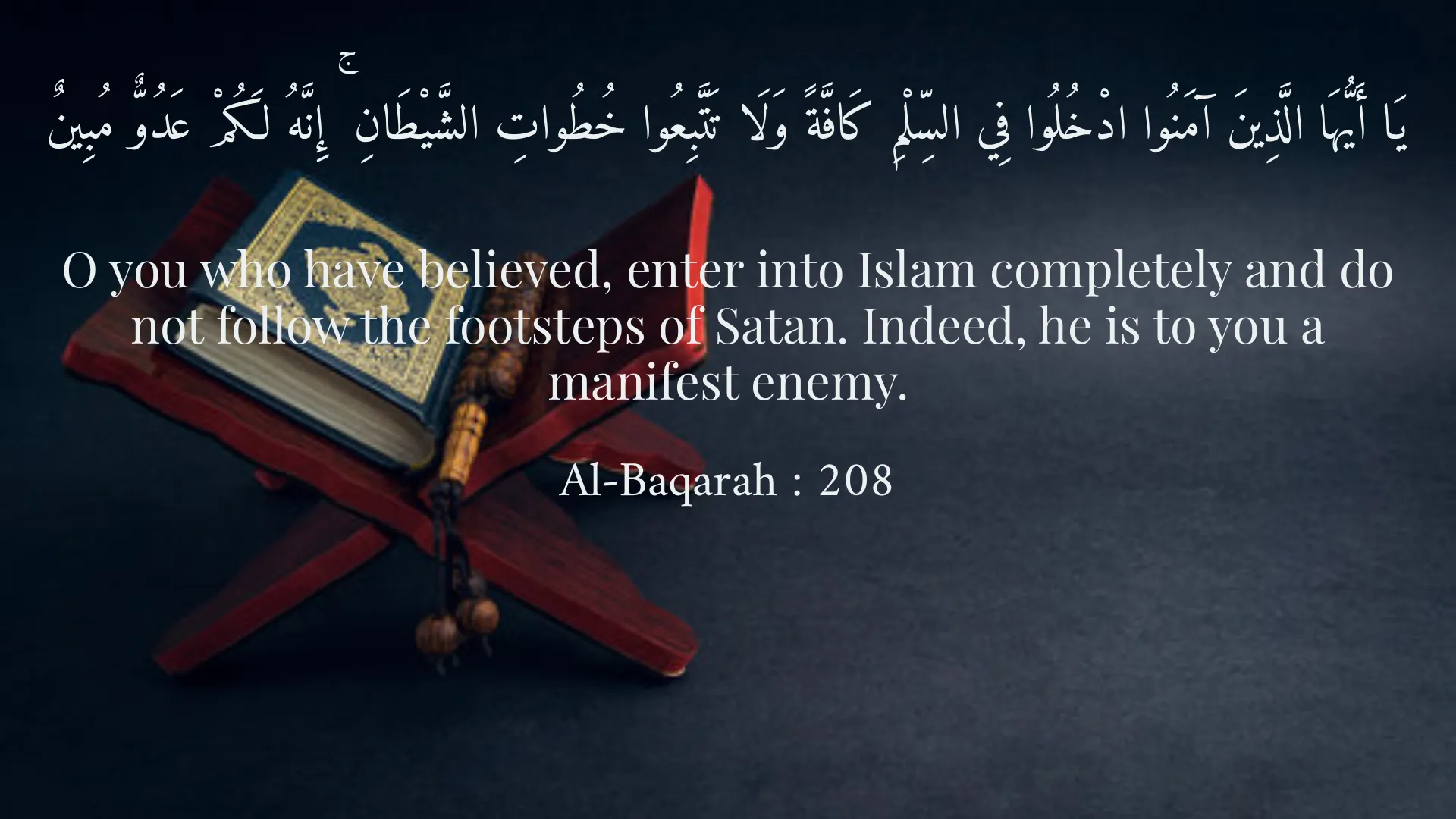
يَا أَيُّهَا الَّذِينَ آمَنُوا ادْخُلُوا فِي السِّلْمِ كَافَّةً وَلَا تَتَّبِعُوا خُطُواتِ الشَّيْطَانِ ۚ إِنَّهُ لَكُمْ عَدُوٌّ مُبِينٌ
O you who have believed, enter into Islam completely and do not follow the footsteps of Satan. Indeed, he is to you a manifest enemy.
Al-Baqarah : 208
أَلَا بِذِكْرِ اللَّهِ تَطْمَئِنُّ الْقُلُوبُ
Indeed, in the remembrance of Allah do hearts find rest.
Ar-Ra'd : 28
زُيِّنَ لِلنَّاسِ حُبُّ الشَّهَوَاتِ مِنَ النِّسَاءِ وَالْبَنِينَ وَالْقَنَاطِيرِ الْمُقَنْتَرَةِ مِنَ الذَّهَبِ وَالْفِضَّةِ
Beautified for people is the love of that which they desire - of women and children, heaped-up sums of gold and silver...
Al-Imran : 14
Short Story
One day, a young man named Ali was reflecting on his sins and wondered why he had become accustomed to them. He decided to turn to the Quran and study its verses. Gradually, he realized that the deception of Satan and the distance from the remembrance of God had led him to become accustomed to sin. He decided to dedicate time each day to the remembrance of God and to distance himself from bad company. In this way, Ali was able to change his life and head down the right path.