Quranic Answer
The Holy Quran, revered as the ultimate authority and guidance for Muslims, offers profound insights into the significance of hope and perseverance in overcoming life's challenges. Throughout its texts, Allah communicates the importance of faith and resilience in the face of adversity, providing believers with encouragement and strength to navigate through difficult times. By examining specific verses, we can better understand the Quran's perspective on maintaining hope and enduring trials as part of the human experience. One notable verse is found in Surah Al-Baqarah, verse 286, which asserts, 'Allah does not burden a soul beyond that it can bear.' This powerful statement underscores a fundamental aspect of the believer's journey: the recognition that every challenge and difficulty comes with its own set of strengths and capabilities bestowed upon individuals by Allah. It conveys the essential belief that even during the most trying periods, we possess the inherent abilities to not only confront our challenges but to emerge from them stronger and wiser. In a world where hardship is inevitable, this verse plays a pivotal role in shaping the mindset of believers. Instead of succumbing to despair or surrendering to the weight of their burdens, individuals are encouraged to reassess their circumstances through a lens of hope and resilience. The recognition that every trial has a purpose can empower believers to hold tight to their faith, cultivate patience, and pursue innovative solutions to their problems. The enduring spirit of the believer is fortified through the understanding that their struggles are not random acts of fate but rather opportunities for growth, self-discovery, and divine reward. Further reinforcing the theme of hope is Surah Al-Imran, verse 139, which reassures believers: 'So do not lose hope, nor be sad; you will surely be the uppermost if you are [true] believers.' This verse encapsulates a vital lesson: faith in Allah serves as a pivotal anchor during tumultuous times. When one faces challenges—whether they be personal, societal, or spiritual—maintaining hope and a positive outlook is crucial. This verse serves as a reminder that faith is not merely a passive state but an active choice to trust in the divine plan despite the grand uncertainty which life can present. The effects of losing hope can be detrimental. Despair can overshadow one's perception of their capabilities, leading to a vicious cycle of stagnation and distress. The Quran emphasizes that despair can detract from one's overall wellbeing and faith, diverting individuals from the path of righteousness and preventing them from accessing the true blessings that come with perseverance and hope. In acknowledging the trials presented by life and believing that one's faith can guide them through, believers can transform their experiences and ultimately emerge stronger. The power of hope is beautifully illustrated through the story of Prophet Yunus (peace be upon him), as recounted in Surah Al-Anbiya, verse 87: 'There is no deity except You; exalted are You. Indeed, I have been of the wrongdoers.' Despite being in the direst of circumstances—in the belly of a great fish—Prophet Yunus maintained hope and continued to call upon Allah. His example serves as a potent reminder that even in the darkest moments, the call to God can illuminate the path ahead. Yunus’s faith amidst his trials exemplifies the core values of patience, humility, and undying hope. His situation demonstrates that recognizing one's limitations, expressing contrition, and mirroring vulnerability is not a sign of weakness but rather a testament to one's intrinsic strength and belief in Allah’s mercy. The ultimate outcome of Yunus' persistence in faith was his salvation, highlighting how maintaining hope in Allah can lead to miraculous resolutions and blessings following tumultuous phases of life. This narrative encourages believers to persist in their supplications, firm in their belief that their prayers hold great power, and that hope can flourish unexpectedly, often when least anticipated. Moreover, the Quran often juxtaposes the concepts of hope and despair, encouraging believers to focus on the former as a source of motivation and strength. In moments of weakness, individuals are reminded to lean on their faith as an anchor, finding solace in the belief that Allah’s wisdom transcends human understanding. Through various experiences, believers learn that challenges are a part of life, and each test shapes their journey, nurturing their resilience and deepening their relationship with Allah. In a broader context, the universal themes of hope and perseverance resonate deeply in today’s world. Many people encounter trials that can seem insurmountable, leading to feelings of hopelessness and despair. The guidance from the Quran is particularly relevant in contemporary society, where pressures abound, and the struggle for balance and peace of mind becomes increasingly challenging. The encouragement to seek strength in faith and hope offers a beacon of light in turbulent times. Additionally, these teachings promote a communal aspect of support among believers. When individuals share their burdens and remind each other of the power of hope and faith, they foster a community that uplifts one another in trials. By drawing strength from collective belief and unity, believers can transform personal tribulations into shared journeys that inspire growth and resilience within the community at large. In conclusion, the teachings found within the Holy Quran regarding hope and perseverance are timeless, offering invaluable lessons that can guide individuals through life’s turbulent waters. From the reminder that 'Allah does not burden a soul beyond that it can bear' to the encouragement not to lose hope in difficult times, these teachings serve as a testament to the importance of faith, patience, and resilience. The essence of hope rooted in the Quran highlights the divine support available to believers, urging them to trust in Allah's wisdom and mercy. Through the narratives and verses presented, we see that while life is undoubtedly filled with challenges, the promises of faith, hope, and divine support allow individuals to embrace their journey with courage, strength, and unwavering belief in a brighter tomorrow.
Related Verses
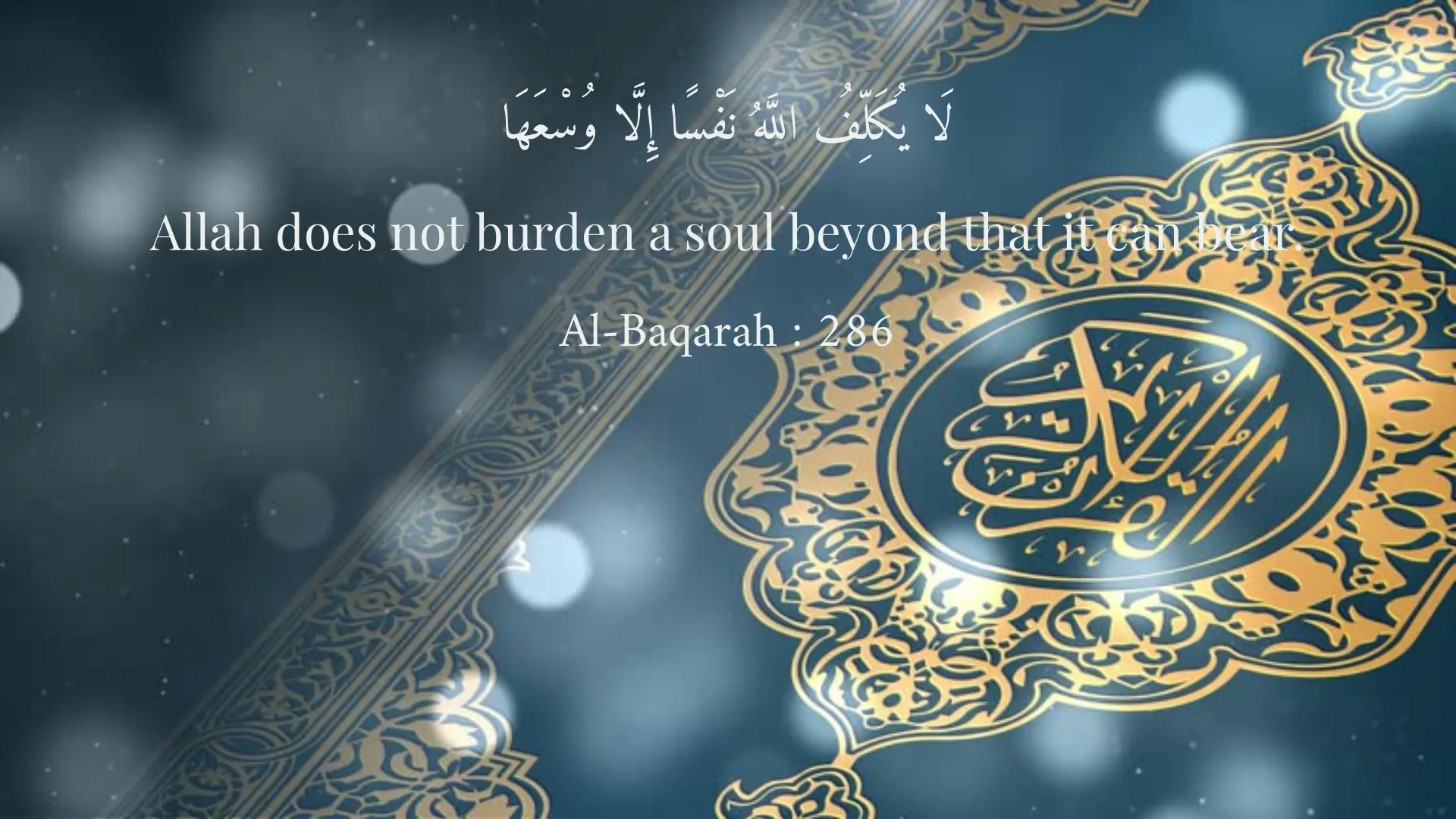
لَا يُكَلِّفُ اللَّهُ نَفْسًا إِلَّا وُسْعَهَا
Allah does not burden a soul beyond that it can bear.
Al-Baqarah : 286
فَلَا تَهِنُوا وَتَدْعُوا إِلَى السَّلاَمِ إِن كُنتُمْ مُؤْمِنِينَ
So do not lose hope, nor be sad; you will surely be the uppermost if you are [true] believers.
Al-Imran : 139
لا إله إلا أنت سبحانك إني كنت من الظالمين
There is no deity except You; exalted are You. Indeed, I have been of the wrongdoers.
Al-Anbiya : 87
Short Story
Once upon a time, a young man named Hassan grew up in a family that always faced difficulties. He had often felt hopeless, thinking that a bright future was not in store for him. One day while walking in the park, he saw an elderly man sitting under a tree reading the Quran. Curious, Hassan asked him, 'How do you always seem so hopeful?' The old man smiled and said, 'My son, life has its challenges, but if you hold on to hope in God and be patient, everything will be fine. The verses of the Quran teach us that nothing is greater than God's grace.' Hassan pondered these words and decided to have more hope in his life.