Quranic Answer
The concept of fate and the associated feelings of helplessness or victimhood are prevalent themes in the Holy Quran. The Quran addresses ignorance regarding fate in various verses, emphasizing the need for understanding and accepting the divine wisdom behind life’s occurrences. This article aims to delve deeper into these teachings, analyzing their implications on believers’ perception of fate, and ultimately guiding towards a more enlightened and spiritually enriched life. The Quran provides numerous insights on the topic of fate, helping believers navigate the complexities of life. For instance, in Surah Al-Baqarah, verse 155, Allah (SWT) clearly states, "Indeed, We will test you with something of fear and hunger and a loss of wealth and lives and fruits, but give good tidings to the patient." This verse serves as a fundamental reminder that trials and tribulations are an inherent part of the human experience. Through these challenges, believers are invited to recognize that they exist within the framework of a divine plan, one that is meticulously crafted with wisdom and purpose. Life's trials can often lead individuals to feel overwhelmed, and in some cases, they may even believe they are victims of fate. The sense of victimhood can stem from a misunderstanding of the nature of these tests. Many people might not grasp that every trial they face is a chance for growth, a pathway to develop their character and strengthening their faith in Allah. When faced with difficulties, it is essential for believers to maintain perspective, understanding that these adversities contain lessons—opportunities for spiritual advancement that Allah has expressly designed for them. In Surah Al-Imran, verse 186, Allah states: "You will surely be tested in your possessions and in yourselves; and you will surely hear from those who were given the Scripture before you and from those who associate others with Allah much abuse. But if you are patient and fear Allah - indeed, that is of the matters [worthy] of determination." This verse reinforces the belief that tests will manifest in various forms—whether through material loss or interpersonal strife. The faithful are encouraged to view these experiences not as punishments or likes of cruelty from a higher power but as personal challenges to be confronted with courage, patience, and reliance on Allah. This understanding doesn’t negate the reality of supernatural experiences or elements that may seem beyond individual control; rather, it emphasizes that one's responses to these experiences lie entirely within their grasp. How one reacts to hardships becomes a testament to their character and faith. Therefore, what people often misinterpret as mere fate is, in fact, a reflection of their choices and their steadfastness in the face of adversity. Moreover, the Quran emphasizes individual agency and accountability, a compelling feature that aligns fate with one’s actions. In Surah Al-Ra'd, verse 11, Allah says, "Indeed, Allah will not change the condition of a people until they change what is within themselves." This highlights that personal growth and transformation are essential precursors to the evolution of one’s circumstances. Thus, believing oneself to be a victim of fate may indicate a lack of awareness regarding the pivotal role that personal effort and faith play in shaping one’s destiny. In contemporary society, the theme of victimhood resonates strongly. Many individuals may find solace in blaming external circumstances when faced with challenges, rather than recognizing the power of their own responses and actions. The Quran challenges this mindset by urging believers to turn towards self-reflection and accountability. Acknowledging the trials as opportunities instead of obstacles allows individuals to harness their inner strength and develop resilience. The dichotomy between being a victim versus an empowered individual reflects a robust struggle with self-awareness. Understanding that trials are a part of the divine decree challenges individuals to rise above the feeling of hopelessness. Instead, they are invited to adopt a proactive stance, seeking understanding, guidance, and, ultimately, a path towards growth through faith and action. The Quran continues to provide a roadmap for navigating life's uncertainties, urging believers to embody qualities such as resilience, patience, and faith. The concept of Tawakkul—complete reliance on Allah while actively working towards one's goals—serves as a essential reminder. Believers are encouraged to cultivate faith that remains steadfast despite life's unpredictability and to trust in Allah’s plan. Moreover, community support and social connections can help mitigate feelings of victimhood. When individuals share their experiences of struggle and growth with others, they reinforce the idea that everyone faces trials and that support exists. As believers unite in faith, they collectively rise against the adversities life presents. The Quran calls for compassion, understanding, and community, reflecting the importance of collective resilience in facing life’s trials. To summarize, the Holy Quran’s teachings provide profound insights into the human experience, addressing the ignorance surrounding fate and the feeling of victimhood. Life’s challenges are not merely hurdles but rather critical tests designed for spiritual growth and maturity. Believers must acknowledge their inherent agency while understanding that external factors are part of a broader divine plan. With patience, faith, and a proactive approach, one can navigate life’s journeys, transforming hardships into opportunities for personal and spiritual enrichment. Ultimately, the teachings of the Quran encourage believers to rise above the feeling of victimhood and embrace their position as empowered individuals guided by faith.
Related Verses
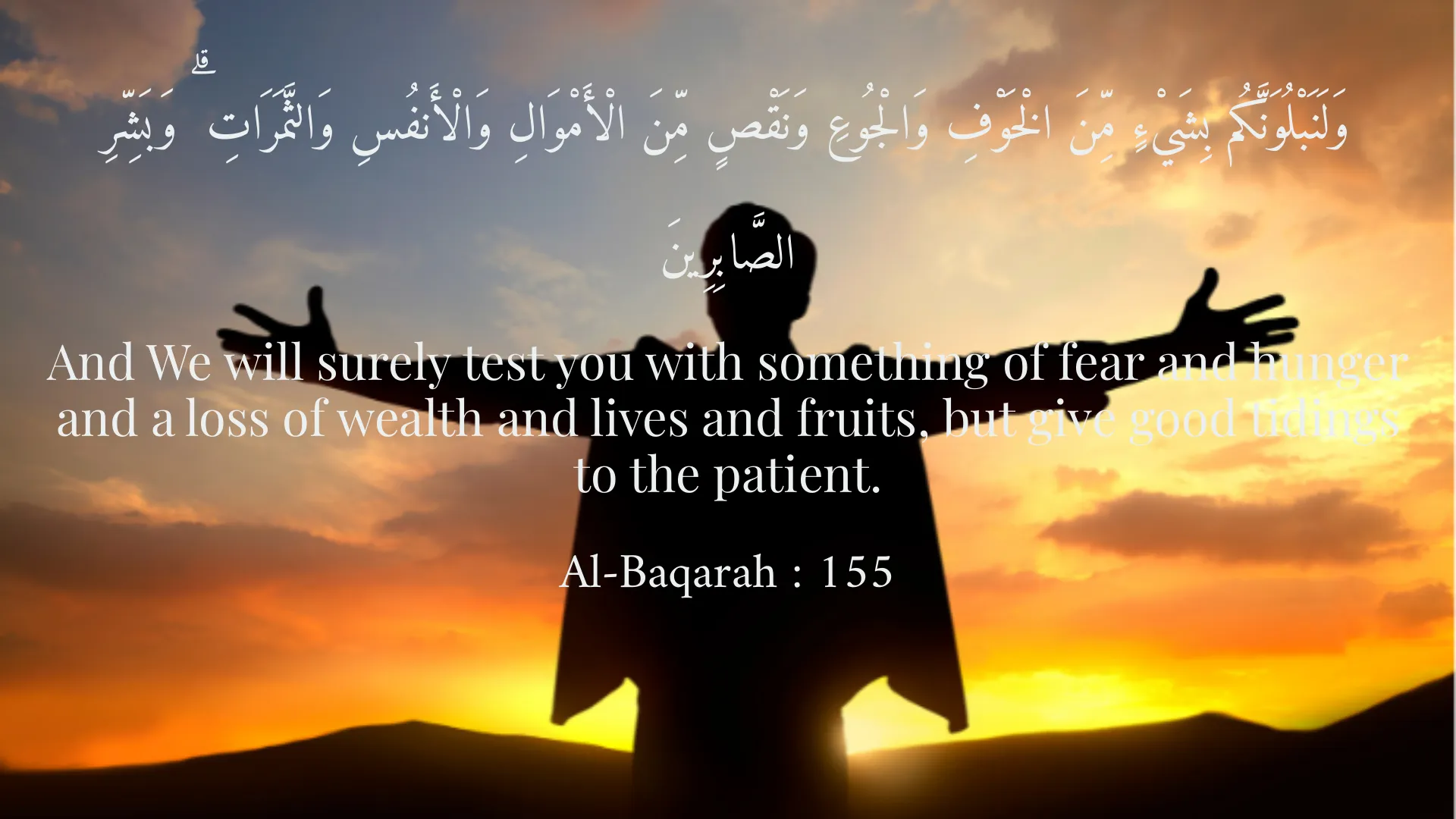
وَلَنَبْلُوَنَّكُم بِشَيْءٍ مِّنَ الْخَوْفِ وَالْجُوعِ وَنَقْصٍ مِّنَ الْأَمْوَالِ وَالْأَنفُسِ وَالثَّمَرَاتِ ۗ وَبَشِّرِ الصَّابِرِينَ
And We will surely test you with something of fear and hunger and a loss of wealth and lives and fruits, but give good tidings to the patient.
Al-Baqarah : 155
إِنَّكَ سَتُخْتَبَرُونَ فِي أَمْوَالِكُمْ وَأَنفُسِكُمْ ۖ وَإِنَّكَ سَتَسْمَعُونَ مِنَ الَّذِينَ أُوتُوا الكِتَابَ مِن قَبْلِكُمْ وَمِنَ الَّذِينَ أَشْرَكُوا أَذًى كَثِيرًا ۖ وَإِن تَصْبِرُوا وَتَتَّقُوا فَإِنَّ ذَٰلِكَ مِنْ عَزْمِ الْأُمُورِ
Indeed, you will be tested in your properties and your lives; and you will surely hear from those who were given the Scripture before you and from those who associate others with Allah much hurt. But if you are patient and fear Allah, it is the best course.
Al-Imran : 186
Short Story
One day, Adel was sitting in a corner of his room, reflecting on the challenges of his life. He felt like a victim of fate. He recalled his father's words about faith during difficult and sorrowful times. His father always said, 'My son, no matter how big the problems seem, there is always a blessing behind them.' Adel decided to follow this advice, facing his challenges with faith and patience. Over time, he gained a better understanding of life and his fate, and his feelings of victimhood faded away.