Quranic Answer
In today's fast-paced world, the Quran, the holy book of Islam, often takes a back seat in people's lives. There are multiple reasons why individuals may find themselves distancing from this profound text, which holds the guidance for millions of Muslims worldwide. One of the primary factors is the lack of correct understanding of its content. The Quran, being revealed in Arabic over 1400 years ago, contains linguistic intricacies and fundamental concepts that may be foreign to non-Arabic speakers or even those who do not deeply engage with its teachings. This disconnection can lead to a perception of the Quran as inaccessible or difficult to comprehend. As highlighted in Surah Al-Imran, verse 7, Allah intentionally makes some verses ambiguous as a test for those who truly seek the truth. This concept is crucial as it implies that understanding the Quran is a journey that requires effort, dedication, and a genuine desire to unlock its meanings. Consequently, individuals who do not invest the time to learn about the Quran’s context, teachings, and language may find themselves alienated from it. This lack of comprehension can lead to an undermining of the Quran’s teachings, causing individuals to drift further away. Another reason for distancing from the Quran is the influence of the social environment. Modern society is often saturated with new thoughts, beliefs, and ideologies that contrast with Islamic principles. People, especially the youth, are inevitably influenced by the prevailing narratives around them. Peer pressure, societal expectations, and trends may steer them away from the Quran, leading them to adopt beliefs that could contradict the core values of Islam. Surah Al-Maidah, verse 54, provides a sobering reminder that those who turn away from their faith may be replaced by another community that holds a dearer place in Allah's heart. This highlights the inevitability of change and reminds believers that neglecting their faith places them at risk of losing their most precious connection to their Creator. Furthermore, the fear of change and confronting new realities can deter individuals from engaging with the Quran. For many, the struggle to align their lives with Islamic teachings against modern-day challenges can be daunting. The journey to embracing faith can be marred by a fear of judgment, misunderstanding, or the perceived consequences of returning to the Quran after a period of estrangement. Those grappling with such feelings may mistakenly believe that their shortcomings and sinful actions create an insurmountable barrier between them and the Quran. Here, the importance of repentance, as a cornerstone of Islamic teaching, emerges brightly. As indicated in Surah Az-Zumar, verse 53, Allah’s mercy is vast and encompassing, assuring believers that all sins can be forgiven. This verse serves to encourage those who feel shame or unworthy to approach the Quran to remember that genuine repentance opens the path towards reconnecting with their spirituality. It is a vital reminder that the Quran is not merely a text of prohibitions and rules, but a guide that welcomes all who seek to improve themselves, regardless of their past. Additionally, the role of media and the prevalence of misleading information about Islam and the Quran cannot be overlooked. In an age where misinformation spreads rapidly, negative portrayals of Islam can sow doubt and fear in the hearts of Muslims. Such influences can result in increased alienation as individuals may feel unsupported or misunderstood when it comes to practicing their faith. The portrayal of Islam, often skewed in mainstream narratives, can lead to self-doubt and a misguided perception that the Quran does not align with modern society. It is essential for individuals to seek authentic knowledge, engage with knowledgeable scholars, and delve into the Quran themselves to dispel misconceptions. Moreover, mental health challenges and a lack of self-esteem may contribute significantly to an individual's distance from the Quran. The pressures of modern life can lead to feelings of inadequacy or despair, causing individuals to withdraw and disengage from their spiritual practices. When faced with mental health issues, many may turn away from the very source of solace and healing that the Quran provides. It is vital to address these challenges by creating supportive communities where individuals can find solace in shared experiences and encouragement to engage with the Quran meaningfully. The Quran offers profound guidance on mental health, inner peace, and personal growth, but one must first turn towards it. In summary, there are various multifaceted reasons contributing to individuals distancing themselves from the Quran, including the inability to comprehend its teachings, the influence of societal pressures, the fear of change, feelings of sin and shame, misinformation from media, and mental health challenges. The task ahead involves creating an atmosphere where people feel encouraged and empowered to dive into the Quran, seeking knowledge and understanding rather than allowing misconceptions to dictate their relationship with it. It is critical to emphasize the importance of continuous learning about the Quran to dismantle these barriers. By recognizing that distancing from it only leads to adverse effects on their quality of life and emotional well-being, individuals can be inspired to reconnect with this sacred text. Through education, community support, and a sincere approach to repentance, individuals can thrive spiritually and physically, allowing the Quran to be a guiding light in their journey through life.
Related Verses
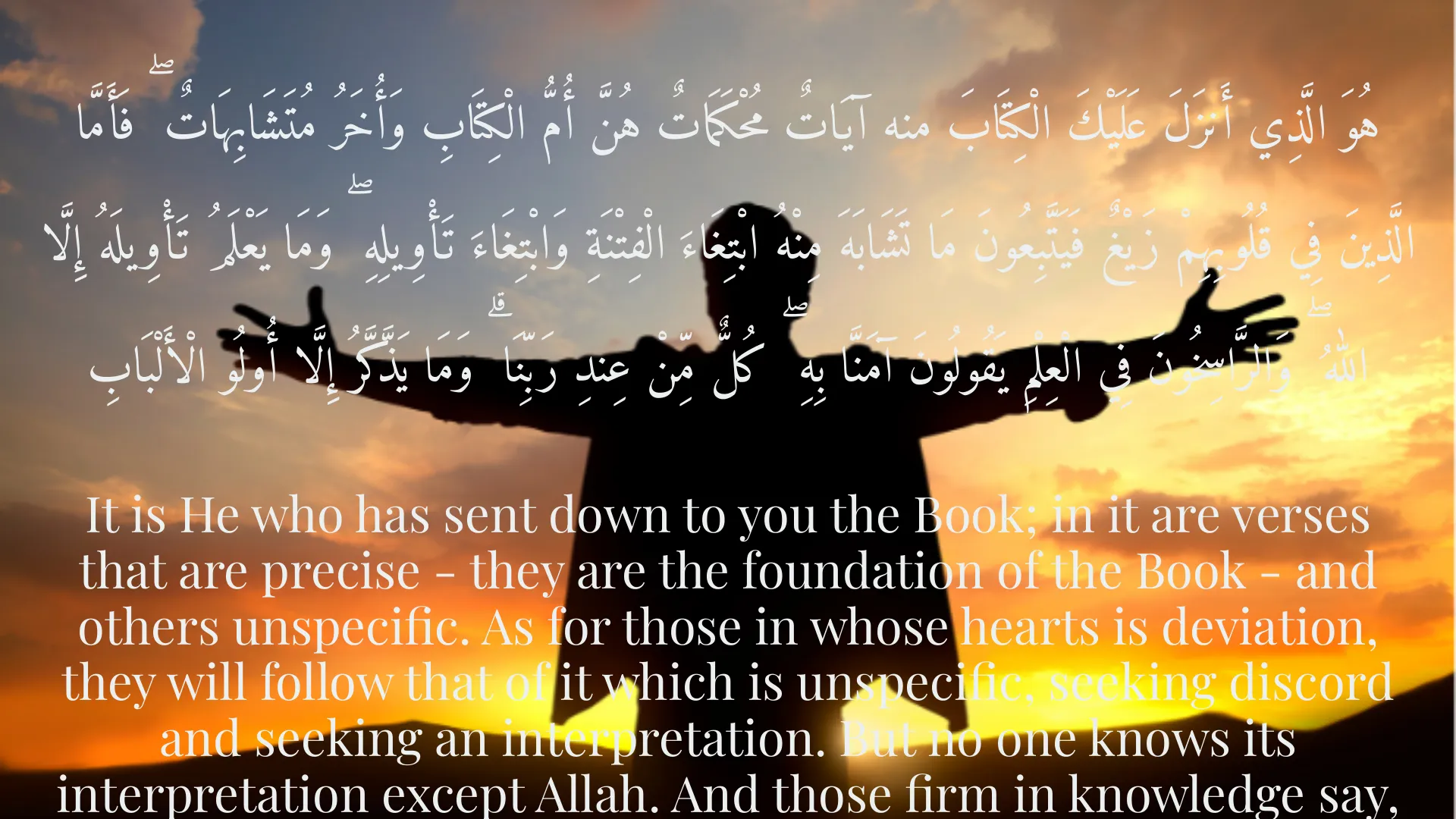
هُوَ الَّذِي أَنزَلَ عَلَيْكَ الْكِتَابَ منه آيَاتٌ مُحْكَمَاتٌ هُنَّ أُمُّ الْكِتَابِ وَأُخَرُ مُتَشَابِهَاتٌ ۖ فَأَمَّا الَّذِينَ فِي قُلُوبِهِمْ زَيْغٌ فَيَتَّبِعُونَ مَا تَشَابَهَ مِنْهُ ابْتِغَاءَ الْفِتْنَةِ وَابْتِغَاءَ تَأْوِيلِهِ ۖ وَمَا يَعْلَمُ تَأْوِيلَهُ إِلَّا اللّٰهُ ۖ وَالرَّاسِخُونَ فِي الْعِلْمِ يَقُولُونَ آمَنَّا بِهِ ۖ كُلٌّ مِّنْ عِندِ رَبِّنَا ۗ وَمَا يَذَّكَّرُ إِلَّا أُولُو الْأَلْبَابِ
It is He who has sent down to you the Book; in it are verses that are precise - they are the foundation of the Book - and others unspecific. As for those in whose hearts is deviation, they will follow that of it which is unspecific, seeking discord and seeking an interpretation. But no one knows its interpretation except Allah. And those firm in knowledge say, 'We believe in it; all of it is from our Lord.' And no one will be reminded except those of understanding.
Al-Imran : 7
يَا أَيُّهَا الَّذِينَ آمَنُوا مَن يَرْتَدَّ مِنكُمْ عَنْ دِينِهِ فَسَوْفَ يَأْتِي اللَّهُ بِقَوْمٍ يُحِبُّهُمْ وَيُحِبُّونَهُ أَذِلَّةٍ عَلَى الْمُؤْمِنِينَ أَعِزَّةٍ عَلَى الْكَافِرِينَ يُجَاهِدُونَ فِي سَبِيلِ اللَّهِ وَلَا يَخَافُونَ لَوْمَةَ لائمٍ ۚ ذَٰلِكَ فَضْلُ اللَّهِ يُؤْتِيهِ مَن يَشَاءُ ۗ وَاللَّهُ وَاسِعٌ عَلِيمٌ
O you who have believed, whoever of you should revert from his religion - Allah will bring forth [for] a people He will love and who will love Him, [who are] humble toward the believers, powerful against the disbelievers. They strive in the cause of Allah and do not fear the blame of a critic. That is the favor of Allah; He bestows it upon whom He wills. And Allah is All-Encompassing and Knowing.
Al-Maidah : 54
قُلْ يَا عِبَادِيَ الَّذِينَ آمَنُوا اتَّقُوا رَبَّكُمْ ۖ لِلَّذِينَ أَحْسَنُوا فِي هَذِهِ الدُّنْيَا حَسَنَةٌ ۖ وَأَرْضُ اللَّهِ وَاسِعَةٌ ۚ إِنَّمَا يُوَفَّى الصَّابِرُونَ أَجْرَهُمْ بِغَيْرِ حِسَابٍ
Say, 'O My servants who have believed, fear your Lord. For those who have done good in this world is good, and the earth of Allah is spacious. Indeed, the patient will be given their reward without account.'
Az-Zumar : 53
Short Story
One day, a young man named Arash began searching for the truth of his life. Influenced by his friends, he had distanced himself from the Quran and felt that nothing mattered to him. However, one day he attended a Quranic session and saw how people had obtained peace and purpose through the Quran. From that day on, Arash decided to return and reconcile with the Quran. He realized that the Quran could offer a new path to his life and bring him peace and contentment.