Quranic Answer
Limiting faith to outward appearances, merely performing rituals and acts without delving into their depth and inner meaning, has been a perpetual challenge in the path of spirituality and religiosity. This phenomenon has multiple roots that can be elucidated by relying on the teachings of the Holy Quran. The Quran consistently emphasizes the importance of the heart, intention, sincerity, and piety, considering outward actions without inner backing as of little or even no value. To understand why this limitation occurs, several fundamental points must be considered. Firstly, one of the primary reasons for faith being restricted to outward appearances is an incomplete and superficial understanding of religion. Many individuals, due to a lack of deep reflection on Quranic teachings and the Prophet's Sunnah, may perceive religion as merely a collection of external rules and rituals. They might believe that by outwardly performing prayers, fasting, undertaking Hajj, or adhering to a specific dress code, they have reached the pinnacle of faith. However, these acts are merely means to achieve inner piety (Taqwa) and self-purification, not the ultimate goal. The Quran repeatedly emphasizes that Allah looks at hearts and intentions, not just the outward appearance of deeds. For instance, in Surah Al-Hajj, verse 37, it states: "Their meat will not reach Allah, nor will their blood, but what reaches Him is piety from you." This verse clearly indicates that even in an act of worship like sacrifice, it is the spirit and inner meaning of the act—which is piety—that holds value, not just its outward form. This superficial understanding prevents individuals from grasping the ethical, social, and spiritual dimensions of faith, confining them within the narrow circle of externalism. Secondly, the phenomena of ostentation (Riya') and hypocrisy (Nifaq) are among the most significant factors contributing to the limitation of faith to outward appearances. Riya' means performing good deeds to attract people's attention and praise, rather than for the pleasure of Allah. Nifaq, on the other hand, refers to outwardly appearing righteous while concealing an inner disposition contrary to faith. The Holy Quran severely condemns those who engage in Riya' and Nifaq, considering their actions fruitless. In Surah Al-Ma'un, verses 4-6, it states: "So woe to those who pray, [but] who are heedless of their prayer - those who make show [of their deeds]." These verses explicitly declare that prayer performed without sincerity and with the intention of showing off is not only devoid of value but also deserving of punishment. Hypocritical individuals transform faith into a tool for gaining social status, respect, or worldly benefits. Consequently, they focus solely on the observable and external aspects of faith to present themselves as pious in the eyes of people, while their inner selves are devoid of the light of true faith. This display and pursuit of human approval lead individuals to neglect the ultimate purpose of religion, which is divine proximity and self-purification, causing them to cling only to the outer shell of religion. Thirdly, social and environmental factors also play a role in this tendency. In some societies, religiosity might be defined solely through customs and social norms, and societal pressure to adhere to religious externals can push individuals towards this superficiality. To gain social acceptance or avoid rejection, people might resort to outward acts, even if their hearts are not truly engaged. This phenomenon creates fertile ground for the growth of hypocrisy and ostentation. The Quran warns against this deviation, prioritizing divine standards over human ones. True faith involves resistance to these social pressures, with the believer preferring the Creator's pleasure over the creation's. Fourthly, spiritual weakness, a lack of self-awareness, and insufficient inner cultivation can also lead to this limitation. Understanding the depth of faith and acting according to its dictates requires continuous spiritual struggle, self-monitoring, and accountability. If an individual neglects their inner self and fails to strive to rid themselves of negative traits and cultivate virtuous characteristics, their faith will remain superficial and external. Such individuals often overlook the ethical dimension of religion, which includes justice, benevolence, honesty, trustworthiness, and service to creation. In Surah Al-Baqarah, verse 177, the Holy Quran provides a comprehensive definition of true righteousness that extends far beyond mere outward acts: "Righteousness is not that you turn your faces toward the East or the West, but [true] righteousness is [in] one who believes in Allah, the Last Day, the angels, the Book, and the prophets and gives wealth, in spite of love for it, to relatives, orphans, the needy, the traveler, those who ask [for help], and for freeing slaves; [and who] establishes prayer and gives zakat; and [those who] fulfill their promise when they promise; and [those who] are patient in poverty and hardship and during battle. Those are the ones who have been true, and it is those who are the righteous." This verse clearly demonstrates that true faith is a combination of heartfelt belief and righteous deeds across all dimensions of life, and merely performing outward rituals is a small part of it. Ultimately, to overcome this externalism, there is a need for a re-evaluation of our understanding of religion, self-cultivation, strengthening sincerity in intention and action, and striving to align inner conviction with outward manifestation. True faith is a light in the heart that is reflected in one's behavior and speech, not just an external display without inner depth.
Related Verses
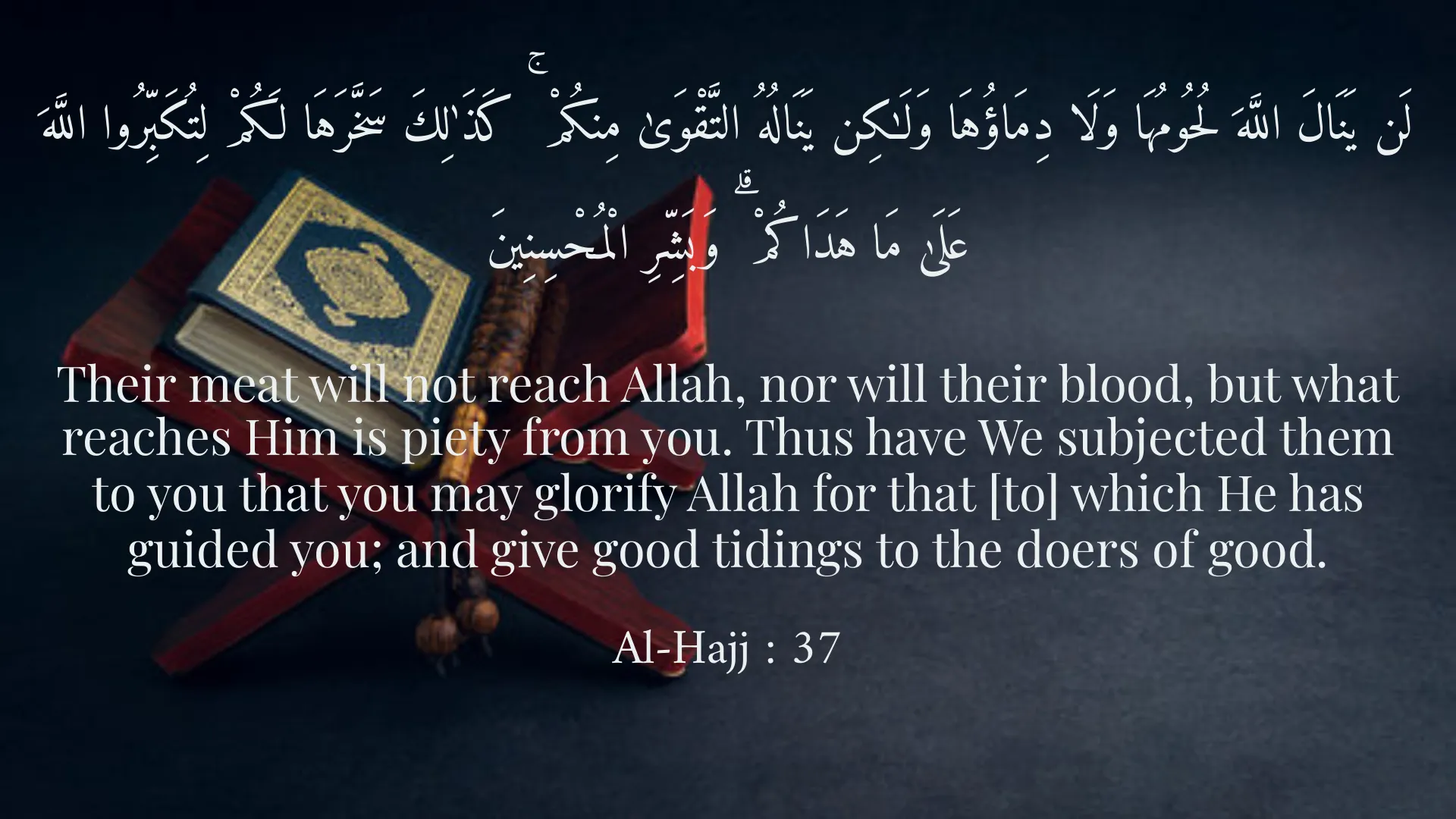
لَن يَنَالَ اللَّهَ لُحُومُهَا وَلَا دِمَاؤُهَا وَلَٰكِن يَنَالُهُ التَّقْوَىٰ مِنكُمْ ۚ كَذَٰلِكَ سَخَّرَهَا لَكُمْ لِتُكَبِّرُوا اللَّهَ عَلَىٰ مَا هَدَاكُمْ ۗ وَبَشِّرِ الْمُحْسِنِينَ
Their meat will not reach Allah, nor will their blood, but what reaches Him is piety from you. Thus have We subjected them to you that you may glorify Allah for that [to] which He has guided you; and give good tidings to the doers of good.
Al-Hajj : 37
فَوَيْلٌ لِّلْمُصَلِّينَ
So woe to those who pray,
Al-Ma'un : 4
الَّذِينَ هُمْ عَن صَلَاتِهِمْ سَاهُونَ
[But] who are heedless of their prayer -
Al-Ma'un : 5
الَّذِينَ هُمْ يُرَاءُونَ
Those who make show [of their deeds]
Al-Ma'un : 6
لَّيْسَ الْبِرَّ أَن تُوَلُّوا وُجُوهَكُمْ قِبَلَ الْمَشْرِقِ وَالْمَغْرِبِ وَلَٰكِنَّ الْبِرَّ مَنْ آمَنَ بِاللَّهِ وَالْيَوْمِ الْآخِرِ وَالْمَلَائِكَةِ وَالْكِتَابِ وَالنَّبِيِّينَ وَآتَى الْمَالَ عَلَىٰ حُبِّهِ ذَوِي الْقُرْبَىٰ وَالْيَتَامَىٰ وَالْمَسَاكِينَ وَابْنَ السَّبِيلِ وَالسَّائِلِينَ وَفِي الرِّقَابِ وَأَقَامَ الصَّلَاةَ وَآتَى الزَّكَاةَ وَالْمُوفُونَ بِعَهْدِهِمْ إِذَا عَاهَدُوا ۖ وَالصَّابِرِينَ فِي الْبَأْسَاءِ وَالضَّرَّاءِ وَحِينَ الْبَأْسِ ۗ أُولَٰئِكَ الَّذِينَ صَدَقُوا ۖ وَأُولَٰئِكَ هُمُ الْمُتَّقُونَ
Righteousness is not that you turn your faces toward the East or the West, but [true] righteousness is [in] one who believes in Allah, the Last Day, the angels, the Book, and the prophets and gives wealth, in spite of love for it, to relatives, orphans, the needy, the traveler, those who ask [for help], and for freeing slaves; [and who] establishes prayer and gives zakat; and [those who] fulfill their promise when they promise; and [those who] are patient in poverty and hardship and during battle. Those are the ones who have been true, and it is those who are the righteous.
Al-Baqarah : 177
Short Story
It is told that a devout and ascetic man would go to the mosque every day, wearing a wool cloak and holding a rosary, performing his prayers with a loud voice and evident humility. People praised him and envied his asceticism. One day, a friend of his, who was himself a mystic, said to him: "My friend, your prayer and remembrance are clear to all, and you are considered among the pious. But have you ever experienced even a tenth of this humility and presence of heart in your solitude? Is your intention in all this display anything but the pleasure of people?" The ascetic man paused for a moment, lost in thought. The mystic continued: "The garden and rose-garden of the heart must be watered, not just the outward garden adorned. Sometimes a pure intention gives value to a thousand outward prostrations, and sometimes an impure intention spoils a thousand deeds. God is the beholder of hearts, not just the observer of forms." The ascetic man became aware of this truth and from then on, he strived to strengthen his faith not in his outward appearance, but in his inner self and intention, for he knew that "the inside must be pure, not just the garment."