Quranic Answer
In the Holy Quran, the emphasis on patience and endurance when facing life's challenges is profound and multi-faceted. These virtues are not only essential for personal growth but are also depicted as key elements in achieving a harmonious relationship with the divine. The verses in which these themes are articulated serve as guiding principles for Muslims as they navigate the myriad difficulties that life presents. Patience, or 'Sabr' in Arabic, is a recurring theme throughout the Quran. It refers to the ability to persevere through trials and tribulations, to maintain composure in distressing situations, and to keep faith amid adversity. The significance of patience is underscored repeatedly, as it holds the power to transform hardships into pathways for spiritual and personal development. In Surah Al-Baqarah, verse 153, Allah commands, "O you who have believed, seek help through patience and prayer. Indeed, Allah is with the patient." This verse highlights the dual approach that believers are encouraged to adopt when confronted with challenges: seeking help through continual patience and turning to prayer as a source of strength. The implication is clear: effective endurance is often a collaborative journey between oneself and the divine. By relying on prayer, believers can cultivate their spiritual resilience, establishing a profound connection with Allah that fortifies them during trying times. Furthermore, the verse emphasizes that Allah is with those who exhibit patience. This promise serves as both reassurance and motivation for individuals who may feel isolated or overwhelmed by their circumstances. It reinforces the idea that they are never truly alone, and that divine support is always accessible to those who earnestly seek it through and in their perseverance. Moreover, in Surah Al-Anfal, verse 46, we find the admonishment directed at the people of Bani Israel: "If you do not practice patience and do not rely on Allah, your problems will persist indefinitely." This warning underscores a critical concept: the necessity of reliance on God. It suggests that without patience and faith, one might find themselves trapped in a cycle of persistent challenges that could otherwise be mitigated through resilience and spiritual trust. Thus, it is not mere endurance that is required, but a conscious choice to depend on divine guidance and assistance. The Quran also frames challenges as tests. Surah Aal-e-Imran, verse 186 states, "You will surely be tested with your properties and your lives, and you will surely hear from those who were given the Scripture before you and from those who associate others with Allah immeasurable harm." This verse acknowledges the inevitability of trials and lays bare the reality that life is fraught with tests that seek to evaluate one's faith, patience, and character. In acknowledging that tests are a part of existence, believers are encouraged to shift their perspective and view challenges not as mere obstacles, but as opportunities—opportunities to deepen their faith, reflect on their capabilities, and emerge stronger. Challenges can serve as profound reminders of one’s purpose and beliefs. They invite introspection and provide a unique chance to reassess one’s path. Life's difficulties can push individuals to rediscover their strengths, acknowledge shortcomings, and foster a more profound understanding of life’s transient nature. Each challenge presents a lesson; thus, the journey of endurance can ultimately lead to transformative growth. Furthermore, the importance of communal support during times of adversity cannot be understated. The Quran encourages believers to band together, share burdens, and lift each other up. This communal aspect of patience is essential; it reaffirms that while individual patience is vital, collective perseverance strengthens the community and fosters a sense of belonging and mutual support. The importance of companionship during times of hardship is a message that resonates deeply within Islamic teachings. Finding solace in community, spiritual gatherings, or even simple acts of compassion towards one another can reinforce the spirit of resilience. Additionally, it is essential to recognize that challenges can uniquely shape the path toward spiritual enlightenment. The act of overcoming obstacles often reveals a deeper layer of understanding and insight. Through the struggles of life, the believer experiences firsthand the principles of mercy, wisdom, and divine testing, all of which draw them closer to Allah. In facing adversity with patience, one develops qualities such as empathy, gratitude, and humility, enriching their interactions with others. Importantly, the practice of patience intertwines with the element of hope. The faithful are continually reminded that life, in all its complexity, is transient and that true relief and ease come through steadfastness and a trust in divine wisdom. In moments of despair, a believer finds solace in the understanding that every hardship is followed by ease, as stated in Surah Al-Inshirah, verse 5: "For indeed, with hardship [will be] ease." This assurance becomes a source of motivation to persevere through the trials of life, reinforcing the belief that one’s current struggles will ultimately lead to growth and divine reward. In conclusion, the virtues of patience and endurance in the face of life’s challenges are central to the teachings of the Holy Quran. The divine guidance offered through various verses serves not only as a spiritual roadmap but also as a profound source of comfort. It reminds believers that through patience, reliance on Allah, and a commitment to growth, they can navigate the complexities of life. Embracing hardship as a means of personal and spiritual development transforms potential despair into a foundation for resilience. Together, through these teachings, believers are equipped to face life’s tests with courage, strength, and an unwavering faith in Allah's presence and support. The journey of encountering and overcoming challenges is not merely about survival; it is about thriving and evolving into the best version of oneself.
Related Verses
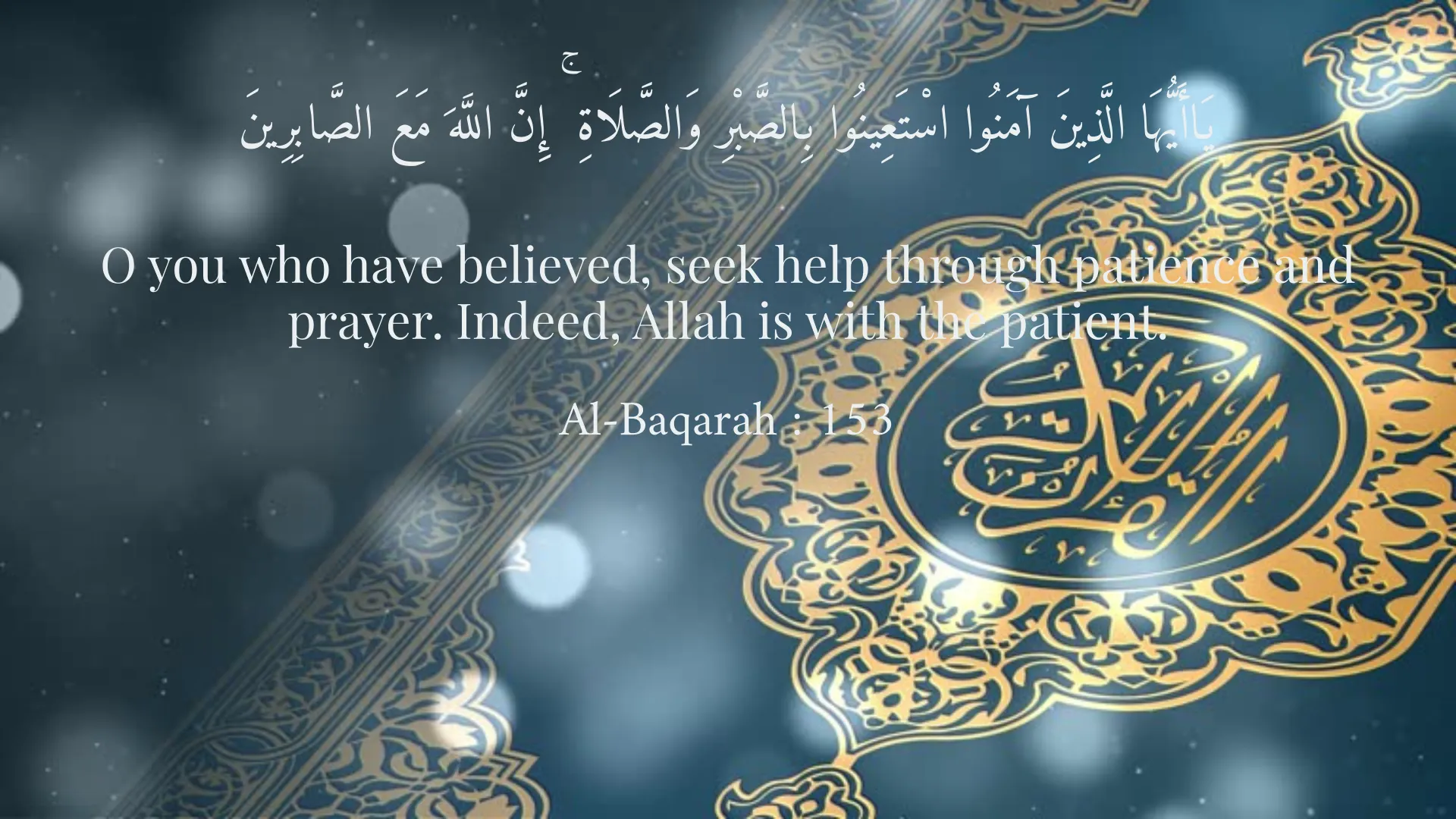
يَاأَيُّهَا الَّذِينَ آمَنُوا اسْتَعِينُوا بِالصَّبْرِ وَالصَّلَاةِ ۚ إِنَّ اللَّهَ مَعَ الصَّابِرِينَ
O you who have believed, seek help through patience and prayer. Indeed, Allah is with the patient.
Al-Baqarah : 153
فَإِن لَّمْ تَصْبِرُوا وَتَتَّقُوا اللَّـهَ فَإِنَّمَا أَجْرُهُ عَلَى اللَّهِ
And if you do not practice patience and fear Allah, then indeed, your reward is with Allah.
Al-Anfal : 46
لَتُبْلَوُنَّ فِي أَمْوَالِكُمْ وَأَنفُسِكُمْ
You will surely be tested with your properties and your lives.
Aal-e-Imran : 186
Short Story
Once upon a time in a small town, there was a man named Nasir who faced numerous challenges. Day and night, he pondered finding solutions but could come up with nothing. Following a friend's suggestion, he went to a mosque and arranged a meeting with the mosque's scholar. The scholar listened attentively and then recited verses from the Quran, encouraging him to practice patience and trust in God. Nasir felt an immense weight lifted off his shoulders and decided to face his problems with dignity. From that day on, his outlook on life changed, and gradually, his challenges resolved.