Quranic Answer
Understanding the phenomenon of persistent and recurring sins, which can be likened to a form of 'addiction to sin,' requires a deep look into the teachings of the Holy Quran regarding human nature, the whispers of Satan, and the continuous impact of deeds on the heart and soul. The Quran does not directly use the term 'addiction' in its modern sense, but it clearly explains concepts that help elucidate why certain behaviors persist and are difficult to abandon. These concepts include the temptation of Satan, following one's desires, heedlessness, and the hardening of the heart resulting from repeated transgression. One of the primary reasons why sins can take on an addictive quality is the deceptive role of Satan. The Holy Quran repeatedly highlights Satan's role in misleading humans and beautifying evil deeds. Satan, through false promises and the illusion of fleeting pleasures, incites humans towards sin, and after the sin is committed, he tries to make them despair of repentance. These temptations grow stronger over time with the repetition of sin, transforming into a mental and behavioral habit. In Surah An-Nisa, verse 119, Allah states: "And I will mislead them, and I will arouse in them [sinful] desires, and I will command them so they will slit the ears of cattle, and I will command them so they will change the creation of Allah." This verse illustrates how Satan gradually leads humans to alter their divine nature and engage in reprehensible acts. Another reason is the pursuit of personal desires and whims. Humans are endowed with instincts and inclinations that, if unchecked, can lead them to sin. The Quran warns about the consequences of following desires in numerous verses. When a person continuously yields to their carnal desires, these inclinations become stronger and more difficult to control, to the extent that abandoning the sin becomes like giving up a deep-rooted, addictive habit. In Surah Al-Furqan, verse 43, Allah asks: "Have you seen he who takes as his god his [own] desire? Then would you be a guardian over him?" This verse clearly indicates that following one's desires can reach a point where a person worships them instead of God, losing control over themselves. Heedlessness (Ghaflah) and forgetting the remembrance of Allah and the Day of Judgment are also crucial factors in the persistence of sins. When a person becomes oblivious to the primary purpose of creation and the consequences of their actions, the significance of sin diminishes in their eyes, and they easily succumb to its repetition. This heedlessness, over time, leads to indifference towards divine commands and even a false sense of pleasure from sin. In Surah Al-Kahf, verse 28, the Quran states: "And do not obey one whose heart We have made heedless of Our remembrance and who follows his desire and whose affair has been [marked by] excess." This verse directly links heedlessness of God's remembrance with following desires, resulting in transgression and excess. Most importantly, the hardening of the heart (Qaswat al-Qalb) is a direct consequence of repeated sins. Every sin committed by a person leaves a black spot on their heart. If they do not repent and continue to sin, these black spots increase and gradually cover the entire heart, making it hard and dark. A hardened heart is no longer capable of grasping truths, accepting advice, or feeling remorse, which makes it easy for the individual to continue their sinful ways. In Surah Al-Mutaffifin, verse 14, it is stated: "No! Rather, the stain has covered their hearts from that which they were earning." This verse clearly indicates that unrighteous deeds and sins pollute and veil the heart, and this 'rust' prevents seeing the truth and returning to God. This condition bears a strong resemblance to physical and psychological dependence in addiction, where the brain and body become accustomed to a substance or a specific behavior, making it extremely difficult to quit. However, the Holy Quran never closes the door to repentance and return. Allah, the Exalted, has emphasized His boundless mercy and forgiveness in numerous verses. Even for those deeply immersed in sin, the path to return is always open, provided they offer sincere and honest repentance (Tawbah Nasuh). Sincere repentance means genuine remorse for the sin, a firm resolve to abandon it in the future, and making amends if possible. In Surah Az-Zumar, verse 53, Allah says: "Say, 'O My servants who have transgressed against themselves [by sinning], do not despair of the mercy of Allah. Indeed, Allah forgives all sins. Indeed, it is He who is the Forgiving, the Merciful.'" This verse offers a beacon of hope for those trapped in the cycle of sin and feeling despair. It shows that although sin can ensnare an individual like an addiction, the power of will, aided by reliance on God and true repentance, can break these chains and open the way to salvation. Therefore, the solution lies in returning to the remembrance of Allah, engaging in jihad al-nafs (struggle against the self), and seeking help through patience and prayer, which can free a person from any spiritual or physical addiction and guide them towards perfection.
Related Verses
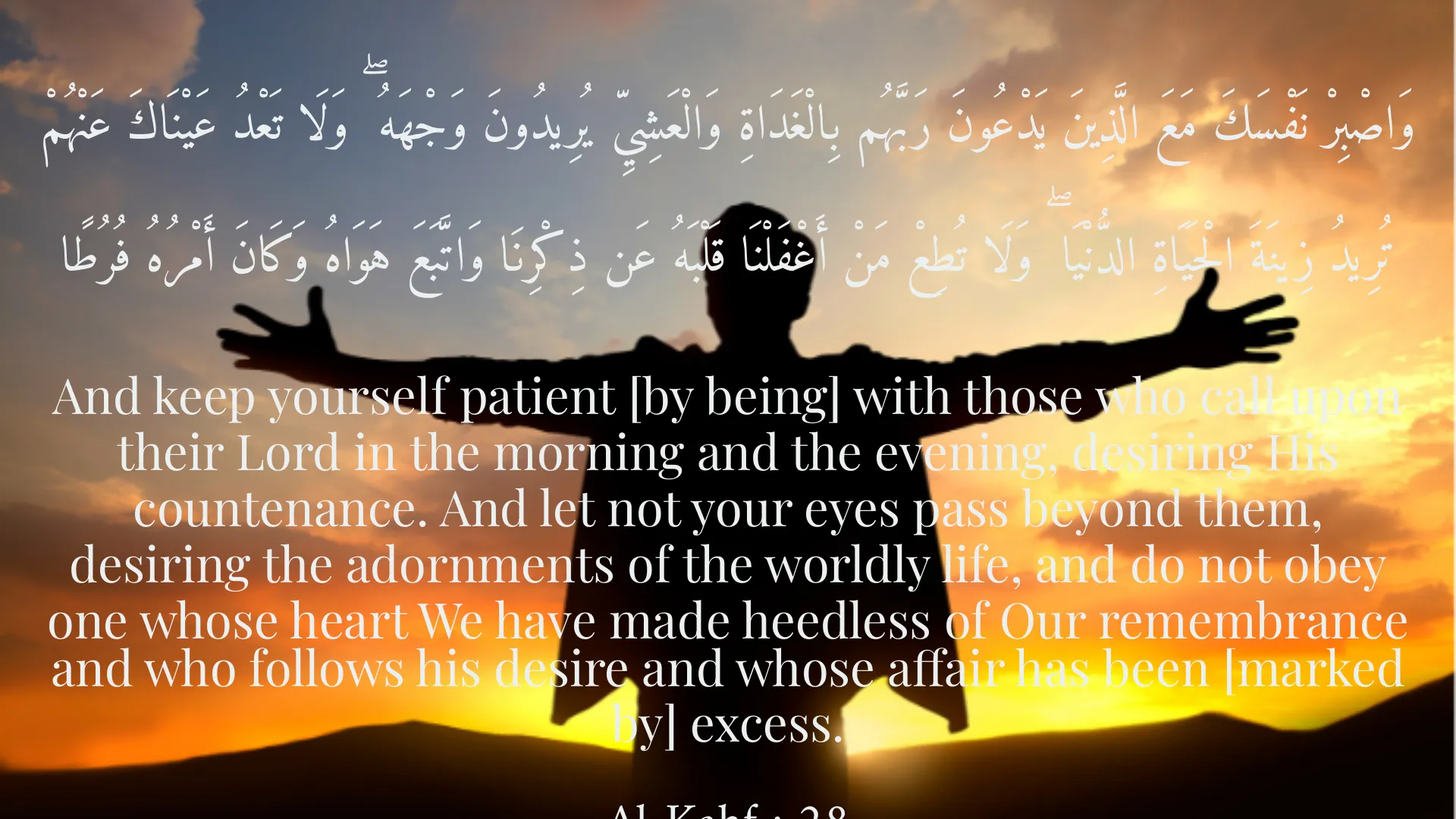
وَاصْبِرْ نَفْسَكَ مَعَ الَّذِينَ يَدْعُونَ رَبَّهُم بِالْغَدَاةِ وَالْعَشِيِّ يُرِيدُونَ وَجْهَهُ ۖ وَلَا تَعْدُ عَيْنَاكَ عَنْهُمْ تُرِيدُ زِينَةَ الْحَيَاةِ الدُّنْيَا ۖ وَلَا تُطِعْ مَنْ أَغْفَلْنَا قَلْبَهُ عَن ذِكْرِنَا وَاتَّبَعَ هَوَاهُ وَكَانَ أَمْرُهُ فُرُطًا
And keep yourself patient [by being] with those who call upon their Lord in the morning and the evening, desiring His countenance. And let not your eyes pass beyond them, desiring the adornments of the worldly life, and do not obey one whose heart We have made heedless of Our remembrance and who follows his desire and whose affair has been [marked by] excess.
Al-Kahf : 28
كَلَّا بَلْ رَانَ عَلَىٰ قُلُوبِهِم مَّا كَانُوا يَكْسِبُونَ
No! Rather, the stain has covered their hearts from that which they were earning.
Al-Mutaffifin : 14
قُلْ يَا عِبَادِيَ الَّذِينَ أَسْرَفُوا عَلَىٰ أَنفُسِهِمْ لَا تَقْنَطُوا مِن رَّحْمَةِ اللَّهِ ۚ إِنَّ اللَّهَ يَغْفِرُ الذُّنُوبَ جَمِيعًا ۚ إِنَّهُ هُوَ الْغَفُورُ الرَّحِيمُ
Say, 'O My servants who have transgressed against themselves [by sinning], do not despair of the mercy of Allah. Indeed, Allah forgives all sins. Indeed, it is He who is the Forgiving, the Merciful.'
Az-Zumar : 53
Short Story
It is narrated that in ancient times, there was a king who was excessively fond of hunting, going to the mountains and plains every day. Hunting had become such a habit for him that even affairs of the kingdom were neglected. A wise minister told him: "O King! Hunting is good, but if it exceeds its limits, it will both exhaust the body and make the heart heedless of important matters." Initially, the king did not heed the minister's words, but gradually he saw that the people were complaining about his inattention to affairs, and he himself had become weary and ill from this excessive habit. One day, he came to his senses and realized that this immoderate passion had ensnared him in its chains. With sincere repentance and strong resolve, he gradually reduced his hunting and paid more attention to the affairs of the people. His heart found peace, and he remembered that any excess, no matter how enjoyable at first, can turn into a master that strips a person of their control.