Quranic Answer
Fear of the future is a common feeling in human life, often stemming from uncertainty and worry about what may happen ahead. This feeling is deeply rooted in our innate desire for security and predictability in a world that is frequently unpredictable. The anxieties associated with the future can manifest in various forms, from mild apprehension about daily decisions to crippling dread about significant life events. In times of overwhelming uncertainty, many individuals find themselves grappling with a sense of helplessness, questioning not only what lies ahead but also their ability to navigate the challenges that may arise. A powerful source of comfort and guidance for millions around the world comes from religious texts. The Quran, in particular, provides insights and encouragement for believers who may find themselves engulfed by fears of the future. Allah emphasizes the importance of relying on Him and trusting in His divine plans, which can instill a sense of peace and reassurance. In Surah Al-Imran, verse 159, it is stated that the Prophet Muhammad (peace be upon him) advises believers to place their trust in Allah amidst life's difficulties and uncertainties. This verse serves as a reminder that uncertainties are an inevitable part of human existence, and fearing the future may hinder our ability to confront challenges effectively. The teachings in the Quran highlight a fundamental truth: that fear and faith are opposing forces. When we succumb to fear, we may find ourselves paralyzed by indecision, clouded by doubts, and unable to take necessary actions to improve our circumstances. On the contrary, when we embrace faith, we invite clarity, hope, and a proactive attitude towards the future. By reminding ourselves of the verses mentioned in the Quran, we can anchor ourselves in a mindset that prioritizes trust in Allah's wisdom and grace. Additionally, in Surah At-Talaq, verses 2 and 3, it is emphasized: "And whoever fears Allah, He will make for him a way out" and "And will provide for him from where he does not expect." These verses offer profound assurance to believers: that by maintaining faith in Allah and exhibiting piety, a path will be clarified even in the most daunting of circumstances. This trust not only mitigates fear but also opens the door for divine support and unexpected solutions to our problems. The essence of these teachings revolves around the notion that surrendering one's worries to a higher power can dramatically transform the way individuals approach their challenges. Moreover, in addition to spiritual insights, we can mitigate fears related to the future through practical approaches in our everyday lives. The impact of fear can often be reduced by taking concrete steps to prepare for what lies ahead. This can include practices such as careful planning, consulting with trusted friends or mentors, and cultivating a positive mindset. Setting specific, actionable goals can help channel apprehensions into productive efforts, transforming anxiety into motivation. By establishing a clear vision of what we want to achieve, we can create a roadmap to follow that helps us navigate through uncertainties. Consulting with others is another excellent strategy for overcoming fears. Engaging in conversations with friends, family, or professionals can provide new perspectives and insights into the challenges we face. Many times, simply sharing our fears can alleviate their intensity. Collaboration can also lead to creative problem-solving, allowing us to face potential obstacles with greater confidence. The support found in community, the exchange of knowledge, and mutual encouragement all play significant roles in combating feelings of isolation stemming from fear. Furthermore, fostering a positive mindset can have profound effects on how we view the future. Cognitive behavioral techniques, practiced mindfulness, and affirmations can help redirect limiting thoughts into empowering beliefs. It’s also crucial to establish a routine that promotes mental well-being, such as exercise, meditation, or engaging in creative pursuits. Taking care of our physical health and emotional well-being creates a solid foundation for resilience, equipping us to confront whatever challenges may arise. By nurturing a positive outlook, we don’t ignore potential difficulties; rather, we learn to approach them with confidence and hope. Ultimately, it is essential to remember that the future lies in Allah’s hands and that He has the best plans for His servants. Embracing this truth can be a transformative experience that enables individuals to live with a sense of freedom and tranquillity. Rather than being paralyzed by the unknown, believers can approach each day with renewed hope and determination, confident that they are in the care of a compassionate Creator who knows their circumstances better than they do. The interplay of trust in Allah and proactive measures in our lives presents a dual approach to overcoming the fear of the future. In essence, we are reminded through the teachings of the Quran that, while the future may be uncertain and fraught with challenges, there is a profound strength and guidance available to those who place their faith in Allah. In conclusion, the fear of the future is a universal human experience, often exacerbated by the uncertain nature of life. Yet, the teachings of the Quran provide believers with essential tools for mitigating these fears. By placing our trust in Allah, embracing faith, engaging with supportive communities, and adopting proactive planning and positive thinking, we can navigate the uncertainties of life with confidence. Ultimately, we are reassured that whatever unfolds in the future, Allah’s plan is always for our best, guiding us to find peace amid challenges and to trust that our needs will be met in ways we may not foresee.
Related Verses
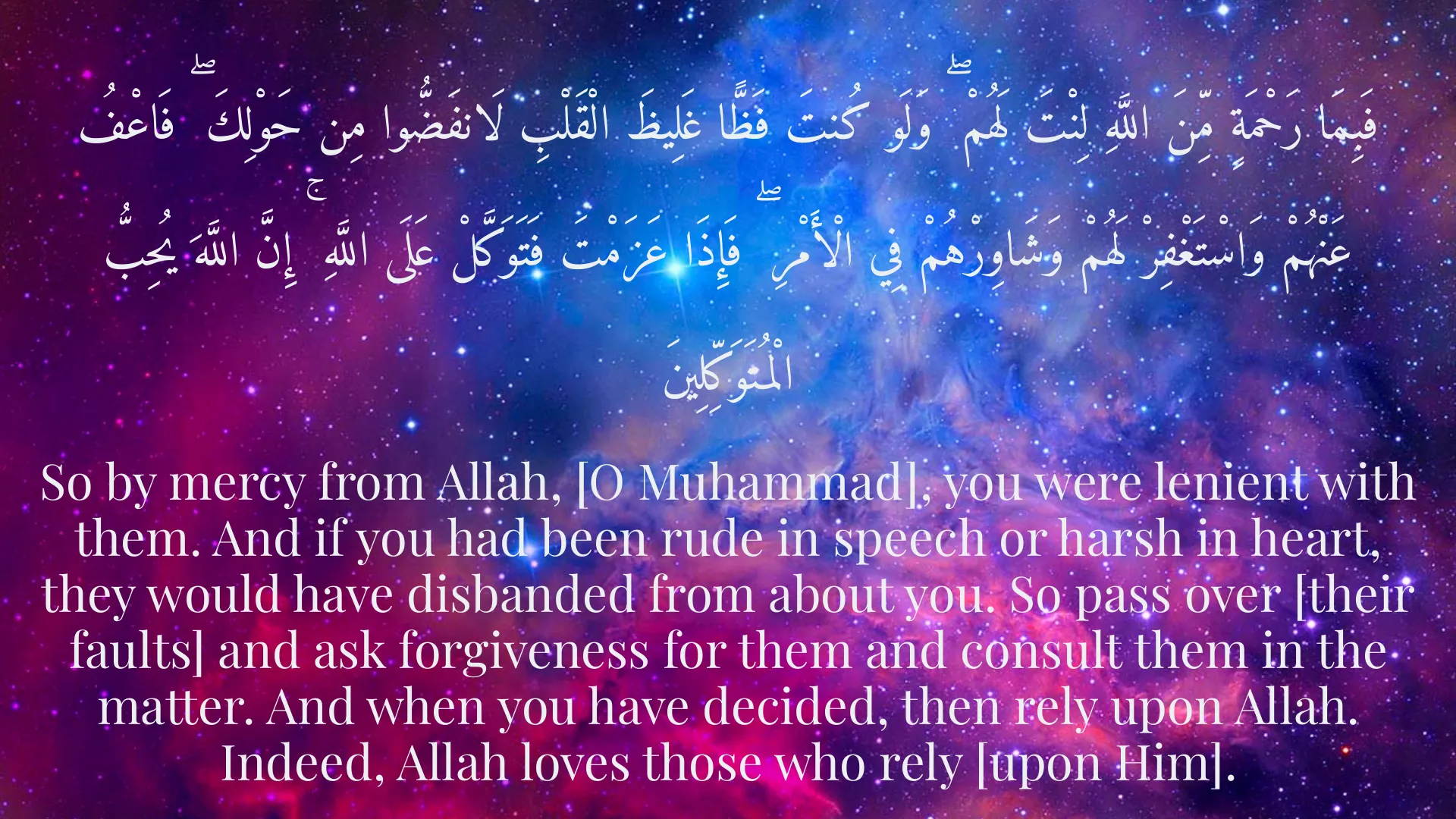
فَبِمَا رَحْمَةٍ مِّنَ اللَّهِ لِنْتَ لَهُمْ ۖ وَلَو كُنتَ فَظًّا غَلِيظَ الْقَلْبِ لَانفَضُّوا مِن حَوْلِكَ ۖ فَاعْفُ عَنْهُمْ وَاسْتَغْفِرْ لَهُمْ وَشَاوِرْهُمْ فِي الْأَمْرِ ۖ فَإِذَا عَزَمْتَ فَتَوَكَّلْ عَلَى اللَّهِ ۚ إِنَّ اللَّهَ يُحِبُّ الْمُتَوَكِّلِينَ
So by mercy from Allah, [O Muhammad], you were lenient with them. And if you had been rude in speech or harsh in heart, they would have disbanded from about you. So pass over [their faults] and ask forgiveness for them and consult them in the matter. And when you have decided, then rely upon Allah. Indeed, Allah loves those who rely [upon Him].
Al-Imran : 159
وَمَن يتَّقِ اللَّـهَ يَجعَل لَّهُ مَخرَجًا
And whoever fears Allah - He will make for him a way out.
At-Talaq : 2
وَيَرزُقْهُ مِن حَيثُ لَا يَحتَسِبُ
And will provide for him from where he does not expect.
At-Talaq : 3
Short Story
Once there was a man named Hasan, a boss who was always worried about the future and losing his position. He couldn't sleep at night and feared what was to come. When he attended a Quranic session and heard the verses about reliance on God, he realized that trusting in Allah could reduce his fears. From that day forward, Hasan began to practice these verses and felt a greater sense of peace.