Quranic Answer
The Importance of Remembering Allah in Daily Life: Finding Peace and Happiness In the fast-paced world we live in today, where distractions abound and the pressures of daily life can become overwhelming, it is easy to lose sight of the deeper meanings of existence. Individuals often find themselves mired in worldly affairs, forgetting the profound peace and happiness that emanates from the remembrance of Allah. The Holy Quran emphasizes the significance of this remembrance, stating that it is a source of comfort and tranquility for the heart. One of the profound statements in the Holy Quran can be found in Surah Ar-Ra'd, verse 28, which mentions: "Unquestionably, by the remembrance of Allah, hearts are assured." This verse encapsulates the essence of how the act of remembering Allah can serve to anchor us in times of turmoil, steering us toward serenity and contentment. To explore the notion of remembrance in more depth, it is essential to understand what is meant by 'dhikr'—the practice of remembering Allah. This can take many forms: from the simple utterance of Allah's name to prayer and meditation, all fostering a connection with the divine that nurtures the soul. However, there are times when individuals may feel weariness or fatigue from engaging in this spiritual practice. Such feelings can arise from a variety of life stresses and distractions, as well as from the neglect of our spiritual duties. This is where a critical reflection on Surah Az-Zumar, verse 22 becomes especially relevant: "So whomsoever Allah wills to guide, He expands his breast to [contain] Islam." This remarkable verse provides insight into the profound relationship between divine guidance and the openness of our hearts to the remembrance of Allah. When we experience moments of disengagement from spiritual practices, it is important to recognize that these feelings can often signify a distance from Allah. The hustle and bustle of everyday life can easily preoccupy our minds, leading us to prioritize worldly tasks over our spiritual well-being. During such times, finding our way back to Allah's remembrance is essential. Just as our physical bodies need nourishment and care, so too do our hearts and souls require the sustenance that comes from spiritual practice. Through reconnecting with Allah—praying, engaging in dhikr, reading the Quran, or simply reflecting on the blessings in our lives—we can bridge the gap and restore our inner peace. It is often said that the joy of maintaining remembrance of Allah is akin to nurturing a relationship. Like any other relationship, it requires effort and diligence. The act of remembering Allah, whether alone or in a group, serves as a reminder of our purpose and connection to something far greater than ourselves. One effective way to reinvigorate our engagement with dhikr when fatigue sets in is to focus on the understanding that such feelings are often temporary. Life is a cycle of ups and downs, and our emotional state often fluctuates with it. Therefore, we should remain steadfast in our daily prayers and practices. In time, with sincerity and persistence, our hearts will find their way back to the peace that Allah's remembrance brings. The significance of dhikr extends beyond personal solace; it connects us as a community. Shared acts of worship and remembrance bring individuals closer together, creating a sense of unity among believers. This solidarity nurtures a supportive environment where individuals can lean on one another and strengthen collective faith. Particularly in times of crisis or communal hardship, the remembrance of Allah can forge bonds among those sharing similar struggles, amplifying that peace we seek. It establishes a sense of comfort within communities that often act as pillars of resilience, providing strength to combat challenges. Engaging in the remembrance of Allah is also an antidote to feelings of loneliness and isolation that can plague individuals in modern society. Many find themselves grappling with disconnection in an age dominated by digital interactions and superficial relationships. Remembering Allah fosters an intrinsic connection that transcends worldly limitations, grounding us in a sense of belonging to a larger purpose. In this sense, dhikr becomes a refuge—a space to retreat within ourselves and find solace in acknowledging the divine nature that surrounds us. Moreover, maintaining the practice of dhikr can create ripple effects that influence the psyche positively. Research indicates that consistent mindfulness practices, such as prayer and meditation, can lead to reduced anxiety and improved emotional health. The mental discipline cultivated through remembrance can spill over into other areas of life, allowing for enhanced focus and emotional regulation. In conclusion, the significance of remembering Allah is profound and multifaceted. The Holy Quran invites us to contemplate the great peace and happiness that accompanies dhikr. Despite moments of fatigue or disinterest, it is crucial to remain steadfast in our practices, as Allah's guidance opens our hearts to find comfort in remembrance. Moreover, the social, psychological, and spiritual benefits that stem from consistent remembrance emphasize the importance of integrating this practice into our daily lives. As we journey through the ebb and flow of existence, let us hold fast to the powerful reminder that through the remembrance of Allah, our hearts can find tranquility and assurance. Insha'Allah, with sincerity and dedication, we can cultivate a life enriched with divine connection and peace.
Related Verses
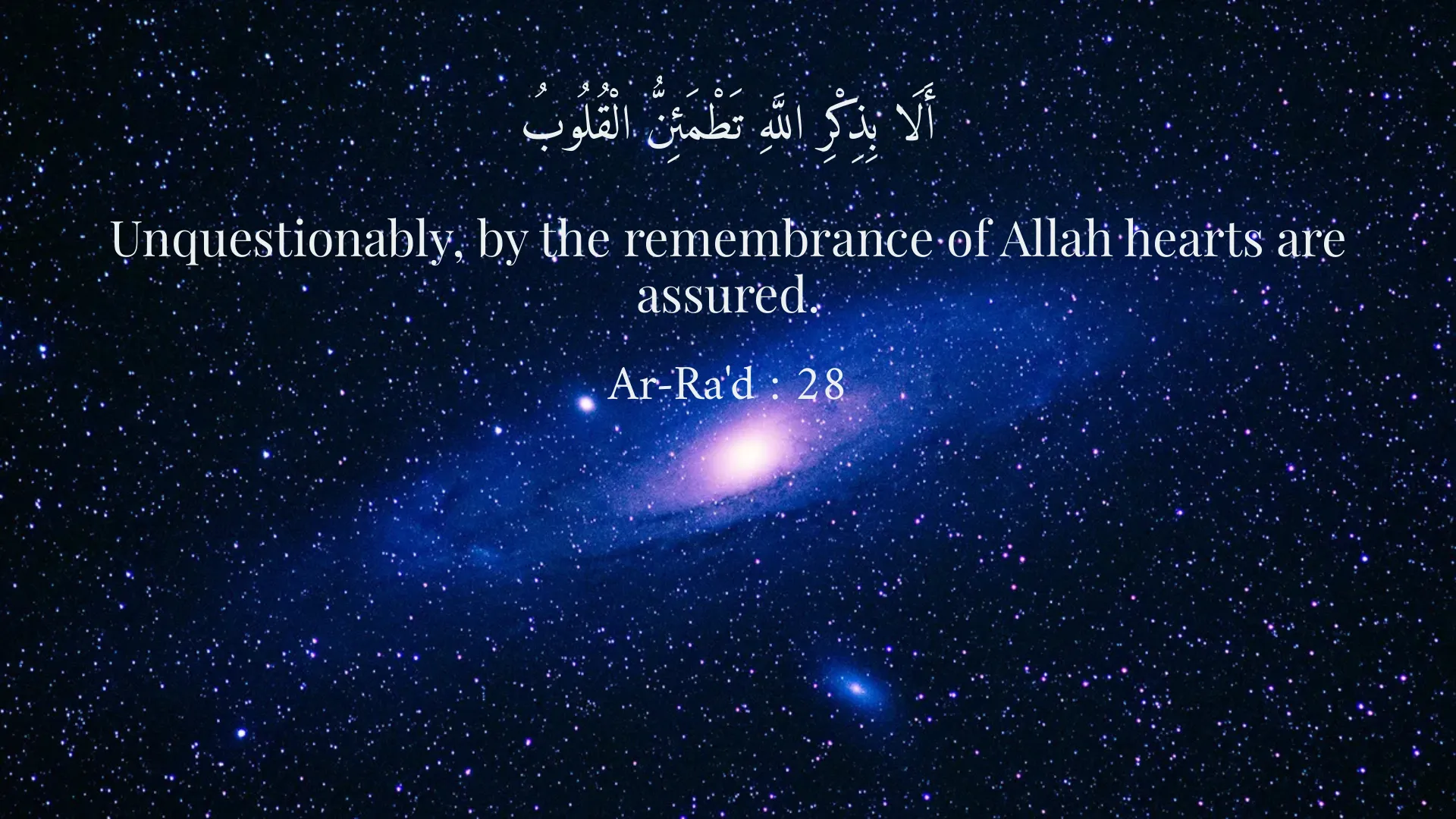
أَلَا بِذِكْرِ اللَّهِ تَطْمَئِنُّ الْقُلُوبُ
Unquestionably, by the remembrance of Allah hearts are assured.
Ar-Ra'd : 28
فَمَن يُرِدِ اللَّهُ أَنْ يَهْدِيَهُ يَشْرَحْ صَدْرَهُ لِلْإِسْلَامِ
So whomsoever Allah wills to guide, He expands his breast to [contain] Islam.
Az-Zumar : 22
Short Story
Once upon a time, there was a man named Amin who felt a sense of loneliness in his heart. He decided to bring peace to his heart through the remembrance of Allah. However, every time he tried to remember, he felt a sense of indifference and weariness. Eventually, Amin concluded that he needed to take a break from his daily routine and go to nature. He went to the seaside and engaged in dhikr amidst the waves. He felt that the remembrance of Allah in that atmosphere was beautiful and pleasant for him. After that, the enthusiasm for remembrance rekindled in his heart, and he experienced peace once again.