Quranic Answer
Peace is essential in life for every human being. In this fast-paced world, where individuals often find themselves trapped in a cycle of stress and chaos, the quest for inner tranquility has become increasingly vital. Among various means to achieve peace, prayer stands out as one of the most important acts of worship in Islam. It is not merely a ritualistic obligation; rather, it is viewed as a pathway toward serenity and closeness to God. However, many individuals report feeling unrest, despite their commitment to performing prayers regularly. This leads us to ponder the complexities of prayer and the nature of true peace. One plausible explanation for the unrest individuals experience, even after fervent prayers, could be the lack of full attention during the spiritual practice. In moments of prayer, engaging wholeheartedly becomes crucial; otherwise, the essence of prayer might be lost. The distractions often accompanying our daily lives can impede one's ability to focus during prayer. As humans, we inherently grapple with a multitude of thoughts, worries, and challenges, which may intrude upon our spiritual connection during these sacred moments. In the Holy Quran, God emphasizes the significance of remembering Him and making supplications. An essential verse, located in Surah Ar-Ra'd (Chapter 13, Verse 28), states: 'Indeed, it is in the remembrance of Allah that hearts find peace.' This profound statement underscores that true tranquility cannot be realized without a deep and consistent remembrance of Allah. To attain real peace, one must fully immerse themselves in the spiritual practice of prayer, continuously engaging in sincere remembrance and connection with the Almighty. Moreover, the overwhelming circumstances of life can further complicate an individual's ability to concentrate during prayer. Daily distractions, whether they be work-related stress, personal relationships, or health issues, serve as barriers that obstruct the deep connection one seeks during prayer. When one's mind is preoccupied with worldly concerns, the heart becomes unable to fully connect with the divine, hindering the overall effectiveness and experience of prayer. The spiritual benefit derived from prayer derives not solely from the physical act of praying but also from the intention and attention brought to that act. In Surah At-Talaq (Chapter 65, Verse 7), Allah mentions: 'Let those who find abundance spend from their abundance. And whoever has been given limited resources - let him spend from what Allah has given him. Allah does not burden a soul beyond that it can bear.' This verse introduces another layer to the concept of peace. It reveals a vital truth: whoever fears Allah and actively works to maintain that fear through sincere intention and effort, Allah will provide pathways and solutions in times of shortage or difficulty. This assurance speaks volumes about the connection between faith and tranquility. However, if an individual fails to address deeper problems — whether they be spiritual, emotional, or relational — then they may struggle to experience true peace. Ultimately, prayers are multi-dimensional acts that extend beyond mere physical motions. The sincere intention behind the prayer, coupled with heartfelt attention, holds great significance. Engaging in prayer means participating in a spiritual dialogue with God, where one lays bare their souls, hopes, fears, and desires. If a person’s heart is preoccupied with mundane realities and everyday matters, they will inevitably find it challenging to attain genuine peace. Furthermore, cultivating an environment that fosters peace is crucial for enhancing the effectiveness of prayer. Finding a suitable space where one feels comfortable and free from distractions can pave the way for deeper engagement during prayer. In addition, allowing oneself moments of reflection before beginning prayer can help clear the mind and recenter thoughts on spirituality. The practice of mindful breathing, recitations, or engaging in supplications prior to starting the prayer can lead to a more profound sense of connection and serenity. Moreover, integrating the principles of gratitude into one’s daily life can positively impact the overall experience of prayer. When individuals focus on the blessings they have, rather than the shortcomings or struggles they face, they begin to cultivate an attitude of thankfulness. This mindset can result in a more peaceful heart that is ready to receive the tranquility that prayer can offer. Another critical aspect to consider is the community surrounding prayer. Engaging in congregational prayers, where individuals come together in worship, can serve as a source of collective peace and spirituality. The shared experience of praying in a group reinforces the connection to the divine and to fellow believers, fostering a sense of belonging and comfort that contributes to individual serenity. In conclusion, peace is not simply the absence of turmoil but a deep-seated tranquility that flows from a genuine connection with the divine. Prayer, as an essential element in the life of a believer, facilitates that connection. Nevertheless, the experience of true peace during prayer demands attention, intention, and sincerity from the individual. When distractions and worldly concerns dominate one’s mind, they deter from the profound connection one seeks with God. By diligently remembering Allah in every aspect of life, surrounding oneself with a supportive community, and embracing gratitude, one can significantly enhance their spiritual practice. It is through such mindful actions that the hearts can truly find peace, according to the timeless wisdom of the Holy Quran.
Related Verses
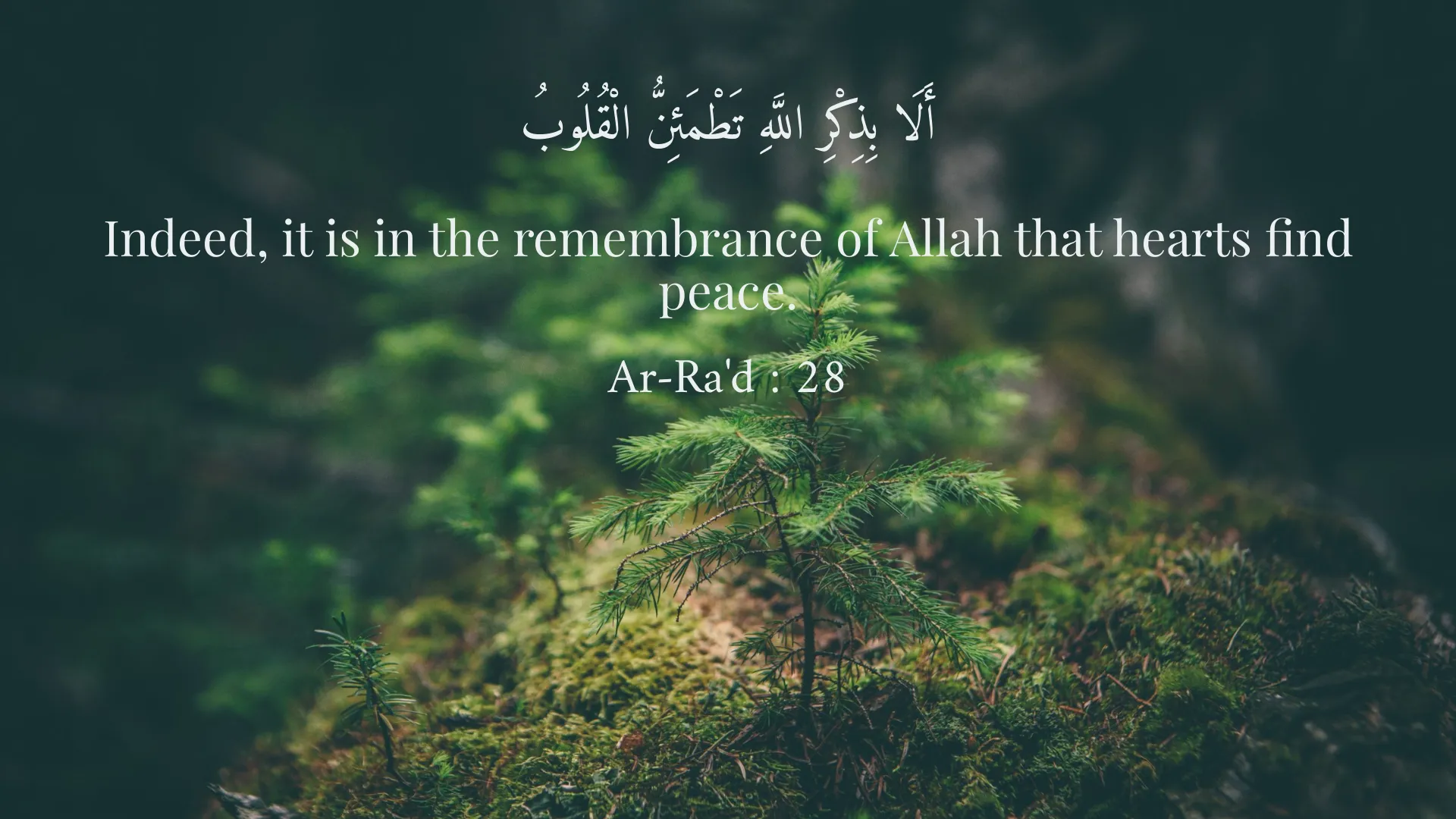
أَلَا بِذِكْرِ اللَّهِ تَطْمَئِنُّ الْقُلُوبُ
Indeed, it is in the remembrance of Allah that hearts find peace.
Ar-Ra'd : 28
لِيُنفِقْ ذُو سَعَةٍ مِّن سَعَتِهِۦ وَمَن قُدِرَ عَلَيْهِ رِزْقُهُۥ فَلْيُنفِقْ مِمَّا آتَاهُ اللَّهُ ۚ لَا يُكَلِّفُ اللَّهُ نَفْسًا إِلَّا مَا آتَاهَا ۚ سَيَجْعَلُ اللَّهُ بَعْدَ عُسْرٍ يُسْرًا
Let a rich man spend according to his capacity, and he whose provision is restricted, let him spend from what Allah has given him. Allah does not burden a soul beyond that which He has given it. Perhaps Allah will make after hardship ease.
At-Talaq : 7
Short Story
One day, Maryam decides to share her problems with God. In her prayer, she sincerely supplicates and asks for peace from Allah. After this, she realizes she must remember God and address her issues. With this understanding, she finds peace in her heart and her life changes.