Quranic Answer
Doubt is a common experience that many individuals encounter at various stages of their lives. It is often inspired by the pressures that daily life imposes, including emotional challenges and misunderstandings about oneself and the world. Life can be overwhelming, and the relentless waves of financial difficulties, turbulent social relationships, and existential questions can leave individuals grappling with uncertainty. This essay delves deeply into the nature of doubt, its origins and manifestations, especially in the context of religious belief and spiritual understanding, as illuminated by the Holy Quran. In our pursuit of happiness and success, the pressures of modern life can trigger feelings of doubt. Financial issues, for instance, are among the most significant sources of anxiety for many. Individuals may find themselves struggling to meet their basic needs, pay bills, or secure a stable future. This financial strain can lead them to question their capabilities and worth, causing doubt to infiltrate their minds. Similarly, social relationships can be both a source of joy and sorrow. Not every relationship lasts, and rejections, betrayals, and misunderstandings can leave deep emotional scars that contribute to feelings of inadequacy and uncertainty. Furthermore, philosophical questions concerning the meaning of life and its purpose can weigh heavily on the minds of many. Such questions often lead individuals to contemplate their existence and wonder about their roles in the grand scheme of things. This exploration can provoke existential doubt as people struggle to find clarity and purpose against a backdrop of varying beliefs and ideologies. In times of doubt, believers often look towards their faith as a source of strength and guidance. The Holy Quran addresses the human experience of doubt eloquently, providing insights for those who may feel overwhelmed or lost. For example, in Surah Al-Imran, verse 139, Allah emphasizes the importance of maintaining faith amidst adversity: "And do not weaken in distress, nor grieve, for you will surely be the uppermost if you are true believers." This verse serves as a powerful reminder that believers should not be disheartened by life's troubles. Instead, they are encouraged to place their reliance on Allah and maintain steadfastness in their faith. The assurance that they will emerge victorious if they remain true believers inspires hope and resilience. Moreover, the Quran offers practical guidance on overcoming doubt. In Surah Al-Baqarah, verse 153, Allah advises believers to seek patience and prayer as tools to navigate through uncertainty: "O you who have believed, seek help through patience and prayer. Indeed, Allah is with the patient." This counsel highlights the intrinsic role that patience and prayer play in alleviating doubts. It is through the act of turning towards Allah in prayer and engaging in reflective practices that individuals can find solace and clarity amid conflicts of faith. In an age where misinformation can proliferate rapidly, a lack of understanding about religious tenets can also breed doubt. Misinterpretations or lack of knowledge surrounding religious teachings can lead to confusion about fundamental beliefs. Hence, acquiring knowledge from reliable sources is paramount. Consulting with knowledgeable scholars, partaking in Islamic discussions, and engaging in thoughtful dialogue can provide clarity and mitigate doubts. The act of studying the Quran can also help individuals connect deeply with their faith. The Quran is not merely a religious text; it is a guide to living a fulfilling life. Its verses contain timeless wisdom and lessons that resonate with the struggles of humanity. By investing time in understanding its teachings, believers can foster their spiritual growth and enhance their connection with Allah, ultimately affirming their faith. Additionally, in moments of doubt, individuals should strive to maintain a positive outlook. Doubt may come knocking at any stage of life, and rather than yielding to despair, one should embrace these feelings as a natural part of the human experience. It is essential to recognize that doubt does not equate to weakness; rather, it can lead to greater self-awareness and personal growth when navigated thoughtfully. Another practical approach to cope with doubt is to engage in community support. Being part of a community, whether it be a local mosque or a group of friends who share similar beliefs, can significantly alleviate feelings of isolation and uncertainty. Sharing experiences and hearing how others cope with doubt can foster unity and understanding. These communal ties can provide both emotional support and additional resources for personal development. In conclusion, life is filled with pressures and challenges that can evoke feelings of doubt. Whether arising from financial struggles, social relationships, or existential inquiries, these feelings are integral to the human experience. The Holy Quran provides invaluable guidance on how to navigate these tumultuous waters with faith and resilience. In moments of uncertainty, believers are urged to maintain steadfastness, seek knowledge, pray, and reach out to their communities for support. Ultimately, while doubt may arise, it serves as an opportunity for growth and greater connection to faith.
Related Verses
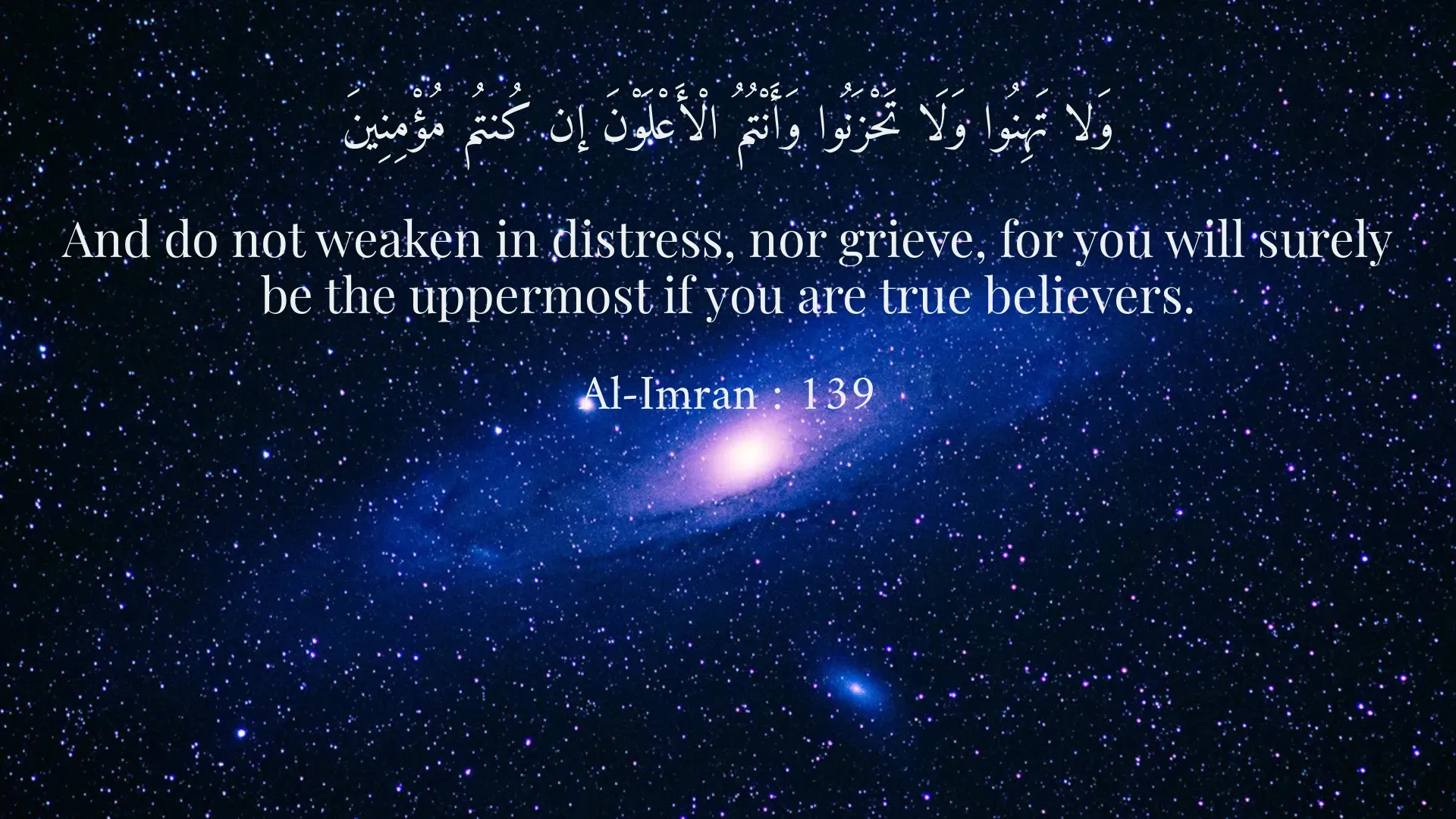
وَلا تَهِنُوا وَلَا تَحْزَنُوا وَأَنْتُمُ الْأَعْلَوْنَ إن كُنتُم مُؤْمِنِينَ
And do not weaken in distress, nor grieve, for you will surely be the uppermost if you are true believers.
Al-Imran : 139
إِنَّ اللَّهَ مَعَ الصَّابِرِينَ
Indeed, Allah is with the patient.
Al-Baqarah : 153
Short Story
One day, a young man named Ali found himself filled with doubt and couldn't decide which path to take in life. He went to the mosque and saw an elderly man reading the Quran. Ali sat beside him and shared his worries. The elder kindly said, 'My son, Allah is always with the patient. If you trust in Him and seek guidance through your prayers, you will find the right path.' Ali felt at ease with these words and decided to draw closer to God.