Quranic Answer
In the rich and profound teachings of the Holy Quran, kindness, beneficence (Ihsan), and goodwill are considered among the most noble virtues and actions through which a person draws closer to God and gives meaning to their life. The Quran repeatedly encourages believers to perform good deeds, help the needy, show kindness to parents, maintain kinship ties, and assist anyone in distress. These commandments are not only a path to eternal salvation but also lay the foundations for a healthy and humane society. However, a question that arises in many of our minds is: despite all this emphasis on kindness, why do good deeds sometimes not only fail to lead to appreciation and the desired outcome but also create an opportunity for some individuals to exploit and take undue advantage? The answer to this question must be sought in several layers of Quranic teachings and an understanding of human nature. Firstly, while encouraging beneficence, the Quran also realistically addresses the dual nature of humanity. Humans are beings composed of both good and evil, nobility and baseness, and are constantly faced with choices between these two. While many people possess an inherently good and grateful nature, others, influenced by worldly desires, greed, selfishness, and a lack of faith, may turn to exploiting kindness instead of appreciating it. These negative traits are not inherent in the doer of good but stem from the weaknesses and spiritual ailments of the exploitative individual. The Quran explicitly speaks of ungrateful, treacherous, and oppressive individuals, which indicates that the phenomenon of ingratitude and exploitation, though unpleasant, is understandable within the context of human realities. The purpose of doing good is to draw closer to God, not to guarantee the good behavior of others. The doer of good, with a pure intention, receives divine reward, even if others are ungrateful. In truth, your kindness earns an afterlife reward, and the exploiter's ingratitude will also have its consequence; this is divine justice. Secondly, alongside encouraging kindness, Islam also calls upon believers to employ wisdom and insight. Kindness should not be accompanied by naivety or ignorance. A wise person is one who discerns where and how to apply kindness so that they are protected from harm, and their good deed is not wasted or even leads to further corruption. Sometimes, boundless giving without discernment not only fails to help the individual but pushes them further into laziness and dependence on others. In such a case, your kindness, instead of being constructive, can be destructive. Wisdom, meaning placing everything in its proper place, teaches us that beneficence must be accompanied by thoughtfulness and an understanding of circumstances. This does not mean withholding help, but rather providing effective and purposeful assistance. For instance, helping someone capable of working who exploits your help is different from assisting a genuinely needy person. The Holy Quran emphasizes the importance of wisdom and insight, stating: “He gives wisdom to whom He wills, and whoever has been given wisdom has certainly been given much good.” (Al-Baqarah: 269). This verse indicates that wisdom is a great blessing that helps a believer make right decisions in life, including in good deeds, and avoid falling prey to exploiters. Therefore, kindness coupled with wisdom serves as a protective shield against ingratitude and exploitation. Thirdly, from the Quranic perspective, the primary goal of doing good is to gain God's pleasure and fulfill a divine duty, not to expect reward or appreciation from other humans. When our intention is purely for God, the reactions of others (whether gratitude or exploitation) do not diminish the value of our action. God says: “We feed you only for the countenance of Allah. We wish not from you reward or gratitude.” (Al-Insan: 9). This verse beautifully expresses this principle. When faced with ingratitude or exploitation, a believer should practice patience and know that their reward is preserved with God. This patience is itself a form of spiritual striving and adds to their spiritual reward. Faith in this truth calms the heart and strengthens the resolve to continue on the path of goodness. On the other hand, we must understand that the exploitative individual ultimately harms themselves. By doing so, they not only increase their sins but also deprive themselves of opportunities to establish healthy, trust-based relationships. God is just, and no action, whether good or evil, remains hidden from Him, and ultimately, everyone will receive their due for their deeds. This assurance of divine justice provides solace to the hearts of those whose kindness has been exploited. Finally, doing good is an inherent and everlasting virtue that should not be overshadowed by bitter experiences of exploitation. The problem is not with your kindness, but with the lack of perfection and human ethics in some others. The Quran also encourages us to maintain our ethical boundaries and personal and financial limits. This does not mean withholding charity, but rather giving with a plan and based on genuine need and circumstances. We should never allow negative experiences to deter us from the virtue of beneficence, but we can make our good deeds more effective and protected by adding wisdom and insight to our actions. Let us remember that the value of our good deeds is to their Creator, not to a creature who may be ungrateful. Therefore, continuing to do good with wisdom, patience, and reliance on God is the path to happiness and peace, even if the path is filled with human adversities.
Related Verses
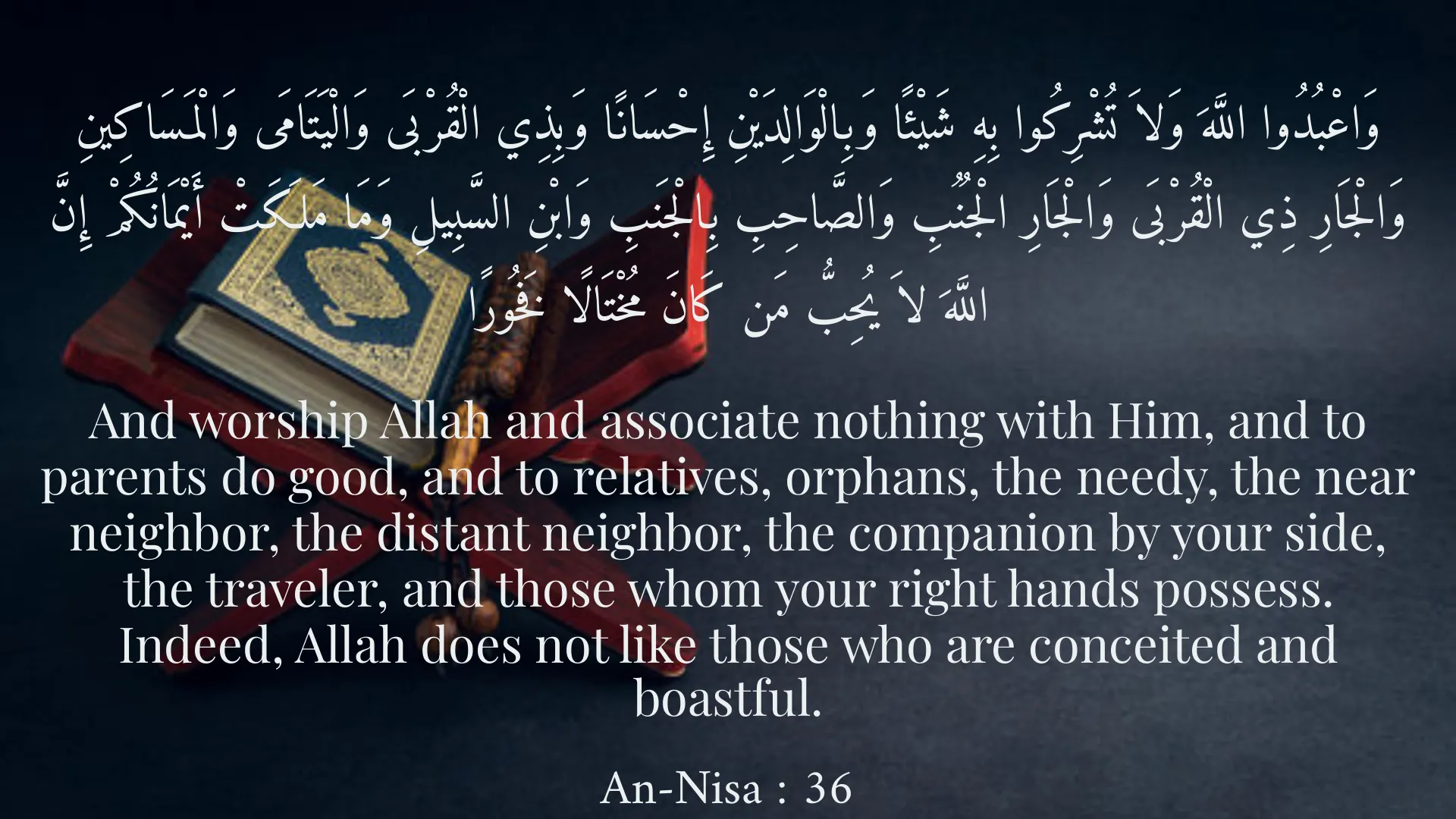
وَاعْبُدُوا اللَّهَ وَلاَ تُشْرِكُوا بِهِ شَيْئًا وَبِالْوَالِدَيْنِ إِحْسَانًا وَبِذِي الْقُرْبَى وَالْيَتَامَى وَالْمَسَاكِينِ وَالْجَارِ ذِي الْقُرْبَى وَالْجَارِ الْجُنُبِ وَالصَّاحِبِ بِالْجَنبِ وَابْنِ السَّبِيلِ وَمَا مَلَكَتْ أَيْمَانُكُمْ إِنَّ اللَّهَ لاَ يُحِبُّ مَن كَانَ مُخْتَالًا فَخُورًا
And worship Allah and associate nothing with Him, and to parents do good, and to relatives, orphans, the needy, the near neighbor, the distant neighbor, the companion by your side, the traveler, and those whom your right hands possess. Indeed, Allah does not like those who are conceited and boastful.
An-Nisa : 36
يُؤْتِي الْحِكْمَةَ مَن يَشَاءُ ۚ وَمَن يُؤْتَ الْحِكْمَةَ فَقَدْ أُوتِيَ خَيْرًا كَثِيرًا ۗ وَمَا يَذَّكَّرُ إِلَّا أُولُو الْأَلْبَابِ
He gives wisdom to whom He wills, and whoever has been given wisdom has certainly been given much good. And none will remember except those of understanding.
Al-Baqarah : 269
إِنَّ الْإِنسَانَ لِرَبِّهِ لَكَنُودٌ
Indeed, mankind, to his Lord, is ungrateful.
Al-Adiyat : 6
وَإِنَّهُ عَلَىٰ ذَٰلِكَ لَشَهِيدٌ
And indeed, he is to that a witness.
Al-Adiyat : 7
Short Story
It is narrated that in a city lived a man of noble character who extended a helping hand to everyone he met, without expecting anything in return for his kindness. He was so generous that he would sometimes forego his own needs to feed another. But one day, it happened that one of those who had repeatedly benefited from his kindness was not only ungrateful but returned each time with greater avarice, putting the kind man in a difficult situation. One day, a wise sage saw him and asked: "O generous one, your kindness is commendable, and its reward is preserved with your Lord, but wisdom is also a part of virtue. Water the tree that bears fruit, not the barren land that yields nothing but weeds and wastes your effort." The benevolent man took the wise man's advice to heart and realized that although kindness itself is an unparalleled virtue, distinguishing the ungrateful from the grateful is also wisdom, so that the seeds of benevolence may fall in their rightful place and the plant of greed does not bear fruit or take root. He learned that love and beneficence must be accompanied by discerning eyes and an aware heart so that they are not used by those with ill intentions as a means for excessive demands, and the jewel of good deeds shines in its proper place.