Quranic Answer
The feeling of a delayed answer to prayer is an experience many believers encounter, and it can sometimes lead to confusion, despair, or even a weakening of faith. However, from the perspective of the Holy Quran, a perceived delay in the response to supplication is not a sign of Allah’s indifference or unkindness, nor is it a rejection of the servant's plea. Rather, it is a profound manifestation of His boundless wisdom, infinite mercy, and divine planning, which transcends the limited understanding of human beings. Allah, the Exalted, the Creator of the universe, the Absolute Knower of the unseen and the seen, and the Most Merciful of the merciful, is never heedless of what passes through the hearts of His servants. He is the All-Hearing, the All-Knowing, and closer to us than our jugular vein, as stated in Surah Qaf, verse 16: “And We have already created man and know what his soul whispers to him, and We are closer to him than [his] jugular vein.” This proximity and Allah’s absolute knowledge attest that every prayer is heard, and every need is known to Him. One of the most significant reasons for this 'delay,' which is in truth not a delay but a divine arrangement and perfect timing, stems from Allah's ultimate and everlasting wisdom (Hikmah). We, as human beings, only perceive a fraction of reality and are often unaware of the long-term consequences and implications of our desires. It is entirely possible that we may earnestly wish for something that is not truly good for us, or we may seek it at an inappropriate time, which could lead to harm or detriment. Allah Almighty states in Surah Al-Baqarah, verse 216, with utmost clarity: “Fighting has been enjoined upon you, though it is hateful to you. But perhaps you hate a thing and it is good for you; and perhaps you love a thing and it is bad for you. And Allah Knows, while you know not.” This verse clearly illustrates that Allah’s knowledge is all-encompassing, and He is more aware of what is best for us than we are ourselves. His granting of our requests at the time and in the manner He deems fit is the essence of His mercy and wisdom. Sometimes, what we desire might be a prerequisite for, or even an impediment to, a greater good that we are unaware of, and Allah, by delaying or altering the form of the response, guides us towards that higher and eternal good. This type of response demonstrates a comprehensive divine plan for human felicity, not merely the fulfillment of momentary desires. Another reason is the testing and educative aspect of these perceived delays. This worldly life is a realm of trials and examinations, and Allah tests His servants with ups and downs, and sometimes with the prolonged waiting for the answer to a prayer. These tests are not for Allah to gain knowledge (for He is already the All-Knower), but rather for the truth of the human being's essence to be revealed, for the core of their faith to be strengthened, and for their spiritual growth and development. In Surah Al-Ankabut, verses 2 and 3, it is clearly stated: “Do people think that they will be left to say, 'We believe' and they will not be tried? But We have certainly tried those before them, and Allah will surely make evident those who are truthful, and He will surely make evident the liars.” Patience and steadfastness in the face of apparent delays strengthen a person's faith, compel them to humility, increase their dependence on Allah, and deter them from relying on anyone other than God. This period of waiting is a golden opportunity for self-improvement, reconsideration of deeds and intentions, and strengthening the connection with the Creator. These delays can foster the spiritual and intellectual maturity of the individual and prepare them to receive greater blessings. Furthermore, sometimes the answer to a prayer comes in various forms that we might not initially recognize as a direct response to our supplication. The Prophet Muhammad (PBUH) stated in a Hadith: “No Muslim supplicates but Allah gives him one of three things: either He answers his prayer immediately, or He stores it for him in the Hereafter, or He averts a calamity from him.” Although this is a Hadith and not an explicit Quranic verse, its spirit is in perfect harmony with Allah’s wisdom and mercy as portrayed in the Quran. The answer might not be in the exact form and manner we expect, but rather in the form of averting harm, facilitating another matter, or even a great reward in the Hereafter. Allah Almighty says in Surah Ghafir, verse 60: “And your Lord says, 'Call upon Me; I will respond to you.' Indeed, those who disdain My worship will enter Hell [rendered] contemptible.” This verse guarantees a response, but Allah determines the quality and timing of that response based on His knowledge and wisdom. Therefore, it is essential for the servant to always be in a state of supplication and to trust in Allah’s promise and never despair of His mercy. A delay in answering can also be an opportunity for repentance and return. Sometimes, our sins and shortcomings can hinder the acceptance of prayers. In such cases, prolonged waiting might lead an individual to self-assessment and seeking forgiveness (Istighfar). After purifying the soul and sincerely returning to Allah, the path for the answer may open. Indeed, the very act of seeking and supplicating is an act of worship, and Allah loves for His servant to call upon Him continuously. Persistence in prayer is a sign of steadfastness in faith and deep dependence on Allah, which is highly valued and beloved by Him. This persistence in prayer signifies an acknowledgement of one's inherent poverty and the absolute richness of the Lord, which in itself is considered the greatest treasure for the servant. Ultimately, understanding why Allah sometimes 'delays' in answering requires a deeper insight into the nature of the servant’s relationship with the Lord, as well as Allah’s grandeur, wisdom, and mercy. These delays are not due to heedlessness or inattention, but rather are based on Allah being the All-Knowing, the All-Wise, and the All-Merciful. Every moment of our lives is in His hands, and everything that occurs is part of a grand, complete, and benevolent plan, the full dimensions of which only He is aware. Faith in divine decree (Qadar) and complete reliance (Tawakkul) on Him bring tranquility to the hearts of believers when facing these 'delays,' assuring them that even if their request is not granted in the desired form in this world, its goodness and blessings are preserved with Allah or will be compensated in a better way in this world and the Hereafter. Therefore, our duty is to persevere in prayer, purify our intentions, strive in the path of truth, and place unending trust in the One who knows what is best for us more than we do and is more merciful to us.
Related Verses
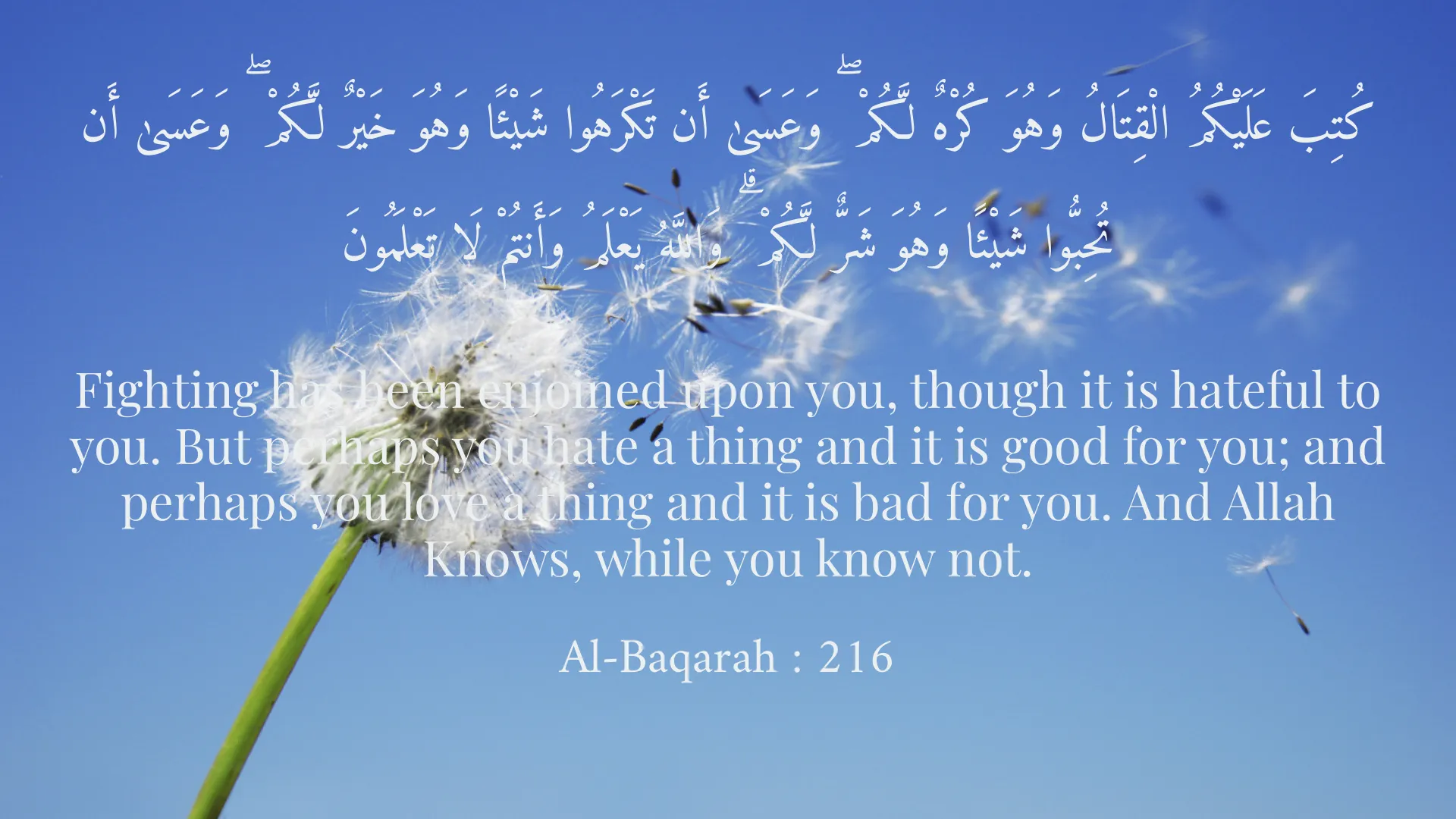
كُتِبَ عَلَيْكُمُ الْقِتَالُ وَهُوَ كُرْهٌ لَّكُمْ ۖ وَعَسَىٰ أَن تَكْرَهُوا شَيْئًا وَهُوَ خَيْرٌ لَّكُمْ ۖ وَعَسَىٰ أَن تُحِبُّوا شَيْئًا وَهُوَ شَرٌّ لَّكُمْ ۗ وَاللَّهُ يَعْلَمُ وَأَنتُمْ لَا تَعْلَمُونَ
Fighting has been enjoined upon you, though it is hateful to you. But perhaps you hate a thing and it is good for you; and perhaps you love a thing and it is bad for you. And Allah Knows, while you know not.
Al-Baqarah : 216
أَحَسِبَ النَّاسُ أَن يُتْرَكُوا أَن يَقُولُوا آمَنَّا وَهُمْ لَا يُفْتَنُونَ * وَلَقَدْ فَتَنَّا الَّذِينَ مِن قَبْلِهِمْ ۖ فَلَيَعْلَمَنَّ اللَّهُ الَّذِينَ صَدَقُوا وَلَيَعْلَمَنَّ الْكَاذِبِينَ
Do people think that they will be left to say, 'We believe' and they will not be tried? But We have certainly tried those before them, and Allah will surely make evident those who are truthful, and He will surely make evident the liars.
Al-Ankabut : 2-3
وَقَالَ رَبُّكُمُ ادْعُونِي أَسْتَجِبْ لَكُمْ ۚ إِنَّ الَّذِينَ يَسْتَكْبِرُونَ عَنْ عِبَادَتِي سَيَدْخُلُونَ جَهَنَّمَ دَاخِرِينَ
And your Lord says, 'Call upon Me; I will respond to you.' Indeed, those who disdain My worship will enter Hell [rendered] contemptible.
Ghafir : 60
Short Story
It is narrated that in ancient times, there was a hardworking and pious farmer who suffered for years from drought, and no matter how much he prayed, rain did not fall. His neighbors taunted him, asking, "Are your prayers not heard?" The farmer raised his head to the sky and, with a heart full of faith and reliance, said: "My Lord, I am aware of Your wisdom and I know that Your delay in answering is not out of indifference, but out of a hidden expediency that is concealed from us. I will not despair of Your mercy, and I know that whatever comes from You is pure goodness." And so it was that shortly thereafter, a rain fell so abundantly that it not only watered his land and brought forth a more bountiful harvest than before, but also provided a water reserve for years to come. Then the farmer knew that Allah had answered his prayer, but in a way and at a time that brought about the best interest for him, and taught him a patience that was worth more than any harvest.