Quranic Answer
The concept of testing and trials for human beings is deeply embedded in the fabric of Islamic teachings, particularly evident in the revered Holy Quran. Through various verses, Allah outlines the significance of these trials as integral components of His divine plan, inviting believers to navigate the complexities of life with resilience and faith. This article elaborates on the essence of trials as portrayed in the Holy Quran, exploring their purpose, the nature of faith, and ultimately, the pathway they forge towards spiritual growth and closeness to Allah. In Surah Al-Baqarah, verse 155, Allah asserts, 'And We will surely test you with something of fear and hunger and a loss of wealth and lives and fruits, and give good tidings to the patient.' This encapsulates the fundamental understanding that trials are not mere accidental occurrences or arbitrary hardships. Instead, they are divinely orchestrated tests designed to evaluate and enhance the faith of individuals. It is during these moments of distress and adversity that believers have the opportunity to express their patience (Sabr) and perseverance (Istiqamah). Moreover, this verse emphasizes the notion that trials serve as universal experiences that all human beings will face. The mention of various forms of tests—fear, hunger, loss—reminds us of the transient nature of worldly possessions and comforts. In doing so, Allah encourages believers to develop a deeper relationship with Him, fortifying their spiritual foundations amidst the storms of life. The Quran further suggests that trials are not solely punitive; rather, they aim to polish the soul and instill virtues. As expressed in Surah Al-Mu'minun, verse 30, 'Indeed, in the creation of the heavens and the earth and the alternation of the night and the day, are signs for those of understanding.' This verse serves as an invitation for believers to reflect on the profound elements of God’s creation and recognize that trials are essential for spiritual enlightenment. Engaging with the natural world, observing its cycles, and enduring life's challenges prompt believers to seek wisdom and foster a deeper comprehension of their existence. In our daily lives, we often encounter obstacles that test our resolve, such as financial difficulties, health issues, or loss of loved ones. These hardships may appear daunting; however, they are often stepping stones towards personal development and maturity. The Quran encourages believers to remain steadfast and hopeful through difficult times, reinforcing that patience is not merely about enduring difficulties but is a proactive engagement with faith and trust in Allah's plan. Surah Al-Imran, verse 186 expresses this idea poignantly: 'You will surely be tested in your possessions and your lives, and you will surely hear from those who were given the Scripture before you and from those who associate others with Allah much abuse.' This verse acknowledges the inevitability of challenges and highlights that they are part and parcel of human existence. It also suggests that believers may face external opposition or adversity from others in their journey of faith, which serves to strengthen their convictions. By accepting the tests that Allah places upon them, individuals can cultivate resilience and dependence on divine guidance. These adversities, therefore, become opportunities for believers to reaffirm their commitments to their faith. The Quran thus transforms the narrative around suffering; instead of viewing challenges as burdens, they can be perceived as blessings that guide individuals closer to spiritual realization and intimacy with the Creator. Moreover, the Quran encourages believers to view trials through the lens of a larger divine plan. Trials achieve their purpose when they inspire individuals to turn to Allah in prayer, seek solace in His words, and strive toward self-improvement. This action leads to cultivation of inner strength, reinforcing the importance of turning adversities into avenues for growth. Believers may also take inspiration from the stories of the prophets who faced immense trials throughout their lives. Prophets such as Job (Ayyub), who faced severe loss and suffering, exemplified unparalleled patience and devotion amidst adversity. Their stories serve as reminders that the lofty path of faith often entails adversity, and the response to such challenges defines one’s spiritual trajectory. The trials faced by these esteemed figures illuminate the importance of character drawing from struggle and hardship. In conclusion, the teachings of the Holy Quran reveal that trials are not intended to defeat or discourage believers; rather, they are stepping stones that facilitate spiritual awakening, self-discovery, and fortification of faith. The verses from Surah Al-Baqarah and Surah Al-Imran articulate that through challenges, one can achieve a closer relationship with Allah, turning trials into transformative experiences. Embracing patience and resilience enables believers to coexist harmoniously with the impermanence of life’s challenges, ultimately leading toward a deeper understanding of divine wisdom and mercy. By adhering to these teachings, individuals can not only navigate the storms of their lives but can emerge from them renewed in faith, character, and spiritual alignment, thereby glorifying the purpose behind their very creation.
Related Verses
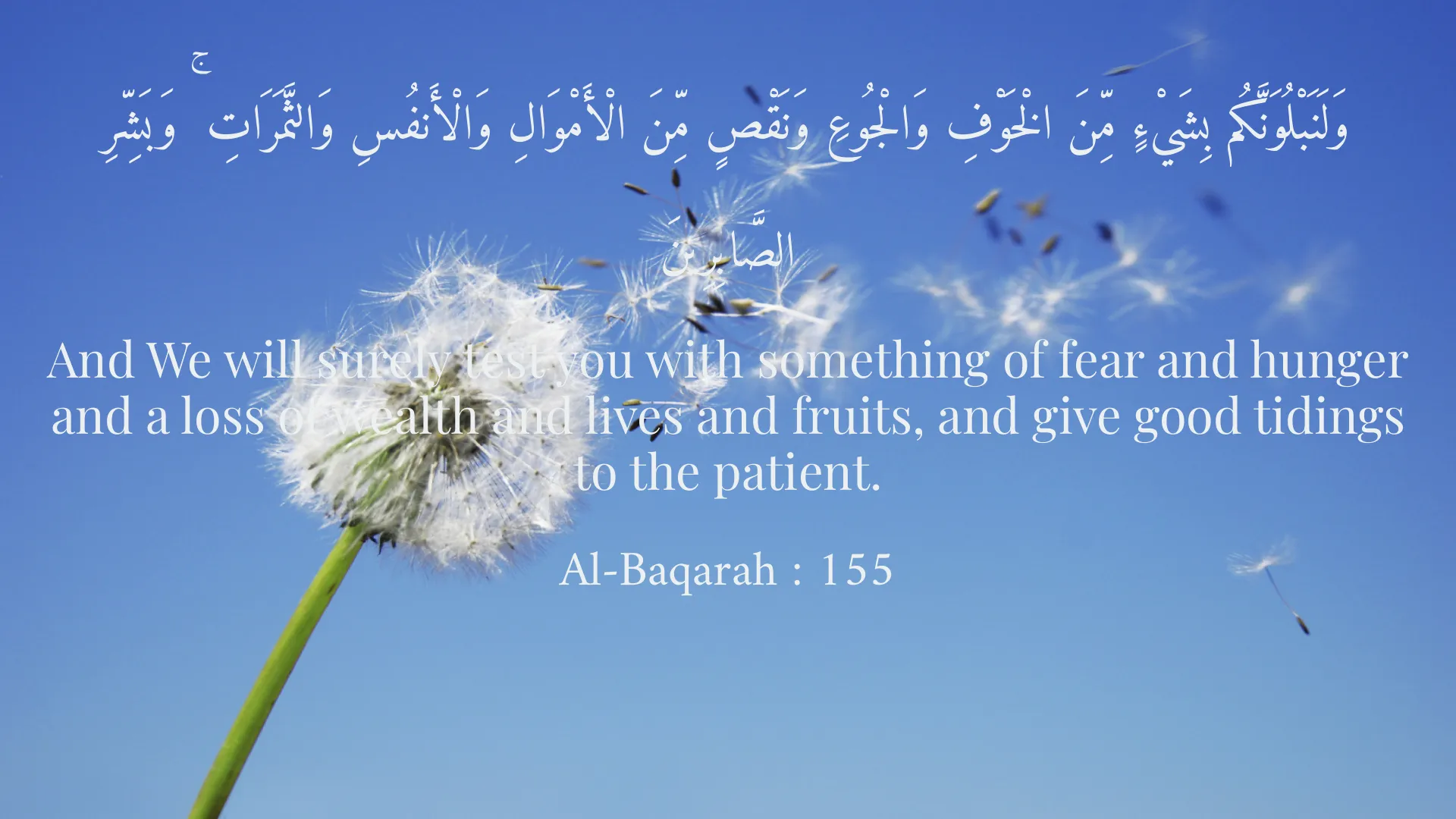
وَلَنَبْلُوَنَّكُم بِشَيْءٍ مِّنَ الْخَوْفِ وَالْجُوعِ وَنَقْصٍ مِّنَ الْأَمْوَالِ وَالْأَنفُسِ وَالثَّمَرَاتِ ۚ وَبَشِّرِ الصَّابِرِينَ
And We will surely test you with something of fear and hunger and a loss of wealth and lives and fruits, and give good tidings to the patient.
Al-Baqarah : 155
إِنَّ فِي خَلْقِ السَّمَاوَاتِ وَالْأَرْضِ وَاخْتِلَافِ اللَّيْلِ وَالنَّهَارِ لَآيَاتٍ لِّأُولِي الْأَلْبَابِ
Indeed, in the creation of the heavens and the earth and the alternation of the night and the day, are signs for those of understanding.
Al-Mu'minun : 30
لَتُبْلَوُنَّ فِي أَمْوَالِكُمْ وَأَنفُسِكُمْ وَلَتَسْمَعُنَّ مِنَ الَّذِينَ أُوتُوا الْكِتَابَ مِن قَبْلِكُمْ وَمِنَ الَّذِينَ أَشْرَكُوا أَذًى كَثِيرًا
You will surely be tested in your possessions and your lives, and you will surely hear from those who were given the Scripture before you and from those who associate others with Allah much abuse.
Al-Imran : 186
Short Story
Once upon a time, a young man named Hassan was talking to God amidst life's challenges and troubles. He was trying to strengthen his spirit and gain a better understanding of the tests and hardships that had come his way. After some contemplation of Quranic verses and discussions with his friends, he concluded that all these tests helped him develop a stronger character and strengthen his connection with God. From that day onwards, Hassan faced challenges with greater enthusiasm, recognizing these tests as opportunities for growth and drawing closer to God.