Quranic Answer
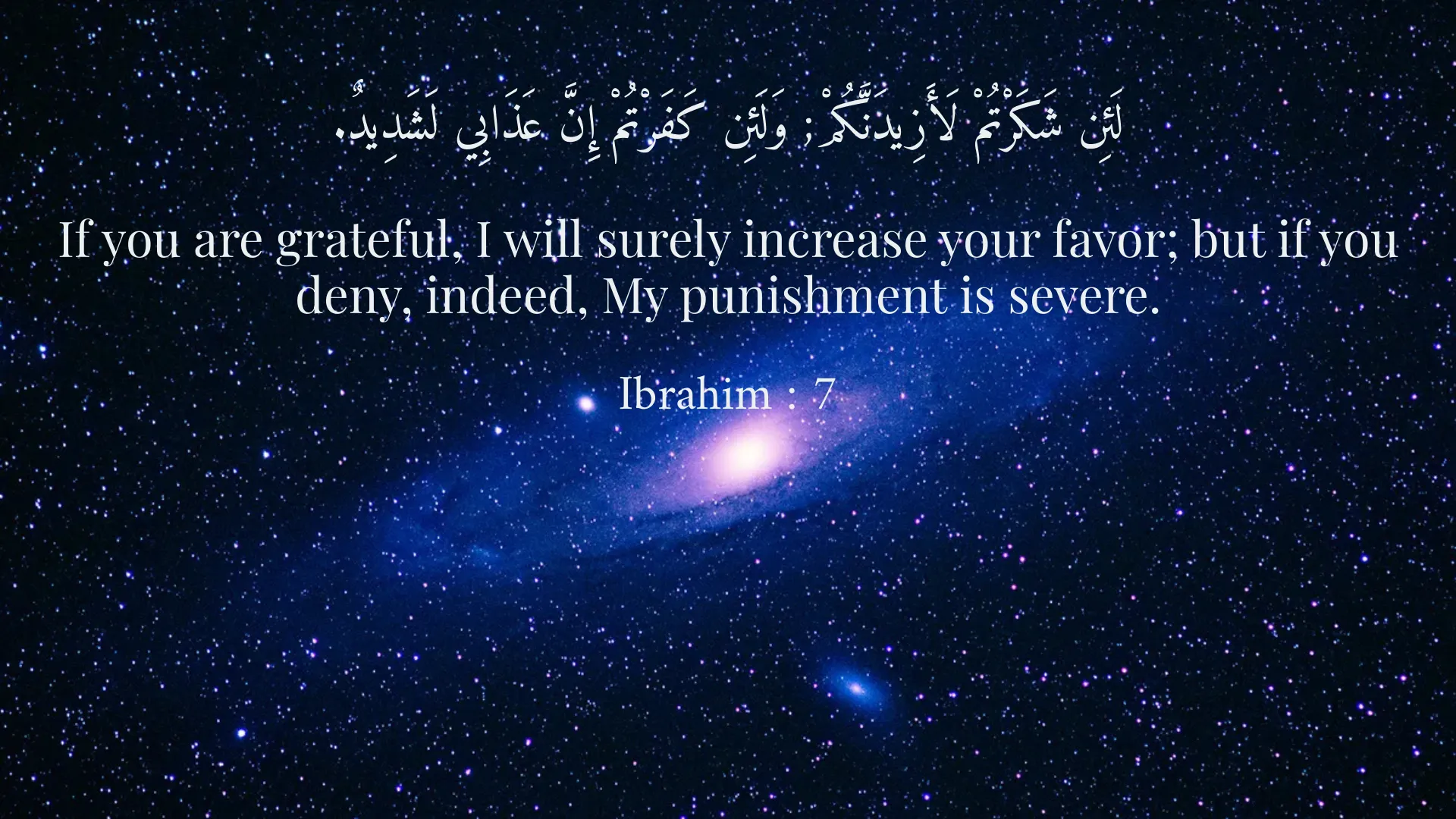
Gratitude is a fundamental principle in life, and its importance is deeply rooted in various cultures and religions around the world. In Islamic teachings, gratitude is a recurring theme that emphasizes the significance of recognizing and appreciating the blessings bestowed upon us by Allah. This concept is particularly highlighted in the Holy Quran, where gratitude is not just a moral behavior but also a means to achieve peace and fulfillment in our lives. In verse 7 of Surah Ibrahim, Allah states: 'If you are grateful, I will surely increase your favor; but if you deny, indeed, My punishment is severe.' This powerful verse encapsulates the essence of gratitude and its potential effects on our lives. In this article, we will explore the reasons why cultivating an attitude of gratitude is essential for our emotional and spiritual well-being, drawing insights from the Quran and relevant psychological studies. ### The Psychological Aspect of Gratitude Gratitude has been extensively studied in the field of psychology, with numerous researchers highlighting its positive effects on mental health. One of the fundamental ways in which gratitude influences our emotional state is by shifting our focus from negative to positive aspects of our lives. When we actively practice gratitude, we train our minds to recognize and appreciate the blessings that often go unnoticed. This practice can lead to improved mood and emotional resilience, enabling us to cope better with life's challenges. The act of writing down or verbally expressing what we are thankful for can create a significant change in our overall perspective. As we list our blessings, we may find ourselves rediscovering joy in simple things—a warm meal, a smile from a friend, or the beauty of nature. This redirection of focus is critical because our minds tend to gravitate towards negative thoughts; therefore, a conscious effort to practice gratitude can help counterbalance this negativity. ### Gratitude and Positive Thinking The first reason gratitude is essential for bringing peace into our lives is because it directs us toward positive thinking. By deliberately focusing on what we have rather than what we lack, we begin to cultivate a mindset of abundance. This shift can significantly affect our emotional state; instead of feeling overwhelmed by challenges, we become more appreciative of our circumstances. Research indicates that individuals who practice gratitude experience higher levels of positive emotions, greater life satisfaction, and even improved physical health. For instance, a study published in the journal "Personality and Individual Differences" found that people who regularly practiced gratitude reported lower levels of depression and stress, as well as increased feelings of connectedness and support from others. This sense of belonging is vital for mental well-being; it reinforces the relationship between gratitude and positive thinking, further emphasizing how gratitude can foster emotional balance. ### Strengthening Our Connection with Allah The second reason gratitude leads us to peace is that it helps us form a closer connection with Allah. In Islam, gratitude is a form of worship that acknowledges Allah’s infinite mercy and generosity. The Quran states in verse 15 of Surah Al-Baqarah: 'As you give thanks, He bestows more upon you...' This verse conveys the idea that gratitude is not only rewarded by Allah but also results in an increase in His blessings. When we express appreciation for what we have, we invite more blessings into our lives, reinforcing our faith and trust in Allah. Acknowledging the blessings we receive fosters a deeper sense of spirituality and allows us to recognize Allah's presence in our daily lives. This awareness brings about tranquility, as we come to understand that we are never truly alone in our struggles. Instead, we can rely on Allah’s mercy and grace. When facing challenges, remembering to be grateful can transform our perspective; instead of feeling despondent, we can find solace in the myriad of blessings surrounding us, even during difficult times. ### The Contentment That Comes with Gratitude Ultimately, cultivating gratitude enhances our appreciation of Allah’s blessings, which fosters a sense of peace and contentment in our lives. By being consistently grateful, we practice mindfulness and presence in the moment, which significantly contributes to our overall happiness. Instead of yearning for more, we learn to savor the abundance of life, leading to increased satisfaction and fulfillment. Moreover, gratitude nurtures positive relationships with others. When we express appreciation to those around us—whether it’s family, friends, or coworkers—we strengthen our connections and cultivate a supportive community. Significant research highlights that expressing gratitude within relationships leads to greater interpersonal trust, cooperation, and satisfaction. A grateful disposition fosters a culture of appreciation, creating an environment that not only benefits individual mental health but also the well-being of those around us. ### Practical Ways to Practice Gratitude Incorporating gratitude into our daily lives need not be complicated. Here are some practical ways to practice gratitude that can yield substantial benefits: 1. Gratitude Journaling: Dedicate a few minutes each day to write down three to five things you are thankful for. This practice helps to rewire your brain to focus on the positives. 2. Express Appreciation: Make it a habit to express your appreciation to others, whether through a heartfelt note, a text message, or a simple thank you. This not only brightens someone else's day but also reinforces your feelings of gratitude. 3. Mindfulness: Engage in mindfulness practices that promote being present in the moment. This can include meditation, deep breathing exercises, or simply taking a moment to reflect on the blessings in your life. 4. Volunteer: Giving back to others can enhance your sense of gratitude. Volunteering for a cause you care about can remind you of the importance of community and the blessings you have. 5. Create Gratitude Rituals: Integrate gratitude into your daily routines, such as saying a prayer of gratitude before meals or reflecting on your blessings before going to bed. ### Conclusion In conclusion, gratitude is a powerful force that shapes our emotional well-being and strengthens our connection with Allah. By practicing gratitude, we cultivate positive thinking and enhance our appreciation of the countless blessings in our lives. As we follow the Quranic teachings on gratitude, we open ourselves to a deeper sense of satisfaction, tranquility, and fulfillment. It requires a conscious effort to embrace gratitude fully; however, the rewards are profound—leading us to a more peaceful and meaningful life. Let us begin today to appreciate the beauty around us, be grateful for our experiences, and cultivate a life filled with blessings and love.
Related Verses
لَئِن شَكَرْتُمْ لَأَزِيدَنَّكُمْ; وَلَئِن كَفَرْتُمْ إِنَّ عَذَابِي لَشَدِيدٌ.
If you are grateful, I will surely increase your favor; but if you deny, indeed, My punishment is severe.
Ibrahim : 7
وَإِذَا قُلْتُمْ فَاذْكُرُوا اللَّـهَ...
And as you give thanks, He bestows more upon you...
Al-Baqarah : 15
Short Story
One day, Ali was sitting and reflecting on his life. He felt that he lacked peace in his life. After a while, he decided to start practicing gratitude as a daily habit. He began to appreciate all the small and great blessings in his life. Over time, he noticed that he had found more peace in his life, and his relationships with others had also improved.