Quranic Answer
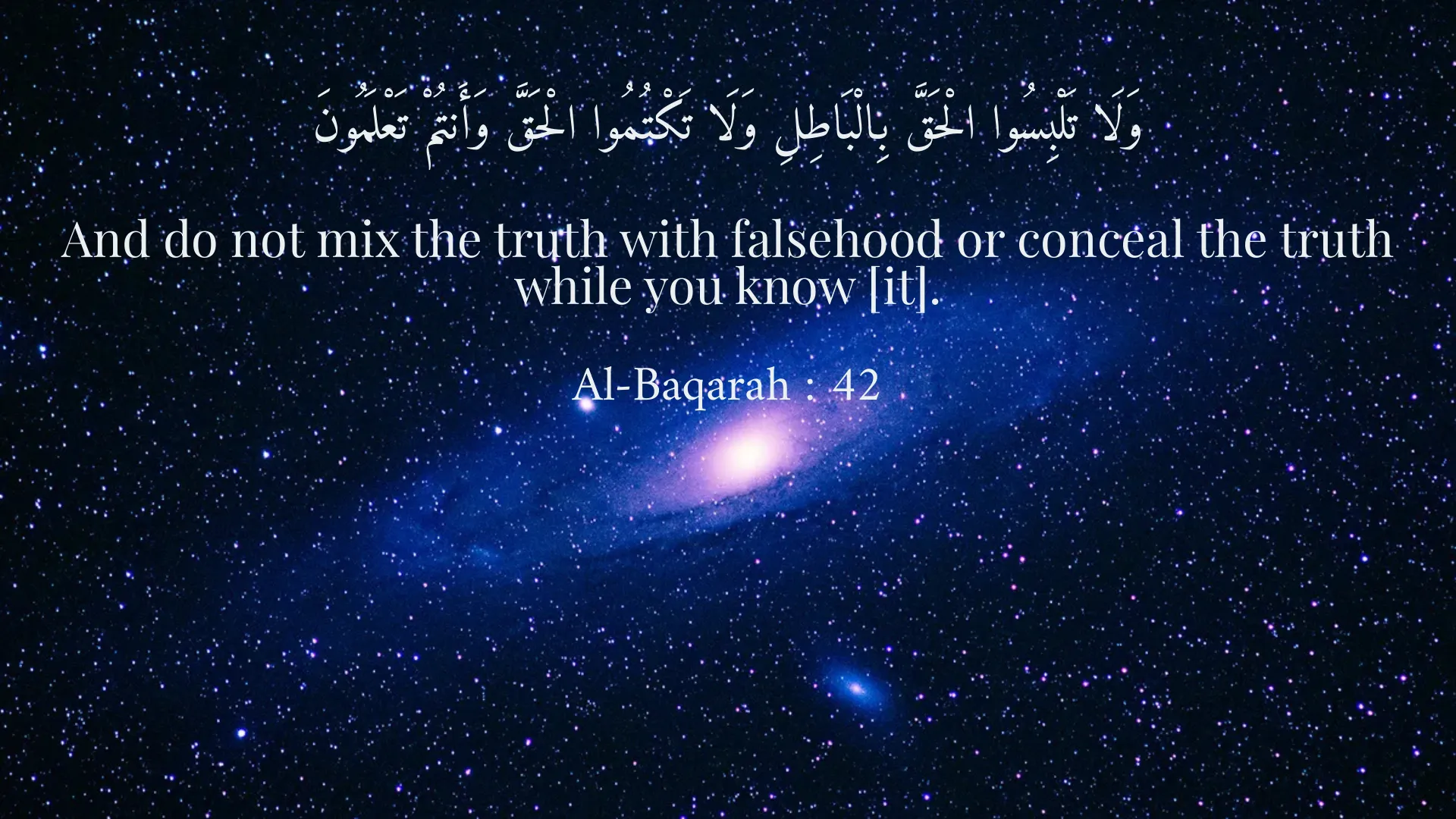
In the Holy Quran, lying is recognized as one of the despised traits that distances a person from divine mercy and forgiveness. It is crucial for believers to understand that engaging in deceit is not only detrimental to their spiritual well-being but also harmful to societal harmony. The Quran emphasizes this principle vividly through various verses, urging individuals to remain steadfast in truthfulness in both personal conduct and communal interactions. The moral fabric of society relies heavily on the honesty of its members, as lies can corrode trust, create misunderstandings, and foster an environment of suspicion and discord. One of the notable references to this concept can be found in Surah Al-Baqarah, verse 42. In this verse, Allah advises the believers: "And do not mix the truth with falsehood or conceal the truth while you know [it]." This profound guidance clearly illustrates the divine perspective on the disdain for falsehood, particularly the act of intentionally distorting the truth. Lying, in this context, is seen not only as a personal failing but also as a social injustice. It disrupts societal harmony and negatively impacts the collective conscience of the community. Moreover, the implications of lying go beyond mere personal repercussions. Lying creates ripples of distrust that can dismantle relationships, lead to conflicts, and contribute to societal breakdowns. In today’s world, where honesty is often compromised for the sake of convenience or gain, the Quran’s message remains ever relevant. It serves as a reminder that truth is integral to both personal integrity and social responsibility. Allah has discouraged believers from indulging in dishonesty, emphasizing that any act of deception can lead to dire consequences, not only in this world but also in the hereafter. In Surah Az-Zumar, verse 32 also highlights the severity of lying: "And who is more unjust than one who invents a lie about Allah?" This rhetoric underscores the enormity of fabricating lies against the Creator, eluding the ultimate truth, and, by extension, the divine nature of reality itself. To fabricate lies about Allah equates to a colossal injustice—not just against God but against oneself and one’s fellow beings. Such actions lead an individual away from the sacred path of righteousness and irrevocably distance them from divine mercy. Understanding the consequences of lying is vital for any Muslim striving to maintain a living relationship with their Creator. The Quran teaches that deceit is a characteristic associated with ignorance and a failure to comprehend the truths laid out by Allah. Individuals who seek to evade reality through falsehood are, in effect, denying themselves the guidance and clarity that truth brings. The pursuit of God’s pleasure, as highlighted in various Quranic passages, is predicated upon honesty and integrity. A servant of God cannot attain satisfaction in the eyes of the Almighty while engaging in false narratives and deceitful behaviors. In Surah Al-Mu'minun, verse 91, Allah proclaiming, "There is no deity worthy of worship except Him. And whoever lies about Allah has indeed gone far astray." This verse succinctly encapsulates the central theme of truth versus falsehood. God’s sovereignty and the authenticity of His message are intertwined. Pervading dishonesty in religion not only shakes the foundation of one’s faith but may also lead to moral degradation. Therefore, embarking on a journey of faith and seeking divine closeness mandates the avoidance of dishonesty at all costs. The power of honesty extends beyond personal faith; it has profound implications for interpersonal relationships. In a world where deception is rampant, being a paragon of truthfulness garners not only respect but also trust. Individuals who value honesty tend to foster deeper connections with those around them, enabling a supportive and nurturing environment. Such relationships are foundational to both personal growth and communal solidarity. In truthfulness, humanity finds a common ground upon which love, compassion, and unity flourish. Additionally, the benefits of honesty resonate in the lifetime experiences of those who choose to adhere to such teachings. By embracing truth, individuals invite divine blessings into their lives. They align themselves with God’s principles, which affirms a sense of moral clarity and purpose. Many believers testify to the transformative power of truth in their lives, as it fortifies their character, enhances their decision-making, and elevates their spiritual journey. Moreover, honesty acts as a guiding light that illuminates the path of righteousness amid the chaos of modern life. With the multitude of distractions and the temptations to lie or misrepresent facts in various aspects of society—be it on social media, in the workplace, or personal dealings—believers are challenged to maintain their commitment to truth. This challenge strengthens their moral resolve and cultivates resilience against the influences that seek to undermine their principles. In conclusion, lying as a concept not only challenges personal morality but also threatens the foundations of society. The Holy Quran offers profound wisdom regarding the dangers of deceit and the blessings of truthfulness. By adhering to the principles set forth in verses such as those found in Surah Al-Baqarah, Az-Zumar, and Al-Mu'minun, believers can forge deeper connections with God and with each other. The pursuit of honesty is not merely about avoiding falsehood; it is about embodying integrity in every breath and action. By recognizing that every lie pulls individuals away from divine mercy, and that truthfulness fosters both personal fulfillment and societal stability, believers are inspired to live by the truth, forever striving to reflect God’s light in a world often overshadowed by darkness. Honesty, therefore, serves not only as a foundational virtue in the Quran but also as an essential part of the ethical fabric that binds humanity together.
Related Verses
وَلَا تَلْبِسُوا الْحَقَّ بِالْبَاطِلِ وَلَا تَكْتُمُوا الْحَقَّ وَأَنتُمْ تَعْلَمُونَ
And do not mix the truth with falsehood or conceal the truth while you know [it].
Al-Baqarah : 42
فَمَن أَظْلَمُ مِمَّن كَذَبَ عَلَى اللَّهِ وَكَذَّبَ بِالْحَقِّ لَمَّا جَاءَهُ أَلَيْسَ فِي جَهَنَّمَ مَثْوًى لِّلْكَافِرِينَ
So who is more unjust than one who fabricates a lie against Allah and denies the truth when it has come to him? Is there not in Hell a residence for the disbelievers?
Az-Zumar : 32
لَمْ يَتَّخِذِ اللَّهُ مِن وَلَدٍ ۖ وَمَا كَانَ مَعَهُ مِن إِلَٰهٍ ۖ إِذًا لَذَهَبَ كُلُّ إِلَٰهٍ بِمَا خَلَقَ وَلَعَلَا بَعْضُهُمْ عَلَى بَعْضٍ ۚ سُبْحَانَ اللَّهِ عَمَّ يَصِفُونَ
Allah has not taken a son, nor is there any deity with Him. If there were, then each deity would have taken away what it created, and some of them would have overpowered others. Exalted is Allah above what they describe.
Al-Mu'minun : 91
Short Story
Once, there was a man named Hasan who was known for his honesty and truthfulness. He always tried to be truthful in his life and never fell into lying. People loved him and trusted him. One day, Hasan found himself at a crossroads, torn between truth and a lie. However, recalling the verses of the Quran, he decided to remain committed to honesty. He realized that being truthful not only brought him closer to God but also filled his life with secrets and blessings. From then on, he reminded everyone around him that honesty is the best policy and that lying would never take his place.